
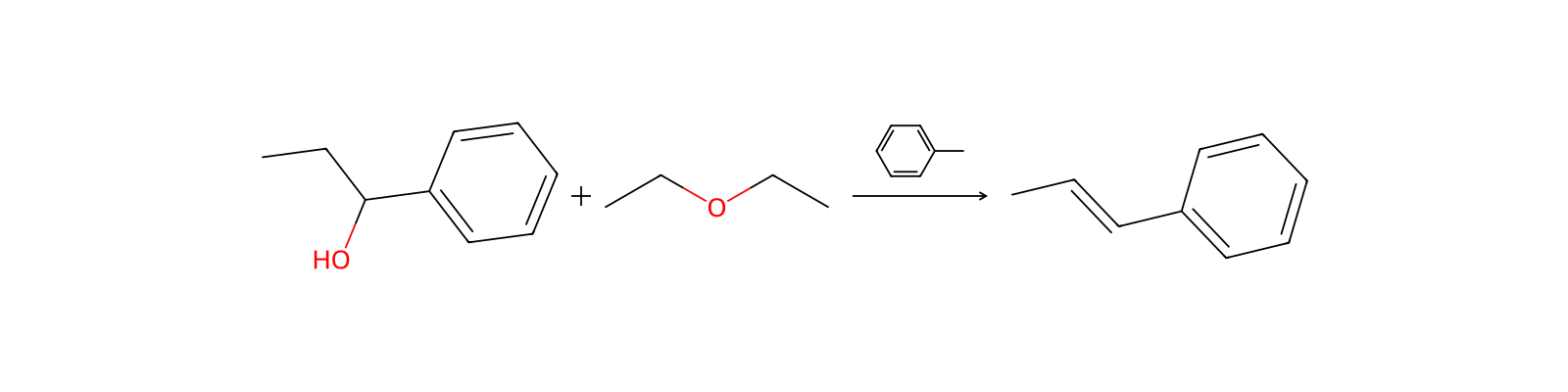
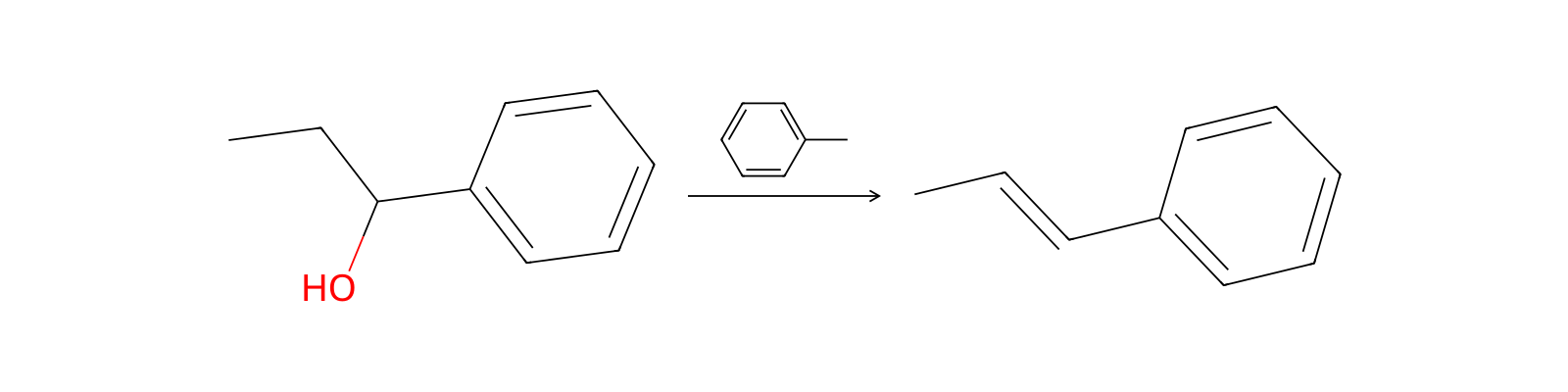
HRID 7082As reactant
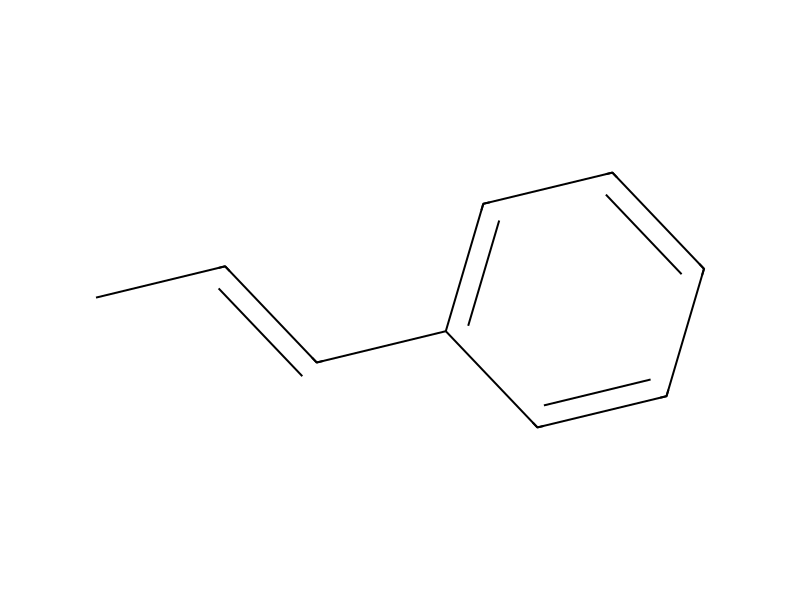
637-50-3CC=Cc1ccccc1QROGIFZRVHSFLM-UHFFFAOYSA-Ncis-beta-methylstyrene has been reported in Actaea simplex with data available.
637-50-3DTXSID2060919Safety information is for reference only and does not replace the supplier’s Safety Data Sheet (SDS), applicable regulations, or professional assessment.
Danger
H226 (99.1%): Flammable liquid and vapor [Warning Flammable liquids]
P203, P210, P233, P240, P241, P242, P243, P261, P264+P265, P271, P272, P273, P280, P301+P316, P302+P352, P303+P361+P353, P304+P340, P305+P351+P338, P318, P319, P321, P331, P333+P317, P337+P317, P362+P364, P370+P378, P403+P233, P403+P235, P405, and P501 (click each P-code to see the statement)
Aggregated GHS information provided per 106 reports by companies from 3 notifications to the ECHA C&L Inventory. Each notification may be associated with multiple companies.
No person may /transport,/ offer or accept a hazardous material for transportation in commerce unless that person is registered in conformance ... and the hazardous material is properly classed, described, packaged, marked, labeled, and in condition for shipment as required or authorized by ... /the hazardous materials regulations (49 CFR 171-177)./
The International Air Transport Association (IATA) Dangerous Goods Regulations are published by the IATA Dangerous Goods Board pursuant to IATA Resolutions 618 and 619 and constitute a manual of industry carrier regulations to be followed by all IATA Member airlines when transporting hazardous materials.
The International Maritime Dangerous Goods Code lays down basic principles for transporting hazardous chemicals. Detailed recommendations for individual substances and a number of recommendations for good practice are included in the classes dealing with such substances. A general index of technical names has also been compiled. This index should always be consulted when attempting to locate the appropriate procedures to be used when shipping any substance or article.
Usesβ-Methylstyrene is a styrene derivative that is used as a chemical intermediate in the manufacture of plasticizers, resins and polymers. β-Methylstyrene is also produced from the combustion of methamp hetamine.




UN 2618; Methyl styrenes, inhibited
IMO 3.3; Methyl styrenes, inhibited
SRP: At the time of review, criteria for land treatment or burial (sanitary landfill) disposal practices are subject to significant revision. Prior to implementing land disposal of waste residue (including waste sludge), consult with environmental regulatory agencies for guidance on acceptable disposal practices.
TERRESTRIAL FATE: Based on a classification scheme(1), an estimated Koc value of 1,600(SRC), determined from a log Kow of 3.35(2) and a regression-derived equation(3), indicates that beta-methyl styrene is expected to have low mobility in soil(SRC). Volatilization of beta-methyl styrene from moist soil surfaces is expected to be an important fate process(SRC) given an estimated Henry's Law constant of 2.7X10⁻³ atm-cu m/mole(SRC), using a fragment constant estimation method(3). The potential for volatilization of beta-methyl styrene from dry soil surfaces may exist(SRC) based upon an estimated vapor pressure of 1 mm Hg(SRC), determined from a fragment constant method(4).
AQUATIC FATE: Based on a classification scheme(1), an estimated Koc value of 1,600(SRC), determined from a log Kow of 3.35(2) and a regression-derived equation(3), indicates that beta-methyl styrene is expected to adsorb to suspended solids and sediment(SRC). Volatilization from water surfaces is expected(3) based upon an estimated Henry's Law constant of 2.7X10⁻³ atm-cu m/mole(SRC), developed using a fragment constant estimation method(4). Using this Henry's Law constant and an estimation method(3), volatilization half-lives for a model river and model lake are 4 hrs and 4 days, respectively(SRC). According to a classification scheme(5), a BCF of 4 for goldfish(6), suggests bioconcentration in aquatic organisms is low(SRC).
ATMOSPHERIC FATE: According to a model of gas/particle partitioning of semivolatile organic compounds in the atmosphere(1), beta-methylstyrene, which has an estimated vapor pressure of 1 mm Hg at 25 °C(SRC), determined from a fragment constant method(2), is expected to exist solely as a vapor in the ambient atmosphere(SRC). Vapor-phase beta-methylstyrene is degraded in the atmosphere by reaction with photochemically-produced hydroxyl radicals and ozone(SRC); the half-life for the reaction in air is estimated to be 7 hrs for hydroxyl radicals(SRC), calculated from its rate constant of 3.2X10⁻¹¹ cu cm/molecule-sec at 25 °C(3). The half-lives for the reaction of cis- and trans-isomers of beta-methylstyrene in air are about 4 and 2 hrs for ozone(SRC), calculated from estimated rate constants of 6.8X10⁻¹⁷ and 1.6X10⁻¹⁶ cu cm/molecule-sec at 25 °C(4,5), respectively. Reaction with ozone rather than hydroxyl radicals may contribute the most to the atmospheric transformation of beta-methyl styrene, especially in urban environments(5). Both alpha- and p-methylstyrene weakly adsorb UV light in the environmentally significant range (wavelengths >290 nm)(6). Hence, beta-methylstyrene probably also has the potential for direct photolysis in the environment(SRC).
beta-Methylstyrene was identified in the wastewater effluent of a petrochemical manufacturer that was discharging into the Calcasieu River, LA(1). For a national survey, beta- methylstyrene was detected in 1 of 21 industrial categories of wastewater effluents; wastewater from the organic chemicals and plastics manufacturing industries contained beta-methylstyrene at an average concn of <0.01 ug/L(2). The removal of lead from gasoline and its subsequent replacement with aromatic compounds has caused an increased release of compounds such as beta- methylstyrene to the atmosphere via fossil fuel combustion(4).
The Koc of beta-methyl styrene is estimated as 1,600(SRC), using a log Kow of 3.35(1) and a regression-derived equation(2). According to a classification scheme(3), this estimated Koc value suggests that beta-methyl styrene is expected to have low mobility in soil(SRC).
beta-Methylstyrene is an impurity contained in alpha-methylstyrene at a concn of about 0.5% by weight(1). Consequently, beta-methylstyrene may be released to the environment via effluents at sites where alpha-methylstyrene is produced or used. beta-Methylstyrene is also released to the environment via wastewater effluents from petrochemical and plastics industries(2,3). The removal of lead from gasoline and its subsequent replacement with aromatic compounds has caused an increased release of compounds such as beta-methylstyrene to the atmosphere via fossil fuel combustion(4).
Data regarding the biodegradation of beta-methylstyrene in either soil or aquatic systems were not available. Pure culture studies showed that the bacteria, Pseudomonas desmolytica, was able to grow on beta-methylstyrene as a single carbon source(1). The degradation reaction mechanism followed beta-oxidation on the n-alkenyl side chain yielding phenylpropionaldehyde and benzoate, which were end metabolites because mineralization or further biotransformation could not be demonstrated(1). However, pure culture experiments provide little insight into the rate of biodegradation in soil or water(SRC).
The Henry's Law constant for beta- methyl styrene is estimated as 2.7X10⁻³ atm-cu m/mole(SRC) using a fragment constant estimation method(1). This Henry's Law constant indicates that beta-methyl styrene is expected to volatilize from water surfaces(2). Based on this Henry's Law constant, the volatilization half-life from a model river (1 m deep, flowing 1 m/sec, wind velocity of 3 m/sec)(2) is estimated as 4 hours(SRC). The volatilization half-life from a model lake (1 m deep, flowing 0.05 m/sec, wind velocity of 0.5 m/sec)(2) is estimated as 4 days(SRC). beta-Methyl styrene's Henry's Law constant indicates that volatilization from moist soil surfaces may occur(SRC). The potential for volatilization of beta-methyl styrene from dry soil surfaces may exist(SRC) based upon an estimated vapor pressure of 1 mm Hg(SRC), determined from a fragment constant method(2).
The rate constant for the vapor-phase reaction of beta-methylstyrene with photochemically-produced hydroxyl radicals has been estimated as 5.9X10⁻¹¹ cu cm/molecule-sec at 25 °C(SRC) using a structure estimation method(1). This corresponds to an atmospheric half-life of about 7 hours at an atmospheric concentration of 5X10+5 hydroxyl radicals per cu cm(SRC). The rate constants for the vapor-phase reaction of cis- (estimated) and trans-beta-methylstyrene (measured) with ozone are 6.8X10⁻¹⁷ and 1.6X10⁻¹⁶ cu cm/molecule-sec at 25 °C(2,3), respectively, which correspond to atmospheric half-lives of about 4 and 2 hrs at an atmospheric concn of 7X10+11 ozone molecules per cu cm(SRC). Products of the trans-beta-methylstyrene-ozone reaction include benzaldehyde, acetaldehyde, acetic acid and benzoic acid(3). Experimental data showed that ozone rather than hydroxyl radicals may contribute the most to the atmospheric transformation of beta-methylstyrene, especially in urban environments(3). beta-Methylstyrene is not expected to undergo hydrolysis in the environment due to the lack of hydrolyzable functional groups(4). Both alpha- and p-methylstyrene weakly adsorb UV light in the environmentally significant range (wavelengths >290 nm)(5). Hence, beta-methylstyrene probably also has the potential for direct photolysis in the environment(SRC).
DRINKING WATER: beta-Methylstyrene was listed as a contaminant found in drinking water for a survey of US cities including Pomona, CA, Escondido, CA, Lake Tahoe and Orange Co, CA and Dallas, TX, Washington, DC, Cincinnati, OH, Philadelphia, PA, Miami, FL, New Orleans, LA, Ottumwa, IA, and Seattle, WA(1).
GROUND WATER: beta-Methylstyrene was identified at 2 of 3 groundwater sample-sites taken down gradient from a primary wastewater rapid infiltration facility at Fort Devens, MA at concn of 0.045 and 0.017 ug/l(1).