HomeMCPWorkbenchSkills
HomeWorkbenchNotificationsMe
llms.txt · MCP GuidePrivacy Policy · Terms of Service · Supportv1.8.0
  1. Home
  2. /Compound

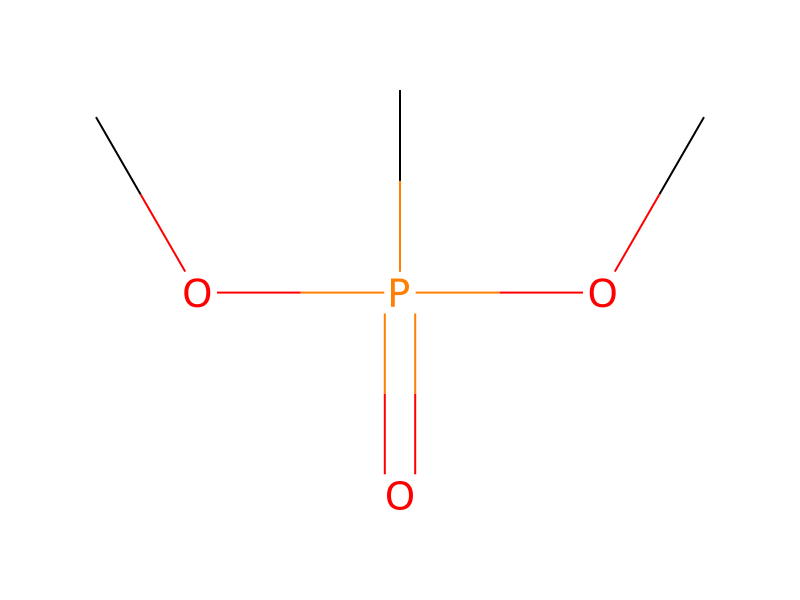
Dimethyl methylphosphonate
HCID 12958
New noteNew reactionRequest quotes
Print preview
Basic informationOverviewNames & identifiersPropertiesSafety & regulationChemistry & industryRelated reactionsCompound notes
Substructure searchFind similar structures

Basic information

CAS
756-79-6
Standard SMILES
COP(C)(=O)OC
InChIKey
VONWDASPFIQPDY-UHFFFAOYSA-N
Molecular formula
C3H9O3P
Average molar mass
124.08 g/mol
Monoisotopic mass
124.02893078

Overview

Dimethyl methylphosphonate is a clear colorless liquid with a pleasant odor. (NTP, 1992)

Names & identifiers

Preferred name
Dimethyl methylphosphonate
IUPAC
[methoxy(methyl)phosphoryl]oxymethane
English name
Dimethyl methylphosphonate
Molecular formula
C3H9O3P
Molecular weight
124.08

Names & synonyms

DIMETHYL METHYLPHOSPHONATE756-79-6DMMPFyrol DMMPPyrol dmmpDimethylmethylphosphonateDimethyl methanephosphonatePhosphonic acid, methyl-, dimethyl esterDimethoxymethylphosphine oxideNCI-C54762Methanephosphonic acid dimethyl esterMethyl phosphonic acid, dimethyl ester
Show more names
MetaranfyroldmmpNSC 62240pyroldmmpReoflam DMMP
DTXSID0020494Phosphonic acid, methyl-,dimethyl esterNSC-62240DTXCID4049420Z996230URefChem:134256212-052-3[methoxy(methyl)phosphoryl]oxymethane

Database identifiers

CAS
756-79-6
PubChem CID
12958
DTXSID
DTXSID0020494
ChEMBL
CHEMBL2924224
UNII
20Z996230U
EC Number
212-052-3
Nikkaji
J14.169K

Properties

Computed structural properties

XLogP
-0.7
Topological polar surface area
35.5 Ų
Hydrogen bond donors
0
Hydrogen bond acceptors
3
Rotatable bonds
2
Heavy atoms
7
Formal charge
0
Complexity
82.2

Experimental & physicochemical properties

Chemical ClassesOther Classes -> Organophosphates, Other
SpringerMaterials PropertiesBoiling point
LogP · 2 items

log Kow = -0.61

-0.61

Density · 3 items

1.1596 at 77 °F (NTP, 1992) - Denser than water; will sink

1.1507 g/cu cm at 20 °C

1.168 @ 20°C

Color/FormColorless liquid
Solubility · 4 items

greater than or equal to 100 mg/mL at 70 °F (NTP, 1992)

Miscible in alcohol, ether, benzene, acetone, carbon tetrachloride; insoluble in heavy mineral oil

Soluble in ethanol, ether

Miscible in water

Flash Point110 °F (NTP, 1992)
Boiling Point · 3 items

358 °F at 760 mmHg (NTP, 1992)

181 °C; 79.5 °C at 20 mm Hg

181 °C @760 [mm Hg]

Safety & regulation

Safety information is for reference only and does not replace the supplier’s Safety Data Sheet (SDS), applicable regulations, or professional assessment.

GHS classification

GHS Classification · 6 items

Danger

H226 (15.3%): Flammable liquid and vapor [Warning Flammable liquids]

P203, P210, P233, P240, P241, P242, P243, P261, P264+P265, P271, P280, P303+P361+P353, P304+P340, P305+P351+P338, P305+P354+P338, P317, P318, P337+P317, P370+P378, P403+P235, P405, and P501 (click each P-code to see the statement)

Aggregated GHS information provided per 262 reports by companies from 15 notifications to the ECHA C&L Inventory. Each notification may be associated with multiple companies.

Warning

H227: Combustible liquid [Warning Flammable liquids]

Hazard information

Regulatory Information · 4 items

Chemical: Phosphonic acid, methyl-, dimethyl ester

Phosphonic acid, P-methyl-, dimethyl ester is listed on the EPA's Chemical Data Reporting (CDR) system. Manufacturers and importers of Phosphonic acid, P-methyl-, dimethyl ester are required to report information about their production and use of this chemical to the EPA under the Toxic Substances Control Act (TSCA). (40 eCFR Part 711)

Status: Active Update: 11-05-2023 https://echa.europa.eu/registration-dossier/-/registered-dossier/13660

Phosphonic acid, methyl-, dimethyl ester: Does not have an individual approval but may be used under an appropriate group standard

Other Safety InformationIMAP assessments - Phosphonic acid, methyl-, dimethyl ester: Human health tier II assessment
DOT LabelFlammable Liquid
Fire HazardsThis chemical is combustible. (NTP, 1992)
Health Hazards · 1 item

SYMPTOMS: Symptoms of exposure to this compound may include irritation of the skin, eyes, mucous membranes and upper respiratory tract. Combustion products may cause breathing difficulty and pulmonary edema. It has weak cholinesterase inhibiting properties.

Chemistry & industry

Pharmacology

Metabolism/Metabolites · 1 item

Dimethyl methylphosphonate (DMMP) is a widely used chemical. Diethyl ethylphosphonate (DEEP) has been proposed as a replacement for DMMP in several applications. ... To further characterize the toxicology of DMMP and DEEP, ... the biotransformation of these compounds and their ability to induce alpha(2u)-globulin accumulation in kidney /were investigated/. Biotransformation of both DMMP and DEEP were studied in male and female rats after single oral doses of 50 and 100 mg/kg. 31P-NMR and GC/MS showed that unchanged DMMP was excreted with urine; methyl phosphonate was identified as the only metabolite in urine. Unchanged DEEP was also excreted with urine; in addition, ethyl ethylphosphonate and ethylphosphonate were urinary metabolites. The majority of the applied dose of both compounds was recovered in urine within 24 hr indicating rapid absorption and excretion. No sex-differences in rates of formation or excretion of metabolites were seen.

MeSH Pharmacological Classification · 1 item

A loosely defined group of drugs that tend to increase behavioral alertness, agitation, or excitation. They work by a variety of mechanisms, but usually not by direct excitation of neurons. The many drugs that have such actions as side effects to their main therapeutic use are not included here.

Absorption, Distribution and Excretion · 1 item

Dimethyl methylphosphonate (DMMP) is a widely used chemical. Diethyl ethylphosphonate (DEEP) has been proposed as a replacement for DMMP in several applications. ... To further characterize the toxicology of DMMP and DEEP, ... the biotransformation of these compounds and their ability to induce alpha(2u)-globulin accumulation in kidney /were investigated/. Biotransformation of both DMMP and DEEP were studied in male and female rats after single oral doses of 50 and 100 mg/kg. 31P-NMR and GC/MS showed that unchanged DMMP was excreted with urine; methyl phosphonate was identified as the only metabolite in urine. Unchanged DEEP was also excreted with urine; in addition, ethyl ethylphosphonate and ethylphosphonate were urinary metabolites. The majority of the applied dose of both compounds was recovered in urine within 24 hr indicating rapid absorption and excretion. No sex-differences in rates of formation or excretion of metabolites were seen.

Related reactions

386 records
New reaction record
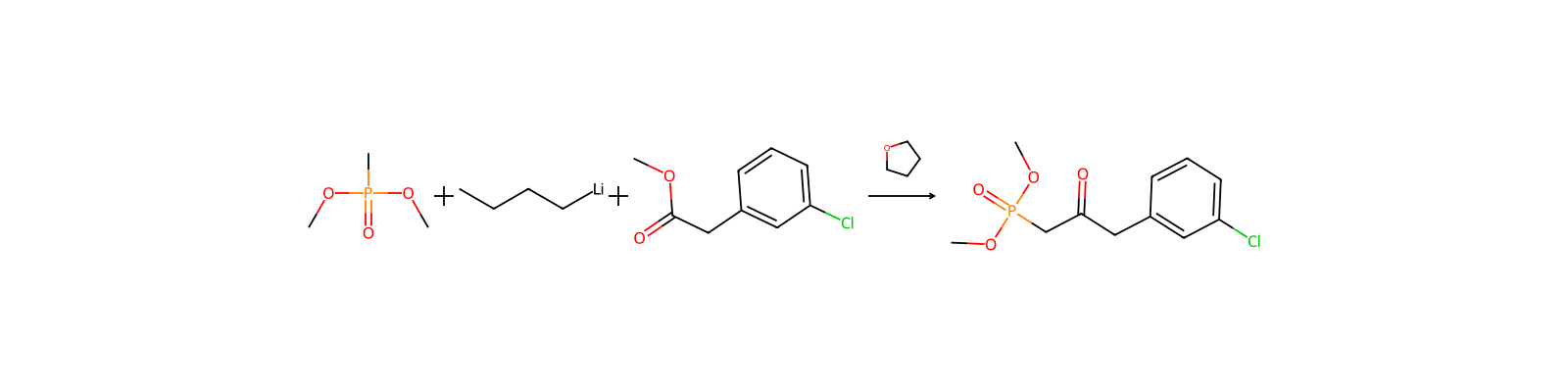
HRID 22084 reaction equation
HRID 22084As reactantuspto-grants-1995_06
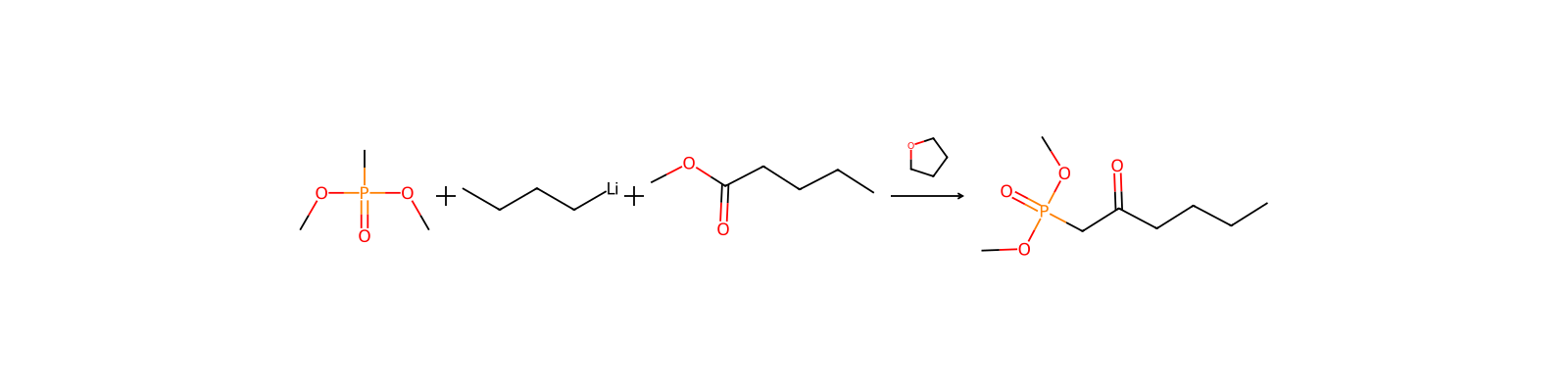
HRID 22420 reaction equation
HRID 22420As reactantuspto-grants-1995_06
HRID 26688 reaction equation
HRID 26688As solventuspto-grants-1979_04
HRID 28090 reaction equation
HRID 28090As reactantuspto-grants-1980_09
HRID 28091 reaction equation
HRID 28091As reactantuspto-grants-1980_09
HRID 28769 reaction equation
HRID 28769As reactantuspto-grants-2008_09
HRID 28771 reaction equation
HRID 28771As reactantuspto-grants-2008_09
HRID 28777 reaction equation
HRID 28777As reactantuspto-grants-2008_09
Page 1 of 49

Compound notes

Loading…

On this pageBasic informationOverviewNames & identifiersPropertiesSafety & regulationChemistry & industryRelated reactionsCompound notes
More actions
New noteNew reactionRequest quotes
Melting Point
<50 °C
Vapor Pressure · 4 items

1.2 mmHg at 77 °F (NTP, 1992)

1.2 [mmHg]

0.962 mm Hg at 25 °C

0.962 [mm Hg] @25 °C

Refractive IndexIndex of refraction: 1.4099 at 30 °C/D
Physical Description · 3 items

Dimethyl methylphosphonate is a clear colorless liquid with a pleasant odor. (NTP, 1992)

Liquid

Colorless liquid; [Merck Index] Pleasant odor; [CAMEO]

Physicochemical properties

Melting point
50 ° · <50°
Boiling point
181 °C · 181 °C(lit.)
Density
1.145 g/mL · 1.145 g/mL at 25 °C(lit.)
vapor pressure
0.1 mm · <0.1 mm Hg ( 20 °C)
refractive index
20 · n20/D 1.413(lit.)
Flash point
156 °F · 156 °F
solubility
Chloroform, Methanol (Slightly, Heated)
form
Liquid
pka
pKa (20°) in water: 2.37
Specific Gravity
1.16 · 1.16
color
Clear colorless
Water Solubility
10 g/100 · >=10 g/100 mL at 21 ºC
Merck
14 · 14,3391
BRN
878263 · 878263
Henry's Law Constant
7.6 · 7.6×100 mol/(m3Pa) at 25℃, HSDB (2015)
Stability
Stability Combustible. Incompatible with strong oxidizing agents, strong bases. May soften some rubbers or plastics. Hydrolyzes slowly in contact with water.
LogP
-0.61 · -0.61
Dissociation constant
2.37 at · 2.37 at 20℃
Toxicology and Carcinogenesis
Toxicology and Carcinogenesis Studies of Dimethyl Methylphosphonate (CASRN 756-79-6) in F344/N Rats and B6C3F1 Mice (Gavage Studies)
CAS DataBase Reference
756 · 756-79-6(CAS DataBase Reference)
FDA UNII
20 Z996230U · 20Z996230U
NIST Chemistry Reference
Phosphonic acid, methyl-, dimethyl ester(756-79-6)
EPA Substance Registry System
Dimethyl methylphosphonate (756-79-6)
Symbol(GHS)
7 · GHS07,GHS08
Signal word
Danger
Hazard statements
319 · H319-H340-H361f
Precautionary statements
201 · P201-P305+P351+P338-P308+P313
Hazard Codes
T,Xi
Risk Statements
46 · 46-36-62
Safety Statements
53 · 53-26-45
RIDADR
2810 · 2810
WGK Germany
2 · 2
RTECS
9120000 · SZ9120000
Hazard Note
Irritant/Toxic
TSCA
TSCA listed
Hazardous Substances Data
756 · 756-79-6(Hazardous Substances Data)
Toxicity
50 in · LD50 in rats, mice (mg/kg): 10190, >6810 orally (Rowland)
REACH Registrations
Active
Hazards Summary · 1 item

None to very minor skin and minor eye irritant in rabbits; No reproductive or developmental toxicity observed in rats except at doses that are maternally toxic; No evidence of teratogenicity; [HSDB] Highly flammable; A skin, eye, mucous membrane, and upper respiratory tract irritant; A weak cholinesterase inhibitor; [CAMEO] Mutagenic, reproductive, and tumorigenic effects; [RTECS] Affects fertility in male rats (decreased sperm count and motility); Recovery noted after 14 weeks, but not complete by histology; No data on effects in human pregnancy; [REPROTOX]

Reactive GroupSulfonates, Phosphonates, and Thiophosphonates, Organic
Special Reports · 2 items

Subcommittee on Flame-Retardant Chemicals, Committee on Toxicology, Board on Environmental Studies and Toxicology, National Research Council; Toxicological Risks of Selected Flame-Retardant Chemicals p.319 (2000) Available at http://www.nap.edu/catalog/9841.html as of October 7, 2008

DHHS/NTP; Toxicology & Carcinogenesis Studies of Dimethyl Methylphosphonate in F344/N Rats and B6C3F1 Mice (Gavage Studies) Technical Report Series No. 323 (1987) NIH Publication No. 88-2579

Reactivity AlertsHighly Flammable
Reactivity Profile · 1 item

DIMETHYL METHYLPHOSPHONATE is incompatible with strong oxidizing agents and strong bases. It reacts with organic halides at 302-392 °F. When heated to temperatures greater than 302 °F, it will act as an alkylating agent with basic nitrogen compounds and phenols. It reacts with enol lactones. This compound has plasticizing properties and may soften or deteriorate some plastics and elastomers (particularly vinyl-based resins, neoprene and natural rubbers) upon contact. (NTP, 1992)

Air and Water ReactionsHighly flammable. Water soluble. Hydrolyzes slowly upon contact with water.
Hazard Classes and Categories · 4 items

Flam. Liq. 3 (15.3%)

Carcinogenicity - category 2

Germ cell mutagenicity - Category 1B

Flammable liquids - Category 4

Safety & protection

Fire FightingFires involving this material can be controlled with a dry chemical, carbon dioxide or Halon extinguisher. A water spray may also be used. (NTP, 1992)
First Aid · 1 item

EYES: First check the victim for contact lenses and remove if present. Flush victim's eyes with water or normal saline solution for 20 to 30 minutes while simultaneously calling a hospital or poison control center. Do not put any ointments, oils, or medication in the victim's eyes without specific instructions from a physician. IMMEDIATELY transport the victim after flushing eyes to a hospital even if no symptoms (such as redness or irritation) develop.

Nonfire Spill Response · 1 item

SMALL SPILLS AND LEAKAGE: If you should spill this chemical, use absorbent paper to pick up all liquid spill material. Seal the absorbent paper, as well as any of your clothing which may be contaminated, in a vapor-tight plastic bag for eventual disposal. Wash any surfaces you may have contaminated with a soap and water solution. Do not reenter the contaminated area until the Safety Officer (or other responsible person) has verified that the area has been properly cleaned.

Disposal Methods · 1 item

SRP: The most favorable course of action is to use an alternative chemical product with less inherent propensity for occupational exposure or environmental contamination. Recycle any unused portion of the material for its approved use or return it to the manufacturer or supplier. Ultimate disposal of the chemical must consider: the material's impact on air quality; potential migration in soil or water; effects on animal, aquatic, and plant life; and conformance with environmental and public health regulations.

Isolation and EvacuationExcerpt from ERG Guide 128 [Flammable Liquids (Water-Immiscible)]:
Protective Action Criteria (PAC) · 3 items

11 [mg/m3]

120 [mg/m3]

730 [mg/m3]

Personal Protective Equipment (PPE)MINIMUM PROTECTIVE CLOTHING: If Tyvek-type disposable protective clothing is not worn during handling of this chemical, wear disposable Tyvek-type sleeves taped to your gloves.
Other Standards Regulations and Guidelines · 1 item

DOE Protective Action Criteria (PAC): Temporary Emergency Exposure Limits (TEELs) for Dimethyl methylphosphonate: TEEL-0: 100 mg/cu m; PAC-1: 350 mg/cu m; PAC-2: 500 mg/cu m; PAC-3: 500 mg/cu m (TEEL-0: The threshold concentration below which most people will experience no adverse health effects; PAC-1: The maximum concentration in air below which it is believed nearly all individuals could be exposed for up to one hour without experiencing other than mild transient adverse health effects or perceiving a clearly defined objectionable odor; PAC-2: The maximum concentration in air below which it is believed nearly all individuals could be exposed for up to one hour without experiencing or developing irreversible or other serious health effects or symptoms that could impair their abilities to take protective action; PAC-3: The maximum concentration in air below which it is believed nearly all individuals could be exposed for up to one hour without experiencing or developing life-threatening health effects).

Toxicology

Ecotoxicity ValuesLC50; Species: Oncorhynchus mykiss (Rainbow trout); Conditions: static, 13.2-14.9 °C, pH 7.6-8.1, hardness 202- 216 mg/L as CaC03; Concentration: 2259 mg/L for 96 hr /99.4% purity/
Environmental Fate · 3 items

TERRESTRIAL FATE: Based on a classification scheme(1), an estimated Koc value of 11(SRC), determined from a log Kow of -0.61(2) and a regression-derived equation(3), indicates that dimethyl methylphosphonate is expected to have very high mobility in soil(SRC); however experiments show that dimethyl methylphosphonate adsorbs strongly to natural montmorillonite clay mineral(4). Volatilization of dimethyl methylphosphonate from moist soil surfaces is expected to be an important fate process(SRC) given an estimated Henry's Law constant of 1.3X10⁻⁶ atm-cu m/mole(SRC), using a fragment constant estimation method(5). Dimethyl methylphosphonate is not expected to volatilize from dry soil surfaces(SRC) based upon a vapor pressure of 0.962 mm Hg(6). In environmental chamber studies, dimethyl methylphosphonate at initial concns in soil from 100-1000 ppm exhibited half-lives ranging from 0.2-60 days; average half-life was 12.4 days(7). The transport and/or degradation process responsible for the loss of dimethyl methylphosphonate was not determined. Limited biodegradation data indicate that biodegradation is not an important fate process in soil(8).

AQUATIC FATE: Based on a classification scheme(1), an estimated Koc value of 11(SRC), determined from a log Kow of -0.61(2) and a regression-derived equation(3), indicates that dimethyl methylphosphonate is not expected to adsorb to suspended solids and sediment(SRC); however experiments show that dimethyl methylphosphonate adsorbs strongly to natural montmorillonite clay mineral(4). Volatilization from water surfaces is expected(3) based upon an estimated Henry's Law constant of 1.3X10⁻⁶ atm-cu m/mole(SRC), developed using a fragment constant estimation method(5). Using this Henry's Law constant and an estimation method(3), volatilization half-lives for a model river and model lake are 22 and 240 days, respectively(SRC). Dimethyl methylphosphonate will hydrolyze to methanol(6). Half-lives for dimethyl methylphosphonate are calculated to be 13.2 and 43.3 yrs at 20 and 10 °C, respectively, at unspecified pH(7). Hydrolysis acid, base and neutral rates for dimethyl methylphosphonate were reported as 1.36X10⁻⁹/mole-sec, 7.5X10⁻³/mole-sec, and 2.5X10⁻¹⁰/mole-sec, respectively(8). These rates correspond to half-lives of 3.27 yrs, 124 days, 12.4 days, and 1.2 days at pH 3, 7, 9, and 11, respectively(SRC). According to a classification scheme(9), an estimated BCF of 3(SRC), from its log Kow(2) and a regression-derived equation(10), suggests the potential for bioconcentration in aquatic organisms is low(SRC). In environmental chamber studies, dimethyl methylphosphonate half-lives in muddy water ranged from 7-210 days, removal mechanism for dimethyl methylphosphonate not specified(11). Limited biodegradation data indicate that biodegradation is not an important fate process in water(12).

ATMOSPHERIC FATE: According to a model of gas/particle partitioning of semivolatile organic compounds in the atmosphere(1), dimethyl methylphosphonate, which has a vapor pressure of 0.962 mm Hg at 25 °C(2), is expected to exist solely as a vapor in the ambient atmosphere. Vapor-phase dimethyl methylphosphonate is degraded in the atmosphere by reaction with photochemically-produced hydroxyl radicals(SRC); the half-life for this reaction in air is estimated to be 2.8 days(SRC), calculated from its rate constant of 5.7X10⁻¹² cu cm/molecule-sec at 25 °C(SRC) that was derived using a structure estimation method(3). Dimethyl methylphosphonate is not expected to be susceptible to direct photolysis by sunlight based upon data for a similar compound, diisopropyl methylphosphonate, which did not photolyze when exposed to light (>290 nm) for 232 hours in distilled or Rocky Mountain Arsenal water(4).

Ongoing Test Status · 1 item

The following link will take the user to the National Toxicology Program (NTP) Test Agent Search Results page, which tabulates all of the "Standard Toxicology & Carcinogenesis Studies", "Developmental Studies", and "Genetic Toxicity Studies" performed with this chemical. Clicking on the "Testing Status" link will take the user to the status (i.e., in review, in progress, in preparation, on test, completed, etc.) and results of all the studies that the NTP has done on this chemical.[Available from: http://ntp-apps.niehs.nih.gov/ntp_tox/index.cfm?fuseaction=ntpsearch.searchresults&searchterm=756-79-6]

Soil Adsorption/Mobility · 1 item

The Koc of dimethyl methylphosphonate is estimated as 11(SRC), using a log Kow of -0.61(1) and a regression-derived equation(2). According to a classification scheme(3), this estimated Koc value suggests that dimethyl methylphosphonate is expected to have very high mobility in soil; however experiments show that dimethyl methylphosphonate adsorbs strongly to natural montmorillonite clay mineral(4).

TSCA Test Submissions · 3 items

Teratogenicity was evaluated in fertilized female Sprague Dawley rats (25/group) exposed orally by gavage to dimethyl methylphosphonate (in 2% sodium carboxymethylcellulose vehicle) at dose levels of 0, 100, 1000 or 2000 mg/kg on gestation days (GD) 6-15. Dams were sacrificed on GD 21. Significant differences were observed between treated and control animals in the following: decreased maternal body weight gain and feed consumption (high-dose group), and retarded fetal physiological growth (including decreased body weight and delay in skeletal maturation, mid- and high-dose group). No significant differences were observed between treated and control animals with respect to fetal malformations. In a supplementary study, fertilized female Sprague Dawley rats (25/group) exposed orally by gavage to dimethyl methylphosphonate (in 2% sodium carboxymethylcellulose vehicle) at dose levels of 0 or 2000 mg/kg on gestation days (GD) 6-15 and 2500 mg/kg on GD 6-10. Dams were sacrificed on GD 21. Significant differences were observed between treated and control animals in the following: decreased maternal body weight gain and feed consumption and retarded fetal physiological growth (including decreased body weight and delay in skeletal maturation) (both treatment levels). No significant differences were observed between treated and control animals in the following: gross malformations, visceral or skeletal anomalies.

The mutagenicity of dimethyl methylphosphonate was evaluated in Salmonella tester strains TA98, TA100, TA1535 and TA1537 (Ames Test), both in the presence and absence of added metabolic activation by Aroclor-induced rat liver S9 fraction. Dimethyl methylphosphonate, diluted in DMSO, was tested at concentrations up to 2025ug/plate using the plate incorporation technique. Dimethyl methylphosphonate did not cause a positive response in any tester strain with or without metabolic activation.

The mutagenicity of dimethyl methylphosphonate was evaluated in Salmonella tester strains TA1535 and TA1538 (Ames Test), both in the presence and absence of added metabolic activation by rat liver S9 fraction. Based on preliminary toxicity determinations, dimethyl methylphosphonate, diluted in DMSO, was tested at concentrations up to 50mg/plate using the plate incorporation technique. Dimethyl methylphosphonate did not cause a positive response in any tester strain with or without metabolic activation.

Atmospheric Concentrations · 1 item

SOURCE DOMINATED: Dimethyl methylphosphonate ambient air concns at three different locations near the edge of a hazardous liquid waste lagoon were 109,000, 10,600 and 2450 ng/cu m(1). Concns at two sites approximately 1 mile from this lagoon were 31 and 20 ng/cu m(1).

Artificial Pollution Sources · 1 item

Dimethyl methylphosphonate's production and use as a flame retardant, simulants for nerve agents, antifoam agent, plasticizer and stabilizer, textile conditioner and antistatic agent, a preignition additive for gasoline, and as an additive for solvents and low-temperature hydraulic fluid(1) may result in its release to the environment through various waste streams(SRC). The compound is listed as a chemical weapons precursor and is regulated by the Chemical Waepons Convention.

Environmental BiodegradationAEROBIC: Dimethyl methylphosphonate was not used as a source of phosphorous or carbon by microorganisms and no organic phosphorous was released from mixed culture tests(1).
Carcinogen Classification · 6 items

Dimethyl Methylphosphonate

TR-323: Toxicology and Carcinogenesis Studies of Dimethyl Methylphosphonate (CASRN 756-79-6) in F344/N Rats and B6C3F1 Mice (Gavage Studies) (1987 )

08/19/86

Some Evidence

No Evidence

Inadequate Experiment

Environmental Bioconcentration · 1 item

An estimated BCF of 3 was calculated in fish for dimethyl methylphosphonate(SRC), using a log Kow of -0.61(1) and a regression-derived equation(2). According to a classification scheme(3), this BCF suggests the potential for bioconcentration in aquatic organisms is low(SRC).

Volatilization from Water/Soil · 1 item

The Henry's Law constant for dimethyl methylphosphonate is estimated as 1.3X10⁻⁶ atm-cu m/mole(SRC) using a fragment constant estimation method(1). This Henry's Law constant indicates that dimethyl methylphosphonate is expected to volatilize from water surfaces(2). Based on this Henry's Law constant, the volatilization half-life from a model river (1 m deep, flowing 1 m/sec, wind velocity of 3 m/sec)(2) is estimated as 22 days(SRC). The volatilization half-life from a model lake (1 m deep, flowing 0.05 m/sec, wind velocity of 0.5 m/sec)(2) is estimated as 240 days(SRC). Dimethyl methylphosphonate's Henry's Law constant indicates that volatilization from moist soil surfaces may occur(SRC). Dimethyl methylphosphonate is not expected to volatilize from dry soil surfaces(SRC) based upon a vapor pressure of 0.962 mm Hg(3).

Non-Human Toxicity Excerpts · 5 items

/LABORATORY ANIMALS: Acute Exposure/ ... To investigate alpha(2u)-globulin accumulation in the kidney after dimethyl methylphosphonate (DMMP) and diethyl ethylphosphonate (DEEP), male and female Fischer-344 rats were administered DMMP or DEEP daily for five consecutive days by gavage. DMMP doses were 500- and 1,000-mg/kg body weight (bw); due to marked toxicity, daily DEEP dose of 50 and 100 mg/kg had to be used. Control rats received corn oil only and positive controls received five doses of 500-mg/kg bw trimethylpentane (TMP). Relative kidney weights were increased in male rats dosed with DMMP, DEEP, and TMP. Alpha(2u)-globulin in kidney cytosol was separated and quantified by capillary electrophoresis and by SDS-PAGE and Western blotting. In DMMP-, DEEP-, and TMP-treated rats, dose-dependent increases in the alpha(2u)-globulin content were observed by both methods in male, but not female rats. The increase of alpha(2u)-globulin accumulation was accompanied by the formation of protein droplets in the proximal tubules of male rats...

/LABORATORY ANIMALS: Acute Exposure/ Four male and four female albino rabbits received a dermal application of 2000 mg/kg Fyrol DMMP to their abdominal skin, which was then wrapped for 24 hours. The skin at the application site was abraded on half the animals. After 24 hours, the binding was removed. The animals were observed for 14 days after which they underwent necropsy. There was no mortality in this study. All rabbits appeared normal thoughout the study, with no clinical signs of toxicity. At necropsy one rabbit showed pale lungs but the other nine animals appeared normal.

/LABORATORY ANIMALS: Acute Exposure/ Six albino rabbits received a dermal application of 0.5 mg of dimethyl methylphosphonate to one abraded and one nonabraded skin site. The application sites were then covered for 24 hours. When unwrapped, the sites were examined at 24 and 72 hours for irritation. If irritation was present, it was scored according to Draize. Very slight irritation was observed at 24 and 72 hours.

/LABORATORY ANIMALS: Acute Exposure/ Six albino rabbits received 0.5 mL of Fyrol DMMP applied to a previously shaven area of their skin. The skin at the application sites of the rabbits was abraded prior to the administration of the test substance. The sites were covered for 24 hours, after which they were uncovered and examined for irritation. The sites were scored for irritation according to Draize. ...There was no irritation at any of the application sites.

For more Non-Human Toxicity Excerpts (Complete) data for DIMETHYL METHYLPHOSPHONATE (30 total), please visit the HSDB record page.

Regulatory information

Federal Drinking Water GuidelinesEPA 100 ug/L

Safety data

wgk
2
tsca
TSCA listed
rtecs
SZ9120000
ridadr
2810
Toxicity
LD50 in rats, mice (mg/kg): 10190, >6810 orally (Rowland)
risk_code
46-36-62
Signal word
Danger
Symbol(GHS)
GHS07,GHS08
hazard_code
T,Xi
hazard_note
Irritant/Toxic
safety_code
53-26-45
Hazard statements
H319-H340-H361f
REACH Registrations
Active
Precautionary statements
P201-P305+P351+P338-P308+P313
Hazardous Substances Data
756-79-6(Hazardous Substances Data)

Uses & manufacturing

Uses · 5 items

Used in NMR probe for cell volume, as a flame retardant, and to simulate nerve agents such as sarin; [Merck Index] Used in heavy metal extraction and solvent separation; Also used as a pre-ignition additive for gasoline, an antifoam agent, a plasticizer and stabilizer, a textile conditioner and antistatic agent, and an additive in solvents and hydraulic fluids; [HSDB]

Petroleum Production and Refining [Category: Industry]

IN HEAVY METAL EXTRACTION & SOLVENT SEPARATION; PRE-IGNITION ADDITIVE FOR GASOLINE; ANTIFOAM AGENT; PLASTICIZER & STABILIZER; TEXTILE CONDITIONER & ANTISTATIC AGENT; ADDITIVE IN SOLVENTS & LOW TEMP HYDRAULIC FLUIDS

... Simulate/s/ the physical and spectroscopic (but not the biologic) properties of anticholinesterase (nerve) agents. Dimethyl methylphosphonate is also used as a flame retardant, a preignition additive for gasoline, an antifoam agent, a plasticizer and stabilizer, a textile conditioner and antistatic agent, and an additive for solvents and low-temperature hydraulic fluids.

Used as a flame retardant, solvent, hydraulic fluid, antifoam agent, plasticizer and stabilizer, textile conditioner and antistatic agent, a preignition additive for gasoline, and an additive for solvents and low-temperature hydraulic fluids. ... also used in the military to simulate nerve gas during testing of protective euqipment. ... listed as a chemical weapons precursor and is regulated by the Chemical Waepons Convention.

U.S. Exports · 2 items

(1972) No Data

(1975) No Data

U.S. Imports · 2 items

(1972) No data

(1975) No Data

U.S. Production · 5 items

2023: 250,000 - <400,000 lb

(1972) PROBABLY GREATER THAN 4.54X10+5 GRAMS

(1975) PROBABLY GREATER THAN 4.54X10+5 GRAMS

Dimethyl methylphosphonate is listed as a High Production Volume (HPV) chemical (65FR81686). Chemicals listed as HPV were produced in or imported into the U.S. in >1 million pounds in 1990 and/or 1994. The HPV list is based on the 1990 Inventory Update Rule. (IUR) (40 CFR part 710 subpart B; 51FR21438).

Production volumes for non-confidential chemicals reported under the Inventory Update Rule. [Table#4069]

Consumer UsesNot Known or Reasonably Ascertainable
Industry UsesOther
Methods of ManufacturingREACTION OF TRIMETHYL PHOSPHITE OR THE SODIUM SALT OF DIMETHYL HYDROGEN PHOSPHITE AND METHYL CHLORIDE
Formulations/PreparationsFyrol DMMP
General Manufacturing Information · 2 items

All Other Chemical Product and Preparation Manufacturing

Phosphonic acid, P-methyl-, dimethyl ester: ACTIVE

Applications · 4 items

UsesAs a flame retardant, a preignition additive for gasoline, an antifoam agent, a plasticizer and stabilizer, a textile conditioner, and an antistatic agent; used experimentally to mimic the physical and spectroscopic (but not biological) properties of anticholinesterase agents

UsesDimethyl methylphosphonate is used as a catalyst and a reagent in organic synthesis for the conversion of esters to ketophosphonates. It is an additive for the synthesis of unsaturated polyester resin which has flame retardant high phosphorous and UV-cured epoxy acrylate. It finds application as hydraulic fluids as well.

UsesNMR probe for cell volume. Flame retardant. Simulant for nerve agents.

General DescriptionClear colorless liquid with a pleasant odor.

Upstream & downstream products

Downstream products

Dimethyl 3,3-dimethyl-2-oxoheptylphosphonateMethylphosphonicacidmethyl-1-methylethylester(4R-cis)-4,4a,5,6,7,8-hexahydro-4,4a-dimethyl-6-(1-methylethylidene)naphthalen-2(3H)-oneTrimethyl phosphateMethylphosphonic acidDimethyl (2-Oxononyl)phosphonatePhenylphosphonic acid dimethyl esterMethanolMethanesulfonic acid