
1,2,4-Trichlorobenzene
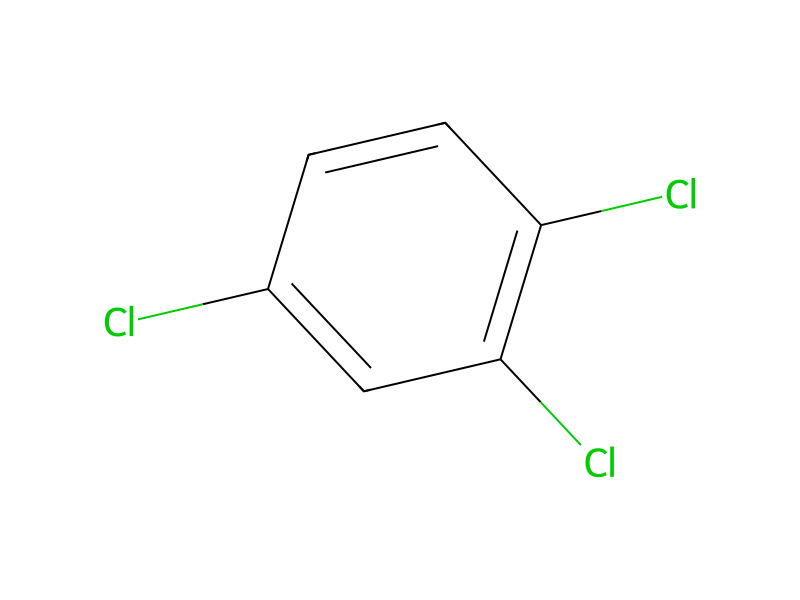
Basic information
- CAS
120-82-1- Standard SMILES
Clc1ccc(Cl)c(Cl)c1- InChIKey
PBKONEOXTCPAFI-UHFFFAOYSA-N- Molecular formula
- C6H3Cl3
- Average molar mass
- 181.4 g/mol
- Monoisotopic mass
- 179.930033
Overview
1,2,4-trichlorobenzene appears as colorless liquid or white solid with a sharp chlorobenzene odor. Melting point 16.95 °C (62.5 °F). (USCG, 1999)
Names & identifiers
- Preferred name
- 1,2,4-Trichlorobenzene
- IUPAC
- 1,2,4-trichlorobenzene
- English name
- 1,2,4-Trichlorobenzene
- Molecular formula
- C6H3Cl3
- Molecular weight
- 181.45
Names & synonyms
1,2,4-trichlorobenzene120-82-1Benzene, 1,2,4-trichloro-unsym-TrichlorobenzeneHostetex L-pecTrojchlorobenzen1,2,4-Trichlorbenzol1,2,4-Trichlorobenzol1,2,5-Trichlorobenzene1,3,4-Trichlorobenzeneas-trichlorobenzeneTrichlorobenzene A
Show more names
TRICHLOROBENZENE124-,,1,2,4-TRICHLOROBENZENE SINGLE COMPONENT STANDARD FOR EPA124TCB1.2.4-Tric1,2,4TrichLHipochem GMhostetexl-pec
DTXSID0021965AI3-0777505IQ959M1NNSC-406697DTXCID701965CHEBI:28222RefChem:411007204-428-0
Database identifiers
- CAS
120-82-1、63697-18-7- PubChem CID
- 13
- DTXSID
DTXSID0021965- ChEMBL
CHEMBL296348- ChEBI
CHEBI:28222- UNII
- 05IQ959M1N
- EC Number
- 204-428-0
- Nikkaji
- J2.482A
Properties
Computed structural properties
- XLogP
- 4
- Topological polar surface area
- 0 Ų
- Hydrogen bond donors
- 0
- Hydrogen bond acceptors
- 0
- Rotatable bonds
- 0
- Heavy atoms
- 9
- Formal charge
- 0
- Complexity
- 94.3
Experimental & physicochemical properties
Chemical Classes
Hazardous Air Pollutants (HAPs)
Volatile Organic Compound (VOC) (Semi-Volatile Organic Compound (SVOC))
SolventsSolvents -> Chlorinated Aromatics
SpringerMaterials Properties13C nuclear magnetic resonance spectrum
PesticidesPesticide -> EPA IRIS
LogP
log Kow = 4.02
3.98
4.03
OdorAromatic odor
Density
1.454 at 68 °F (USCG, 1999) - Denser than water; will sink
1.459 g cu cm at 20 °C/4 °C
Liquid density: 1.44829 kg/L
Critical density: 0.447 kg/L
Relative density (water = 1): 1.5
1.45
Color/Form
Colorless liquid
Orthorhombic crystals
Colorless liquid or crystalline solid (below 63 degrees F).
Solubility
less than 1 mg/mL at 70 °F (NTP, 1992)
Sparingly soluble in alcohol. Miscible with ether, benzene, petroleum ether, carbon disulfide
In water, 49.0 mg/L at 25 °C
Solubility in water, mg/l: 34.6
0.003%
Flash Point
230 °F (NTP, 1992)
105 °C
105 °C (222 °F)
105 °C c.c.
222 °F
222 °F
Boiling Point
415 °F at 760 mmHg (NTP, 1992)
213.5 °C
213 °C
416 °F
213.5 °C @760 [mm Hg]
416 °F
DecompositionWhen heated to decomp, it emits toxic fumes of /hydrogen chloride/.
Physicochemical properties
- Melting point
- 16 °C · 16 °C(lit.)
- Boiling point
- 214 °C · 214 °C(lit.)
- Density
- 1.454 g/mL · 1.454 g/mL at 25 °C(lit.)
- vapor density
- 6 · >6 (vs air)
- vapor pressure
- 1 mm · 1 mm Hg ( 40 °C)
- refractive index
- 20 · n20/D 1.571(lit.)
- Flash point
- 230 °F · >230 °F
- storage temp.
- 2 · 2-8°C
- solubility
- water: insoluble
- form
- Liquid
- color
- Clear
- Odor
- Characteristic aromatic odor
- explosive limit
- 6.6 %, · 6.6%, 150°F
- Water Solubility
- INSOLUBLE
- Thermal Conductivity
- 0.109 W/ · 0.109 W/(m·K) at 25 ℃
- λmax
- 308 nm · λ: 308 nm Amax: 1.00λ: 310 nm Amax: 0.50λ: 350 nm Amax: 0.05λ: 375-400 nm Amax: 0.01
- Merck
- 14 · 14,9631
- BRN
- 956819 · 956819
- Henry's Law Constant
- 0.997 at · 0.997 at 20.0 °C (wetted-wall column, ten Hulscher et al., 1992) 1.24, 2.27, 2.58, 3.06, and 3.90 at 2.0, 6.0, 10.0, 18.0, and 25.0 °C, respectively (EPICS-SPME, Dewulf et al., 1999)
- Exposure limits
- 2 ppm · EU LTEL:2 ppm(15.1 mg/m3); EU STEL:5 ppm(37.8 mg/m3)
- Dielectric constant
- 2.24 · 2.2400000000000002
- Stability
- Stable. Incompatible with strong oxidizing agents. Combustible.
- InChI
- 1S/C6H3Cl3/c7-4-1-2-5(8)6(9)3-4/h1-3H
- InChIKey
- PBKONEOXTCPAFI-UHFFFAOYSA-N
- SMILES
- Clc1ccc(Cl)c(Cl)c1
- EPA Primary Drinking Water Standard
- 0.07 · MCL:0.07,MCLG:0.07
- LogP
- 4.28 · 4.28
- REACH Annex XVII Substances List
- Trichlorobenzene (120-82-1)
- CAS DataBase Reference
- 120 · 120-82-1(CAS DataBase Reference)
- EWG's Food Scores
- 5 · 5
- FDA UNII
- 5 IQ959M1N · 05IQ959M1N
- NIST Chemistry Reference
- 1 · Benzene, 1,2,4-trichloro-(120-82-1)
- EPA Substance Registry System
- 1 · 1,2,4-Trichlorobenzene (120-82-1)
- UNSPSC Code
- 41116107 · 41116107
- NACRES
- 24 · NA.24
- Symbol(GHS)
- 7 · GHS07,GHS08,GHS09
- Signal word
- Warning
- Hazard statements
- 302 · H302-H315-H373-H335-H336-H410
- Precautionary statements
- 501 · P501-P273-P260-P270-P271-P264-P280-P302+P352-P391-P314-P362+P364-P332+P313-P301+P312+P330-P304+P340+P312-P403+P233-P405
- Hazard Codes
- Xn,N,Xi,T,F
- Risk Statements
- 22 · 22-38-50/53-52/53-39/23/24/25-23/24/25-11-51/53
- Safety Statements
- 23 · 23-37/39-60-61-45-36/37-16-7
- OEL
- 5 ppm · Ceiling: 5 ppm (40 mg/m3)
- RIDADR
- 2321 · UN 2321 6.1/PG 3
- WGK Germany
- 3 · 3
- RTECS
- 2100000 · DC2100000
- Autoignition Temperature
- 571 °C · 571 °C
- Hazard Note
- Irritant
- TSCA
- TSCA listed
- HazardClass
- 6.1 · 6.1
- PackingGroup
- III
- HS Code
- 29036990 · 29036990
- Storage Class
- 6.1 C · 6.1C - Combustible acute toxic Cat.3toxic compounds or compounds which causing chronic effects
- Hazard Classifications
- 4 OralAquatic · Acute Tox. 4 OralAquatic Acute 1Aquatic Chronic 1Skin Irrit. 2
- Hazardous Substances Data
- 120 · 120-82-1(Hazardous Substances Data)
- Toxicity
- 50 orally · LD50 orally in Rabbit: 550 mg/kg LD50 dermal Rat 6139 mg/kg
- REACH Registrations
- Active
- Limited Quantities
- 5 L · 5.0 L (1.3 gallons) (liquid) or 5.0 kg (11 lbs) (solid)
- Excepted Quantities
- Max Inner Pack (30g or 30ml) and Max Outer Pack (1Kg or 1L)
Safety & regulation
Safety information is for reference only and does not replace the supplier’s Safety Data Sheet (SDS), applicable regulations, or professional assessment.
GHS classification
GHS Classification
Warning
H302: Harmful if swallowed [Warning Acute toxicity, oral]
P264, P270, P273, P280, P301+P317, P302+P352, P321, P330, P332+P317, P362+P364, P391, and P501 (click each P-code to see the statement)
Warning
H302 (100%): Harmful if swallowed [Warning Acute toxicity, oral]
P264, P264+P265, P270, P273, P280, P301+P317, P302+P352, P305+P351+P338, P321, P330, P332+P317, P337+P317, P362+P364, P391, and P501 (click each P-code to see the statement)
Hazard information
Regulatory Information
Chemical: Benzene, 1,2,4-trichloro-
Hazard Traits - Bioaccumulation; Endocrine Toxicity; Environmental Persistence; Hepatotoxicity and Digestive System Toxicity; Neurotoxicity; Respiratory Toxicity
Benzene, 1,2,4-trichloro- is listed on the EPA's Chemical Data Reporting (CDR) system. Manufacturers and importers of Benzene, 1,2,4-trichloro- are required to report information about their production and use of this chemical to the EPA under the Toxic Substances Control Act (TSCA). (40 eCFR Part 711)
REACH registered substance: 1,2,4-trichlorobenzene (EC: 204-428-0)
Restricted substance: Trichlorobenzene
1,2,4-Trichlorobenzene: Does not have an individual approval but may be used under an appropriate group standard
Other Safety InformationIMAP assessments - Benzene, 1,2,4-trichloro-: Human health tier I assessment
DOT LabelPoison
Fire Hazards
Special Hazards of Combustion Products: May contain toxic hydrogen chloride and phosgene.
Combustible. Gives off irritating or toxic fumes (or gases) in a fire.
Fire Potential
Vapor explosion hazard indoors, outdoors, or in sewers. Runoff to sewer may creat fire or explosion hazard.
Combustible when exposed to heat or flame.
Health Hazards
Exposures to high concentrations via inhalation are potentially hazardous to the lungs, kidneys and liver. Prolonged or repeated exposures or short exposure to high concentrations via inhalation are potentially hazardous to the lungs, kidneys and liver. Prolonged or repeated exposure to the eyes is likely to result in moderate pain and transient irritation. Prolonged or repeated contact with the skin may result in moderate irritation and possible systemic effects. Ingestion: May cause kidney and liver damage. (USCG, 1999)
Hazards Summary
Occupational exposure to 1,2,4-trichlorobenzene may occur from inhalation during its manufacture and use. No information is available on the acute (short-term), chronic (long-term), reproductive, developmental, and carcinogenic effects of 1,2,4-trichlorobenzene in humans. Local irritation of the lungs and dyspnea have been reported in animals following acute inhalation exposure. Chronic oral exposure has been observed to result in increased adrenal weights and vacuolization of the zona fasciculata in the cortex in rats. Liver effects have also been reported following chronic oral exposure in rats. EPA has classified 1,2,4-trichlorobenzene as a Group D, not classifiable as to human carcinogenicity.
Animal studies show 1,2,4-trichlorobenzene to be toxic to the liver, kidneys, and brain (central nervous system depressant). [ACGIH] A skin, eye, and respiratory tract irritant; May cause liver injury; [ICSC]
DOT ID and Guide2321 153(liquid)
Reactive GroupAryl Halides
EC ClassificationSymbol: Xn, N; R: 22-38-50/53; S: (2)-23-37/39-60-61
UN ClassificationUN Hazard Class: 6.1; UN Pack Group: III
Special Reports
USEPA; Ambient Water Quality Criteria Doc: Chlorinated Benzenes (1980) EPA 440/5-80-028.
European Chemicals Bureau; IUCLID Dataset, 1,2,4-Trichlorobenzene (120-82-1) (2000 CD-ROM edition) contains information on use, toxicology, and environmental effects of this chemical as supplied to the European Union by industry.
U.S. Environmental Protection Agency's Integrated Risk Information System (IRIS) on 1,2,4-Trichlorobennzene (120-82-1).[Available from the Substance File List, as of July 10, 2009: http://www.epa.gov/iris/index.html]
Safety & protection
Fire Fighting
Fire Extinguishing Agents: Small fires: dry chemical, CO2, water spray or foam; large fires: water spray, fog or foam. (USCG, 1999)
Use water spray, powder, foam, carbon dioxide.
First Aid Measures
Fresh air, rest. Refer for medical attention.
Remove contaminated clothes. Rinse skin with plenty of water or shower. Refer for medical attention .
First rinse with plenty of water for several minutes (remove contact lenses if easily possible), then refer for medical attention.
Rinse mouth. Give one or two glasses of water to drink. Refer for medical attention .
First Aid
EYES: First check the victim for contact lenses and remove if present. Flush victim's eyes with water or normal saline solution for 20 to 30 minutes while simultaneously calling a hospital or poison control center. Do not put any ointments, oils, or medication in the victim's eyes without specific instructions from a physician. IMMEDIATELY transport the victim after flushing eyes to a hospital even if no symptoms (such as redness or irritation) develop.
(General first aid procedures)
Safe StorageSeparated from strong oxidants, acids and food and feedstuffs.
Exposure Control and Personal Protection0.5 [ppm]
Fire Fighting Procedures
Do not extinguish fire unless flow can be stopped. Use water in flooding quantities as fog. Solid streams of water may spread fire. Cool all affected containers with flooding quantities of water. Apply water from as far a distance as possible. Use foam, dry chemical, or carbon dioxide.
Storage Conditions
1,2,4-Trichlorobenzenes are liquids at room temperature and are shipped in bulk in aluminum tank trucks and steel or stainless steel tank cars.
1,2,4-Trichlorobenzene must be stored to avoid contact with oxidizers (such as perchlorates, peroxides, permanganates, chlorates and nitrates) since violent reactions occur. Sources of ignition, such as smoking and open flames, are prohibited where 1,2,4-trichlorobenzene is used, handled, or stored in a manner that could create a potential fire or explosion hazard.
Cleanup Methods
SRP: Wastewater from contaminant suppression, cleaning of protective clothing/equipment, or contaminated sites should be contained and evaluated for subject chemical or decomposition product concentrations. Concentrations shall be lower than applicable environmental discharge or disposal criteria. Alternatively, pretreatment and/or discharge to a POTW is acceptable only after review by the governing authority. Due consideration shall be given to remediation worker exposure (inhalation, dermal and ingestion) as well as fate during treatment, transfer and disposal. If it is not practicable to manage the chemical in this fashion, it must meet Hazardous Material Criteria for disposal.
If material or contaminated runoff enters waterways, notify downstream users of potentially contaminated waters. Notify local health and fire officials and pollution control agencies.
Absorb the spills with paper towels or like materials. Place in a hood to evaporate. Dispose by burning the towel.
Nonfire Spill Response
SMALL SPILLS AND LEAKAGE: If you spill this chemical, FIRST REMOVE ALL SOURCES OF IGNITION. Then, use absorbent paper to pick up all liquid spill material. Your contaminated clothing and absorbent paper should be sealed in a vapor-tight plastic bag for eventual disposal. Solvent wash all contaminated surfaces with 60-70% ethanol followed by washing with a soap and water solution. Do not reenter the contaminated area until the Safety Officer (or other responsible person) has verified that the area has been properly cleaned.
Disposal Methods
SRP: The most favorable course of action is to use an alternative chemical product with less inherent propensity for occupational exposure or environmental contamination. Recycle any unused portion of the material for its approved use or return it to the manufacturer or supplier. Ultimate disposal of the chemical must consider: the material's impact on air quality; potential migration in soil or water; effects on animal, aquatic, and plant life; and conformance with environmental and public health regulations.
Land spill. Dig a pit, pond, lagoon, holding area to contain liquid or solid material. /SRP: If time permits, pits, ponds, lagoons, soak holes, or holding areas should be sealed with an impermeable flexible membrane liner./Dike surface flow using soil, sand bags, foamed polyurethane, or foamed concrete. Absorb bulk liquid with fly ash, cement powder, or commercial sorbents. Apply universal gelling agent to immobilize spill. Apply appropriate foam to diminish vapor and fire hazard. Water spill. Use natural deep water pockets, excavated lagoons, or sand bag barriers to trap material at bottom. If dissolved, in region of 10 ppm or greater concentration, apply activated carbon at ten times the spilled amount. Remove trapped material with suction hoses. Use mechanical dredges or lifts to remove immobilized masses of pollutants and precipitates. Air spill. Apply water spray or mist to knock down vapors. Combustion products include corrosive or toxic vapors.
Incineration, preferably after mixing with another combustible fuel. Care must be exercised to assure complete combustion to prevent the formation of phosgene. An alkali scrubber is necessary to remove the halo acids produced. Recommendable method: Incineration.
In the powdered activated carbon treatment (PACT) process, powdered activated carbon is used with the activated sludge method for wastewater treatment. Primary treatment consists of neutralization with lime and settling followed by combined powdered activated carbon-activated sludge for secondary/tertiary treatment. Primary sludge consisting of metal salts and unreacted lime is dewatered before disposal in a lined landfill. Powdered activated carbon and return powdered activated carbon treatment sludge are added to the primary effluent as it is fed to aeration tanks. Treated effluent is discharged after first passing through a settling lagoon. Consistency and efficiency of removal varies greatly among cmpd reported and ranges from 44% for 1,2-dichlorobenzene to 99% for a number of volatile organic compounds. For 1,2,4-trichlorobenzene, 66% was removed giving an average powdered activated carbon treatment effluent of 169 ppb.
The following wastewater treatment technologies have been investigated for 1,2,4-trichlorobenzene: biological treatment, stripping, solvent extraction, activated carbon, and resin adsorption.
Spillage Disposal
Personal protection: filter respirator for organic gases and vapours adapted to the airborne concentration of the substance. Do NOT let this chemical enter the environment. Collect leaking liquid in sealable containers. Absorb remaining liquid in sand or inert absorbent. If solid: sweep spilled substance into sealable containers. Then store and dispose of according to local regulations.
Preventive Measures
SRP: Contaminated protective clothing should be segregated in such a manner so that there is no direct personal contact by personnel who handle, dispose, or clean the clothing. Quality assurance to ascertain the completeness of the cleaning procedures should be implemented before the decontaminated protective clothing is returned for reuse by the workers. Contaminated clothing should not be taken home at end of shift, but should remain at employee's place of work for cleaning.
SRP: The scientific literature for the use of contact lenses in industry is conflicting. The benefit or detrimental effects of wearing contact lenses depend not only upon the substance, but also on factors including the form of the substance, characteristics and duration of the exposure, the uses of other eye protection equipment, and the hygiene of the lenses. However, there may be individual substances whose irritating or corrosive properties are such that the wearing of contact lenses would be harmful to the eye. In those specific cases, contact lenses should not be worn. In any event, the usual eye protection equipment should be worn even when contact lenses are in place.
Keep sparks, flames, and other sources of ignition away. Keep material out of water sources and sewers. Build dikes to contain flow as necessary. Attempt to stop leak if without undue personnel hazard. Use water spray to knock-down vapors. ... Avoid breathing vapors. Keep upwind. ... Do not handle broken packages unless wearing appropriate personal protective equipment. Wash away any material which may have contacted the body with copious amounts of water or soap and water.
The worker should immediately wash the skin when it becomes contaminated.
Work clothing that becomes wet or significantly contaminated should be removed and replaced.
Toxicology
Body Burden
1,2,4-Trichlorobenzene has been detected in 26% of Canadian human adipose tissue at a mean concn of 103 ng/g(1). Combined trichlorobenzene and tetrachlorobenzene isomers were detected in human adipose tissue in Slovenia at a concn of 60 ng/g and in human hair samples at 40 ng/g(2). A 1992 epidemiologic study of 497 Canadian samples resulted in 49.1% positive detection of 1,2,4-trichlorobenzene at a median concn of 3.4 ng/g lipid with a 118 ng/g lipid maximum concn(3). 1,2,4-Trichlorobenzene was detected in 21 samples of follicular fluid, taken at the time of oocyte retrieval for in vitro fertilization at a concn of 212 pg/mL(4). 1,2,4-Trichlorobenzene was detected in human milk in Yugoslavia at a concn of 25 ppb(5) and human milk in Canada at 0.11 ng/g (whole milk) and 3.81 ng/g (milk fat)(6).
Interactions
The halogenated benzenes, inducers of xenobiotic metabolism, were studied for their effects on the metabolism of malathion, malaoxon (lindane), and paraoxon and on the toxicity and lethality of these organophosphorus insecticides and parathion. One mmol/kg of 1,4-dichlorobenzene (p-dichlorobenzene), 1,2,4-trichlorobenzene, 1,4-dibromobenzene, 1,2,4-tribromobenzene, or hexabromobenzene or 0.1 mmol/kg hexachlorobenzene was administered po to male mice daily for 7 days. In general, the trihalogenated benzenes increased the LD50 of all 4 insecticides 2- to 6-fold. These increases were larger than those observed with the di- or hexahalogenated isomers. The bromide-substituted benzenes were usually more active than the chlorinated ones with the exception being hexabromobenzene. There was a good correlation between their effects on lethality and increases in in vitro carboxylesterase activity with either malathion or malaoxon as the substrate. The trihalogenated benzenes decreased the inhibitory effect of malathion on cholinesterase activity in the brain and to a lesser degree in the red blood cells, but not in liver or plasma. There was also a good correlation between protection against parathion and paraoxon lethality, protection against inhibition of cholinesterase in the brain and liver by paraoxon, and increases in the dealkylation of paraoxon by microsomal mixed-function oxidases but not by hepatic or plasma esterases. It appears that the halogenated benzenes are able to protect against organophosphorus insecticide toxicity. With malathion, increases in carboxylesterase activity may be important, and with paraoxon, increases in microsomal mixed-function oxidase dealkylation and tissue binding cannot be excluded from contributing to the protection seen.
Target Organs
Endocrine
Eyes, skin, respiratory system, liver, reproductive system
Health EffectsHigh levels of trichlorobenzene may damage the liver, kidney, and thyroid. (A153)
Ecotoxicity Values
LC50; Species: Allolobophora tuberculata (Earthworm, adult) multiple environmental routes (using filter paper) 23 ug/sq cm for 48 hr (95% confidence interval: 16-32 ug/sq cm)
LC50; Species: Allolobophora tuberculata (Earthworm, adult) direct application (artificial soil, 69% sand, 20% clay, pH 6.0, and 10% organic matter, 35% moisture) 251 mg/kg for 48 hr (95% confidence interval: 167-378 mg/kg)
LC50; Species: Eisenia fetida (Earthworm, adult) multiple environmental routes (using filter paper) 27 ug/sq cm for 48 hr (95% confidence interval: 24-32 ug/sq cm)
LC50; Species: Eisenia fetida (Earthworm, adult) direct application (artificial soil, 69% sand, 20% clay, pH 6.0, and 10% organic matter, 35% moisture) 197 mg/kg for 48 hr (95% confidence interval: 137-282 mg/kg)
For more Ecotoxicity Values (Complete) data for 1,2,4-TRICHLOROBENZENE (41 total), please visit the HSDB record page.
Environmental Fate
TERRESTRIAL FATE: Based on a classification scheme(1), Koc values of 440(2) to 10,715(3), indicate that 1,2,4-trichlorobenzene is expected to have moderate to no mobility in soil(SRC). Volatilization of 1,2,4-trichlorobenzene from moist soil surfaces is expected to be an important fate process(SRC) given a Henry's Law constant of 1.42X10⁻³ atm-cu m/mole(4). However, adsorption to soil is expected to attenuate volatilization(SRC). 1,2,4-Trichlorobenzene is not expected to volatilize from dry soil surfaces(SRC) based upon a vapor pressure of 0.46 mm Hg(5). 1,2,4-Trichlorobenzene is expected to biodegrade slowly in soils with biodegradation half-lives ranging from several weeks to a few months(6,7).
AQUATIC FATE: Based on a classification scheme(1), Koc values of 440(2) 10,715(3), indicate that 1,2,4-trichlorobenzene is expected to adsorb to suspended solids and sediment(SRC). Volatilization from water surfaces is expected(4) based upon a Henry's Law constant of 1.42X10⁻³ atm-cu m/mole(5). Using this Henry's Law constant and an estimation method(4), volatilization half-lives for a model river and model lake are 4.8 hours and 5.6 days, respectively(SRC). However, volatilization from water surfaces is expected to be attenuated by adsorption to suspended solids and sediment in the water column. The volatilization half-life from a model pond is up to 86 days when adsorption is considered(6). According to a classification scheme(7), BCF values of 120 in carp(8) to 57,544 in Atlantic croaker(2), suggest bioconcentration in aquatic organisms is high to very high(SRC). A hydrolysis half-life was given as 3.4 years for 1,2,4-trichlorobenzene(2). The aerobic and anaerobic biodegradation half-lives of 1,2,4-trichlorobenzene in natural waters was reported as 28 and 110 days, respectively(9).
AQUATIC FATE: 1,2,4-Trichlorobenzene has estimated half-lives of 0.3-3, 3-30, and 30-300 days in rivers, lakes and groundwater, respectively(1).
ATMOSPHERIC FATE: According to a model of gas/particle partitioning of semivolatile organic compounds in the atmosphere(1), 1,2,4-trichlorobenzene, which has a vapor pressure of 0.46 mm Hg at 25 °C(2), is expected to exist solely as a vapor in the ambient atmosphere. Vapor-phase 1,2,4-trichlorobenzene is degraded in the atmosphere by reaction with photochemically-produced hydroxyl radicals(SRC); the half-life for this reaction in air is estimated to be 30 days(SRC), calculated from its rate constant of 5.3X10⁻¹³ cu cm/molecule-sec at 25 °C(3). The half-life of 1,2,4-trichlorobenzene in surface waters, when exposed to summer sunlight at 40 deg latitude, was calculated as 450 years(4), suggesting that the compound is not expected to be susceptible to direct photolysis by sunlight(SRC).
Food Survey Values
1,2,4-Trichlorobenzene was detected in corn oil at 0.01 ppm and sunflower oil at 0.003 ppm(1). 1,2,4-Trichlorobenzene was identified, not quantified, in rape seed, walnuts and poppies, soybeans, sesame, and hazelnut(1). 1,2,4-Trichlorobenzene was detected in potatoes at 0.032 ug/kg (peel), cabbage at 0.0159 ug/kg (outer), cauliflower at 0.0104 ug/kg (stem), lettuce at 0.007 ug/kg (outer), and peas at 0.0159 (pod) and 0.0676 ug/kg (seeds)(2).
Adverse EffectsNeurotoxin - Acute solvent syndrome
Exposure Routes
The substance can be absorbed into the body by inhalation, through the skin and by ingestion.
inhalation, skin absorption, ingestion, skin and/or eye contact
Oral (T38) ; inhalation (T38) ; dermal (T38)
Milk ConcentrationsENVIRONMENTAL: 1,2,4-Trichlorobenzene was detected in human milk in Yugoslavia at a concentration of 25 ppb(1) and human milk in Canada at 0.11 ng/g (whole milk) and 3.81 ng/g (milk fat)(2).
Toxicity SummaryTrichlorobenzene may uncouple mitochondrial oxidative phosphorylation, inducing potassium ion release and inhibiting respiratory control. It's metabolites may covalently bind to cellular proteins and alkylate DNA. (A154, A155)
Average Daily IntakeAIR INTAKE: Estimated inhalation dosage for 1,2,4-trichlorobenzene (ug/day, based on intake of 23 cu m/day at 25 °C, 1 atm pressure), 1979: Los Angeles, CA, 11.8, Phoenix, AZ, 4.8, Oakland, CA, 6.3(1).
Regulatory information
TSCA Requirements
Pursuant to section 8(d) of TSCA, EPA promulgated a model Health and Safety Data Reporting Rule. The section 8(d) model rule requires manufacturers, importers, and processors of listed chemical substances and mixtures to submit to EPA copies and lists of unpublished health and safety studies. 1,2,4-Trichlorobenzene is included on this list. Effective date 10/4/82; Sunset date: 10/4/92.
Atmospheric Standards
This action promulgates standards of performance for equipment leaks of Volatile Organic Compounds (VOC) in the Synthetic Organic Chemical Manufacturing Industry (SOCMI). The intended effect of these standards is to require all newly constructed, modified, and reconstructed SOCMI process units to use the best demonstrated system of continuous emission reduction for equipment leaks of VOC, considering costs, non air quality health and environmental impact and energy requirements. Trichlorobenzenes are produced, as an intermediate or final product, by process units covered under this subpart. /The standards apply to all of the isomers and mixtures./
Listed as a hazardous air pollutant (HAP) generally known or suspected to cause serious health problems. The Clean Air Act, as amended in 1990, directs EPA to set standards requiring major sources to sharply reduce routine emissions of toxic pollutants. EPA is required to establish and phase in specific performance based standards for all air emission sources that emit one or more of the listed pollutants. 1,2,4-Trichlorobenzene is included on this list.
CERCLA Reportable Quantities
Persons in charge of vessels or facilities are required to notify the National Response Center (NRC) immediately, when there is a release of this designated hazardous substance, in an amount equal to or greater than its reportable quantity of 100 lb or 45.4 kg. The toll free number of the NRC is (800) 424-8802. The rule for determining when notification is required is stated in 40 CFR 302.4 (section IV.D.3.b).
Clean Water Act RequirementsToxic pollutant designated pursuant to section 307(a)(1) of the Federal Water Pollution Control Act and is subject to effluent limitations. /Chlorinated benzenes (other than dichlorobenzenes)/
State Drinking Water Standards
(CA) CALIFORNIA 5 ug/L
(NJ) NEW JERSEY 9 ug/L
State Drinking Water Guidelines
(AZ) ARIZONA 140 ug/L
(ME) MAINE 70 ug/L
Federal Drinking Water StandardsEPA 70 ug/L
Federal Drinking Water GuidelinesEPA 70 ug/L
Safety data
- OEL
- Ceiling: 5 ppm (40 mg/m3)
- wgk
- 3
- tsca
- TSCA listed
- rtecs
- DC2100000
- ridadr
- UN 2321 6.1/PG 3
- hs_code
- 29036990
- Toxicity
- LD50 orally in Rabbit: 550 mg/kg LD50 dermal Rat 6139 mg/kg
- risk_code
- 22-38-50/53-52/53-39/23/24/25-23/24/25-11-51/53
- Signal word
- Warning
- Symbol(GHS)
- GHS07,GHS08,GHS09
- hazard_code
- Xn,N,Xi,T,F
- hazard_note
- Irritant
- safety_code
- 23-37/39-60-61-45-36/37-16-7
- hazard_class
- 6.1
- Storage Class
- 6.1C - Combustible acute toxic Cat.3toxic compounds or compounds which causing chronic effects
- packing_group
- III
- Hazard statements
- H302-H315-H373-H335-H336-H410
- Limited Quantities
- 5.0 L (1.3 gallons) (liquid) or 5.0 kg (11 lbs) (solid)
- Excepted Quantities
- Max Inner Pack (30g or 30ml) and Max Outer Pack (1Kg or 1L)
- REACH Registrations
- Active
- Hazard Classifications
- Acute Tox. 4 OralAquatic Acute 1Aquatic Chronic 1Skin Irrit. 2
- Autoignition Temperature
- 571 °C
- Precautionary statements
- P501-P273-P260-P270-P271-P264-P280-P302+P352-P391-P314-P362+P364-P332+P313-P301+P312+P330-P304+P340+P312-P403+P233-P405
- Hazardous Substances Data
- 120-82-1(Hazardous Substances Data)
Chemistry & industry
Pharmacology
Biological Half-Life
Fingerling rainbow trout (Salmo gairdnerii) were exposed to (14)C-labeled 1,2,4-trichlorobenzene for 8 hr in a static exposure (0.018 mg/L) or for 35 days in a continuous-flow exposure (0.20 mg/L) followed by a subsequent elimination period. For 2 days after 8 hr exposure, half-time of elimination of (14)C from muscle & liver was 0.4 days, while after 35 day exposure an early rapid elimination of (14)C from these tissues (half-time= 0.4 days) was followed by slower elimination (half-time= 50 days) during days 4-36.
In a tissue distribution study groups of rats were given 1.36 mmol 1,2,4-TCB/kg intraperitoneally and animals were killed at intervals up to 120 hours after dosing. The estimated half-lives of 1,2,4-TCB in blood, liver and kidney were 5.8, 5.2, and 6.2 hours, respectively. The 1,2,4-TCB levels were much higher in adipose tissue than in blood and other tissues.
Metabolism/Metabolites
More than 60% of oral doses of 14C-1,2,4-trichlorobenzene (ca. 21 mg/kg) administered to rats were excreted in bile as S-trichlorophenyl-mercapturic acid pathway metabolites. The biliary metabolites were ultimately excreted in urine mainly as the isomeric mercapturic acids. An acetylated glutathione conjugate was isolated as a major metabolite in bile (8% dose). The acetyl group was shown by mass spectrometry to be on the glutamyl moiety. A glutamylcysteine conjugate of trichlorobenzene was also isolated from bile as a major metabolite (8% dose). Trichlorothiophenols were deduced not to be intermediates or end-products of enzymic metabolism of trichlorobenzene in rats because 14C-2,4,5-trichlorothiophenol dosed ip to rats was excreted as the S-glucuronide (17% dose) and as S-(methylsulphonyl-dichlorophenyl)-mercapturic acid (36% dose).
Microsomal metabolism of 1,2,4-(14C)trichlorobenzene (1,2,4-TrCB) ... was studied with special emphasis on the conversion-dependent covalent binding to protein and DNA. 1,2,4-TrCB was metabolized to 2,3,6- and 2,4,5-trichlorophenol, and to a lesser extent to 2,4,6- and 2,3,5-trichlorophenol, and trichlorohydroquinone. About 10% of all metabolites became covalently bound to protein in a rather nonselective way. For 1,2,4-TrCB ... a strong correlation between secondary metabolism to hydroquinones and covalent binding was established. Protein binding was completely inhibited by the addition of ascorbic acid, indicating quinone metabolites as the sole reactive species formed. 1,2,4-TrCB ... alkylated DNA, although to a much lesser extent than protein (0.5% ... of all metabolites). Nonquinone intermediates, presumably epoxides, were responsible for a minor portion of the observed DNA binding, since complete inhibition by ascorbic acid was not reached. The differential role of cytochrome P450 both in primary and in secondary metabolism was demonstrated by the use of microsomes from rats pretreated with different inducers. Dexamethasone (DEX) microsomes (cytochrome P450IIIA1) showed the highest activity toward these chlorinated benzenes (14 nmol/mg/5 min for 1,2,4-TrCB ... both with regard to the formation of phenols and to the formation of protein-bound metabolites. In addition, DEX microsomes preferentially formed 2,3,6-trichlorophenol, whereas other microsomal suspensions formed 2,4,5-trichlorophenol as the major isomer. The present study clearly demonstrates the high alkylating potency of secondary quinone metabolites derived from chlorinated benzenes and poses a need for reevaluation of the role of epoxides in the observed toxicity of these compounds.
2,3,5- and 2,4,5-trichlorophenyl methyl sulfides, 2,3,5- and 2,4,5-trichlorophenyl methyl sulfoxides, and 2,3,5- and 2,4,5-trichlorophenyl methyl sulfones (TCPSO2Mes) were detected in the urine of rats dosed with 1,2,4-trichlorobenzene (TCB). After the administration of 1,2,4-TCB to rats, swift decreases in concentrations of 1,2,4-TCB in blood, liver, kidneys, and adipose tissue were observed. On the other hand, 2,3,5-TCPSO2Me appeared in blood, liver, kidneys, and adipose tissue and remained detectable in the blood and the three tissues until 120 hr. The increases in the activities of aminopyrine N-demethylase and aniline hydroxylase and the contents of cytochromes P450 and b5 in hepatic microsomes produced by 1,2,4-TCB occurred after increases in the hepatic concentration of 2,3,5-TCSO2Me. 2,3,5- and 2,4,5-TCPSO2Me increased the above four parameters in rat liver microsomes. The inducing intensity of 2,3,5-TCPSO2Me was much higher than that of 2,4,5-TCPSO2Me. 2,3,5-TCPSO2Me was considered to be a potent inducer and to play a principal role in the induction by 1,2,4-TCB. When 1,2,4-TCB was injected ip into bile duct-cannulated rats, little 2,3,5-TCPSO2Me was detected in blood, liver, kidneys, and adipose tissue. In the antibiotic-pretreated rats dosed with 1,2,4-TCB, 2,3,5-TCPSO2Me concentrations in the blood and the three tissues markedly decreased. These findings suggest that the formation of methylsulfonyl metabolites from 1,2,4-TCB depends largely upon the metabolism of some precursor(s) excreted in the bile by intestinal microflora. The increasing effects of 1,2,4-TCB administration on the activities of aminopyrine- and aniline-metabolizing enzymes and the contents of cytochromes P450 and b5 in hepatic microsomes were not observed in the bile duct-cannulated rats. These findings provide evidence that the induction of drug-metabolizing enzymes by 1,2,4-TCB is not due to the action of 1,2,4-TCB itself but is due to its methylsulfonyl metabolite, 2,3,5-TCPSO2Me.
1,2,4-Trichlorobenzene was reductively converted into monochlorobenzene via dichlorobenzenes on incubation with intestinal contents of rats. The amounts of monochlorobenzene produced from o-dichlorobenzenes, m-dichlorobenzenes, or p-dichlorobenzenes, as substrates were compared, /and/ ... o-dichlorobenzenes /produced the least amount of monochlorobenzene/. This was consistent with the finding that o-dichlorobenzenes tended to accumulate more than the other isomers.
For more Metabolism/Metabolites (Complete) data for 1,2,4-TRICHLOROBENZENE (10 total), please visit the HSDB record page.
1,2,4-trichlorobenzene has known human metabolites that include 2,4,5-trichlorophenol, 2,3,6-trichlorophenol, and 2,3,5-trichlorophenol.
Absorption, Distribution and Excretion
More than 60% of oral doses of 14C-1,2,4-trichlorobenzene (ca. 21 mg/kg) administered to rats were excreted in bile as S-trichlorophenyl-mercapturic acid pathway metabolites. The biliary metabolites were ultimately excreted in urine mainly as the isomeric mercapturic acids. An acetylated glutathione conjugate was isolated as a major metabolite in bile (8% dose). The acetyl group was shown by mass spectrometry to be on the glutamyl moiety. A glutamylcysteine conjugate of trichlorobenzene was also isolated from bile as a major metabolite (8% dose). Trichlorothiophenols were deduced not to be intermediates or end-products of enzymic metabolism of trichlorobenzene in rats because 14C-2,4,5-trichlorothiophenol dosed ip to rats was excreted as the S-glucuronide (17% dose) and as S-(methylsulphonyl-dichlorophenyl)-mercapturic acid (36% dose).
1,2,4-Trichlorobenzene was fed to rats for 7 days at a dose of 1 mmol/kg per day. (14)C-Trichlorobenzene was admin and disposition of the radioactivity was determined. Tissue analysis showed highest levels in fat. Some was excreted in the urine, and fecal excretion was only 5-10% of the dose.
(14)C-labeled 1,2,4-trichlorobenzene was admin orally (10 mg/kg) and iv (10 mg/kg) to rats and rhesus monkeys. By 24 hr, the monkey had excreted 22% of the iv dose and roughly 40% of the oral dose in the urine. Less than 1% of the radioactivity was found in the feces. For the rat, 84% of the oral dose and 78% of the iv dose were collected in the urine by 24 hr; 11% and 7%, respectively, were the amounts collected in the feces.
Fingerling rainbow trout (Salmo gairdnerii) were exposed to (14)C-labeled 1,2,4-trichlorobenzene for 8 hr in a static exposure (0.018 mg/L) or for 35 days in a continuous-flow exposure (0.20 mg/L) followed by a subsequent elimination period. For 2 days after 8 hr exposure, half-time of elimination of (14)C from muscle & liver was 0.4 days, while after 35 day exposure an early rapid elimination of (14)C from these tissues (half-time= 0.4 days) was followed by slower elimination (half-time= 50 days) during days 4-36. Values for bile were much greater, reaching 240 after 8 hr exposure & 1400 during the 35 day exposure. When larger trout & carp were exposed to (0.2-0.4 mg/L), the bioconcentration factor for bile (14)C to water (14)C was less than 100. Pretreatment of trout with beta-naphthoflavone, an inducer of hepatic mixed-function oxidase, incr this bioconcentration factor for bile to several hundred. Solvent partitioning and thin layer chromatography indicated that about 60% of (14)C in bile from control trout or carp was present as highly polar biotransformation products, while for induced trout the value was more than 90%.
For more Absorption, Distribution and Excretion (Complete) data for 1,2,4-TRICHLOROBENZENE (10 total), please visit the HSDB record page.
Uses & manufacturing
Uses
1,2,4-Trichlorobenzene is used as a dye carrier, a herbicide intermediate, a heat-transfer medium, a dielectric fluid in transformers, a degreaser, a lubricant, in synthetic transformer oils, and as a solvent in chemical manufacturing. 1,2,4-Trichlorobenzene was formerly used as an insecticide against termites.
Used as a dielectric and heat transfer fluid and as an intermediate for other organic chemicals; [ACGIH] Used as a degreaser, wood preservative, and dye solvent; [HSDB]
Metal Degreasing [Category: Clean]
For 1,2,4-trichlorobenzene (USEPA/OPP Pesticide Code: 081101) there are 0 labels match. /SRP: Not registered for current use in the U.S., but approved pesticide uses may change periodically and so federal, state and local authorities must be consulted for currently approved uses./
Solvent in chemical manufacturing, dyes and intermediates, dielectric fluid, synthetic transformer oils, lubricants, heat-transfer medium, insecticides.
Trichlorobenzene ... has been used as a soil treatment to repel or poison termites around the foundation of buildings. The technical product is a mixture of the 1,2,3- and 1,2,4- isomers. /SRP: Former use/
U.S. Imports
(1975) 8.78X10+8 g (Principle Customs Distributors)
(1983) 1.39X10+9 g /1,2,3- and 1,2,4-Trichlorobenzene/
U.S. Production
2023: 1,000,000 - <5,000,000 lb
(1972) 7.10X10+9 g
(1973) 1.28X10+10 g
(1982) 2,750,000 to 8,070,000 lb/yr
Benzene, 1,2,4-trichloro- is listed as a High Production Volume (HPV) chemical (65FR81686). Chemicals listed as HPV were produced in or imported into the U.S. in >1 million pounds in 1990 and/or 1994. The HPV list is based on the 1990 Inventory Update Rule. (IUR) (40 CFR part 710 subpart B; 51FR21438).
For more U.S. Production (Complete) data for 1,2,4-TRICHLOROBENZENE (6 total), please visit the HSDB record page.
Consumer UsesPigment
Industry UsesProcessing aids not otherwise specified
Methods of Manufacturing
The batch reaction of benzene with a 2.8-fold molar quantity of chlorine in the presence of ferric chloride at temperatures increasing to 100 °C gives a chlorination mixture consisting of 26% 1,4-dichlorobenzene, 4.5% 1,2-dichlorobenzene, 48% 1,2,4-trichlorobenzene, 8% 1,2,3-trichlorobenzene, 8% 1,2,3,4-tetrachlorobenzene, 5.5% 1,2,4,5-tetrachlorobenzene, and less than 1% pentachlorobenzene. The proportion of 1,4-dichlorobenzene, and thus also of 1,2,4-trichlorobenzene, can be raised by adding sulfur compounds as cocatalysts. After the chlorination mixture has been neutralized it can be separated by fractional distillation provided a column with more than 60 practical plates is used.
... Production method applicable to 1,2,4- and 1,2,3-trichlorobenzenes is based on the dehydrohalogenation of 1,2,3,4,5,6-hexachlorocyclohexane (stereoisomeric mixture), a byproduct of gamma-hexachlorocyclohexane production. In the presence of aqueous alkali or alkaline earth solutions or of ammonia, or directly through use of catalysts, hexachlorocyclohexane is converted at a temperature of 90 - 250 °C mainly to trichlorobenzene. The yield lies between 80 and 99%, with the product mixture consisting of 70 - 85% 1,2,4-trichlorobenzene and 13 - 30% 1,2,3-trichlorobenzene.
Chlorination of monochlorobenzene
... From 2,4-dichloroaniline or 2,5-dichloroaniline or 3,4-dichloroaniline by diazotization and treatment with Cu2Cl2. ... From 1,3-diaminobenzene by tetrazotization & treatment with Cu2Cl2.
Dehydrochlorination at 60 °C of the alpha, delta, and gamma isomers of benzene hexachloride.
Formulations/PreparationsGrades: Technical; 99%; mixture of 1,2,4- and 1,2,3-isomers distilling at 213-219 °C
General Manufacturing Information
Paint and Coating Manufacturing
Benzene, 1,2,4-trichloro-: ACTIVE
1,2,4-Trichlorobenzene is formed in minor quantities during the production of monochlorobenzene.
Applications
DescriptionTrichlorobenzenes (TCBs) are synthetic chemicals that occur in three different isomeric forms. The three chlorinated cyclic aromatic isomers are 1,2,3-trichlorobenzene (1,2,3-TCB), 1,2,4-trichlorobenzene (1,2,4-TCB), and 1,3,5-trichlorobenzene (1,3,5-TCB). 1,2,4-TCB is one of the 188 chemicals designated as a hazardous air pollutant under the Clean Air Act.
Uses1,2,4-Trichlorobenzene is used as a dielectric and heat transfer fluid in transformers. It acts as an intermediate, degreaser, wood preservative and solvent for dye. It is a high-temperature solvent used in gel permeation chromatography, especially for polyethylene and polypropylene. Further, it is used as a lubricant and as a synthetic transformer oil.
General DescriptionColorless liquid or white solid with a sharp chlorobenzene odor. Melting point 16.95°C (62.5°F) .
Upstream & downstream products
Upstream raw materials
Downstream products
Additional notes
DefinitionChEBI: 1,2,4-trichlorobenzene is a trichlorobenzene with chloro substituents at positions 1, 2 and 4. It is a solvent in various organic chemical reactions.
Related reactions
121 records


Compound notes
Loading…