

Basic information
- Standard SMILES
CCOC(=O)C(O)c1ccccc1- InChIKey
SAXHIDRUJXPDOD-UHFFFAOYSA-N- Molecular formula
- C10H12O3
- Average molar mass
- 180.2 g/mol
- Monoisotopic mass
- 180.07864424
Names & identifiers
- Preferred name
- Ethyl mandelate
- IUPAC
- ethyl 2-hydroxy-2-phenylacetate
- English name
- ETHYL MANDELATE
- Molecular formula
- C10H12O3
- Molecular weight
- 180.2
Names & synonyms
ETHYL MANDELATE774-40-3Ethyl phenylglycolateMandelic acid, ethyl esterMandelsaeureaethylesterDTXSID6057829Benzeneacetic acid, alpha-hydroxy-, ethyl esterNSC-5307HB863RG3P8DTXCID7031618(+-)-Ethyl mandelateRefChem:596255
Show more names
Mandelate ethylDL-ETHYL MANDELATE(±)-Ethyl mandelateETHYL MANDELATE 97%EthylDL-Mandelate>ETHYL PHENYLGLYCOLATEEthyl DL-mandelate,97%l-hydroxyphenylacetate
CHEBI:78407212-263-0ethyl 2-hydroxy-2-phenylacetate4358-88-7DL-MANDELIC ACID ETHYL ESTER(+)-Ethyl MandelateEthyl dl-mandelateEthyl hydroxy(phenyl)acetate
Database identifiers
- CAS
10606-72-1、4358-88-7、774-40-3- PubChem CID
- 13050
- DTXSID
DTXSID6057829- ChEMBL
CHEMBL165662- ChEBI
CHEBI:38750- UNII
- HB863RG3P8
- EC Number
- 212-263-0、610-127-9
- Nikkaji
- J48.639F
Properties
Computed structural properties
- XLogP
- 1.5
- Topological polar surface area
- 46.5 Ų
- Hydrogen bond donors
- 1
- Hydrogen bond acceptors
- 3
- Rotatable bonds
- 4
- Heavy atoms
- 13
- Formal charge
- 0
- Complexity
- 162
Experimental & physicochemical properties
Vapor Pressure0.00026 [mmHg]
Physical DescriptionMelting point = 35 deg C; [ChemIDplus] Colorless liquid; [Alfa Aesar MSDS]
Physicochemical properties
- Melting point
- 37 °C · 37 °C
- Boiling point
- 253 · 253-255 °C(lit.)
- Density
- 1.115 g/mL · 1.115 g/mL at 25 °C(lit.)
- refractive index
- 20 · n20/D 1.512(lit.)
- Flash point
- 230 °F · >230 °F
- storage temp.
- 30 °C · Store below +30°C.
- solubility
- soluble in Methanol
- form
- powder to lump to clear liquid
- pka
- 12.33 · 12.33±0.20(Predicted)
- color
- White or Colorless to Light yellow
- FreezingPoint
- 23 to · 23.0 to 27.0 ℃
- InChI
- InChI=1S/C10H12O3/c1-2-13-10(12)9(11)8-6-4-3-5-7-8/h3-7,9,11H,2H2,1H3
- InChIKey
- SAXHIDRUJXPDOD-UHFFFAOYSA-N
- SMILES
- C(OCC)(=O)C(C1=CC=CC=C1)O
- CAS DataBase Reference
- 774 · 774-40-3(CAS DataBase Reference)
- UNSPSC Code
- 12352108 · 12352108
- NACRES
- 22 · NA.22
- Symbol(GHS)
- 7 · GHS07
- Signal word
- Warning
- Hazard statements
- 319 · H319
- Precautionary statements
- 264 · P264-P280i-P305+P351+P338-P337+P313
- Hazard Codes
- Xi
- Risk Statements
- 36 · 36
- Safety Statements
- 37 · 37/39-26
- WGK Germany
- 2 · 2
- RTECS
- 7397000 · OO7397000
- HS Code
- 2918 · 2918 19 98
- Storage Class
- 10 · 10 - Combustible liquids
- Hazard Classifications
- 2 · Eye Irrit. 2
Safety & regulation
GHS classification
GHS Classification
Danger
H318 (86.4%): Causes serious eye damage [Danger Serious eye damage/eye irritation];H319 (13.6%): Causes serious eye irritation [Warning Serious eye damage/eye irritation]
P264+P265, P280, P305+P351+P338, P305+P354+P338, P317, and P337+P317 (click each P-code to see the statement)
Aggregated GHS information provided per 44 reports by companies from 3 notifications to the ECHA C&L Inventory. Each notification may be associated with multiple companies.;Information may vary between notifications depending on impurities, additives, and other factors. The percentage value in parenthesis indicates the notified classification ratio from companies that provide hazard codes. Only hazard codes with percentage values above 10% are shown. For more detailed information, please visit ECHA C&L website.
Hazard information
Regulatory InformationEthyl mandelate: Does not have an individual approval but may be used under an appropriate group standard
Hazards SummaryA severe eye irritant; [RTECS] A strong eye irritant; [Alfa Aesar MSDS]
Hazard Classes and CategoriesEye Dam. 1 (86.4%);Eye Irrit. 2 (13.6%)
Regulatory information
Regulatory InformationEthyl mandelate: Does not have an individual approval but may be used under an appropriate group standard
Safety data
- wgk
- 2
- rtecs
- OO7397000
- hs_code
- 2918 19 98
- risk_code
- 36
- Signal word
- Warning
- Symbol(GHS)
- GHS07
- hazard_code
- Xi
- safety_code
- 37/39-26
- Storage Class
- 10 - Combustible liquids
- Hazard statements
- H319
- Hazard Classifications
- Eye Irrit. 2
- Precautionary statements
- P264-P280i-P305+P351+P338-P337+P313
Chemistry & industry
Applications
UsesEthyl Mandelate is used as a reagent in the synthesis of several organic compounds including that of volatile methylsiloxanes which have the potential to be a more environmentally sustainable alternative as solvents in chemical synthesis to non-polar organic solvents. It was found to act as a substrate for (S)-mandelate dehydrogenase which is a flavin mononucleotide dependent enzyme that oxidises (S)-mandelate to benzoylformate.
Suppliers50 total
山东泰诚生物科技有限公司18769832557 18769832557 · [email protected]
温州共赢化学有限公司+86-0086-577-64498589 +86-15355981851 · [email protected]
陕西缔都化学有限公司029-029-81123119 17391733320 · [email protected]
江苏艾康生物医药研发有限公司025-025-66113011 15955137747 · [email protected]
Dayang Chem (Hangzhou) Co.,Ltd.+86-0571-88938639 17705817739 · [email protected]
山东利腾生物科技有限公司+86-18663721413 +86-15552573001 · [email protected]
上海辅欣医药科技有限公司+86-021-021-50872116 · [email protected]
安耐吉化学&3A(安徽泽升科技股份有限公司)400-0056266 · [email protected]
上海钰康生物科技有限公司+86-18930848214 +86-021-56762820 · [email protected]
上海景颜化工科技有限公司13817811078 · [email protected]
嘉兴市艾森化工有限公司0573-85285100 18627885956 · [email protected]
常州市华阳科技有限公司+8615250961469 · [email protected]
苏州启航生物科技有限公司18662190603;18151111370 · [email protected]
山东西亚化学有限公司13355009207 13355009207 · [email protected]
广东大小化工有限公司1866-171603 18666171603 · [email protected]
玛雅试剂+86 (573) 82222445 (0)18006601000 452520369 · [email protected]
上海珂华生物科技有限公司021-60455363 18019463053 · [email protected]
河南多贝化工有限公司0370-2785118 17550508557 · [email protected]
南京诺利斯医药科技有限公司13901585132 · [email protected]
扬州瑞宏生物科技有限公司15380367604; 15380367604 · [email protected]
PT CHEM GROUP LIMITED+86-85511178; +86-85511178 · [email protected]
上海笛柏生物科技有限公司400-008-9730,021-54359730 400-008-9730 · [email protected]
Labnetwork lnc.+86-27-50766799 +86-18062016861 · [email protected]
上海石洋化工有限公司021-56795766 · [email protected]
上海永叶生物科技有限公司86-021-61559134 15921386130 · [email protected]
常州言己生物科技有限公司0519-83556355 18015005120 · [email protected]
九鼎化学(上海)科技有限公司4009209199 · [email protected]
上海谱振生物科技有限公司4001650900 13817534909 · [email protected]
厦门志信化学有限公司+86-5922680277 +86-13806087780 · [email protected]
湖北世腾化工科技有限公司18971850150 19086915685 · [email protected]
上海珈得尔化学技术有限公司021-4007787-550 400-7787-550 · [email protected]
江西普欣生物科技有限公司15867635987
上海源叶生物科技有限公司13636370518 · [email protected]
湖北威德利化学试剂有限公司15871722230 · [email protected]
上海策嵘生物科技有限公司(定制合成实验室)13062833949 · [email protected]
广州市金华大化学试剂有限公司020-84383047 · [email protected]
山东小野化学股份有限公司0539-6362799 20)
杭州摩库生物医药科技有限公司400-711-5280 86-571-81025280 · [email protected]
武汉弘德悦欣医药科技有限公司027-83850116 18164090116 · [email protected]
杭州洁汉化工有限公司+86-571-86217390; +8618058761490 · [email protected]
Capot Chemical Co.,Ltd.+86-(0)57185586718 +86-13336195806 · [email protected]
武汉峰耀同辉化学制品有限公司027-87466105 15377573527 · [email protected]
厦门盈融达化工有限公司+86-0592-6210733 · [email protected]
南京法恩化学有限公司025-85710122 17714198479 · [email protected]
济南利恒生物科技有限公司0531-18763987518 18763987518 · [email protected]
上海晶石医药科技有限公司021-000000 · [email protected]
北京沃凯生物科技有限公司010-62971590 18548936886 · [email protected]
career henan chemical co+86-0371-86658258 · [email protected]
深圳聚合生化科技有限公司+86-400-002-6226 · [email protected]
海蔚化学86-21-51086038 · [email protected]
Additional notes
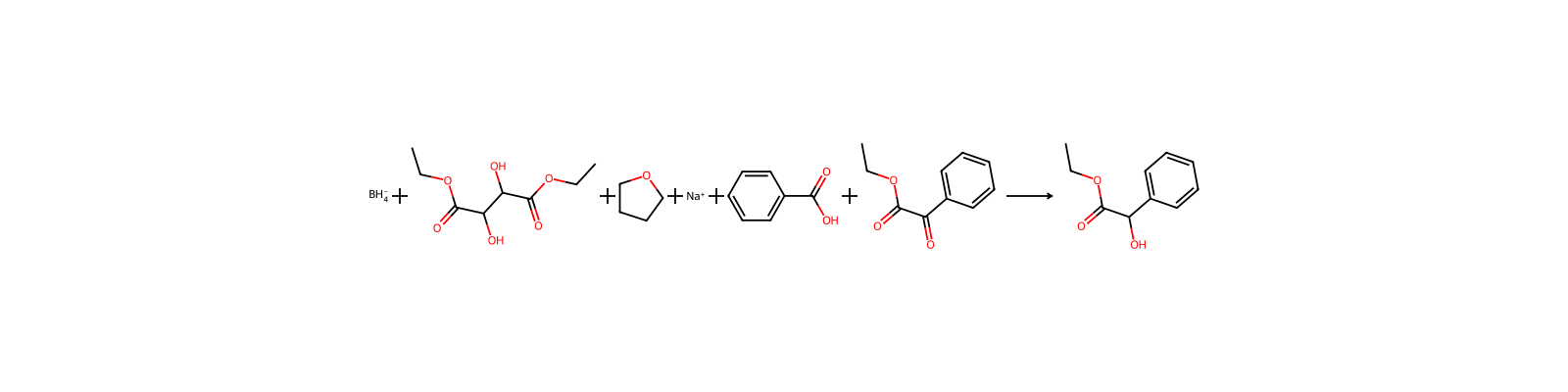
DefinitionChEBI: The ethyl ester of mandelic acid.
Related reactions
9 records




Linked notes
Loading…