
Triphenylphosphine Oxide
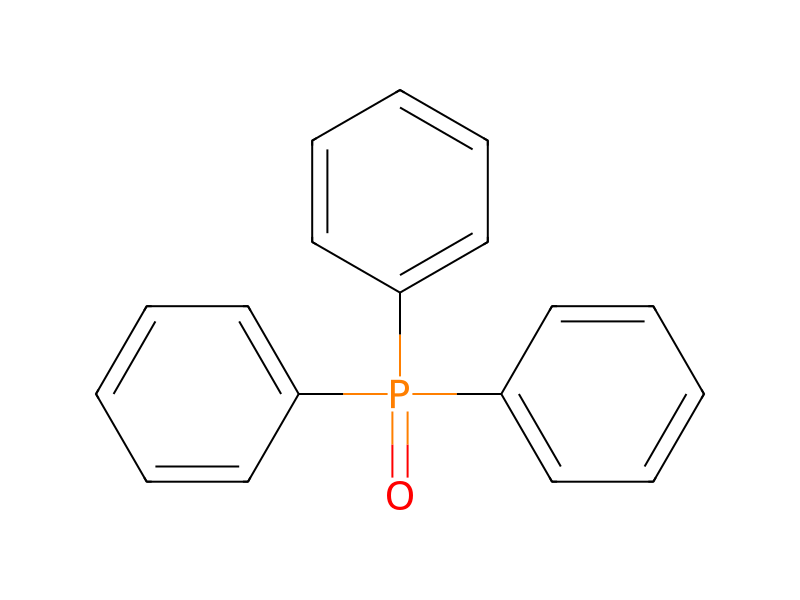
Basic information
- CAS
791-28-6- Standard SMILES
O=P(c1ccccc1)(c1ccccc1)c1ccccc1- InChIKey
FIQMHBFVRAXMOP-UHFFFAOYSA-N- Molecular formula
- C18H15OP
- Average molar mass
- 278.3 g/mol
- Monoisotopic mass
- 278.0860521
Overview
Triphenylphosphane oxide is a phosphine oxide in which the substituents on phosphorus are three phenyl groups.
Names & identifiers
- Preferred name
- Triphenylphosphine Oxide
- IUPAC
- diphenylphosphorylbenzene
- English name
- Triphenylphosphine oxide
- Molecular formula
- C18H15OP
- Molecular weight
- 278.28
Names & synonyms
TRIPHENYLPHOSPHINE OXIDE791-28-6Phosphine oxide, triphenyl-Triphenyl phosphorus oxideTriphenyl phosphine oxideDTXSID2022121TRIPHENYLPHOSPHINE MONOXIDEZ69161FKI3phosphorane, triphenyl-, oxideDTXCID402121NSC-398RefChem:191910
Show more names
TPOTTPO(C6H5)3P=OOrlistat Related CoMpound CTriphenylphosphinoxidTrisphenylphosphine oxide
212-338-8diphenylphosphorylbenzenetriphenylphosphane oxideTriphenylphosphineoxide(diphenylphosphoroso)benzeneTriphenylphosphanoxidTPPOPH3PO
Database identifiers
- CAS
791-28-6- PubChem CID
- 13097
- DTXSID
DTXSID2022121- ChEMBL
CHEMBL482091- ChEBI
CHEBI:36601- UNII
- Z69161FKI3
- EC Number
- 212-338-8
- Nikkaji
- J541J
Properties
Computed structural properties
- XLogP
- 2.8
- Topological polar surface area
- 17.1 Ų
- Hydrogen bond donors
- 0
- Hydrogen bond acceptors
- 1
- Rotatable bonds
- 3
- Heavy atoms
- 20
- Formal charge
- 0
- Complexity
- 281
Experimental & physicochemical properties
Chemical Classes
Other Classes -> Phosphorus Compounds
Industrial compound
SpringerMaterials Properties13C nuclear magnetic resonance spectrum
LogP2.85
Physical DescriptionSolid; [IUCLID] Beige crystalline solid; [Aldrich MSDS]
Collision Cross Section162.9 Ų [M+H]+ [CCS Type: DT; Buffer gas: N2; Ionization: ESI+; Dataset: TOXCAST; Source Identifier: DTXSID2022121]
Physicochemical properties
- Melting point
- 150 · 150-157 °C(lit.)
- Boiling point
- 360 °C · 360 °C
- Density
- 1 · 1,212 g/cm3
- bulk density
- 400 · 400-450kg/m3
- vapor pressure
- 1 hPa · <1 hPa (50 °C)
- Flash point
- 180 °C · 180 °C
Safety & regulation
Safety information is for reference only and does not replace the supplier’s Safety Data Sheet (SDS), applicable regulations, or professional assessment.
GHS classification
GHS Classification
This chemical does not meet GHS hazard criteria for 2% (5 of 245) of reports.
Warning
H302 (98%): Harmful if swallowed [Warning Acute toxicity, oral]
P261, P264, P264+P265, P270, P271, P273, P280, P301+P317, P302+P352, P304+P340, P305+P351+P338, P319, P321, P330, P332+P317, P337+P317, P362+P364, P403+P233, P405, and P501 (click each P-code to see the statement)
Aggregated GHS information provided per 245 reports by companies from 12 notifications to the ECHA C&L Inventory. Each notification may be associated with multiple companies.
Warning
Hazard information
Regulatory Information
Chemical: Phosphine oxide, triphenyl-
Regulation (EC) No 1831/2003 (amended)
REACH registered substance: Triphenylphosphine oxide (EC: 212-338-8)
Triphenylphosphine oxide: Does not have an individual approval but may be used under an appropriate group standard
Hazards Summary
Causes convulsions, aggression, and dyspnea in oral lethal-dose studies of dogs (LD50 = 500 mg/kg); [RTECS] Causes liver injury in 3-month feeding study of dogs at 2,000 ppm; [IUCLID] An irritant; Harmful by ingestion; Targets nerves; [Aldrich MSDS] See Triphenylphosphine.
Hazard Classes and Categories
Acute Tox. 4 (98%)
Acute toxicity (Oral) - Category 4
Toxicology
Adverse EffectsNeurotoxin - Other CNS neurotoxin
RAIS Toxicity Values
Chemistry & industry
Uses & manufacturing
UsesUsed for processing (extraction, separation, and spectrophotometric determination) environmental samples of cadmium and mercury; [ChemIDplus]
General Manufacturing InformationPhosphine oxide, triphenyl-: ACTIVE
Applications
DescriptionTriphenylphosphine oxide (TPPO) is a coordinating solvent used to activate crystallization of chemical compounds. It has been used in flame retardant applications, as an epoxy cure catalyst, and more recently, to produce nanostructures.
UsesTriphenylphosphine Oxide (Orlistat USP Related Compound C) is a catalyst in the conversion of aldehydes into 1,1-dichlorides. Triphenylphosphine Oxide is used as a catalyst for the synthesis of hightly functionalized α-CF3 γ-keto esters.
UsesTriphenylphosphine oxide can be used:As a catalyst in Appel-type chlorination reaction of acyclic primary and secondary alcohols.As a catalyst in stereoselective poly and dibromination of α,β-unsaturated esters and β,γ-unsaturated α-ketoester compounds.As a promotor in the diastereoselective synthesis of α-ribofuranosides through ribofuranosylation of alcohols with ribofuranosyl iodides.
UsesTriphenylphosphine oxide is a phosphine ligand used for coupling reactions, epoxidations, and Michael reactions
Preparation methods
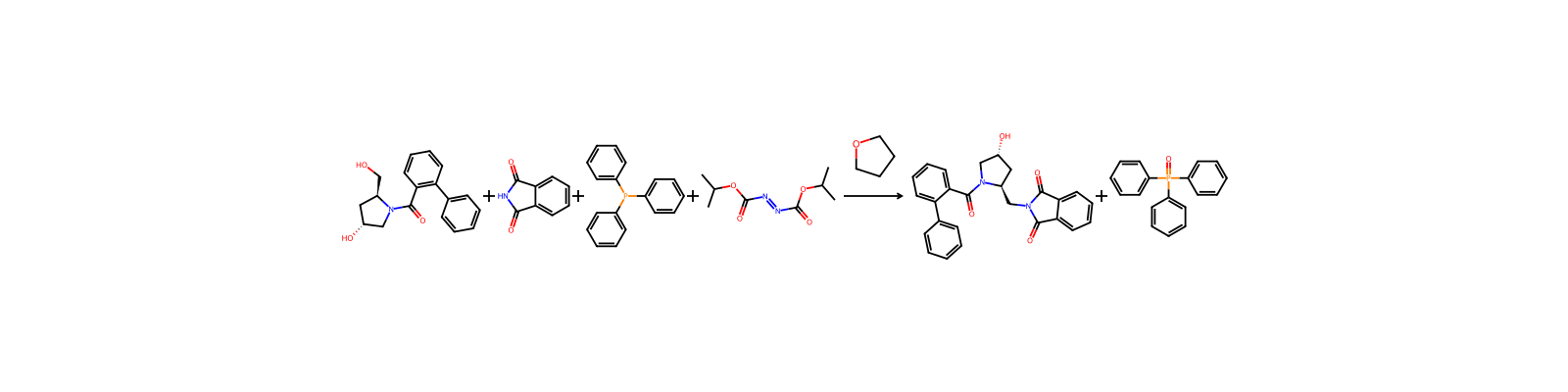
PreparationMany reactions in organic synthesis, such as the Wittig, Staudinger, and phototactic reactions, produce Ph3PO as a byproduct. Ph3PCl2 also produces triphenylphosphine oxide during the conversion of alcohols to chlorinated hydrocarbons: Ph3PCl2 + ROH → Ph3PO + HCl + RCl
Upstream & downstream products
Upstream raw materials
Related reactions
457 records




Compound notes
Loading…