

Basic information
- Standard SMILES
O=C([O-])CC(O)(CC(=O)[O-])C(=O)[O-].O=C([O-])CC(O)(CC(=O)[O-])C(=O)[O-].[Ca+2].[Ca+2].[Ca+2]- InChIKey
FNAQSUUGMSOBHW-UHFFFAOYSA-H- Molecular formula
- C12H10Ca3O14
- Average molar mass
- 498.4 g/mol
- Monoisotopic mass
- 497.89482794
Overview
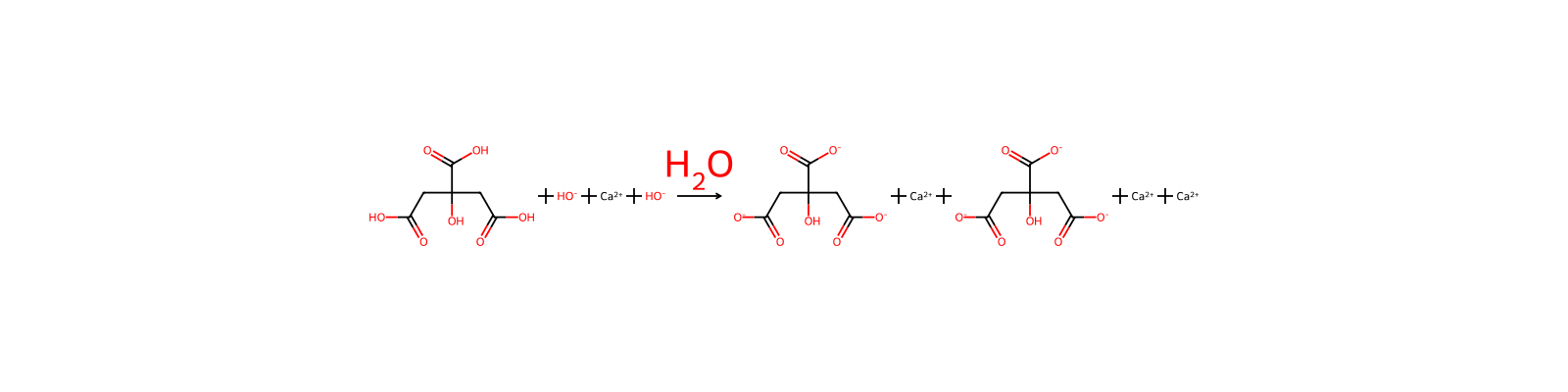
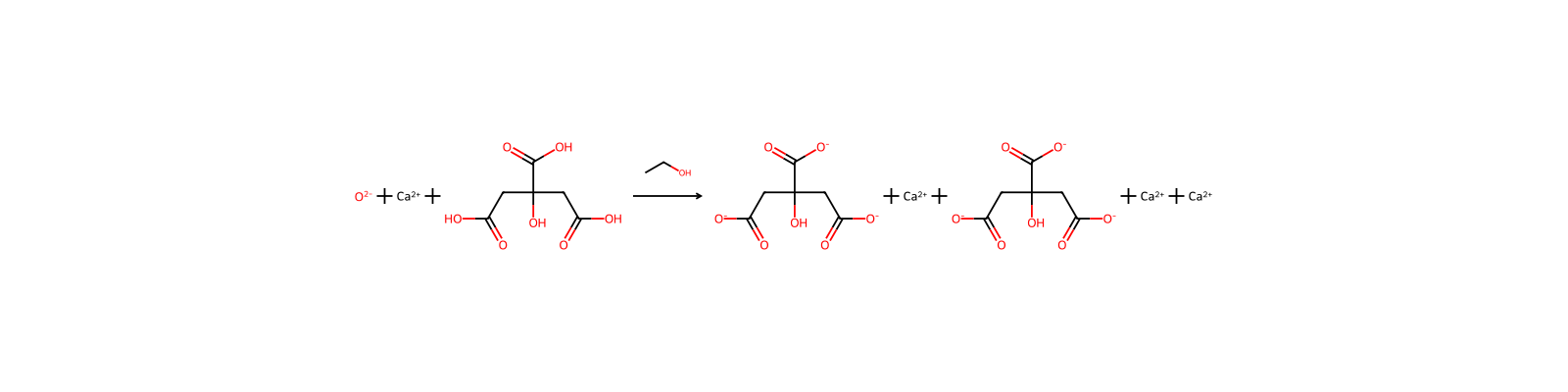
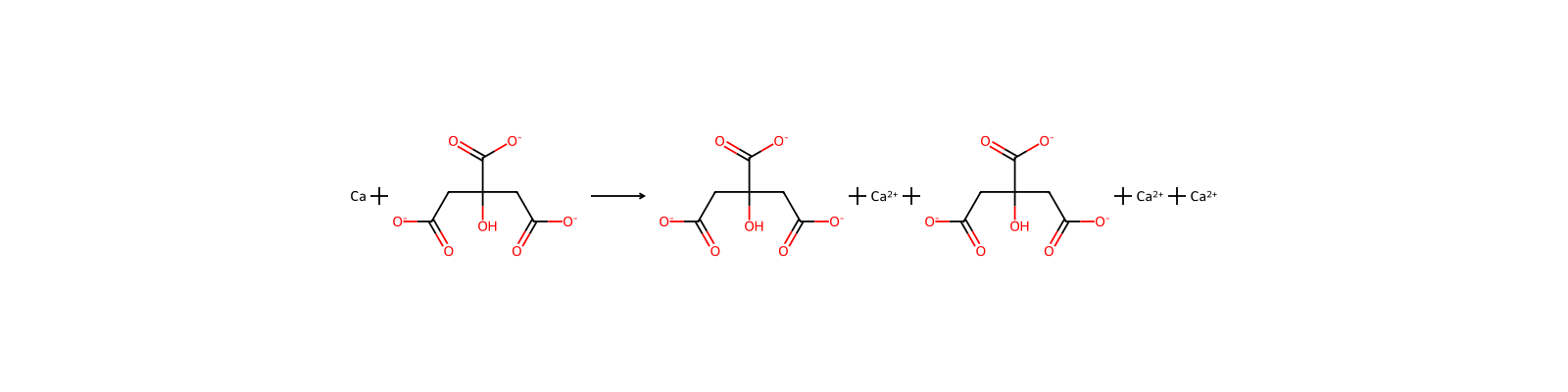
Calcium citrate is an organic calcium salt composed of calcium cations and citrate anions in a 3:2 ratio. It has a role as a flavouring agent, a nutraceutical, a food additive and a food preservative. It contains a citrate(3-).
Names & identifiers
- Preferred name
- Tricalcium Citrate
- IUPAC
- tricalcium bis(2-hydroxypropane-1,2,3-tricarboxylate)
- English name
- Calcium citrate tetrahydrate
- Molecular formula
- C12H18Ca3O18
- Molecular weight
- 570.49
Names & synonyms
Calcium citrate813-94-5Tricalcium dicitrateAcicontralTRICALCIUM CITRATECalcitrateCitricalCalcium citrate, tribasicCitracalTribasic calcium citrateCalcimaxCitric acid, calcium salt (2:3)
Show more names
MAGNESIA 87231MAGGRAN(R) CCICalcium CitratesTricalcium dicitCALCIUM(II) CITRATECALCIUM CITRIC ACIDCalcium Citrate 21 %E333 Calcium CitrateCitric acid calcium salt
INS NO.333(III)tricalcium citrate tetrahydrateINS-333(III)Calcium (as citrate)1,2,3-Propanetricarboxylic acid, 2-hydroxy-, calcium salt (2:3)Calcium 2-hydroxy-1,2,3-propanetricarboxylate (3:2)86117BWO7PE-333(III)
Database identifiers
- CAS
5785-44-4、7693-13-2、813-94-5- PubChem CID
- 13136
- DTXSID
DTXSID7061148- ChEMBL
CHEMBL2106123- ChEBI
CHEBI:190513- UNII
- 86117BWO7P
- EC Number
- 212-391-7
Properties
Computed structural properties
- Topological polar surface area
- 281 Ų
- Hydrogen bond donors
- 2
- Hydrogen bond acceptors
- 14
- Rotatable bonds
- 4
- Heavy atoms
- 29
- Formal charge
- 0
- Complexity
- 211
Experimental & physicochemical properties
Chemical Classes
Other Uses -> Food Additives
Other Uses -> Food Additives
Cosmetics
Cosmetic ingredients (Calcium Citrate) -> CIR (Cosmetic Ingredient Review)
Buffering
Food AdditivesFIRMING AGENT, NUTRIENT SUPPLEMENT, PH CONTROL AGENT, SEQUESTRANT -> FDA Substance added to food
Solubility
White powder, odorless. Insol in alcohol. Loses most of its water @ 100 °C and all @ 120 °C /Tetrahydrate/
Soluble in 1050 parts cold water; somewhat more sol in hot water; insoluble in alcohol. /Tetrahydate/
0.085 G & 0.096 G/100 CC WATER @ 18 °C & 23 °C
Odorless; loses most of its water @ 100 °C and all @ 120 °C; sol in 1050 parts cold water; somewhat more in hot water; insol in alc /Tetrahydrate/
Physical Description
Fine white powder
Tetrahydrate: White odorless solid; [HSDB]
Tetrahydrate: White odorless solid; [HSDB] White odorless crystalline powder; [MSDSonline]
Other Experimental Properties
WHITE NEEDLES /TETRAHYDRATE/
White powder /Tetrahydrate/
Physicochemical properties
- Melting point
- 300 °C · >300°C
- storage temp.
- -20 °C · -20°C Freezer
- solubility
- 0.1 M · 0.1 M HCl: 0.01 M at 20 °C, clear, colorless
- form
- Liquid
- color
- Clear
- Odor
- Odorless
- PH
- 5 · 5-6 (20°C, 25g/L in H2O, slurry)
- Water Solubility
- Soluble in water and hydrochloric acid.
- λmax
- 260 nm · λ: 260 nm Amax: 0.04λ: 280 nm Amax: 0.03
- Merck
- 13 · 13,1662
- BRN
- 3924520 · 3924520
- InChI
- 1S/2C6H8O7.3Ca.4H2O/c2*7-3(8)1-6(13,5(11)12)2-4(9)10;;;;;;;/h2*13H,1-2H2,(H,7,8)(H,9,10)(H,11,12);;;;4*1H2/q;;3*+2;;;;/p-6
- InChIKey
- LNIZKKFWMDARJV-UHFFFAOYSA-H
- SMILES
- O.O.O.O.OC1(CC(=O)O[Ca]OC(=O)C1)C(=O)O[Ca]OC(=O)C2(O)CC(=O)O[Ca]OC(=O)C2
- LogP
- -1.721 · -1.721 (est)
- CAS DataBase Reference
- 5785 · 5785-44-4(CAS DataBase Reference)
- FDA UNII
- 29 U2X85 · MLM29U2X85
- EPA Substance Registry System
- Calcium citrate tetrahydrate (5785-44-4)
- UNSPSC Code
- 12352107 · 12352107
- NACRES
- 25 · NA.25
- Symbol(GHS)
- 7 · GHS07
- Signal word
- Warning
- Hazard statements
- 319 · H319
- Precautionary statements
- 264 · P264-P280-P305+P351+P338-P337+P313P
- PPE
- 95 · Eyeshields, Gloves, type N95 (US)
- Safety Statements
- 22 · 22-24/25
- WGK Germany
- 1 · 1
- TSCA
- Yes
- HS Code
- 29181500 · 29181500
- Storage Class
- 11 · 11 - Combustible Solids
Safety & regulation
GHS classification
GHS Classification
This chemical does not meet GHS hazard criteria for 99% (97 of 98) of all reports.
Not Classified
Aggregated GHS information provided per 98 reports by companies from 2 notifications to the ECHA C&L Inventory.
Hazard information
Regulatory Information
Chemical: 1,2,3-Propanetricarboxylic acid, 2-hydroxy-, calcium salt (2:3)
Chemical: 1,2,3-Propanetricarboxylic acid, 2-hydroxy-, calcium salt
Status: Active Update: 25-10-2022 https://echa.europa.eu/registration-dossier/-/registered-dossier/11241
Calcium citrate: Does not have an individual approval but may be used under an appropriate group standard
Other Safety Information
IMAP assessments - 1,2,3-Propanetricarboxylic acid, 2-hydroxy-, calcium salt (2:3): Human health tier I assessment
IMAP assessments - 1,2,3-Propanetricarboxylic acid, 2-hydroxy-, calcium salt: Human health tier I assessment
Hazards Summary
Generally regarded as safe (GRAS) for use in foods; [HSDB] See Tricalcium citrate. See Calcium.
Used in food and generally recognized as safe (GRAS); [HSDB] May cause irritation; Poses little or no danger to human health; [MSDSonline] See Calcium citrate. See Calcium.
FDA Requirements
Substance added directly to human food affirmed as generally recognized as safe (GRAS).
Calcium citrate used as a general purpose food additive is generally recognized as safe when used in accordance with good manufacturing or feeding practice.
Calcium citrate used as a nutrient and/or dietary supplement is generally recognized as safe when used in accordance with good manufacturing or feeding practice.
Calcium citrate used as a sequestrant is generally recognized as safe when used in accordance with good manufacturing or feeding practice.
Special ReportsOptimal Calcium Uptake. Current Bibliographies in Medicine 94-4. Public Services Division/National Library of Medicine. 775 citations from January, 1990-April, 1994. Available from: http://www.nlm.nih.gov/pubs/cbm/calcium.html
EPA Safer ChemicalChemical: Calcium citrate
FIFRA Requirements
Residues of calcium citrate are exempted from the requirement of a tolerance when used as a solid diluent, carrier in accordance with good agricultural practices as inert (or occasionally active) ingredients in pesticide formulations applied to growing crops or to raw agricultural commodities after harvest.
Hazard Classes and CategoriesNot Classified
Safety & protection
Disposal Methods
SRP: At the time of review, criteria for land treatment or burial (sanitary landfill) disposal practices are subject to significant revision. Prior to implementing land disposal of waste residue (including waste sludge), consult with environmental regulatory agencies for guidance on acceptable disposal practices.
SRP: At the time of review, criteria for land treatment or burial (sanitary landfill) disposal practices are subject to significant revision. Prior to implementing land disposal of waste residue (including waste sludge), consult with environmental regulatory agencies for guidance on acceptable disposal practices.
Allowable Tolerances
Residues of calcium citrate are exempted from the requirement of a tolerance when used as a solid diluent, carrier in accordance with good agricultural practices as inert (or occasionally active) ingredients in pesticide formulations applied to growing crops or to raw agricultural commodities after harvest.
Toxicology
Toxicity SummarySafe in the present practices of use and concentration. Ingredient, concentration, and use information are available in documents discoverable at https://cir-reports.cir-safety.org
Regulatory information
FDA Requirements
Substance added directly to human food affirmed as generally recognized as safe (GRAS).
Calcium citrate used as a general purpose food additive is generally recognized as safe when used in accordance with good manufacturing or feeding practice.
Calcium citrate used as a nutrient and/or dietary supplement is generally recognized as safe when used in accordance with good manufacturing or feeding practice.
Calcium citrate used as a sequestrant is generally recognized as safe when used in accordance with good manufacturing or feeding practice.
FIFRA Requirements
Residues of calcium citrate are exempted from the requirement of a tolerance when used as a solid diluent, carrier in accordance with good agricultural practices as inert (or occasionally active) ingredients in pesticide formulations applied to growing crops or to raw agricultural commodities after harvest.
Safety data
- PPE
- Eyeshields, Gloves, type N95 (US)
- wgk
- 1
- tsca
- Yes
- hs_code
- 29181500
- Signal word
- Warning
- Symbol(GHS)
- GHS07
- safety_code
- 22-24/25
- Storage Class
- 11 - Combustible Solids
- Hazard statements
- H319
- Precautionary statements
- P264-P280-P305+P351+P338-P337+P313P
Chemistry & industry
Pharmacology
ATC Code
A - Alimentary tract and metabolism
QA - Alimentary tract and metabolism
Protein BindingAbout 46.4% of calcium is bound to plasma proteins.
PharmacodynamicsIncreases plasma calcium levels leading to a decrease in calcium flux and increase in calcium deposition into bone
Mechanism of Action
Calcium citrate increases plasma calcium levels. This reduces calcium flux from osteocyte activity by reducing the secretion of parathyroid hormone (PTH). Calcium does this by stimulating a G-protein coupled calcium receptor on the surface of parathyroid cells. The reduction in calcium flux increases the amount of calcium deposited in bone resulting in an increase in bone mineral density. The reduction in PTH secretion also reduces the amount of vitamin D metabolized to its active form, calcidiol. Since calcidiol increases the expression of calcium dependent ATPases and transient receptor potential cation channel subfamily V member 6 (TRPV6) both of which are involved in calcium uptake from the gut, a reduction in calcidiol results in less calcium absorption. Additionally, TRPV5, the channel responsible for calcium reabsorption in the kidney, is downregulated when PTH secretion is reduced thus increasing calcium excretion via the kidneys. Another hormone, calitonin, is likely involved in the reduction of bone resorption during periods of high plasma calcium.
MeSH Pharmacological Classification
Substances used in the processing or storage of foods or animal feed including ANTIOXIDANTS; FOOD PRESERVATIVES; FOOD COLORING AGENTS; FLAVORING AGENTS; ANTI-INFECTIVE AGENTS; EXCIPIENTS and other similarly used substances. Many of the same substances are used as PHARMACEUTIC AIDS.
Absorption, Distribution and Excretion
The percentage of calcium absorbed varies inversely with intake. Tmax of about 3.5-5h varying with formulation.
Cleared via the kidneys but largely reabsorbed (98-99%) under normal conditions.
Uses & manufacturing
Uses
CIR ingredient: Calcium Citrate
Used as emulsifier, sequestering agent, and acidity regulator in foods; Also used to make citric acid, remove sulfur compounds from waste gases, and to treat scours in mammals; [HSDB]
Used to make citric acid and other citrates and to improve the baking properties of flour; Also used as dietary supplement, food additive (sequestrant, buffer, and firming agent), and medication; [HSDB]
DIETARY SUPPLEMENT FOOD ADDITIVE /TETRAHYDRATE/
Buffer and firming agent in foods /Tetrahydrate/
CHEM INT (CAPTIVELY) FOR CITRIC ACID; EMULSIFIER & SEQUESTERING AGENT IN FOODS
U.S. Imports(1972) 1.82X10+5 GRAMS
U.S. Production
(1972) PROBABLY GREATER THAN 4.54X10+5 GRAMS
(1976) PROBABLY GREATER THAN 2.27X10+6 GRAMS
Consumption PatternsEXCLUDING CAPTIVE USE AS A CHEM INT FOR CITRIC ACID, APPROX 100% AS A FOOD ADDITIVE (1977)
Methods of Manufacturing
MOLD FERMENTATION OF SUGAR SOLUTIONS (OR CANDIDA YEAST FERMENTATION OF NORMAL PARAFFINS) FOLLOWED BY REACTION OF THE RESULTING CITRIC ACID WITH HIGH PURITY CALCIUM HYDROXIDE IN WATER
BY-PRODUCT IN MFR OF CITRIC ACID. /TETRAHYDRATE/
... from citrus fruit: Cole, US patent 2,389,766 (1945 to California Fruit Growers Exchange). Review: Rudy, Pharmazie 4: 393 (1949).
A BY-PRODUCT IN THE MFR OF CITRIC ACID. /TETRAHYDRATE/
Formulations/Preparations
Grades: Reagent, technical, FCC
Grades: reagent; technical; FCC. /Tetrahydrate/
Use Classification
EPA Safer Chemical Functional Use Classes -> Processing Aids and Additives
Safer Chemical Classes -> Green circle - The chemical has been verified to be of low concern
Food additives
Food Additives -> ACIDITY_REGULATOR; FIRMING_AGENT; SEQUESTRANT -> JECFA Functional Classes
Cosmetics -> Buffering
General Manufacturing Information
1,2,3-Propanetricarboxylic acid, 2-hydroxy-, calcium salt (2:3): ACTIVE
REPORTED USES: ARTIFICIALLY SWEETENED JELLIES, PRESERVES & JAMS CAN...CONTAIN CALCIUM CITRATE .../IT/ IS PERMITTED FOR FIRMING PEPPERS, POTATOES, TOMATOES & LIMA BEANS DURING PROCESSING.
Available commercially as the tetrahydrate.
Applications
UsesCalcium citrate tetrahydrate is mainly used for Calcium supplements.
UsesIn foods as calcium fortifier; as anticaking agent in dry mixes.
UsesCalcium citrate tetrahydrate may be used as raw material in the preparation of nanoparticle with the nominal composition Ca0.8 Ba0.2 Ti03 :Pr3+, via sol-gel process. It may be employed as carbon source in a simple and effective carbonization method to prepare porous carbon without any activation process. It is suitable for use in the preparation of bovine serum albumin (BSA) nanoparticles.
General DescriptionThermal decomposition of calcium citrate tetrahydrate in dynamic air or dry nitrogen has been investigated by by TG, DTA and DSC.
Suppliers50 total
国药集团化学试剂有限公司86-21-63210123 · [email protected]
上海阿拉丁生化科技股份有限公司400-6206333 13167063860 · [email protected]
Shandong chuangyingchemical Co., Ltd.18853181302 · [email protected]
上海康朗生物科技有限公司021-61998208 18217752821 · [email protected]
天津市光复科技发展有限公司022-85689490 13132141716 · [email protected]
武汉欣扬瑞和化学科技有限公司153-07155313 15307155313 · [email protected]
Baoji Guokang Healthchem co.,ltd+8615604608665 15604608665 · [email protected]
上海如吉生物科技发展有限公司+86-21-65211385-8001 36031160 · [email protected]
Dayang Chem (Hangzhou) Co.,Ltd.+86-0571-88938639 17705817739 · [email protected]
Jai Radhe Sales+(91)-(79)-26431096/65255722 · [email protected]
科瑞迪化学400-821-5857 021-64326257 · [email protected]
上海迈瑞尔生化科技有限公司4006356688 18621169109 · [email protected]
北京华威锐科化工有限公司0757-86329057 18934348241 · [email protected]
上海晶抗生物工程有限公司021-54721350 13524668266 · [email protected]
大连美仑生物技术有限公司0411-62910999 13889544652 · [email protected]
阿法埃莎(中国)化学有限公司400-6106006 · [email protected]
安耐吉化学&3A(安徽泽升科技股份有限公司)400-0056266 · [email protected]
上海瀚鸿科技股份有限公司021-54306202 13764082696 · [email protected]
天津万象恒远科技有限公司15722085254 · [email protected]
上海泰坦科技股份有限公司400-6009262 15618770481 · [email protected]
张家港市思普生化有限公司512-0512-58992291,58992287 18606280718 · [email protected]
苏州启航生物科技有限公司18662190603;18151111370 · [email protected]
山东西亚化学有限公司13355009207 13355009207 · [email protected]
四川库利南科技有限公司400-1166-196 18981987031 · [email protected]
天津希恩思生化科技有限公司400 638 7771 · [email protected]
Xiamen AmoyChem Co., Ltd+86-86-5926051114 · [email protected]
斯洋(辽宁)生化制品有限公司+86-15221114306; +86-15221114306 · [email protected]
湖南汇百侍生物科技有限公司0731-85526065 13308475853 · [email protected]
南京化学试剂股份有限公司025-58369808 17895012682 · [email protected]
斯百全化学(上海)有限公司021-021-021-67601398-809-809-809 15221380277 · [email protected]
赛默飞世尔科技(中国)有限公司800-810-5118 · [email protected]
苏州亚科科技股份有限公司0512-87182055 13451648594 · [email protected]
湖北威德利化学试剂有限公司186-02735115 18602735115 · [email protected]
上海将来实业股份有限公司400-0066400 13621662912 · [email protected]
上海将来实业股份有限公司021-61552785 · [email protected]
安徽科迪达化工有限公司0554-2106669 · [email protected]
HBCChem, Inc.+1-510-219-6317 · [email protected]
大连瑞闻科技有限公司86-0411-62789512 · [email protected]
上海爱蝶实业有限公司021-58957966 18930537195 · [email protected]
成都零六生物科技有限公司400-1166-196 13458535857 · [email protected]
成都润泽本土化工有限公司13096311329 028-88469284 616445927 · [email protected]
Sigma-Aldrich西格玛奥德里奇(上海)贸易有限公司021-61415566 800-8193336 · [email protected]
Alfa Chemistry1-516-6625404 · [email protected]
北京诺其雅盛生物科技有限公司4000-819-385 010-62329685 13718666987
九鼎化学(上海)科技有限公司4009209199 · [email protected]
上海珈得尔化学技术有限公司021-4007787-550 400-7787-550 · [email protected]
浙江珲达生物科技有限公司0571-89903022 18679456698 · [email protected]
湖北源梦生物科技有限公司027-68897569 18120462897 · [email protected]
成都润泽本土化工有限公司028-88469284 18000562381 · [email protected]
上海岚克医药科技发展有限公司0086-21-58956006
Related reactions
29 records




Linked notes
Loading…