

Basic information
- CAS
816-40-0- Standard SMILES
CCC(=O)CBr- InChIKey
CCXQVBSQUQCEEO-UHFFFAOYSA-N- Molecular formula
- C4H7BrO
- Average molar mass
- 151 g/mol
- Monoisotopic mass
- 149.96802694
Overview
1-bromo-2-butanone appears as a colorless to straw-colored liquid. Toxic by inhalation, skin contact or ingestion.
Names & identifiers
- Preferred name
- 1-Bromo-2-butanone
- IUPAC
- 1-bromobutan-2-one
- English name
- 1-BROMO-2-BUTANONE
- Molecular formula
- C4H7BrO
- Molecular weight
- 151
Names & synonyms
1-BROMO-2-BUTANONE816-40-01-bromobutan-2-one2-Butanone, 1-bromo-Bromomethyl ethyl ketoneEINECS 212-431-3BRN 0741894DTXSID002312164-01-00-03258 (Beilstein Handbook Reference)RefChem:75057DTXCID00153707CCXQVBSQUQCEEO-UHFFFAOYSA-N
Show more names
1-Brombutanon-(2)tl8191-bromo-2-butanonBrommethylethylketon
1-BromobutanoneTL 8191-bromo-butan-2-oneMFCD000002074UPM4J7CVAbromobutanonebromobutan-2-one2-Oxobutyl bromide
Database identifiers
- CAS
816-40-0- PubChem CID
- 13156
- DTXSID
DTXSID00231216- UNII
- 4UPM4J7CVA
- EC Number
- 212-431-3
- Nikkaji
- J42.075A
Properties
Computed structural properties
- XLogP
- 1.2
- Topological polar surface area
- 17.1 Ų
- Hydrogen bond donors
- 0
- Hydrogen bond acceptors
- 1
- Rotatable bonds
- 2
- Heavy atoms
- 6
- Formal charge
- 0
- Complexity
- 51.5
Experimental & physicochemical properties
SpringerMaterials PropertiesBoiling point
Physical Description1-bromo-2-butanone appears as a colorless to straw-colored liquid. Toxic by inhalation, skin contact or ingestion.
Physicochemical properties
- Boiling point
- 105 °C150 · 105 °C150 mm Hg(lit.)
- Density
- 1.479 g/mL · 1.479 g/mL at 25 °C(lit.)
- refractive index
- 20 · n20/D 1.465(lit.)
- Flash point
- 155 °F · 155 °F
- storage temp.
- Keep Cold
- form
- Liquid
- Specific Gravity
- 1.479 · 1.479
- color
- Colorless to light yellow
- Sensitive
- Lachrymatory
- BRN
- 741894 · 741894
- InChI
- InChI=1S/C4H7BrO/c1-2-4(6)3-5/h2-3H2,1H3
- InChIKey
- CCXQVBSQUQCEEO-UHFFFAOYSA-N
- SMILES
- C(Br)C(=O)CC
- CAS DataBase Reference
- 816 · 816-40-0(CAS DataBase Reference)
- EWG's Food Scores
- 1 · 1
- FDA UNII
- 4 UPM4J7CVA · 4UPM4J7CVA
- UNSPSC Code
- 12352100 · 12352100
- Symbol(GHS)
- 7 · GHS07
- Signal word
- Warning
- Hazard statements
- 302 · H302+H312+H332-H315-H319-H335
- Precautionary statements
- 261 · P261-P280-P301+P312-P302+P352+P312-P304+P340+P312-P305+P351+P338
- target organs
- Respiratory system
- PPE
- Eyeshields, Faceshields, Gloves, type ABEK (EN14387) respirator filter
- Hazard Codes
- Xn,Xi,F
- Risk Statements
- 20 · 20/21/22-36/37/38
- Safety Statements
- 26 · 26-27-36/37/39
- RIDADR
- 1693 · 1693
- WGK Germany
- 3 · 3
- RTECS
- 7000000 · EL7000000
- Hazard Note
- Harmful/Irritant/Lachrymatory
- HazardClass
- 6.1 · 6.1
- PackingGroup
- III
- HS Code
- 29147000 · 29147000
- Storage Class
- 10 · 10 - Combustible liquids
- Hazard Classifications
- 4 DermalAcute · Acute Tox. 4 DermalAcute Tox. 4 InhalationAcute Tox. 4 OralEye Irrit. 2Skin Irrit. 2STOT SE 3
- Limited Quantities
- 5 L · 5.0 L (1.3 gallons) (liquid) or 5.0 kg (11 lbs) (solid)
- Excepted Quantities
- Max Inner Pack (30g or 30ml) and Max Outer Pack (1Kg or 1L)
Safety & regulation
GHS classification
GHS Classification
Warning
H302 (91.3%): Harmful if swallowed [Warning Acute toxicity, oral]
P261, P264, P264+P265, P270, P271, P280, P301+P317, P302+P352, P304+P340, P305+P351+P338, P317, P319, P321, P330, P332+P317, P337+P317, P362+P364, P403+P233, P405, and P501 (click each P-code to see the statement)
Aggregated GHS information provided per 46 reports by companies from 6 notifications to the ECHA C&L Inventory. Each notification may be associated with multiple companies.
Hazard information
DOT LabelPoison
Fire HazardsExcerpt from ERG Guide 159 [Substances (Irritating)]:
Health HazardsExcerpt from ERG Guide 159 [Substances (Irritating)]:
Reactive GroupHalogenated Organic Compounds
Reactivity ProfileSome of these materials may burn, but none ignite readily. Containers may explode when heated.
Air and Water ReactionsWater soluble.
Hazard Classes and CategoriesAcute Tox. 4 (91.3%)
Safety & protection
Fire FightingExcerpt from ERG Guide 159 [Substances (Irritating)]:
First AidExcerpt from ERG Guide 159 [Substances (Irritating)]:
Nonfire Spill ResponseExcerpt from ERG Guide 159 [Substances (Irritating)]:
Isolation and EvacuationExcerpt from ERG Guide 159 [Substances (Irritating)]:
Personal Protective Equipment (PPE)Excerpt from ERG Guide 159 [Substances (Irritating)]:
Toxicology
Carcinogen ClassificationNo indication of carcinogenicity to humans (not listed by IARC).
Safety data
- PPE
- Eyeshields, Faceshields, Gloves, type ABEK (EN14387) respirator filter
- wgk
- 3
- rtecs
- EL7000000
- ridadr
- 1693
- hs_code
- 29147000
- risk_code
- 20/21/22-36/37/38
- Signal word
- Warning
- Symbol(GHS)
- GHS07
- hazard_code
- Xn,Xi,F
- hazard_note
- Harmful/Irritant/Lachrymatory
- safety_code
- 26-27-36/37/39
- hazard_class
- 6.1
- Storage Class
- 10 - Combustible liquids
- packing_group
- III
- target organs
- Respiratory system
- Hazard statements
- H302+H312+H332-H315-H319-H335
- Limited Quantities
- 5.0 L (1.3 gallons) (liquid) or 5.0 kg (11 lbs) (solid)
- Excepted Quantities
- Max Inner Pack (30g or 30ml) and Max Outer Pack (1Kg or 1L)
- Hazard Classifications
- Acute Tox. 4 DermalAcute Tox. 4 InhalationAcute Tox. 4 OralEye Irrit. 2Skin Irrit. 2STOT SE 3
- Precautionary statements
- P261-P280-P301+P312-P302+P352+P312-P304+P340+P312-P305+P351+P338
Chemistry & industry
Applications
Uses1-Bromo-2-butanone (bromomethyl ethyl ketone) was used as a potential regulatory site-directed reagent for the residue C221 on pyruvate decarboxylase. It was also used as a reagent for aromatic bromination with sodium hydride in DMSO and in a microwave-assisted preparation of fused heterocycles.
Upstream & downstream products
Downstream products
Suppliers74 total
湖北永阔科技有限公司027-59223108 15972152991 · [email protected]
Career Henan Chemica Co+86-0371-86658258 +86-13203830695 · [email protected]
武汉英诺医药科技有限公司+86-027-59232304 15387063101 · [email protected]
上海炎泽化工有限公司15345144255 19975051755 · [email protected]
咸宁深蓝生物医药研发有限公司18171815831 · [email protected]
杭州品高化工有限公司0571-87658025 · [email protected]
上海毕得医药科技股份有限公司400-1647117 13681763483 · [email protected]
T&W GROUP021-61551611 13296011611 · [email protected]
Dayang Chem (Hangzhou) Co.,Ltd.+86-0571-88938639 17705817739 · [email protected]
郑州鸿晟医药科技有限公司0371-55695890 15637198702 · [email protected]
上海迈瑞尔生化科技有限公司4006356688 18621169109 · [email protected]
北京索莱宝科技有限公司010-50973130 17801761073 · [email protected]
Hangzhou Sage Chemical Co., Ltd.+86057186818502 13588463833 · [email protected]
阿法埃莎(中国)化学有限公司400-6106006 · [email protected]
安耐吉化学&3A(安徽泽升科技股份有限公司)400-0056266 · [email protected]
武汉凯威斯科技有限公司86-027-67849912 · [email protected]
欧利希(湖北)医药科技有限公司17316404525 17316404525 · [email protected]
上海瀚鸿科技股份有限公司021-54306202 13764082696 · [email protected]
韶远科技(上海)有限公司021-50795510 4000665055 · [email protected]
重庆科脉材料科技有限公司17830741407 · [email protected]
湖北广奥生物科技有限公司027-02702759223056 18162699093 · [email protected]
上海攀鸿化工科技有限公司021-56491756 13512199871 · [email protected]
苏州启航生物科技有限公司18662190603;18151111370 · [email protected]
南京维奥化工有限公司Please Send Email 18652950785 · [email protected]
赛默飞世尔科技(中国)有限公司800-810-5118 · [email protected]
北京伊诺凯科技有限公司400-810-7969 010-59572699 · [email protected]
Clearsynth Labs Limited+91-22-26355700 · [email protected]
郑州安步防护用具有限公司+86-0371-88006763; +86-15988602810 · [email protected]
PT CHEM GROUP LIMITED+86-85511178; +86-85511178 · [email protected]
成都零六生物科技有限公司400-1166-196 13458535857 · [email protected]
雷丁试剂0510-85629785 18013409632 · [email protected]
上海御略医药科技有限公司021-60345187 13671753212 · [email protected]
Sigma-Aldrich西格玛奥德里奇(上海)贸易有限公司021-61415566 800-8193336 · [email protected]
上海皓之翔生物科技有限公司(原上海拓青化工有限公司)526763801 13301653310 · [email protected]
诺尔凯立科技有限公司86-(0)21-31261262 373522135 · [email protected]
九鼎化学(上海)科技有限公司4009209199 · [email protected]
赛诺威(厦门)科技有限公司请加微信(同手机号)或QQ询价 13876246362 · [email protected]
上海阿拉丁生化科技股份有限公司6206333 13167063860 · [email protected]
武汉多普乐生物医药有限公司+86-02787215551 19945035818 · [email protected]
陕西缔都医药化工有限公司+86-29-81139210 +86-17392587031 · [email protected]
南京艾比克斯生化科技有限公司025-87193546 18652950785 · [email protected]
上海源叶生物科技有限公司13636370518 · [email protected]
上海颖心实验室设备有限公司021-021-59178156 15300768757 · [email protected]
南京博米尔生物科技有限公司025-83453382-8005 · [email protected]
上海相辉医药科技有限公司[email protected]
Shanghai Acmec Biochemical Technology Co., Ltd.+86-18621343501 · [email protected]
嘉兴市德亿化工有限公司86-0573-85866609 18367600069 · [email protected]
深圳市丽晶生化科技有限公司0755-85201366 18938635012 · [email protected]
江苏艾康生物医药研发有限公司025-58859352 13913916777 · [email protected]
上海皓鸿生物医药科技有限公司400-8210725 400821072 · [email protected]
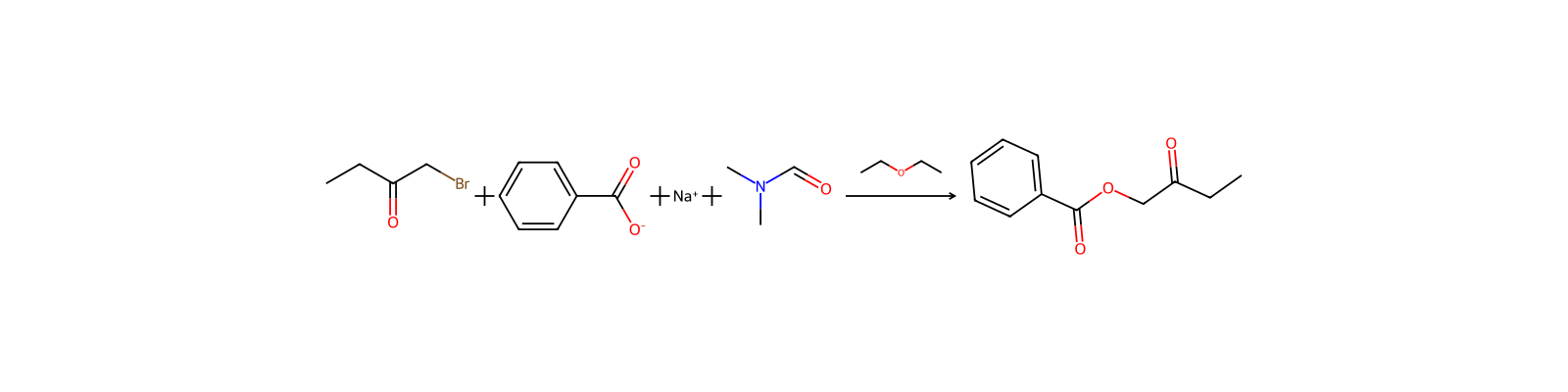
Related reactions
190 records


Compound notes
Loading…