

Basic information
- Standard SMILES
O=C(O)C12CC3CC(CC(C3)C1)C2- InChIKey
JIMXXGFJRDUSRO-UHFFFAOYSA-N- Molecular formula
- C11H16O2
- Average molar mass
- 180.24 g/mol
- Monoisotopic mass
- 180.11502975
Names & identifiers
- Preferred name
- 1-Adamantanecarboxylic acid
- IUPAC
- adamantane-1-carboxylic acid
- English name
- 1-Adamantanecarboxylic acid
- Molecular formula
- C11H16O2
- Molecular weight
- 180.24
Names & synonyms
1-Adamantanecarboxylic acid828-51-3Adamantoic acidAdamantanecarboxylic acidRefChem:552944DTXCID101505931DTXSID901020894212-584-6Adamantane-1-carboxylic acid1-Carboxyadamantane1-adamantane carboxylic acidMFCD00074720
Show more names
1-Adamantyl Carboxylic Acid1-AdamantanecarboxyL1-AdamantanecarboxylicAdamantane-1-carboxylic acid 99%Saxaint-KAKOS BC-06551-ADAMANTOIC ACID
3-ADAMANTANECARBOXYLIC ACIDadamantane carboxylic acidCHEMBL1705681-Adamantane-1-carboxylic acidtricyclo[3.3.1.1~3,7~]decane-1-carboxylic acid(3r,5r,7r)-adamantane-1-carboxylic acidTricyclo[3.3.1.13,7]decane-1-carboxylic acidadamantane-carboxylic acid
Database identifiers
- CAS
15897-81-1、828-51-3- PubChem CID
- 13235
- DTXSID
DTXSID40870784- ChEMBL
CHEMBL170568、CHEMBL5186120- EC Number
- 212-584-6
- Nikkaji
- J108B
Properties
Computed structural properties
- XLogP
- 2.6
- Topological polar surface area
- 37.3 Ų
- Hydrogen bond donors
- 1
- Hydrogen bond acceptors
- 2
- Rotatable bonds
- 1
- Heavy atoms
- 13
- Formal charge
- 0
- Complexity
- 216
Experimental & physicochemical properties
Chemical ClassesOther Classes -> Organic Acids
Physical DescriptionWhite powder; [Alfa Aesar MSDS]
Physicochemical properties
- Melting point
- 172 · 172-174 °C (lit.)
- Boiling point
- 253.08 °C · 253.08°C (rough estimate)
- Density
- 0.9976 · 0.9976 (rough estimate)
- refractive index
- 1.491 · 1.4910 (estimate)
- storage temp.
- Sealed in dry,Room Temperature
- solubility
- Chloroform, Methanol (Slightly)
- pka
- 4.86 · 4.86±0.20(Predicted)
- form
- Crystalline Powder
- color
- White to off-white
- Water Solubility
- Insoluble in water. Solubility in methanol gives very faint turbidity. Soluble in ethanol, chloroform, and dichloromethane.
- BRN
- 1910637 · 1910637
- InChI
- InChI=1S/C11H16O2/c12-10(13)11-4-7-1-8(5-11)3-9(2-7)6-11/h7-9H,1-6H2,(H,12,13)
- InChIKey
- JIMXXGFJRDUSRO-UHFFFAOYSA-N
- SMILES
- C12(C(O)=O)CC3CC(CC(C3)C1)C2
- CAS DataBase Reference
- 828 · 828-51-3(CAS DataBase Reference)
- EWG's Food Scores
- 1 · 1
- NIST Chemistry Reference
- -1 · Adamantane-1-carboxylic acid(828-51-3)
- UNSPSC Code
- 12352100 · 12352100
- NACRES
- 22 · NA.22
- Symbol(GHS)
- 7 · GHS07
- Signal word
- Warning
- Hazard statements
- 335 · H335-H315-H319
- Precautionary statements
- 261 · P261-P280a-P304+P340-P305+P351+P338-P405-P501a-P264-P280-P302+P352+P332+P313+P362+P364-P305+P351+P338+P337+P313
- PPE
- 95 · Eyeshields, Gloves, type N95 (US)
- Hazard Codes
- Xi
- Risk Statements
- 36 · 36/37/38
- Safety Statements
- 22 · 22-24/25-36-26
- WGK Germany
- 3 · 3
- RTECS
- 4452200 · AU4452200
- Hazard Note
- Irritant
- HS Code
- 29162000 · 29162000
- Storage Class
- 11 · 11 - Combustible Solids
- REACH Registrations
- Active
Safety & regulation
GHS classification
GHS Classification
Warning
H302 (28.6%): Harmful if swallowed [Warning Acute toxicity, oral]
P261, P264, P264+P265, P270, P271, P280, P301+P317, P302+P352, P304+P340, P305+P351+P338, P319, P321, P330, P332+P317, P337+P317, P362+P364, P403+P233, P405, and P501 (click each P-code to see the statement)
Aggregated GHS information provided per 14 reports by companies from 6 notifications to the ECHA C&L Inventory. Each notification may be associated with multiple companies.
Hazard information
Regulatory Information
Status: Active Update: 29-05-2018 https://echa.europa.eu/registration-dossier/-/registered-dossier/23651
Tricyclo3.3.1.13,7decane-1-carboxylic acid: Does not have an individual approval but may be used under an appropriate group standard
Hazards SummaryIntraperitoneal lethal-dose (mouse) >600 mg/kg; Causes anticonvulsant behavior in lethal-dose studies of mice (route unreported); [RTECS] A skin and strong eye irritant; [Alfa Aesar MSDS]
Hazard Classes and CategoriesAcute Tox. 4 (28.6%)
Safety data
- PPE
- Eyeshields, Gloves, type N95 (US)
- wgk
- 3
- rtecs
- AU4452200
- hs_code
- 29162000
- risk_code
- 36/37/38
- Signal word
- Warning
- Symbol(GHS)
- GHS07
- hazard_code
- Xi
- hazard_note
- Irritant
- safety_code
- 22-24/25-36-26
- Storage Class
- 11 - Combustible Solids
- Hazard statements
- H335-H315-H319
- REACH Registrations
- Active
- Precautionary statements
- P261-P280a-P304+P340-P305+P351+P338-P405-P501a-P264-P280-P302+P352+P332+P313+P362+P364-P305+P351+P338+P337+P313
Chemistry & industry
Applications
UsesAdamantoic Acid is an inhibitor of chorismate mutase activity and hydroxyphenylpyruvate synthase. It inhibits TTR conformational changes facilitating amyloid fibril formation.
UsesIt can be used as a stabilizer in the synthesis of monodisperse, highly crystalline CoPt3 nanoparticles1 and porous platinum nanoparticles. It is a potent and reversible CerK inhibitor.
Uses1-Adamantanecarboxylic acid can be used as: A stabilizer in the synthesis of monodisperse, highly crystalline CoPt3nanoparticles and porous platinum nanoparticles.An additive in polycondensation reactions to yield conjugated polymers as possible optoelectronic materials.An additive in the allylic substitution reaction, which is catalyzed by palladium in an aqueous medium.
Upstream & downstream products
Downstream products
Suppliers50 total
国药集团化学试剂有限公司86-21-63210123 · [email protected]
梯希爱(上海)化成工业发展有限公司021-67121386 · [email protected]
上海阿拉丁生化科技股份有限公司400-6206333 13167063860 · [email protected]
山东泰诚生物科技有限公司18769832557 18769832557 · [email protected]
INTATRADE GmbH+49 3493/605464 · [email protected]
T&W GROUP021-61551611 13296011611 · [email protected]
爱斯特(成都)生物制药股份有限公司+86-28-85122536 85324413 · [email protected]
北京安司莫森技术有限公司010-82954736 13391601435 · [email protected]
科瑞迪化学400-821-5857 021-64326257 · [email protected]
上海将来实业股份有限公司400-0066400 13621662912 · [email protected]
Syntechem Co.,Ltd[email protected]
北京颖诺凯胜科技有限公司010-56541685 13070143590 · [email protected]
上海迈瑞尔生化科技有限公司4006356688 18621169109 · [email protected]
阿法埃莎(中国)化学有限公司400-6106006 · [email protected]
上海德默医药科技有限公司400-021-7337 2355568890 · [email protected]
安耐吉化学&3A(安徽泽升科技股份有限公司)400-0056266 · [email protected]
艾琪康医药科技(上海)有限公司13661411401 · [email protected]
上海瀚鸿科技股份有限公司021-54306202 13764082696 · [email protected]
上海景颜化工科技有限公司13817811078 · [email protected]
嘉兴市艾森化工有限公司0573-85285100 18627885956 · [email protected]
成都福尔斯特医药技术有限公司028-87078428 028-87074958 · [email protected]
孝感深远化工有限公司15527621225; 15527621225 · [email protected]
山东西亚化学有限公司13355009207 13355009207 · [email protected]
玛雅试剂+86 (573) 82222445 (0)18006601000 452520369 · [email protected]
四川库利南科技有限公司400-1166-196 18981987031 · [email protected]
天津希恩思生化科技有限公司400 638 7771 · [email protected]
河南多贝化工有限公司0370-2785118 17550508557 · [email protected]
艾科试剂4008-755-333 18080918076 · [email protected]
上海思域化工科技有限公司86-21-34053660 · [email protected]
赛默飞世尔科技(中国)有限公司800-810-5118 · [email protected]
北京伊诺凯科技有限公司400-810-7969 010-59572699 · [email protected]
上海遐瑞医药科技有限公司+86 21 61551611
江苏艾康生物医药研发有限公司025-66113011 13913916777 · [email protected]
TCI AMERICA800-4238616 · [email protected]
TOKYO CHEMICAL INDUSTRY CO., LTD.03-36680489 · [email protected]
TCI Europe320-37350700 · [email protected]
上海贤鼎生物科技有限公司4009209199 · [email protected]
深圳康特腾科技有限公司86-0755-86635001 · [email protected]
越林试剂021-62960152 · [email protected]
南京生利德生物科技有限公司025-57798810 18652991625 · [email protected]
无锡中坤生化科技有限公司+86 0510-85629785
上海灏云化工科技有限公司021-68367562 · [email protected]
嘉兴凯瑞生物科技有限公司18258318278 · [email protected]
北京环宇世纪化学科技有限公司hysj_bj.com
上海将来实业股份有限公司400-0066400 13621662912 · [email protected]
上海将来实业股份有限公司021-61552785 · [email protected]
HBCChem, Inc.+1-510-219-6317 · [email protected]
上海笛柏生物科技有限公司400-008-9730,021-54359730 400-008-9730 · [email protected]
成都零六生物科技有限公司400-1166-196 13458535857 · [email protected]
雷丁试剂0510-85629785 18013409632 · [email protected]
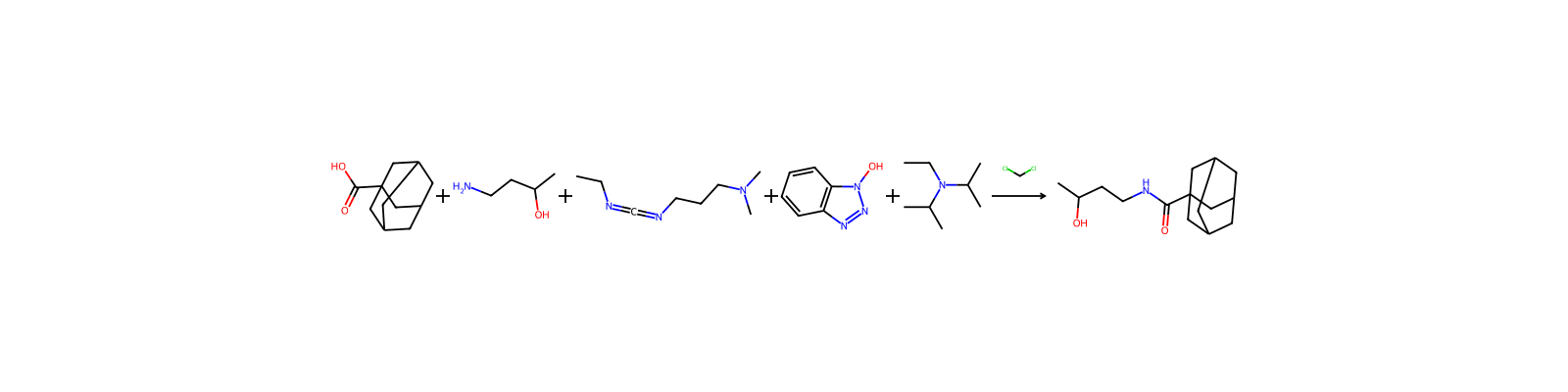
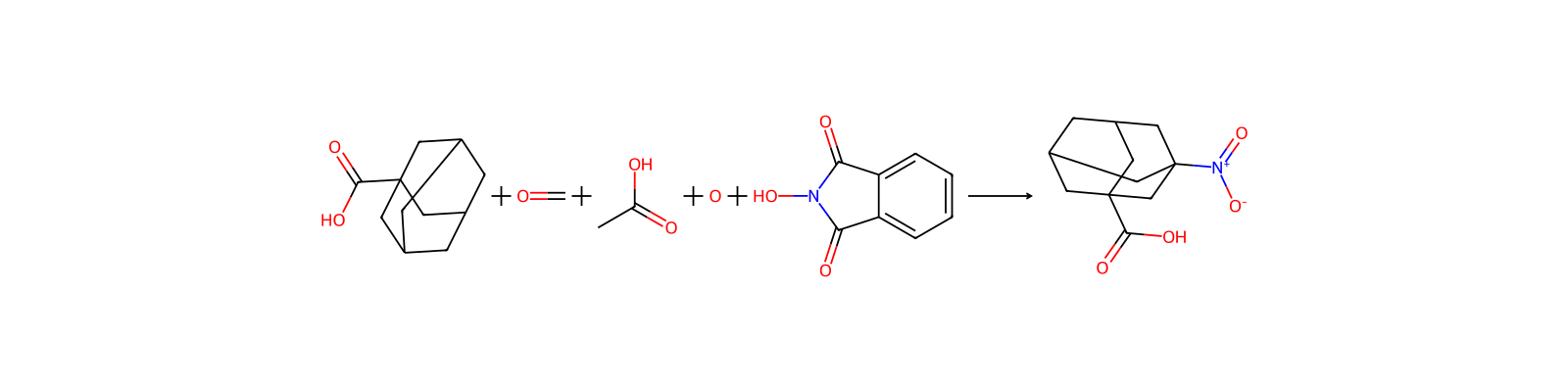
Related reactions
144 records


Linked notes
Loading…