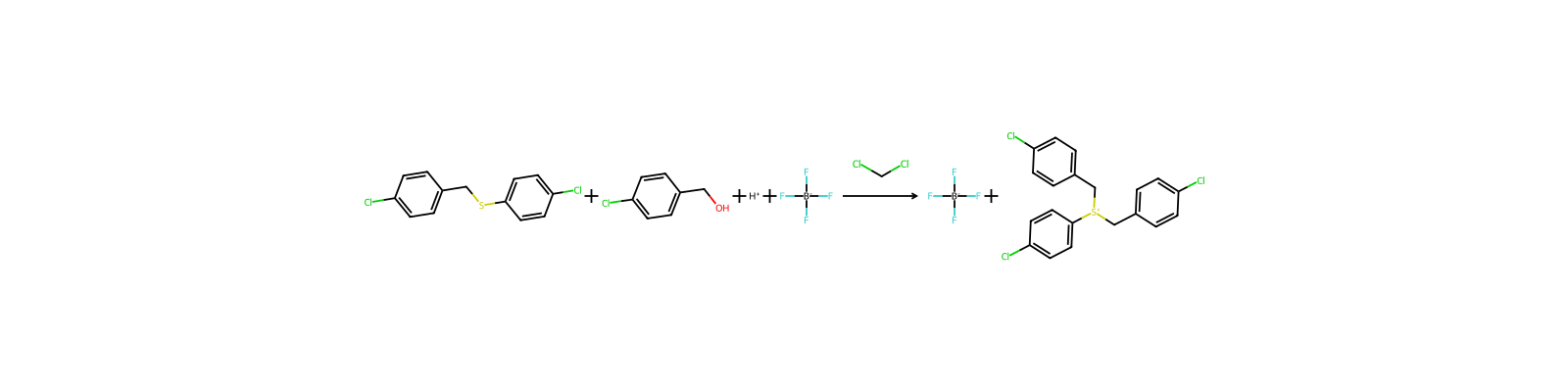

Basic information
- Standard SMILES
OCc1ccc(Cl)cc1- InChIKey
PTHGDVCPCZKZKR-UHFFFAOYSA-N- Molecular formula
- C7H7ClO
- Average molar mass
- 142.58 g/mol
- Monoisotopic mass
- 142.01854252
Names & identifiers
- Preferred name
- 4-Chlorobenzyl alcohol
- IUPAC
- (4-chlorophenyl)methanol
- English name
- 4-Chlorobenzyl alcohol
- Molecular formula
- C7H7ClO
- Molecular weight
- 142.58
Names & synonyms
4-Chlorobenzyl alcohol873-76-7P-CHLOROBENZYL ALCOHOL4-ChlorobenzenemethanolBenzenemethanol, 4-chloro-Benzyl alcohol, p-chloro-4-Chlorobenzylic alcoholCCRIS 51204-chlorophenylmethanolp-chlorotoluolAI3-20628NSC 5286
Show more names
4-chlorobenzylRARECHEM AL BD 00774-Chlorobenzyl alcohp-chloro-benzylalcohoChlorophenyl MethanolLABOTEST-BB LT02085068
EINECS 212-852-2GF8BS53B6VNSC-5286DTXSID7073937RefChem:521959DTXCID8048579Benzenemethanol, 4-chloro-(9CI)(4-Chlorophenyl)methanol
Database identifiers
- CAS
873-76-7- PubChem CID
- 13397
- DTXSID
DTXSID7073937- ChEMBL
CHEMBL1224554- UNII
- GF8BS53B6V
- EC Number
- 212-852-2
- Nikkaji
- J141.587E
Properties
Computed structural properties
- XLogP
- 2
- Topological polar surface area
- 20.2 Ų
- Hydrogen bond donors
- 1
- Hydrogen bond acceptors
- 1
- Rotatable bonds
- 1
- Heavy atoms
- 9
- Formal charge
- 0
- Complexity
- 77
Experimental & physicochemical properties
SpringerMaterials PropertiesChemical shift
Physicochemical properties
- Melting point
- 68 · 68-71 °C(lit.)
- Boiling point
- 234 °C · 234 °C(lit.)
- Density
- 1.1104 · 1.1104 (rough estimate)
- refractive index
- 1.539 · 1.5390 (estimate)
- Flash point
- 70 °C · 70 °C
- storage temp.
- Sealed in dry,Room Temperature
- solubility
- 2.5 g/l · 2.5g/l
- pka
- 14.16 · 14.16±0.10(Predicted)
- form
- Crystalline Needles or Powder
- color
- Almost white to beige
- Water Solubility
- Soluble in water (2.5 mg/ml at 20°C), and methanol.
- BRN
- 636502 · 636502
- Stability
- Stable. Incompatible with acid chlorides, acid anhydrides, acids, oxidizing agents. Combustible.
- Major Application
- pharmaceutical
- InChI
- 1S/C7H7ClO/c8-7-3-1-6(5-9)2-4-7/h1-4,9H,5H2
- InChIKey
- PTHGDVCPCZKZKR-UHFFFAOYSA-N
- SMILES
- OCc1ccc(Cl)cc1
- CAS DataBase Reference
- 873 · 873-76-7(CAS DataBase Reference)
- EWG's Food Scores
- 1 · 1
- FDA UNII
- 8 BS53B6V · GF8BS53B6V
- NIST Chemistry Reference
- 4 · 4-Chlorobenzyl alcohol(873-76-7)
- EPA Substance Registry System
- 4 · 4-Chlorobenzenemethanol (873-76-7)
- UNSPSC Code
- 77101502 · 77101502
- NACRES
- 22 · NA.22
- Symbol(GHS)
- 7 · GHS07
- Signal word
- Warning
- Hazard statements
- 315 · H315-H319-H335
- Precautionary statements
- 261 · P261-P305+P351+P338
- Safety Statements
- 22 · 22-24/25
- WGK Germany
- 3 · 3
- RTECS
- 9242000 · DN9242000
- HS Code
- 29062900 · 29062900
- Storage Class
- 11 · 11 - Combustible Solids
Safety & regulation
GHS classification
GHS Classification
This chemical does not meet GHS hazard criteria for 94.1% (48 of 51) of all reports.
Not Classified
Aggregated GHS information provided per 51 reports by companies from 4 notifications to the ECHA C&L Inventory.
Hazard information
Regulatory Information
Chemical: Benzenemethanol, 4-chloro-
Benzenemethanol, 4-chloro-: Does not have an individual approval but may be used under an appropriate group standard
Hazard Classes and CategoriesNot Classified
Safety data
- wgk
- 3
- rtecs
- DN9242000
- hs_code
- 29062900
- Signal word
- Warning
- Symbol(GHS)
- GHS07
- safety_code
- 22-24/25
- Storage Class
- 11 - Combustible Solids
- Hazard statements
- H315-H319-H335
- Precautionary statements
- P261-P305+P351+P338
Chemistry & industry
Applications
DescriptionIt is usually used as the intermediate in organic synthesis and pharmaceutical industry. Specifically, this chemical can react with o-xylene in the presence of HAuCl4 or AuCl3 at 80 ℃ to generate the corresponding benzylated product.1 Moreover, the acetylation of 4-chlorobenzyl alcohol in presence of catalytic amounts of Ce(OTf)4 has been performed in acetic acid to produce the desired esters in the excellent yields.2 In addition, this chemical may function as the raw material to produce its corresponding carboxylic acids and ketones in good yields through the oxidation reaction by using hydrogen peroxide and cobalt(Ⅱ) complex.3 Besides, the formylation and acetylation of 4-chlorobenzyl alcohol may be carried out in the presence of Silphos [PCl3?n(SiO2)n] in ethyl formate and ethyl acetate.4
UsesReagent for carboxyl group protection.
Uses4-Chlorobenzyl alcohol acts as a reagent for the protection of carboxyl groups as their 4-chlorobenzyl esters, more stable to acid than the corresponding benzyl esters. It is used as solvent in paint stripper and waterborne coatings. It acts as curing agent. It is also used in pharmaceuticals, cosmetics, preservatives, and flavoring & fragrance agents.
Upstream & downstream products
Downstream products
Suppliers50 total
国药集团化学试剂有限公司86-21-63210123 · [email protected]
梯希爱(上海)化成工业发展有限公司021-67121386 · [email protected]
上海阿拉丁生化科技股份有限公司400-6206333 13167063860 · [email protected]
爱斯特(成都)生物制药股份有限公司+86-28-85122536 85324413 · [email protected]
韶远科技(上海)有限公司021-50795510 4000665055 · [email protected]
科瑞迪化学400-821-5857 021-64326257 · [email protected]
Ark Pharm, Inc.847-367-3680 · [email protected]
上海迈瑞尔生化科技有限公司4006356688 18621169109 · [email protected]
武汉易泰科技有限公司上海分公司18930552037 · [email protected]
阿法埃莎(中国)化学有限公司400-6106006 · [email protected]
太原市瑞和丰科贸有限公司+86 351 7031519 · [email protected]
上海德默医药科技有限公司400-021-7337 2355568890 · [email protected]
安耐吉化学&3A(安徽泽升科技股份有限公司)400-0056266 · [email protected]
吴江市稣科医药发展有限公司+86-512-6320-2019
上海瀚鸿科技股份有限公司021-54306202 13764082696 · [email protected]
上海柯维化学技术有限公司021-64609169 18901607656 · [email protected]
Pure Chemistry Scientific Inc.001-857-928-2050 or 1-888-588-9418 · [email protected]
上海隆盛化工有限公司58099637 13585536065 · [email protected]
孝感深远化工有限公司15527621225; 15527621225 · [email protected]
山东洛恒化工产品有限公司17306359933
山东西亚化学有限公司13355009207 13355009207 · [email protected]
玛雅试剂+86 (573) 82222445 (0)18006601000 452520369 · [email protected]
四川库利南科技有限公司400-1166-196 18981987031 · [email protected]
天津希恩思生化科技有限公司400 638 7771 · [email protected]
南京斯贝源医药科技有限公司+86-25-68710855, +86-25-68710897 · [email protected]
南京维奥化工有限公司Please Send Email 18652950785 · [email protected]
艾科试剂4008-755-333 18080918076 · [email protected]
上海思域化工科技有限公司86-21-34053660 · [email protected]
赛默飞世尔科技(中国)有限公司800-810-5118 · [email protected]
上海特伯化学科技有限公司+86-21-60341587 · [email protected]
上海遐瑞医药科技有限公司+86 21 61551611
江苏艾康生物医药研发有限公司025-66113011 13913916777 · [email protected]
TCI AMERICA800-4238616 · [email protected]
TOKYO CHEMICAL INDUSTRY CO., LTD.03-36680489 · [email protected]
TCI Europe320-37350700 · [email protected]
上海贤鼎生物科技有限公司4009209199 · [email protected]
苏州安尼康药物研发有限公司0512-69369885 · [email protected]
上海洪创医药科技有限公司18151128828 · [email protected]
上海湄水化工科技有限公司021-60549325 18616193163
上海将来实业股份有限公司021-61552785 · [email protected]
安徽科迪达化工有限公司0554-2106669 · [email protected]
HBCChem, Inc.+1-510-219-6317 · [email protected]
上海爱蝶实业有限公司021-58957966 18930537195 · [email protected]
广拓化学(上海)有限公司021-60899189-8001 18918189673 · [email protected]
上海御略医药科技有限公司021-60345187 13671753212 · [email protected]
上海嵩爰化工科技有限公司010-1234567 18521000990 · [email protected]
上海有朋化工有限公司021-69005955 13701776567 · [email protected]
北京海力扬化学科技有限公司13718199399 · [email protected]
北京欣赛维化学科技有限公司010-56218822 13717722232 · [email protected]
四川海诺威科技有限公司13708085536 13708085536 · [email protected]
Related reactions
109 records


Linked notes
Loading…