
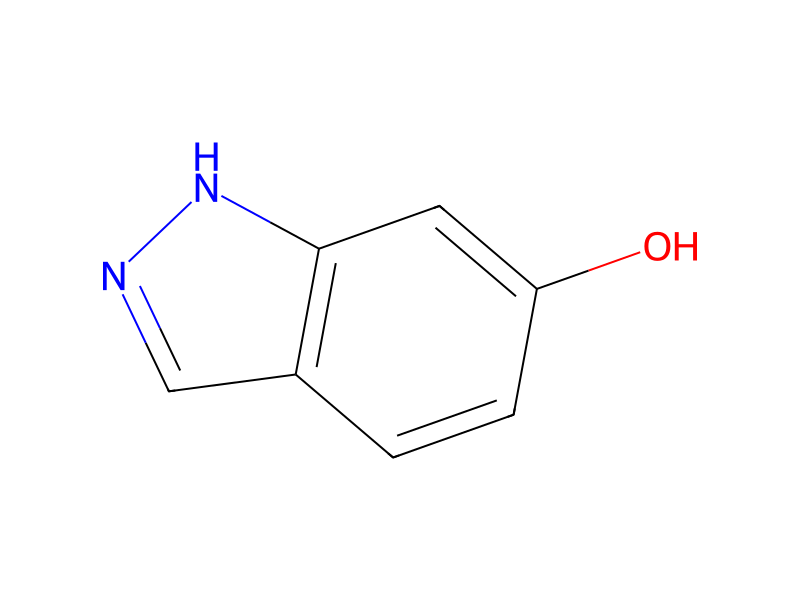
Basic information
- Standard SMILES
Oc1ccc2cn[nH]c2c1- InChIKey
NUYZVDBIVNOTSC-UHFFFAOYSA-N- Molecular formula
- C7H6N2O
- Average molar mass
- 134.14 g/mol
- Monoisotopic mass
- 134.04801281
Overview
has neuroprotective activity; structure in first source
Names & identifiers
- Preferred name
- 6-hydroxy-1H-indazole
- IUPAC
- 1H-indazol-6-ol
- English name
- 6-Hydroxyindazole
- Molecular formula
- C7H6N2O
- Molecular weight
- 134.14
Names & synonyms
6-Hydroxy-1H-indazoleRefChem:798361H-Indazol-6-ol6-Hydroxyindazole23244-88-46-Indazolol1,2-dihydroindazol-6-oneIndazole, 6-hydroxy-MFCD000227881,2-Dihydro-6H-indazol-6-one1935152-48-9EINECS 245-519-5
Show more names
indazol-6-ol6-Hydroxy-1H-indazoL6-Hydroxyindazole>1,2-dihydroindazol-6-one1H-Indazol-6-ol (6CI, 8CI, 9CI, ACI)
NSC 92744BRN 00032156-Isoindazolol6-Hydroxyindazol2K4NSC92744indazol-6(1h)-oneBAS 00226160
Database identifiers
- CAS
23244-88-4- PubChem CID
- 135483987
- DTXSID
DTXSID70901318- EC Number
- 245-519-5
- Nikkaji
- J41.018G
Properties
Computed structural properties
- XLogP
- 1.9
- Topological polar surface area
- 48.9 Ų
- Hydrogen bond donors
- 2
- Hydrogen bond acceptors
- 2
- Rotatable bonds
- 0
- Heavy atoms
- 10
- Formal charge
- 0
- Complexity
- 129
Physicochemical properties
- Melting point
- 217 to · 217.0 to 221.0 °C
- Boiling point
- 366.5 · 366.5±15.0 °C(Predicted)
- Density
- 1.434 · 1.434±0.06 g/cm3(Predicted)
- storage temp.
- Inert atmosphere,Room Temperature
- solubility
- soluble in Methanol
- form
- powder to crystal
- pka
- 9.17 · 9.17±0.40(Predicted)
- color
- Light yellow to Yellow to Orange
- InChI
- InChI=1S/C7H6N2O/c10-6-2-1-5-4-8-9-7(5)3-6/h1-4,10H,(H,8,9)
- InChIKey
- NUYZVDBIVNOTSC-UHFFFAOYSA-N
- SMILES
- N1C2=C(C=CC(O)=C2)C=N1
- CAS DataBase Reference
- 23244 · 23244-88-4
- EWG's Food Scores
- 1 · 1
- UNSPSC Code
- 12352100 · 12352100
- NACRES
- 22 · NA.22
- Symbol(GHS)
- 7 · GHS07
- Signal word
- Warning
- Hazard statements
- 302 · H302
- Precautionary statements
- 501 · P501-P270-P264-P301+P312+P330
- Hazard Codes
- Xn
- Risk Statements
- 22 · 22
- WGK Germany
- 3 · 3
- RTECS
- 8010000 · NK8010000
- HS Code
- 2933998090 · 2933998090
- Storage Class
- 11 · 11 - Combustible Solids
- Hazard Classifications
- 4 Oral · Acute Tox. 4 Oral
- Toxicity
- 50 · mouse,LD50,intravenous,180mg/kg (180mg/kg),U.S. Army Armament Research & Development Command, Chemical Systems Laboratory, NIOSH Exchange Chemicals. Vol. NX#04549,
Safety & regulation
GHS classification
GHS Classification
Warning
H302 (100%): Harmful if swallowed [Warning Acute toxicity, oral]
P264, P270, P301+P317, P330, and P501 (click each P-code to see the statement)
Aggregated GHS information provided per 44 reports by companies from 2 notifications to the ECHA C&L Inventory.
Hazard information
Hazard Classes and CategoriesAcute Tox. 4 (100%)
Safety data
- wgk
- 3
- rtecs
- NK8010000
- hs_code
- 2933998090
- Toxicity
- mouse,LD50,intravenous,180mg/kg (180mg/kg),U.S. Army Armament Research & Development Command, Chemical Systems Laboratory, NIOSH Exchange Chemicals. Vol. NX#04549,
- risk_code
- 22
- Signal word
- Warning
- Symbol(GHS)
- GHS07
- hazard_code
- Xn
- Storage Class
- 11 - Combustible Solids
- Hazard statements
- H302
- Hazard Classifications
- Acute Tox. 4 Oral
- Precautionary statements
- P501-P270-P264-P301+P312+P330
Chemistry & industry
Applications
Uses6-Hydroxyinazole is a light brown powder and an important pharmaceutical intermediate used to construct the core of active drug molecules. It has broad application prospects in the synthesis and screening of small molecule chemical drugs. 6-Hydroxyinazole has neuroprotective effects. Indazole and its derivatives possess various biological activities, such as anti-inflammatory, antitumor, antioxidant, hypoglycemic, anti-HIV, anti-tuberculosis, antiplatelet, and 5-HT3 receptor antagonism. In addition, indazole derivatives are widely used in herbicides and dyes. Indazole was originally defined as a "pyrazole-ringed benzene ring," belonging to the azole family. It contains only three elements: carbon, hydrogen, and oxygen, and is an aromatic heterocycle containing 10 electrons. Theoretically, depending on whether there are hydrogen atoms on the two nitrogen atoms, indazole exists in two tautomeric forms: 1H-indazole and 2H-indazole. When there are no substituents on the indazole, it mainly exists in the 1H-indazole form.
Upstream & downstream products
Upstream raw materials
Downstream products
Suppliers50 total
梯希爱(上海)化成工业发展有限公司021-67121386 · [email protected]
环生美森医药技术(山东)有限公司0531-88762217 18301471076 · [email protected]
上海瀚麟生物科技有限公司183-0212-4410 18302124410 · [email protected]
常熟市海天医药原料有限公司13913622609
Dayang Chem (Hangzhou) Co.,Ltd.+86-0571-88938639 17705817739 · [email protected]
郑州鸿晟医药科技有限公司0371-55695890 15637198702 · [email protected]
上海弘顺生物科技有限公司15901914505 · [email protected]
郑州德元凯化工有限公司17837139533 · [email protected]
韶远科技(上海)有限公司021-50795510 4000665055 · [email protected]
江苏普乐司生物科技有限公司0513-66017706 18551496367 · [email protected]
安耐吉化学&3A(安徽泽升科技股份有限公司)400-0056266 · [email protected]
常州科化生物科技有限公司0519-68985668 13685222090 · [email protected]
上海瀚鸿科技股份有限公司021-54306202 13764082696 · [email protected]
衢州市鸿通生物科技有限公司0571-64067827 13372408495 · [email protected]
Advanced chemblocks inc650-6922368 650-6922368;650-6922368 · [email protected]
烟台盛凯伦生物制品有限公司13356901049 · [email protected]
安徽合诺生物科技有限公司18455579438
武汉永璨生物科技有限公司17702719238 · [email protected]
北京零式京安科技有限责任公司10-61256048 13810278579 · [email protected]
苏州启航生物科技有限公司18662190603;18151111370 · [email protected]
常州四渡化工有限公司0519-81291281 18015082300
南京斯贝源医药科技有限公司+86-25-68710855, +86-25-68710897 · [email protected]
上海先诺生物科技有限公司021-50718719 13918719472
TCI AMERICA800-4238616 · [email protected]
TOKYO CHEMICAL INDUSTRY CO., LTD.03-36680489 · [email protected]
TCI Europe320-37350700 · [email protected]
武汉卡诺斯科技有限公司153-37111468 15337111468 · [email protected]
合肥恩立医药科技有限公司0551-66399836 18955197623 · [email protected]
武汉代为医药科技有限公司027-65318838 13646286950 · [email protected]
山东益众新材料有限公司0531-69958783 15508681609 · [email protected]
金瓯生物医药(南京)有限公司13000000000 · [email protected]
河南赢创生物科技有限公司15672878902 · [email protected]
上海毕得医药科技股份有限公司400-164-7117 18317119277 · [email protected]
上海笛柏生物科技有限公司400-008-9730,021-54359730 400-008-9730 · [email protected]
湖南华腾制药有限公司400-8592883 · [email protected]
上海纳谦化学科技有限公司13598610367 13598610367 · [email protected]
上海洽凡生化科技有限公司+86-021-61654350 · [email protected]
南京恰风和医药科技有限公司025-57018978 18251899859 · [email protected]
江苏艾康生物医药研发有限公司025-66028182 17714375163 · [email protected]
陕西缔都医药化工有限公司029-81024372 17792795018 · [email protected]
凯试(上海)科技有限公司021-50135380 · [email protected]
Sigma-Aldrich西格玛奥德里奇(上海)贸易有限公司021-61415566 800-8193336 · [email protected]
Accela ChemBio Inc.+1(858) 699-3322 · [email protected]
TargetMol中国(陶术生物)021-021-33632979 15002134094 · [email protected]
诺尔凯立科技有限公司86-(0)21-31261262 373522135 · [email protected]
斯派螺(武汉)药物研发有限公司[email protected]
九鼎化学(上海)科技有限公司4009209199 · [email protected]
许昌峰飞新材料科技有限公司19713077352; 19713077352 · [email protected]
南京科晟祥科技有限公司18252089365 · [email protected]
武汉逸翮科技有限公司1842-7358864 18427358864 · [email protected]
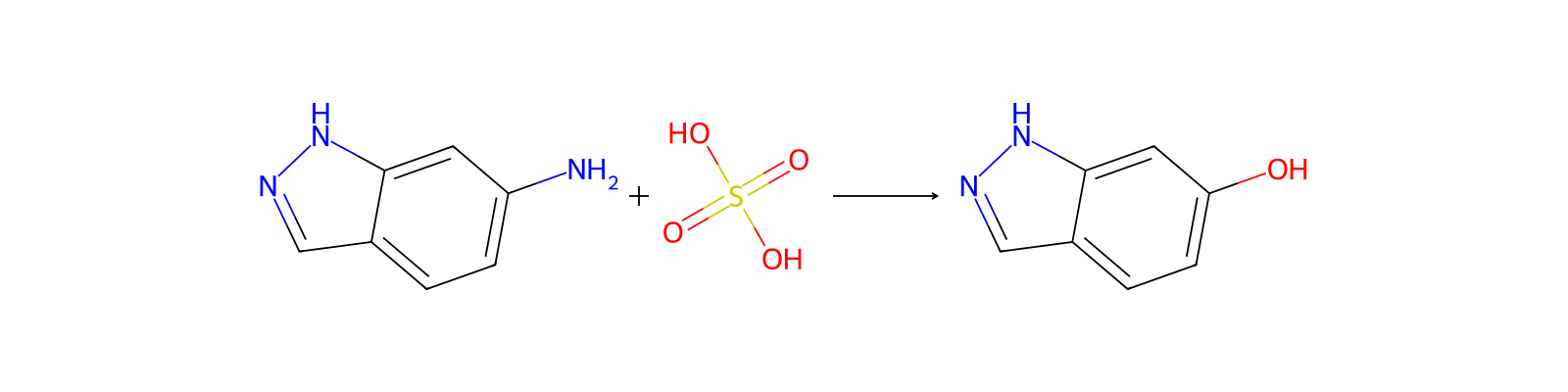
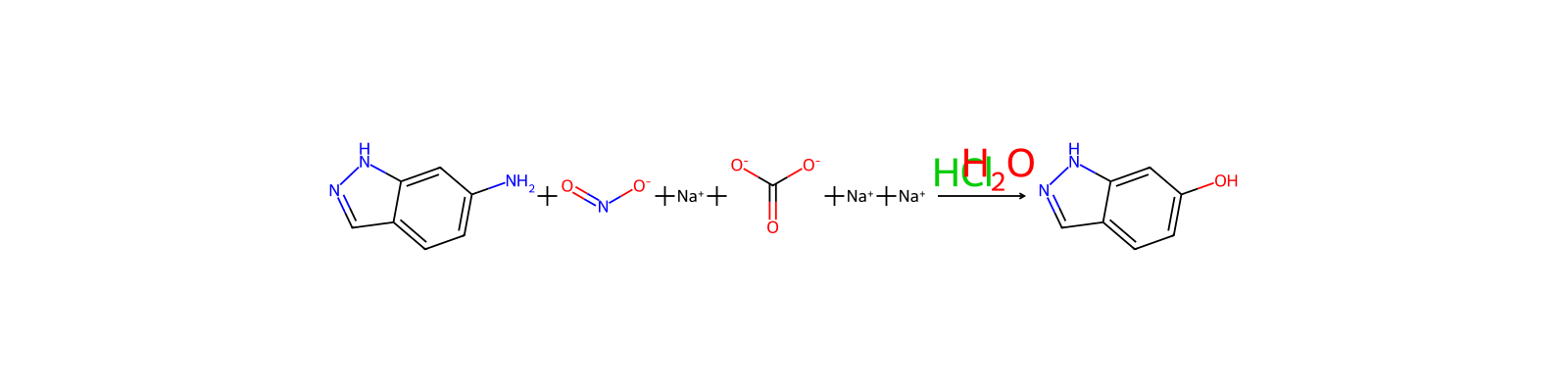
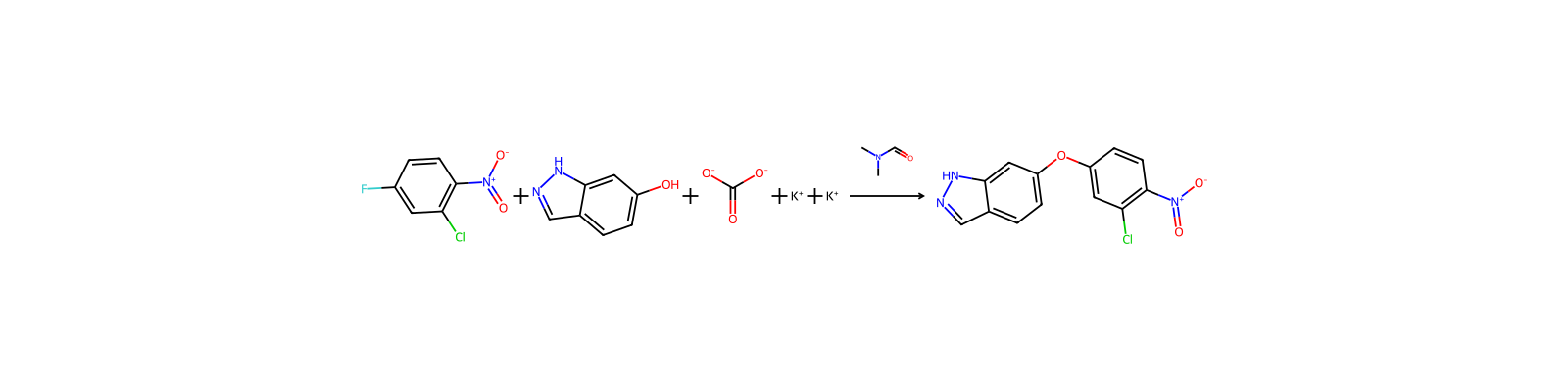
Related reactions
21 records




Linked notes
Loading…