

Basic information
- Standard SMILES
C#CC1CC1- InChIKey
NPTDXPDGUHAFKC-UHFFFAOYSA-N- Molecular formula
- C5H6
- Average molar mass
- 66.1 g/mol
- Monoisotopic mass
- 66.04695019
Names & identifiers
- Preferred name
- Cyclopropylacetylene
- IUPAC
- ethynylcyclopropane
- English name
- Cyclopropylacetylene
- Molecular formula
- C5H6
- Molecular weight
- 66.1
Names & synonyms
Cyclopropylacetylene6746-94-7ethynyl cyclopropaneDTXSID80217795EC 425-430-1RefChem:581231DTXCID30140286425-430-1614-067-4EthynylcyclopropaneCyclopropyl acetylenecyclopropane, ethynyl-
Show more names
CPACCylopropylethylnenCylopropyl acetyleneCyclopropyl acetylenCyclopropylacethyleneCYCLOPROPYL ACETHLENEethylnyl-cyclopropane
Cyclopropane,ethynyl-MFCD02181090C5H6cyclopropylethyne336800-75-0Cyclopropylethyne; Ethyne, cyclopropyl-; EthynylcyclopropaneEthynylcyclopropane; Cyclopropylethyne;cyclopropyl ethyne
Database identifiers
- CAS
6746-94-7- PubChem CID
- 138823
- DTXSID
DTXSID80217795- UNII
- CYA9F6WH2T
- EC Number
- 425-430-1、614-067-4
- Nikkaji
- J798.432D
Properties
Computed structural properties
- XLogP
- 1.5
- Topological polar surface area
- 0 Ų
- Hydrogen bond donors
- 0
- Hydrogen bond acceptors
- 0
- Rotatable bonds
- 0
- Heavy atoms
- 5
- Formal charge
- 0
- Complexity
- 69.3
Experimental & physicochemical properties
SpringerMaterials PropertiesCoriolis coupling
Physicochemical properties
- Melting point
- 294 °C · 294 °C (decomp)
- Boiling point
- 79 · 79-80 °C
- Density
- 0.7801 · 0.7801
- refractive index
- 20 · n20/D 1.4480
- Flash point
- -5 °F · -5 °F
- storage temp.
- 2 · 2-8°C
- solubility
- Chloroform, Ethyl Acetate
- form
- Liquid
- Specific Gravity
- 0.797 · 0.797
- color
- Clear colorless to light yellow
- Water Solubility
- Slightly soluble in water.
- InChI
- InChI=1S/C5H6/c1-2-5-3-4-5/h1,5H,3-4H2
- InChIKey
- NPTDXPDGUHAFKC-UHFFFAOYSA-N
- SMILES
- C1(C#C)CC1
- CAS DataBase Reference
- 6746 · 6746-94-7(CAS DataBase Reference)
- NIST Chemistry Reference
- Cyclopropylacetylene(6746-94-7)
- UNSPSC Code
- 12352100 · 12352100
- NACRES
- 22 · NA.22
- Symbol(GHS)
- 2 · GHS02,GHS05
- Signal word
- Danger
- Hazard statements
- 225 · H225-H315-H318-H412
- Precautionary statements
- 210 · P210-P233-P273-P280-P303+P361+P353-P305+P351+P338
- PPE
- Eyeshields, Faceshields, Gloves
- Hazard Codes
- F,Xn,Xi
- Risk Statements
- 11 · 11-36/37/38-48/20-63-65-67-52/53-41-38-4-37/38-22
- Safety Statements
- 26 · 26-36/37-62-37/39-16-61-33-9-36/37/39-39
- RIDADR
- 1294 · UN 1294 3/PG 2
- WGK Germany
- 2 · 2
- HazardClass
- IRRITANT, FLAMMABLE
- PackingGroup
- II
- HS Code
- 29021990 · 29021990
- Storage Class
- 3 · 3 - Flammable liquids
- Hazard Classifications
- 3 Eye · Aquatic Chronic 3Eye Dam. 1Flam. Liq. 2Skin Irrit. 2
- REACH Registrations
- Inactive
Safety & regulation
GHS classification
GHS Classification
Danger
H225: Highly Flammable liquid and vapor [Danger Flammable liquids]
P210, P233, P240, P241, P242, P243, P264, P264+P265, P273, P280, P302+P352, P303+P361+P353, P305+P354+P338, P317, P321, P332+P317, P362+P364, P370+P378, P403+P235, and P501 (click each P-code to see the statement)
Danger
H225 (96.1%): Highly Flammable liquid and vapor [Danger Flammable liquids]
P210, P233, P240, P241, P242, P243, P264, P264+P265, P273, P280, P302+P352, P303+P361+P353, P305+P354+P338, P317, P321, P332+P317, P362+P364, P370+P378, P403+P235, and P501 (click each P-code to see the statement)
Hazard information
Regulatory InformationStatus: Active Update: 05-09-2011 https://echa.europa.eu/registration-dossier/-/registered-dossier/1000
Hazard Classes and Categories
Flam. Liq. 2 (96.1%)
Flam. Liq. 2 (85.7%)
Flammable liquid - category 2
Flam. Liq. 2
Safety data
- PPE
- Eyeshields, Faceshields, Gloves
- wgk
- 2
- ridadr
- UN 1294 3/PG 2
- hs_code
- 29021990
- risk_code
- 11-36/37/38-48/20-63-65-67-52/53-41-38-4-37/38-22
- Signal word
- Danger
- Symbol(GHS)
- GHS02,GHS05
- hazard_code
- F,Xn,Xi
- safety_code
- 26-36/37-62-37/39-16-61-33-9-36/37/39-39
- hazard_class
- 3
- Storage Class
- 3 - Flammable liquids
- packing_group
- II
- Hazard statements
- H225-H315-H318-H412
- REACH Registrations
- Inactive
- Hazard Classifications
- Aquatic Chronic 3Eye Dam. 1Flam. Liq. 2Skin Irrit. 2
- Precautionary statements
- P210-P233-P273-P280-P303+P361+P353-P305+P351+P338
Chemistry & industry
Applications
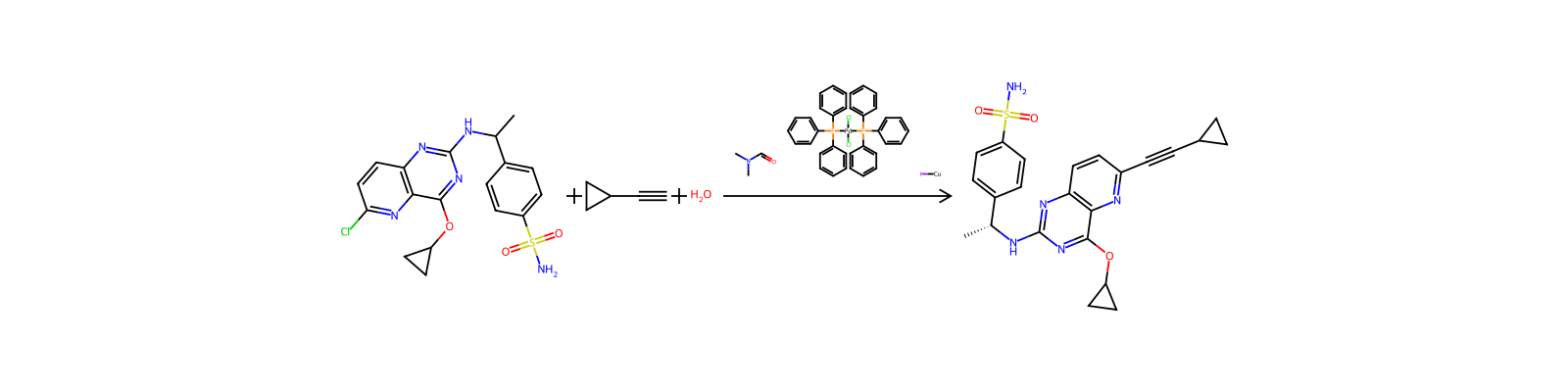
UsesCyclopropylacetylene is used as an organic chemical synthesis intermediate.
Preparation methods
PreparationCyclopropylacetylene was prepared in a two-step procedure by dichlorination of cyclopropyl methyl ketone with phosphorus pentachloride (PCl5) followed by double dehydrohalogenation with a strong base. This sequence presented significant scale-up problems with low overall yields (20-25%). Similarly, cyclopropylacetylene has been prepared by base-induced dehydrohalogenation of bromovinylcyclopropane . Cyclopropylacetylene has also been prepared from the 1-trimethylsilyl derivative of cyclopropylacetylene, which was prepared by treatment of 5-chloro-1-trimethylsilyl-1-pentyne with lithium diisopropylamide at 78°C followed by warming to room temperature.
Upstream & downstream products
Upstream raw materials
Downstream products
Suppliers50 total
国药集团化学试剂有限公司86-21-63210123 · [email protected]
梯希爱(上海)化成工业发展有限公司021-67121386 · [email protected]
衢州润东化工有限公司0570-8789886 18892685668 · [email protected]
上海阿拉丁生化科技股份有限公司400-6206333 13167063860 · [email protected]
爱斯特(成都)生物制药股份有限公司+86-28-85122536 85324413 · [email protected]
科瑞迪化学400-821-5857 021-64326257 · [email protected]
Syntechem Co.,Ltd[email protected]
上海迈瑞尔生化科技有限公司4006356688 18621169109 · [email protected]
阿法埃莎(中国)化学有限公司400-6106006 · [email protected]
太原市瑞和丰科贸有限公司+86 351 7031519 · [email protected]
安耐吉化学&3A(安徽泽升科技股份有限公司)400-0056266 · [email protected]
上海瀚鸿科技股份有限公司021-54306202 13764082696 · [email protected]
上海相辉医药科技有限公司13761987713 · [email protected]
上海景颜化工科技有限公司13817811078 · [email protected]
嘉兴市艾森化工有限公司0573-85285100 18627885956 · [email protected]
Pure Chemistry Scientific Inc.001-857-928-2050 or 1-888-588-9418 · [email protected]
上海隆盛化工有限公司58099637 13585536065 · [email protected]
上海攀鸿化工科技有限公司021-56491756 13512199871 · [email protected]
石家庄建鑫生物科技有限公司0311-1906231-3169 19062313169 · [email protected]
孝感深远化工有限公司15527621225; 15527621225 · [email protected]
山东西亚化学有限公司13355009207 13355009207 · [email protected]
四川库利南科技有限公司400-1166-196 18981987031 · [email protected]
天津希恩思生化科技有限公司400 638 7771 · [email protected]
Syntor Fine Chemicals Ltd.+44 (0) 1928 579865 · [email protected]
Syntor Fine Chemicals Ltd.+44 (0) 1928 579865 · [email protected]
河南多贝化工有限公司0370-2785118 17550508557 · [email protected]
艾科试剂4008-755-333 18080918076 · [email protected]
上海思域化工科技有限公司86-21-34053660 · [email protected]
赛默飞世尔科技(中国)有限公司800-810-5118 · [email protected]
北京伊诺凯科技有限公司400-810-7969 010-59572699 · [email protected]
江苏艾康生物医药研发有限公司025-66113011 13913916777 · [email protected]
上海健超生物科技有限公司150-2103-5486 18017383231 · [email protected]
TCI AMERICA800-4238616 · [email protected]
TOKYO CHEMICAL INDUSTRY CO., LTD.03-36680489 · [email protected]
TCI Europe320-37350700 · [email protected]
上海贤鼎生物科技有限公司4009209199 · [email protected]
深圳振强药物研发有限公司0755-66853366 13670046396 · [email protected]
越林试剂021-62960152 · [email protected]
无锡中坤生化科技有限公司+86 0510-85629785
上海将来实业股份有限公司400-0066400 13621662912 · [email protected]
安徽科迪达化工有限公司0554-2106669 · [email protected]
HBCChem, Inc.+1-510-219-6317 · [email protected]
雷丁试剂0510-85629785 18013409632 · [email protected]
上海创赛科技有限公司400-6087598 15021221957 · [email protected]
上海御略医药科技有限公司021-60345187 13671753212 · [email protected]
上海麦克林生化科技股份有限公司15221275939 15221275939 · [email protected]
杭州杰恒化工有限公司0571-87396432 · [email protected]
上海洽凡生化科技有限公司+86-021-61654350 · [email protected]
上海嵩爰化工科技有限公司010-1234567 18521000990 · [email protected]
北京欣赛维化学科技有限公司010-56218822 13717722232 · [email protected]
Related reactions
225 records





Linked notes
Loading…