HomeMCPWorkbenchSkills
HomeWorkbenchNotificationsMe
llms.txt · MCP GuidePrivacy Policy · Terms of Service · Supportv1.8.3
  1. Home
  2. /Compound

Phenylhydroquinone

HCID 14116
New reaction
Print
Basic informationOverviewNames & identifiersPropertiesSafety & regulationChemistry & industryRelated reactionsCompound notes
Substructure searchFind similar structures

Basic information

CAS
1079-21-6
Standard SMILES
Oc1ccc(O)c(-c2ccccc2)c1
InChIKey
XCZKKZXWDBOGPA-UHFFFAOYSA-N
Molecular formula
C12H10O2
Average molar mass
186.21 g/mol
Monoisotopic mass
186.06807956

Overview

major metabolite of o-phenylphenol; cleaves DNA; structure given in first source

Names & identifiers

Preferred name
Phenylhydroquinone
IUPAC
2-phenylbenzene-1,4-diol
English name
Phenylhydroquinone
Molecular formula
C12H10O2
Molecular weight
186.21

Names & synonyms

Phenylhydroquinone1079-21-62-Phenylhydroquinone[1,1'-Biphenyl]-2,5-diol2,5-DihydroxybiphenylBiphenyl-2,5-diolHydroquinone, phenyl-1,4-Benzenediol, phenyl-O-Phenylhydroquinone(1,1'-Biphenyl)-2,5-diolGPT41T80FJDTXSID7051553
Show more names
Phenylhydroquinolphenyl-hydroquinon
NSC-407988RefChem:861747DTXCID1030105214-091-12-phenylbenzene-1,4-diol2,5-BIPHENYLDIOLTFIIH Modulator-122-Phenyl-1,4-benzenediol

Database identifiers

CAS
1079-21-6
PubChem CID
14116
DTXSID
DTXSID7051553
ChEMBL
CHEMBL510600
UNII
GPT41T80FJ
EC Number
214-091-1
Nikkaji
J34.952F

Properties

Computed structural properties

XLogP
3.2
Topological polar surface area
40.5 Ų
Hydrogen bond donors
2
Hydrogen bond acceptors
2
Rotatable bonds
1
Heavy atoms
14
Formal charge
0
Complexity
175

Experimental & physicochemical properties

Endocrine DisruptorsPotential endocrine disrupting compound

Physicochemical properties

Melting point
98 · 98-100 °C(lit.)
Boiling point
280.69 °C · 280.69°C (rough estimate)
Density
1.228 · 1.228
refractive index
1.601 · 1.6010 (estimate)
storage temp.
Keep in dark place,Inert atmosphere,Room temperature
solubility
Chloroform (Slightly), DMSO (Slightly)
form
Solid
pka
10.46 · 10.46±0.18(Predicted)
color
Needles from EtOH (aq)
BRN
1949429 · 1949429
InChI
1S/C12H10O2/c13-10-6-7-12(14)11(8-10)9-4-2-1-3-5-9/h1-8,13-14H
InChIKey
XCZKKZXWDBOGPA-UHFFFAOYSA-N
SMILES
Oc1ccc(O)c(c1)-c2ccccc2
CAS DataBase Reference
1079 · 1079-21-6(CAS DataBase Reference)
EWG's Food Scores
1 · 1
FDA UNII
41 T80FJ · GPT41T80FJ
EPA Substance Registry System
1 · [1,1'-Biphenyl]-2,5-diol (1079-21-6)
UNSPSC Code
12352100 · 12352100
NACRES
22 · NA.22
Symbol(GHS)
7 · GHS07
Signal word
Warning
Hazard statements
315 · H315-H319-H335
Precautionary statements
261 · P261-P264-P271-P280-P302+P352-P305+P351+P338
target organs
Respiratory system
PPE
95 · dust mask type N95 (US), Eyeshields, Gloves
Hazard Codes
Xi
Risk Statements
36 · 36/37/38
Safety Statements
26 · 26-36
WGK Germany
3 · 3
RTECS
4550000 · DV4550000
F
1 · 1-10
TSCA
TSCA listed
HS Code
2907299090 · 2907299090
Storage Class
11 · 11 - Combustible Solids
Hazard Classifications
2 Skin · Eye Irrit. 2Skin Irrit. 2STOT SE 3
Toxicity
10 mmol/L · dnd-esc 10 mmol/L CBINA8 76,163,90

Safety & regulation

Safety information is for reference only and does not replace the supplier’s Safety Data Sheet (SDS), applicable regulations, or professional assessment.

GHS classification

GHS Classification · 4 items

Warning

H315 (90.9%): Causes skin irritation [Warning Skin corrosion/irritation]

P261, P264, P264+P265, P271, P280, P302+P352, P304+P340, P305+P351+P338, P319, P321, P332+P317, P337+P317, P362+P364, P403+P233, P405, and P501 (click each P-code to see the statement)

Aggregated GHS information provided per 44 reports by companies from 4 notifications to the ECHA C&L Inventory. Each notification may be associated with multiple companies.

Hazard information

Hazard Classes and CategoriesSkin Irrit. 2 (90.9%)

Safety data

F
1-10
PPE
dust mask type N95 (US), Eyeshields, Gloves
wgk
3
tsca
TSCA listed
rtecs
DV4550000
hs_code
2907299090
Toxicity
dnd-esc 10 mmol/L CBINA8 76,163,90
risk_code
36/37/38
Signal word
Warning
Symbol(GHS)
GHS07
hazard_code
Xi
safety_code
26-36
Storage Class
11 - Combustible Solids
target organs
Respiratory system
Hazard statements
H315-H319-H335
Hazard Classifications
Eye Irrit. 2Skin Irrit. 2STOT SE 3
Precautionary statements
P261-P264-P271-P280-P302+P352-P305+P351+P338

Chemistry & industry

Pharmacology

Metabolism/Metabolites2,5-dihydroxybiphenyl is a known human metabolite of 2-phenylphenol.

Uses & manufacturing

General Manufacturing Information[1,1'-Biphenyl]-2,5-diol: ACTIVE

Applications

Uses2-Phenylhydroquinone (cas# 1079-21-6) is a compound useful in organic synthesis.

Upstream & downstream products

Upstream raw materials

3-Bromo-4-hydroxydiphenyl

Related reactions

3 records
New reaction record
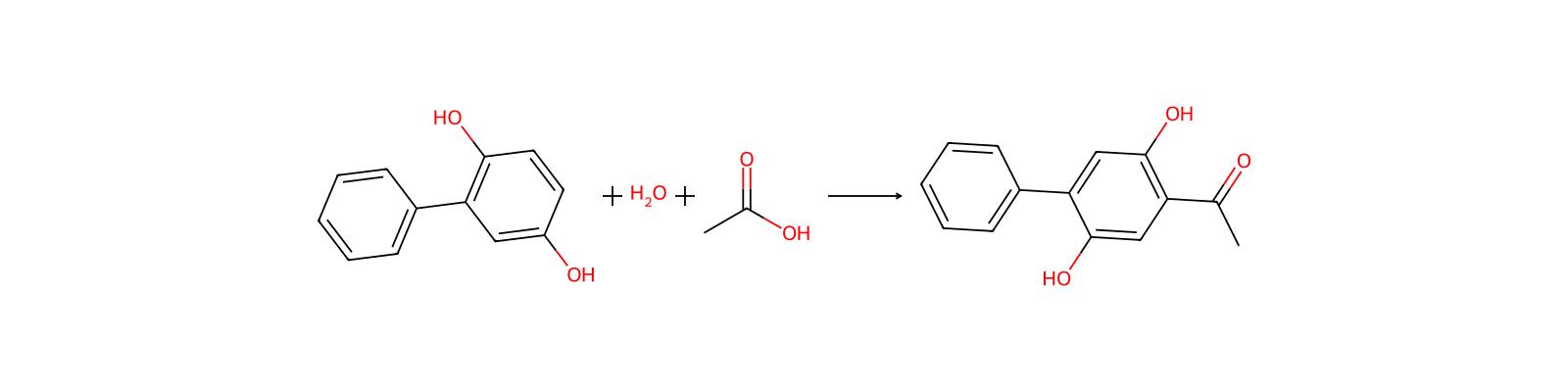
HRID 1030815 reaction equation
HRID 1030815As reactant
HRID 1758024 reaction equation
HRID 1758024As reactant
HRID 2166478 reaction equation
HRID 2166478As product

Compound notes

On this pageBasic informationOverviewNames & identifiersPropertiesSafety & regulationChemistry & industryRelated reactionsCompound notes