HomeMCPWorkbenchSkills
HomeWorkbenchNotificationsMe
llms.txt · MCP GuidePrivacy Policy · Terms of Service · Supportv1.8.0
  1. Home
  2. /Compound

Diisobutylaluminum hydride

HCID 14487
New noteNew reactionRequest quotes
Print preview

Completing data — refresh the page later to see the latest

Basic informationOverviewNames & identifiersPropertiesSafety & regulationChemistry & industryRelated reactionsCompound notes
Substructure searchFind similar structures

Basic information

CAS
1191-15-7
Standard SMILES
CC(C)[CH2][AlH][CH2]C(C)C
InChIKey
AZWXAPCAJCYGIA-UHFFFAOYSA-N
Molecular formula
C8H19Al
Average molar mass
142.22 g/mol
Monoisotopic mass
142.13021424

Overview

Diisobutylaluminium hydride is an organoaluminum compound. It is a reducing agent used in organic synthesis. Aluminum is the most abundant metal in the earth's crust and is always found combined with other elements such as oxygen, silicon, and fluorine. (L739, L740, L774)

Names & identifiers

Preferred name
Diisobutylaluminum hydride
IUPAC
bis(2-methylpropyl)alumane
English name
Diisobutylaluminium hydride
Molecular formula
C8H19Al
Molecular weight
142.22

Names & synonyms

Dibal-Hbis(2-methylpropyl)alumaneDiisobutylhydroaluminumAl-DiisobutylAl-AlchiliDiisobutylaluminumHydrodiisobutylaluminumBis(isobutyl)hydroaluminumAluminum, diisobutylhydro-Aluminum, hydrodiisobutyl-H2EJ47H11ADTXSID4041866
Show more names
DibalDIISOBUTYLALUMINUM HYDRIDEDIBAHDABAL-Hdiisobutylaluminum hydride solutionDiisobutylaluminum hydridDIBAH~DIBAL-H
Hydrobis(2-methylpropyl)aluminumDIBALH cpdRefChem:134038DTXCID2021866Aluminium, hydrobis(2-methylpropyl)-214-729-91191-15-7Aluminum, hydrobis(2-methylpropyl)-

Database identifiers

CAS
1191-15-7
PubChem CID
14487
DTXSID
DTXSID4041866
UNII
H2EJ47H11A
EC Number
214-729-9

Properties

Computed structural propertiesFilling in

Topological polar surface area
0 Ų
Hydrogen bond donors
0
Hydrogen bond acceptors
0
Rotatable bonds
4
Heavy atoms
9
Formal charge
0
Complexity
49.6

Experimental & physicochemical properties

Chemical Classes · 2 items

Metals -> Metals, Organic Compounds

Flammable agents - 4th degree

Density · 2 items

0.798 g/mL

0.798 @25 °C

Viscosity18.0 mPa-s (millipascal second) at 25 °C
Color/FormColorless liquid
SolubilityMiscible with hydrocarbon solvents
Boiling Point105 °C @ 0.2 mm Hg
Melting Point · 2 items

-80 °C (Freezing point)

-80 °C

Heat of Combustion-6412 kJ/mol (kilojoules/mole)
Physical Description · 2 items

CBI

Colorless liquid; [Hawley]

Stability/Shelf Life · 2 items

Low melting solids or colorless, volatile liquids. /Alkylaluminum halides/

Safety & regulation

Safety information is for reference only and does not replace the supplier’s Safety Data Sheet (SDS), applicable regulations, or professional assessment.

GHS classification

GHS Classification · 4 items

Danger

H250 (97.7%): Catches fire spontaneously if exposed to air [Danger Pyrophoric liquids]

P210, P222, P223, P231, P231+P232, P233, P260, P264, P264+P265, P280, P301+P330+P331, P302+P335+P334, P302+P361+P354, P304+P340, P305+P354+P338, P316, P317, P321, P363, P370+P378, P402+P404, P405, and P501 (click each P-code to see the statement)

Aggregated GHS information provided per 173 reports by companies from 8 notifications to the ECHA C&L Inventory. Each notification may be associated with multiple companies.

Hazard information

Regulatory Information · 5 items

Chemical: Aluminium, hydrobis(2-methylpropyl)-

Aluminum, hydrobis(2-methylpropyl)- is listed on the EPA's Chemical Data Reporting (CDR) system. Manufacturers and importers of Aluminum, hydrobis(2-methylpropyl)- are required to report information about their production and use of this chemical to the EPA under the Toxic Substances Control Act (TSCA). (40 eCFR Part 711)

Status: Active Update: 20-12-2021 https://echa.europa.eu/registration-dossier/-/registered-dossier/13341

Aluminium, hydrobis(2-methylpropyl)-: HSNO Approval: HSR001272 Approved with controls

The New Jersey Worker and Community Right to Know Act requires public and private employers to provide information about hazardous substances at their workplaces. (N.J.S.A. 34:5A-1 et. seq.)

Other Safety InformationIMAP assessments - Aluminium, hydrobis(2-methylpropyl)-: Human health tier I assessment
Fire Potential · 5 items

The undiluted material ignites in air unless diluted to below 25% concentration.

Ignites spontaneously in air.

Certain polymerization catalysts, such as aluminum alkyls, react & burn violently on contact with water. /Aluminum alkyls/

Aluminum alkyls are organic aluminum compounds that are highly reactive and dangerous because of spontaneous burning in air. /Aluminum alkyls/

Chemistry & industry

Pharmacology

Metabolism/Metabolites · 1 item

Aluminum is poorly absorbed following either oral or inhalation exposure and is essentially not absorbed dermally. The bioavailability of aluminum is strongly influenced by the aluminum compound and the presence of dietary constituents which can complex with aluminum and enhance or inhibit its absorption. Aluminum binds to various ligands in the blood and distributes to every organ, with highest concentrations found in bone and lung tissues. In living organisms, aluminum is believed to exist in four different forms: as free ions, as low-molecular-weight complexes, as physically bound macromolecular complexes, and as covalently bound macromolecular complexes. Absorbed aluminum is excreted principally in the urine and, to a lesser extent, in the bile, while unabsorbed aluminum is excreted in the faeces. (L739)

Uses & manufacturing

Uses · 6 items

Used as a reducing agent (pharmaceuticals, aldehydes, amides, and olefins), a polymerization catalyst for polyethylene, and an intermediate in silicones, certain polymers, and organic acid synthesis; [HSDB] Organic aluminum compounds are some of the most important, highest volume, highest value organometallic compounds in production. [Ullmann]

... Reduction of the aldehyde or ketone carbonyl function to an alcohol.

Reducing agent in pharmaceuticals

REDUCING AGENT, EG, FOR ALDEHYDES, AMIDES & OLEFINS

POLYMERIZATION CATALYST FOR POLYETHYLENE

...Intermediates in silicones, certain polymers and organic acid synthesis.

U.S. Production · 2 items

2023: 1,000,000 - <2,500,000 lb

(1979) PROBABLY GREATER THAN 4.54X10+6 GRAMS

Industry UsesNot Known or Reasonably Ascertainable
Methods of Manufacturing · 2 items

Reaction of isobutylene and hydrogen with aluminum.

CONTROLLED THERMAL DECOMPOSITION OF TRIISOBUTYLALUMINUM TO DIISOBUTYLALUMINUM HYDRIDE & ISOBUTENE; DIRECT REACTION OF ALUMINUM, HYDROGEN, & TRIISOBUTYLALUMINUM

Related reactions

2,366 records
New reaction record
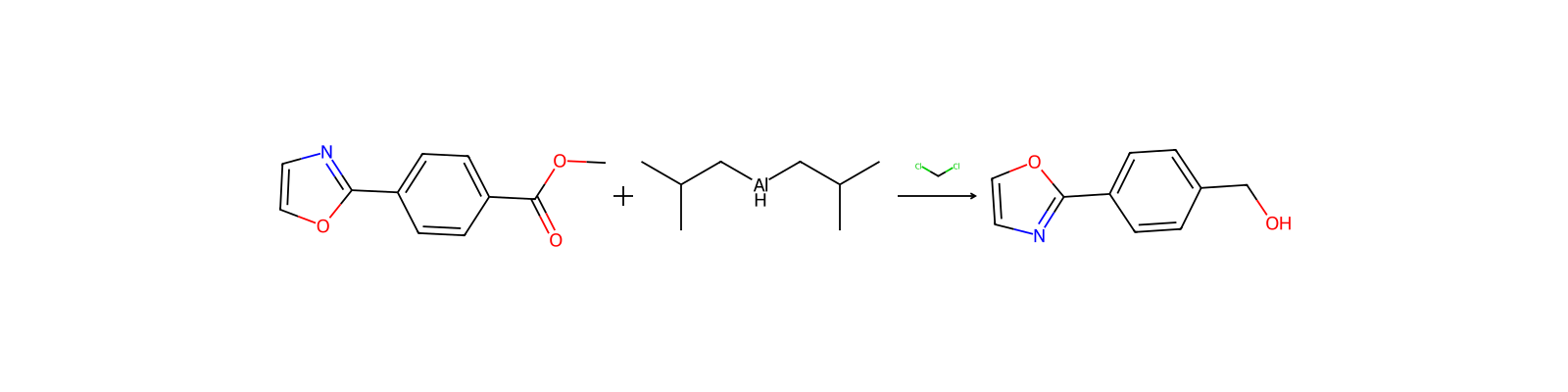
HRID 4462 reaction equation
HRID 4462As reactantuspto-grants-1988_02
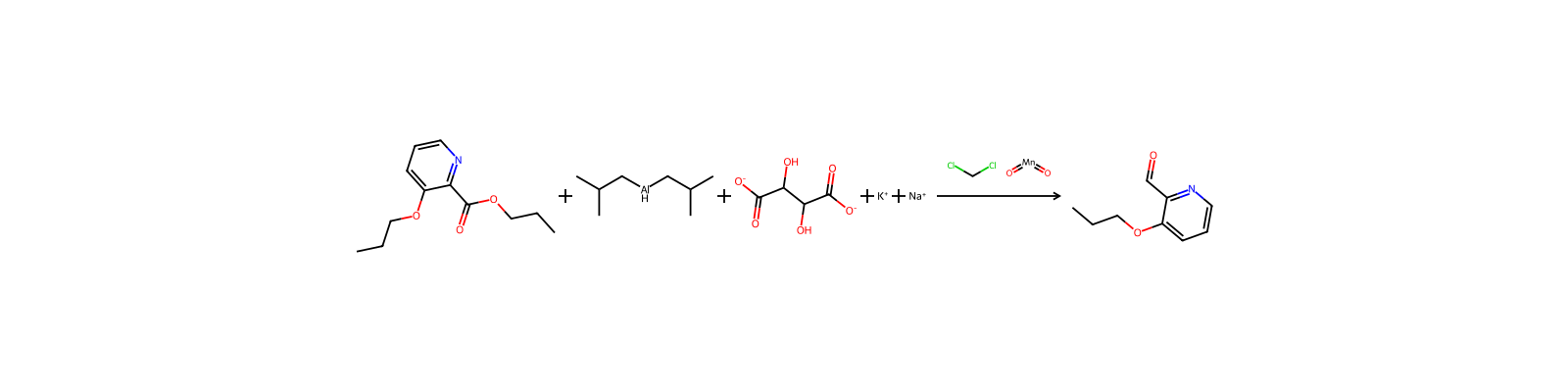
HRID 7145 reaction equation
HRID 7145As reactantuspto-grants-2006_08
HRID 8906 reaction equation
HRID 8906As reactantuspto-grants-2006_08
HRID 8967 reaction equation
HRID 8967As reactantuspto-grants-2006_08
HRID 8971 reaction equation
HRID 8971As reactantuspto-grants-2006_08
HRID 8973 reaction equation
HRID 8973As reactantuspto-grants-2006_08
HRID 8975 reaction equation
HRID 8975As reactantuspto-grants-2006_08
HRID 8979 reaction equation
HRID 8979As reactantuspto-grants-2006_08
Page 1 of 296

Compound notes

Loading…

On this pageBasic informationOverviewNames & identifiersPropertiesSafety & regulationChemistry & industryRelated reactionsCompound notes
More actions
New noteNew reactionRequest quotes

Less sensitive than trialkylaminums to oxidation upon exposure to air. /Alkylaluminum halides/

Other Experimental Properties · 4 items

Pyrophoric; dilute solutions nonpyrophoric

Specific heat: 2.15 J/g at 57 °C

The fumes are white, possess a characteristic musty odor at low concentrations, and thus have suitable warning properties. /Aluminum alkyls/

Dialkylaluminum hydrides are trimeric, with bridging hydrides.

Physicochemical properties

Melting point
-70 °C · -70 °C
Boiling point
65 °C · 65 °C
Density
1.23 g/mL · 1.23 g/mL at 25 °C
vapor pressure
13.3 Pa · 13.3Pa at 90℃
Flash point
40 °F · 40 °F
storage temp.
2 · 2-8°C
solubility
Miscible with organic solvents.
form
Solution
Specific Gravity
0.86 · 0.860
color
Clear
Water Solubility
vigorous reaction
Hydrolytic Sensitivity
8 · 8: reacts rapidly with moisture, water, protic solvents
Sensitive
Air Sensitive/Heat Sensitive
BRN
4123663 · 4123663
InChI
1S/2C4H9.Al.H/c2*1-4(2)3;;/h2*4H,1H2,2-3H3;;
InChIKey
AZWXAPCAJCYGIA-UHFFFAOYSA-N
SMILES
CC(C)C[AlH]CC(C)C
LogP
4.22 · 4.22
CAS DataBase Reference
1191 · 1191-15-7(CAS DataBase Reference)
EWG's Food Scores
1 · 1
FDA UNII
2 EJ47H11A · H2EJ47H11A
NIST Chemistry Reference
Diisobutylaluminum hydride(1191-15-7)
EPA Substance Registry System
Diisobutylaluminum hydride (1191-15-7)
UNSPSC Code
12352001 · 12352001
NACRES
22 · NA.22
Symbol(GHS)
2 · GHS02,GHS05,GHS07,GHS08
Signal word
Danger
Hazard statements
225 · H225-H250-H260-H304-H314-H336-H361d-H373-H412
Precautionary statements
210 · P210-P231+P232-P280-P301+P310+P331-P301+P330+P331-P303+P361+P353-P305+P351+P338+P310-P370+P378
target organs
Central nervous system
Hazard Codes
F,T,C,N
Risk Statements
14 · 14/15-17-35-40-67-65-63-48/20-11-34-19-62-51/53-23/24/25-20/21/22-15-14-50/53-37-22
Safety Statements
26 · 26-43-45-62-46-36/37/39-29-16-61-27-9
RIDADR
3399 · UN 3399 4.3/PG 1
WGK Germany
2 · 2
RTECS
710000 · BD0710000
F
1 · 1-4.3-10
TSCA
TSCA listed
HazardClass
4.3 · 4.3
PackingGroup
I
HS Code
29319090 · 29319090
Storage Class
4.2 · 4.2 - Pyrophoric and self-heating hazardous materials
Hazard Classifications
1 Aquatic · Aquatic Acute 1Aquatic Chronic 1Asp. Tox. 1Eye Dam. 1Pyr. Liq. 1Skin Corr. 1BSTOT SE 3Water-react 1
Hazardous Substances Data
1191 · 1191-15-7(Hazardous Substances Data)
REACH Registrations
Active
Excepted Quantities
Not Permitted as Excepted Quantity

Prophoric material in flammable solvent. Vapors are heavier than air & may travel to a source of ignition & flash back. /Aluminum alkyls/

Hazards Summary · 1 item

Spontaneously ignites in air; [Hawley] Stored 25% w/w in hexane; Pyrophoric; Reacts violently with water, evolving extremely flammable gases; A corrosive substance that can cause injury to the skin, eyes, and respiratory tract; Inhalation may cause chemical pneumonitis and pulmonary edema; May have CNS effects; [MSDSonline] Organoaluminum compounds are corrosive; Harmful if absorbed through the skin or inhaled; The butyl alkyls and below are pyrophoric; Aluminum alkyls are eye irritants; [HSDB] Organic aluminum compounds can cause irritation or burns, depending upon concentration; [Ullmann] TLV withdrawn for aluminum alkyls because of inadequate toxicological data; [ACGIH] See Aluminum. See ORGANOMETALS.

OSHA StandardsVacated 1989 OSHA PEL TWA 2 mg/cu m is still enforced in some states. /Aluminum, soluble salts & alkyls, as Al/
DOT Emergency Guidelines · 5 items

/GUIDE 138: SUBSTANCES - WATER-REACTIVE (EMITTING FLAMMABLE GASES)/ Fire or Explosion: Produce flammable gases on contact with water. May ignite on contact with water or moist air. Some react vigorously or explosively on contact with water. May be ignited by heat, sparks or flames. May re-ignite after fire is extinguished. Some are transported in highly flammable liquids. Runoff may create fire or explosion hazard. /Aluminum alkyl hydrides/

/GUIDE 138: SUBSTANCES - WATER-REACTIVE (EMITTING FLAMMABLE GASES)/ Health: Inhalation or contact with vapors, substance, or decomposition products may cause severe injury or death. May produce corrosive solutions on contact with water. Fire will produce irritating, corrosive and/or toxic gases. Runoff from fire control may cause pollution. /Aluminum alkyl hydrides/

/GUIDE 138: SUBSTANCES - WATER-REACTIVE (EMITTING FLAMMABLE GASES)/ Public Safety: CALL Emergency Response Telephone Number ... . As an immediate precautionary measure, isolate spill or leak area in all directions for at least 50 meters (150 feet) for liquids and at least 25 meter (75 feet) for solids. Keep unauthorized personnel away. Stay upwind. Keep out of low areas. Ventilate the area before entry. /Aluminum alkyl hydrides/

/GUIDE 138: SUBSTANCES - WATER-REACTIVE (EMITTING FLAMMABLE GASES)/ Protective Clothing: Wear positive pressure self-contained breathing apparatus (SCBA). Wear chemical protective clothing that is specifically recommended by the manufacturer. It may provide little or no thermal protection. Structural firefighters' protective clothing will only provide limited protection in fire situations ONLY; it is not effective in spill situations where direct contact with the substance is possible. /Aluminum alkyl hydrides/

For more DOT Emergency Guidelines (Complete) data for DIISOBUTYLALUMINUM HYDRIDE (8 total), please visit the HSDB record page.

NFPA Hazard Classification · 3 items

3 - Materials that, under emergency conditions, can cause serious or permanent injury.

4 - Materials that rapidly or completely vaporize at atmospheric pressure and normal ambient temperature or that are readily dispersed in air and burn readily.

3 - Materials that in themselves are capable of detonation or explosive decomposition or explosive reaction but that require a strong initiating source or must be heated under confinement before initiation.

NIOSH Recommendations · 4 items

Recommended Exposure Limit: 10-Hr Time-Weighted Avg: 10 mg/cu m (total). /Aluminum/

Recommended Exposure Limit: 10 Hr Time-Weighted Avg: 5 mg/cu m (resp). /Aluminum/

Recommended Exposure Limit: 10 Hr Time-Weighted Avg: 2 mg/cu m. /Aluminum (soluble salts and alkyls, as Al)/

Recommended Exposure Limit: 10 Hr Time-Weighted Avg: 5 mg/cu m. /Aluminum (pyro powders and welding fumes, as Al)/

Hazard Classes and Categories · 2 items

Pyr. Liq. 1 (97.7%)

Flammable agents - 4th degree, Reactive agents - 3rd degree

State Drinking Water Standards(CA) CALIFORNIA 1000 ug/l /Aluminum/
State Drinking Water Guidelines · 3 items

(AZ) ARIZONA 73 ug/l /Aluminum/

(CA) CALIFORNIA 200 ug/l /Aluminum/

(ME) MAINE 1430 ug/l /Aluminum/

Shipment Methods and Regulations · 3 items

The International Maritime Dangerous Goods Code lays down basic principles for transporting hazardous chemicals. Detailed recommendations for individual substances and a number of recommendations for good practice are included in the classes dealing with such substances. A general index of technical names has also been compiled. This index should always be consulted when attempting to locate the appropriate procedures to be used when shipping any substance or article.

The International Air Transport Association (IATA) Dangerous Goods Regulations are published by the IATA Dangerous Goods Board pursuant to IATA Resolutions 618 and 619 and constitute a manual of industry carrier regulations to be followed by all IATA Member airlines when transporting hazardous materials.

No person may /transport,/ offer or accept a hazardous material for transportation in commerce unless that person is registered in conformance ... and the hazardous material is properly classed, described, packaged, marked, labeled, and in condition for shipment as required or authorized by ... /the hazardous materials regulations (49 CFR 171-177)./

Safety & protection

Exposure Control and Personal Protection · 1 item

TIH (Toxic Inhalation Hazard) - Term used to describe gases and volatile liquids that are toxic when inhaled. Some are TIH materials themselves, e.g., chlorine, and some release TIH gases when spilled in water, e.g., chlorosilanes. [ERG 2016].

Fire Fighting Procedures · 2 items

Do not use water, foam or halogenated extinguishing agents.

Stop flow of liquid before extinguishing fire. Use dry chemical or carbon dioxide. DO NOT use water as straight stream directly on spilled material. Water fog can be used to control fire. DO NOT use halogenated extinguishing agents on spilled material. Violent reaction may result. Use water spray to keep fire-exposed containers cool. Fight fire from protected location or maximum possible distance. /Aluminum Alkyls/

Storage Conditions · 5 items

Extremely reactive with air, moisture and compounds containing active hydrogen and therefore must be kept under a blanket of inert gas. /Aluminum alkyls/

In general, materials ... toxic as stored or which can decompose into toxic components ... Should be stored in cool ... ventilated place, out of ... sun, away from ... fire hazard ... be periodically inspected and monitored. Incompatible materials should be isolated ...

All possibility of contact with water must be avoided. Solution containing not more than 20% of these compounds in non-reactive solvents, however, can be handled without risk of spontaneous ignition. /Aluminum alkyls/

Must be stored in an inert atmosphere; sensitive to oxidation and hydrolysis in air. /Trialkylaluminums/

Separate from air, water, halocarbons, alcohols. Store in a cool, dry, well-ventilated location. Outside or detached storage is preferred. Inside storage should be in a standard flammable liquid storage warehouse, room, or cabinet. /Aluminum alkyls/

Disposal Methods · 2 items

Aluminum compounds are treated under anhydrous conditions to prevent violent reactions, recover solvent, and form Al compounds suitable for landfill by reaction with anhydrous hydrolysis agent, eg calcium hydroxide. /Aluminum compounds/

SRP: The most favorable course of action is to use an alternative chemical product with less inherent propensity for occupational exposure or environmental contamination. Recycle any unused portion of the material for its approved use or return it to the manufacturer or supplier. Ultimate disposal of the chemical must consider: the material's impact on air quality; potential migration in soil or water; effects on animal, aquatic, and plant life; and conformance with environmental and public health regulations.

Preventive Measures · 5 items

SRP: The scientific literature for the use of contact lenses in industry is conflicting. The benefit or detrimental effects of wearing contact lenses depend not only upon the substance, but also on factors including the form of the substance, characteristics and duration of the exposure, the uses of other eye protection equipment, and the hygiene of the lenses. However, there may be individual substances whose irritating or corrosive properties are such that the wearing of contact lenses would be harmful to the eye. In those specific cases, contact lenses should not be worn. In any event, the usual eye protection equipment should be worn even when contact lenses are in place.

Work clothing that becomes wet or significantly contaminated should be removed and replaced. /Aluminum (soluble salts and alkyls, as Al)/

Workers whose clothing may have become contaminated should change into uncontaminated clothing before leaving the work premises. /Aluminum (soluble salts and alkyls, as Al)/

The worker should immediately wash the skin when it becomes contaminated. /Aluminum (soluble salts and alkyls, as Al)/

SRP: Contaminated protective clothing should be segregated in such a manner so that there is no direct personal contact by personnel who handle, dispose, or clean the clothing. Quality assurance to ascertain the completeness of the cleaning procedures should be implemented before the decontaminated protective clothing is returned for reuse by the workers. Contaminated clothing should not be taken home at end of shift, but should remain at employee's place of work for cleaning.

Minimum Risk LevelIntermediate Oral: 1.0 mg/kg/day (L134) Chronic Oral: 1.0 mg/kg/day (L134)
Threshold Limit Values (TLV) · 3 items

8 hr Time Weighted Avg (TWA): 1 mg/cu m (respirable fraction). /Aluminum metal and insoluble compounds/

Excursion Limit Recommendation: Excursions in worker exposure levels may exceed 3 times the TLV-TWA for no more than a total of 30 minutes during a work day, and under no circumstances should they exceed 5 times the TLV-TWA, provided that the TLV-TWA is not exceeded. /Aluminum and compounds, as Al; metal dust, pyro powders, soluble salts & alkyls (not otherwise specified)/

A4; Not classifiable as a human carcinogen. /Aluminum metal and insoluble compounds/

Protective Action Criteria (PAC) · 3 items

29 [mg/m3]

320 [mg/m3]

1900 [mg/m3]

Personal Protective Equipment (PPE) · 3 items

Wear appropriate personal protective clothing to prevent skin contact. /Aluminum (soluble salts and alkyls, as Al/

Wear appropriate eye protection to prevent eye contact. /Aluminum (soluble salts and alkyls, as Al)/

Protective clothing and a high standard of training in the necessary precautionary measures are essential for the handling of the materials. /Aluminum alkyls/

Toxicology

Health Effects · 1 item

Aluminum targets the nervous system and causes decreased nervous system performance and is associated with altered function of the blood-brain barrier. The accumulation of aluminum in the body may cause bone or brain diseases. High levels of aluminum have been linked to Alzheimer's disease. A small percentage of people are allergic to aluminium and experience contact dermatitis, digestive disorders, vomiting or other symptoms upon contact or ingestion of products containing aluminium. (L739, L740)

Adverse EffectsDermatotoxin - Skin burns.
Exposure RoutesOral (L739) ; inhalation (L739)
Toxicity Summary · 1 item

The main target organs of aluminum are the central nervous system and bone. Aluminum binds with dietary phosphorus and impairs gastrointestinal absorption of phosphorus. The decreased phosphate body burden results in osteomalacia (softening of the bones due to defective bone mineralization) and rickets. Aluminum's neurotoxicity is believed to involve several mechanisms. Changes in cytoskeletal protein functions as a results of altered phosphorylation, proteolysis, transport, and synthesis are believed to be one cause. Aluminum may induce neurobehavioral effects by affecting permeability of the blood-brain barrier, cholinergic activity, signal transduction pathways, lipid peroxidation, and impair neuronal glutamate nitric oxide-cyclic GMP pathway, as well as interfere with metabolism of essential trace elements because of similar coordination chemistries and consequent competitive interactions. It has been suggested that aluminum's interaction with estrogen receptors increases the expression of estrogen-related genes and thereby contributes to the progression of breast cancer (A235), but studies have not been able to establish a clear link between aluminum and increased risk of breast cancer (A15468). Certain aluminum salts induce immune responses by activating inflammasomes. (L739, A235, A236)

Signs and Symptoms · 1 item

Inhalating aluminum dust causes coughing and abnormal chest X-rays. A small percentage of people are allergic to aluminium and experience contact dermatitis, digestive disorders, vomiting or other symptoms upon contact or ingestion of products containing aluminium. (L739, L740)

Human Toxicity Excerpts · 2 items

/SIGNS AND SYMPTOMS/ Corrosive. Causes severe eye and skin burns. Irritating to skin, eyes, and respiratory system. May be harmful if absorbed through skin or inhaled. "Metal fume fever" may result from inhalation of fumes /from organoaluminum compounds/. /SRP: While possible, metal fume fever is not highly probable./ /Organoaluminum compounds/

/OTHER TOXICITY INFORMATION/ Vapors of the pyrophoric alkyls (butyls and below) are nontoxic because they are completely consumed, but inhalation of the metallic oxide smoke (Al2O3) at 15 mg/cu m or greater can result in symptoms such as "metal fume fever." /Aluminum alkyls/

Carcinogen Classification · 1 item

Not listed by IARC. IARC classified aluminum production as carcinogenic to humans (Group 1), but did not implicate aluminum itself as a human carcinogen. (L135) A link between use of aluminum-containing antiperspirants and increased risk of breast cancer has been proposed (A235), but studies have not been able to establish a clear link (A15468).

Evidence for CarcinogenicityA4; Not classifiable as a human carcinogen. /Aluminum metal and insoluble compounds/
Toxicity DataLCLo (guinea pigs) = 70,000 mg/m3/1h

Regulatory information

State Drinking Water Standards(CA) CALIFORNIA 1000 ug/l /Aluminum/
State Drinking Water Guidelines · 3 items

(AZ) ARIZONA 73 ug/l /Aluminum/

(CA) CALIFORNIA 200 ug/l /Aluminum/

(ME) MAINE 1430 ug/l /Aluminum/

Federal Drinking Water GuidelinesEPA 50-200 ug/l /Aluminum/

Safety data

F
1-4.3-10
wgk
2
tsca
TSCA listed
rtecs
BD0710000
ridadr
UN 3399 4.3/PG 1
hs_code
29319090
risk_code
14/15-17-35-40-67-65-63-48/20-11-34-19-62-51/53-23/24/25-20/21/22-15-14-50/53-37-22
Signal word
Danger
Symbol(GHS)
GHS02,GHS05,GHS07,GHS08
hazard_code
F,T,C,N
safety_code
26-43-45-62-46-36/37/39-29-16-61-27-9
hazard_class
4.3
Storage Class
4.2 - Pyrophoric and self-heating hazardous materials
packing_group
I
target organs
Central nervous system
Hazard statements
H225-H250-H260-H304-H314-H336-H361d-H373-H412
Excepted Quantities
Not Permitted as Excepted Quantity
REACH Registrations
Active
Hazard Classifications
Aquatic Acute 1Aquatic Chronic 1Asp. Tox. 1Eye Dam. 1Pyr. Liq. 1Skin Corr. 1BSTOT SE 3Water-react 1
Precautionary statements
P210-P231+P232-P280-P301+P310+P331-P301+P330+P331-P303+P361+P353-P305+P351+P338+P310-P370+P378
Hazardous Substances Data
1191-15-7(Hazardous Substances Data)
Formulations/PreparationsSUPPLIED AS A SOLN IN HYDROCARBON SOLVENTS.
General Manufacturing Information · 2 items

Not Known or Reasonably Ascertainable

Aluminum, hydrobis(2-methylpropyl)-: ACTIVE

Applications · 4 items

DescriptionDiisobutylaluminium hydride (DIBALH, DIBAL, DIBAL-H or DIBAH) is a reducing agent with the formula (i-Bu2AlH)2, where i-Bu represents isobutyl (-CH2CH(CH3)2). It can be used for various homogeneous reductions such as alkynes to alkenes, esters or nitriles to aldehydes. It is available commercially as the neat reagent and as a solution in several different solvents (hexane, dichloromethane, tetrahydrofuran, etc.). The neat reagent is a liquid and is supplied in metal cylinders. It is pyrophoric and highly reactive and therefore must be handled with great care. The molar solutions in organic solvents are more stable and easier to handle provided that the normal precautions are taken for working with air-sensitive compounds. They must all be handled in an atmosphere free from oxygen and water. Commonly used solvents for diisobutylaluminium hydride are dichloromethane, diglyme, dioxane and tetrahydrofuran. Even when the substrate is not completely soluble in these solvents successful reductions can be accomplished.

UsesDiisobutylaluminum hydride is commonly used as a reducing agent in organic synthesis.Diisobutylaluminum hydride can be used in the following protocols:As a promotor of Tishchenko reaction of aldehydes.Conversion of benzylidene acetals of 1,2-and 1,3-glycols to the corresponding monobenzyl ethers of the glycols.To generate a novel chiral reducing agent based on (S)-proline for the asymmetric reduction of prochiral ketones.

UsesDiisobutylaluminum hydride is used as reducing agent in pharmaceuticals. It is also used as raw material in organic synthesis, agrochemicals and dyestuffs.

UsesDiisobutylaluminum hydride (DIBAL-H) is a common reducing agent to reduce aldehydes, ketones, esters, acids and acid chlorides to the corresponding alcohols. Some of the applications are:Synthesis of α-acetoxy ethers by reduction and subsequent acetylation of esters.Synthesis of coniferyl, sinapyl, and p-coumaryl alcohol by selective reduction of corresponding cinnamate esters.Reduction of secondary phosphine oxides (SPOs) to the corresponding phosphines.DIBAL-H can also be used in the hydroalumination of alkene and alkynes.

Upstream & downstream products

Downstream products

tert-Butyl 4-(3-formylbenzyl)tetrahydro-1(2H)-pyrazinecarboxylateCitronellolphenyltin7-Bromo-1,2,3,4-tetrahydro-quinoline hydrochloride3-Methyl-5-(2,6,6-trimethyl-1-cyclohexen-1-yl)-2,4-pentadienal4,4,4-trifluoro-2-(2,2,2-trifluoroethyl)butanaltert-Butyl 4-(4-formylbenzyl)piperazine-1-carboxylateDi-tert-butylphenylphosphonium tetrafluoroborate1-Boc-4-(4-formylphenyl)piperazine(S)-4-Boc-morpholine-3-carboxylic acid