
HRID 35692As reactant

366-18-7c1ccc(-c2ccccn2)nc1ROFVEXUMMXZLPA-UHFFFAOYSA-N2,2'-bipyridine is a bipyridine in which the two pyridine moieties are linked by a bond between positions C-2 and C-2'. It has a role as a ferroptosis inhibitor and a chelator.
366-18-7DTXSID9040635CHEMBL39879CHEBI:30351log Kow= 1.50
1.67
White crystals
Crystals from dilute alcohol
PRISMS FROM PETROLEUM ETHER
Very sol in alcohol, ether, and benzene
Soluble in oxygenated solvents
In water, 5.93X10+3 mg/l @ 25 °C
Solubility in water, g/100ml: 6.4
273.5 °C
272-273 °C
Safety information is for reference only and does not replace the supplier’s Safety Data Sheet (SDS), applicable regulations, or professional assessment.
This chemical does not meet GHS hazard criteria for 1.5% (10 of 659) of reports.
Danger
H301+H311 (34.9%): Toxic if swallowed or in contact with skin [Danger Acute toxicity, oral; acute toxicity, dermal]
P262, P264, P264+P265, P270, P273, P280, P301+P316, P302+P352, P305+P351+P338, P316, P317, P321, P330, P337+P317, P361+P364, P362+P364, P405, and P501 (click each P-code to see the statement)
Aggregated GHS information provided per 659 reports by companies from 21 notifications to the ECHA C&L Inventory. Each notification may be associated with multiple companies.
Danger
Chemical: 2,2'-Bipyridine
2,2'-Bipyridine is listed on the EPA's Chemical Data Reporting (CDR) system. Manufacturers and importers of 2,2'-Bipyridine are required to report information about their production and use of this chemical to the EPA under the Toxic Substances Control Act (TSCA). (40 eCFR Part 711)
REACH registered substance: 2,2'-bipyridyl (EC: 206-674-4)
2,2'-Bipyridine: Does not have an individual approval but may be used under an appropriate group standard
A skin, eye, and mucous membrane irritant; Emergency treatment: Pyridine; Pyridine is an irritant that causes CNS depression after ingestion of 1/2 cup or inhalation of 6-12 ppm; It can cause liver and kidney injury; [HSDB] A skin, eye, and respiratory tract irritant; [ICSC] A teratogen (limb malformations) in rat studies; [REPROTOX] An irritant; [MSDSonline] See 4,4'-Bipyridine and 2,3'-Bipyridine.
2,2'-DIPYRIDYL, A CHELATOR OF IRON(+2) & INHIBITOR OF PLATELET AGGREGATION WAS STUDIED TO DETERMINE THE MECHANISM OF ITS EFFECTS ON PLATELETS. AT LOW CONCENTRATIONS REQUIRED TO INHIBIT ARACHIDONIC ACID-MEDIATED AGGREGATION, 2,2'-DIPYRIDYL & 4,4'DIPYRIDYL-2HCL INHIBITED THE PLATELET CYCLOOXYGENASE. THE MECHANISM OF INHIBITION OF ADP-INDUCED AGGREGATION WAS INDUCED AGGREGATION, 2,2'-DIPYRIDYL DID NOT ALTER CELL ULTRASTRUCTURE, SEROTONIN OR NUCLEOTIDE CONTENT, OR INTERFERE WITH RELEASE OF ARACHIDONIC ACID-(14)C OR CALCIUM MOVEMENTS. APPARENTLY, THE INHIBITION OF CYCLOOXYGENASE BY LOW CONCENTRATIONS OF THESE COMPOUNDS IS NOT DUE TO BIDENTATE IRON CHELATION, SINCE 4,4'-DIPYRIDYL WAS ALMOST AS EFFECTIVE AS 2,2'-DIPYRIDYL, BUT IS COMPATIBLE WITH BINDING OF THESE INHIBITORS TO THE FE IN THE HEME OF THE CYCLOOXYGENASE.
2,2'-BIPYRIDINE INHIBITED AROMATIC HYDROXYLATION IN MICROSOMES DERIVED FROM 3-METHYLCHOLANTHRENE TREATED RATS & ENHANCED THIS PROCESS IN MICROSOMES FROM PHENOBARBITAL SODIUM TREATED RATS. 2,2'-BIPYRIDINE PRODUCED A TYPE I BINDING SPECTRUM WITH AEROBIC MICROSOMAL FRACTIONS FROM PHENOBARBITAL SODIUM TREATED RATS & A TYPE II BINDING SPECTRUM WITH MICROSOMES FROM 3-METHYLCHOLANTHRENE TREATED RATS.
Chemicals that bind to and remove ions from solutions. Many chelating agents function through the formation of COORDINATION COMPLEXES with METALS.
Substances used for the detection, identification, analysis, etc. of chemical, biological, or pathologic processes or conditions. Indicators are substances that change in physical appearance, e.g., color, at or approaching the endpoint of a chemical titration, e.g., on the passage between acidity and alkalinity. Reagents are substances used for the detection or determination of another substance by chemical or microscopical means, especially analysis. Types of reagents are precipitants, solvents, oxidizers, reducers, fluxes, and colorimetric reagents. (From Grant & Hackh's Chemical Dictionary, 5th ed, p301, p499)
PYRIDINE & ITS ALKYL DERIVATIVES ARE ABSORBED FROM GI TRACT, INTRAPERITONEAL CAVITY & LUNGS. PERITONEAL ABSORPTION IS APPARENTLY ONLY SLIGHTLY MORE RAPID & COMPLETE THAN GI ABSORPTION ... IN GENERAL THE BASES ARE RAPIDLY ABSORBED THROUGH INTACT SKIN. /ALKYL DERIVATIVES OF PYRIDINE/


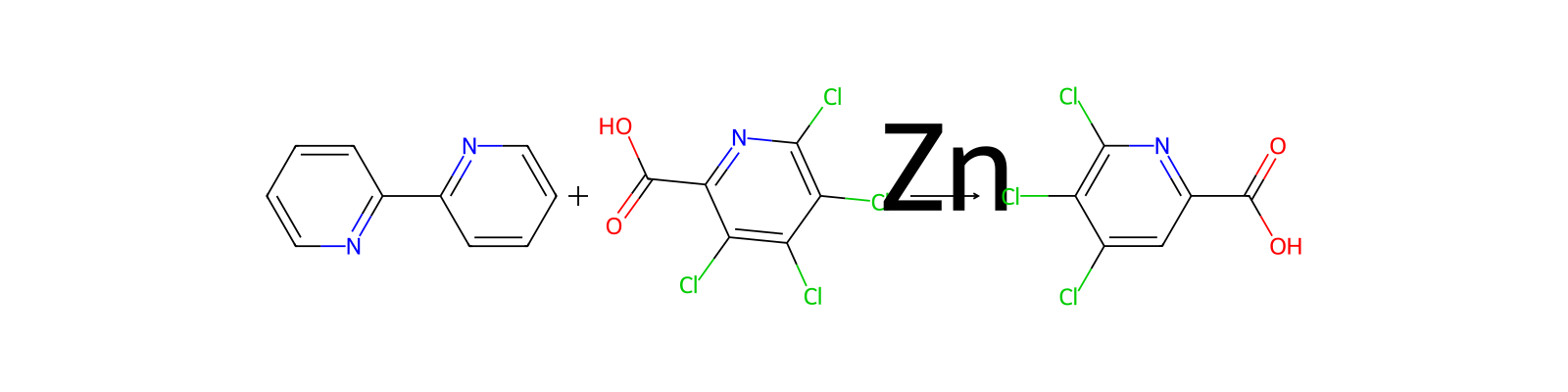
72 °C
70 °C
White solid; [Hawley] White or yellow crystalline solid; [MSDSonline]
WHITE CRYSTALS.
Positive
3.84
2.7
Agilent XCT
Electrospray ionization
formic acid (5.3nM)
Acute Tox. 3 (94.5%)
Acute toxicity (Oral) - Category 3
Acute toxicity (Oral) - Category 3
Fresh air, rest.
Rinse and then wash skin with water and soap.
First rinse with plenty of water for several minutes (remove contact lenses if easily possible), then refer for medical attention.
Rinse mouth. Refer for medical attention .
SRP: At the time of review, criteria for land treatment or burial (sanitary landfill) disposal practices are subject to significant revision. Prior to implementing land disposal of waste residue (including waste sludge), consult with environmental regulatory agencies for guidance on acceptable disposal practices.
Personal protection: particulate filter respirator adapted to the airborne concentration of the substance. Sweep spilled substance into covered containers. If appropriate, moisten first to prevent dusting. Carefully collect remainder. Then store and dispose of according to local regulations.
SRP: The scientific literature for the use of contact lenses in industry is conflicting. The benefit or detrimental effects of wearing contact lenses depend not only upon the substance, but also on factors including the form of the substance, characteristics and duration of the exposure, the uses of other eye protection equipment, and the hygiene of the lenses. However, there may be individual substances whose irritating or corrosive properties are such that the wearing of contact lenses would be harmful to the eye. In those specific cases, contact lenses should not be worn. In any event, the usual eye protection equipment should be worn even when contact lenses are in place.
2,2'-BIPYRIDINE AT CONCENTRATIONS OF 1.0-5.0 MILLIMOLE GREATLY INCREASED THE COVALENT BINDING OF (14)C-LABELED CARBON TETRACHLORIDE TO RAT LIVER MICROSOMES.
BIOTRANSFORMATION OF M-FLUOROTYROSINE BY TYROSINE METABOLIC PATHWAY OF THE LIVER PLAYED AN IMPORTANT ROLE IN THE ELICITATION OF CONVULSIONS IN MICE BY M-FLUOROTYROSINE. SIMULTANEOUS ADMINISTRATION OF M-FLUOROTYROSINE & ALPHA,ALPHA-DIPYRIDYL PREVENTED THE APPEARANCE OF M-FLUOROTYROSINE INDUCED SEIZURES.
TERRESTRIAL FATE: Based on a classification scheme(1), an estimated Koc value of 160(SRC), determined from a log Kow of 1.5(2) and a regression-derived equation(3), indicates that 2,2'-bipyridine is expected to have moderate mobility in soil(SRC). Volatilization of 2,2'-bipyridine from moist soil surfaces is not expected to be an important fate process(SRC) given an estimated Henry's Law constant of 5.4X10⁻¹⁰ atm-cu m/mole(4). 2,2'-Bipyridine is not expected to volatilize from dry soil surfaces(SRC) based upon an estimated vapor pressure of 1.3X10⁻⁵ mm Hg(SRC), derived from a water solubility, 5.9X10+3 mg/l(5), and its estimated Henry's Law constant(4).
AQUATIC FATE: Based on a classification scheme(1), an estimated Koc value of 160(SRC), determined from a log Kow of 1.5(2) and a regression-derived equation(3), indicates that 2,2'-bipyridine is expected to adsorb to suspended solids and sediment(SRC). Volatilization from water surfaces is not expected(3) based upon an estimated Henry's Law constant of 5.4X10⁻¹⁰ atm-cu m/mole(4). According to a classification scheme(5), an estimated BCF of 3(SRC), from its log Kow(2) and a regression-derived equation(6), suggests the potential for bioconcentration in aquatic organisms is low(SRC). 2,2'-Bipyridine was shown to undergo slow oxidation with photochemically generated hydroxyl radicals in aqueous solution (half-life of about 129 days)(7).
ATMOSPHERIC FATE: According to a model of gas/particle partitioning of semivolatile organic compounds in the atmosphere(1), 2,2'-bipyridine, which has an estimated vapor pressure of 1.3X10⁻⁵ mm Hg at 25 °C(SRC), derived from a water solubility, 5.9X10+3 mg/l(2), and an estimated Henry's Law constant, 5.3X10⁻¹⁰ atm-cu m/mole(3), will exist in both the vapor and particulate phases in the ambient atmosphere(SRC). Vapor-phase 2,2'-bipyridine is degraded in the atmosphere by reaction with photochemically-produced hydroxyl radicals(SRC); the half-life for this reaction in air is estimated to be 12.5 days(SRC), calculated from its rate constant of 1.3X10⁻¹² cu cm/molecule-sec at 25 °C(SRC) that was derived using a structure estimation method(4). Particulate-phase 2,2'-bipyridine may be removed from the air by wet and dry deposition(SRC).
Cough. Sore throat.
Redness. Pain.
Redness. Pain.
Burning sensation in the throat and chest. Nausea. Vomiting.
The Koc of 2,2'-bipyridine is estimated as 160(SRC), using a log Kow of 1.5(1) and a regression-derived equation(2). According to a classification scheme(3), this estimated Koc value suggests that 2,2'-bipyridine is expected to have moderate mobility in soil(SRC).
The Henry's Law constant for 2,2'-bipyridine is estimated as 5.4X10⁻¹⁰ atm-cu m/mole(1). This Henry's Law constant indicates that 2,2'-bipyridine is expected to be essentially nonvolatile from water surfaces(2). 2,2'-Bipyridine is not expected to volatilize from dry soil surfaces(SRC) based upon an estimated vapor pressure of 1.3X10⁻⁵ mm Hg(SRC), derived from its water solubility, 5.9X10+3 mg/l(3), and an estimated Henry's Law constant(1).
IN RATS & MICE ALPHA,ALPHA-DIPYRIDYL DECREASED THE LEVEL OF NOREPINEPHRINE & INHIBITED DOPAMINE-BETA-HYDROXYLASE ACTIVITY IN THE BRAIN IN A DOSE DEPENDENT MANNER. DOPAMINE & 5-HYDROXYTRYPTAMINE LEVELS WERE NOT AFFECTED.
THE DEPLETION OF NOREPINEPHRINE IN RAT BRAIN & OTHER TISSUES DID NOT APPEAR TO BE RELATED TO THE TREMORS, HYPOTHERMIA, & HYPOTENSION PRODUCED BY ALPHA,ALPHA'-DIPYRIDYL.
2,2'-BIPYRIDYL ADMINISTERED INTRAPERITONEALLY OR ORALLY IN DOSES OF 250, 100, & 50 MG/KG TO RATS CAUSED TREMORS & SLIGHT PTOSIS WHICH COMPLETELY DISAPPEARED IN 24 HOURS.
THE MUTAGENICITIES OF 18 SUPEROXIDE GENERATING COMPOUNDS WERE SCREENED BY AMES/SALMONELLA METHOD. ALPHA,ALPHA'-DIPYRIDYL WAS MUTAGENIC.
For more Non-Human Toxicity Excerpts (Complete) data for 2,2'-BIPYRIDINE (9 total), please visit the HSDB record page.
The rate constant for the vapor-phase reaction of 2,2'-bipyridine with photochemically-produced hydroxyl radicals has been estimated as 1.3X10⁻¹² cu cm/molecule-sec at 25 °C(SRC) using a structure estimation method(1). This corresponds to an atmospheric half-life of about 12 days at an atmospheric concentration of 5X10+5 hydroxyl radicals per cu cm(1). The rate constant for the reaction of 2,2'-bipyridine with photochemically-produced hydroxyl radicals in water has been measured to be 6.2X10+9 M-1 sec-1 at 21 °C and a pH of 9.3(2), which corresponds to an aqueous half-life of about 129 days at a hydroxyl radical concn of 1X10-17 M(3). 2,2'-Bipyridine is not expected to undergo hydrolysis in the environment due to the lack of hydrolyzable functional groups(4). Data are not available to assess this compound's potential for direct photolysis.
Used as an iron chelating agent, indicator for photometric determination of metals (Ag, Cd, Cu, Fe, and Mo), and chemical intermediate in the production of the herbicide diquat; [HSDB] Formed as a pyrolysis product in tobacco smoke and also from the degradation of the herbicide paraquat; [Reference #1]
Smoking cigarettes [Category: Food & Drugs]
Iron chelating agent
Indicator for photometric determination of Ag, Cd, Cu, Fe, and Mo
Important chemical intermediate in the production of the herbicide diquat; the quaternary salt is used as a contact herbicide.
Dehydrogenation of pyridine with nickel or other metal catalysts gives 2,2'-bipyridyl.
Raney nickel reduction /of pyridine/ gives 2,2'-bipyridine.
UsesA high-affinity chelator of iron. A reagent used for the determination of iron.
Uses2,2'-bipyridine acts as a bidentate chelating ligand which form complexes with transition metal ions and shows antifungal, antibacterial and antiviral activity. It is used for the colorimetric determination of iron as well as oxidation reduction indicators to confirm the presence of ferrous ion in soils. It forms complexes with ruthenium and platinum, exhibit intense luminescence, which may have practical applications. Copper(I) bipyridine complexes involved in the oxidation of alcohols under aerobic conditions.
General Description2,2′-Bipyridyl, is a symmetrical bipyridine commonly used as a neutral ligand for complexation with metal ions. The molecule is planar with trans-conformation and crystallizes in the monoclinic crystal system.
Preparation2,2'-bipyridine is synthesized by the reaction of pyridine with ferric chloride. Take 70g of anhydrous pyridine and mix with 13g of anhydrous ferric chloride, heat and react at 300℃ in a sealed tube for about 35h. After cooling, the reactant solidified into red-black crystals, the sealing tube was opened, and the red-black solution of the solid was washed out with a small amount of hot water. The oily impurities were removed by extraction with ether. After neutralization with sodium bicarbonate, excess pyridine was removed by heating with steam. The mixture was then made strongly basic, and the 2,2'-bipyridine was distilled off with steam.
DefinitionChEBI: 2,2'-bipyridine is a bipyridine in which the two pyridine moieties are linked by a bond between positions C-2 and C-2'. It has a role as a ferroptosis inhibitor and a chelator.