
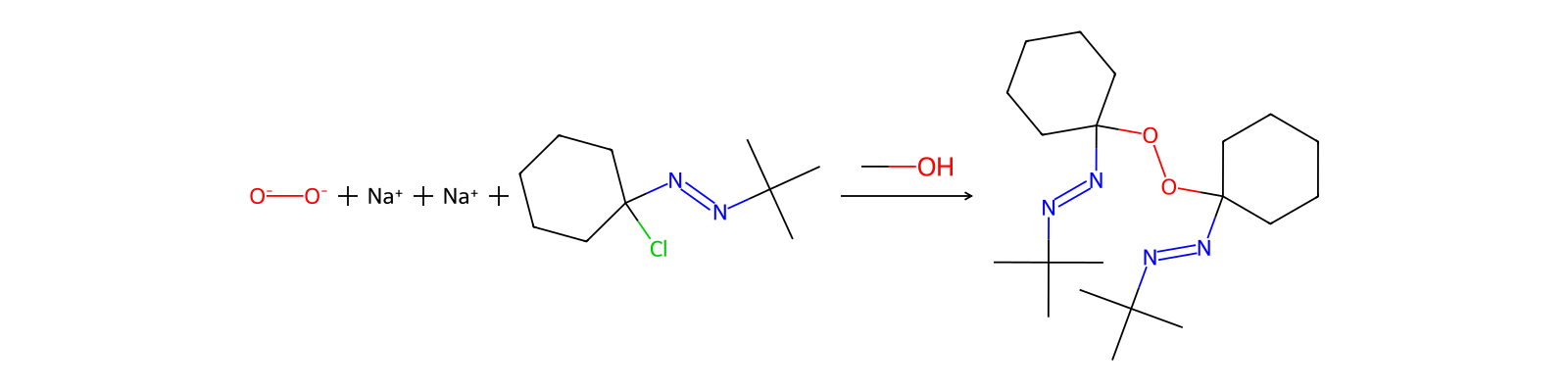
HRID 26630As reactant
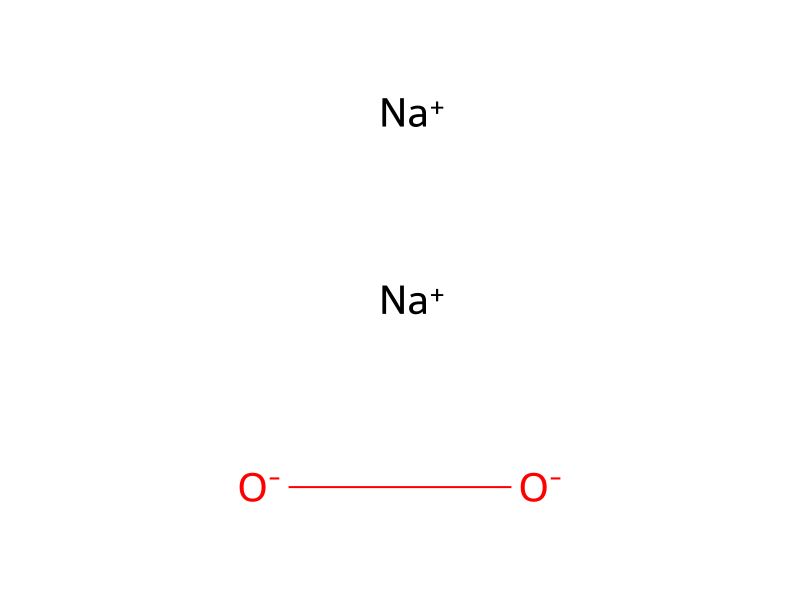
1313-60-6[Na+].[Na+].[O-][O-]PFUVRDFDKPNGAV-UHFFFAOYSA-NSodium peroxide appears as a yellow-white to yellow granular solid. Mixtures with combustible material are readily ignited by friction, heat, or contact with moisture. May vigorously decompose under prolonged exposure to heat, causing the rupture of the containers.
1313-60-6DTXSID0061660Metals -> Peroxides, Metal
Reactive agents - 1st degree
2.805 @ 20 °C
2.8 g/cm³
2.805 @25 °C
Yellowish-white, granular powder
WHITE POWDER TURNING YELLOW ON EXPOSURE TO ATMOSPHERE
Yellowish-white powder turns yellow when heated
Pale yellow solid
SOLUBLE IN ACID; INSOLUBLE IN ALKALI
Freely sol in water, forming sodium hydroxide and hydrogen peroxide, the latter quickly decomp into oxygen and water
Solubility in water: reaction
460 °C, decomp
675 °C
Sodium peroxide appears as a yellow-white to yellow granular solid. Mixtures with combustible material are readily ignited by friction, heat, or contact with moisture. May vigorously decompose under prolonged exposure to heat, causing the rupture of the containers.
Safety information is for reference only and does not replace the supplier’s Safety Data Sheet (SDS), applicable regulations, or professional assessment.
Danger
H271: May cause fire or explosion; strong Oxidizer [Danger Oxidizing liquids; Oxidizing solids]
P210, P220, P260, P264, P280, P283, P301+P330+P331, P302+P361+P354, P304+P340, P305+P354+P338, P306+P360, P316, P321, P363, P370+P378, P371+P380+P375, P405, P420, and P501 (click each P-code to see the statement)
Danger
H271 (100%): May cause fire or explosion; strong Oxidizer [Danger Oxidizing liquids; Oxidizing solids]
P210, P220, P260, P264, P264+P265, P280, P283, P301+P330+P331, P302+P361+P354, P304+P340, P305+P354+P338, P306+P360, P316, P317, P321, P363, P370+P378, P371+P380+P375, P405, P420, and P501 (click each P-code to see the statement)
Chemical: Sodium peroxide (Na2(O2))
Status: Active Update: 30-03-2018 https://echa.europa.eu/registration-dossier/-/registered-dossier/23936
Sodium peroxide: HSNO Approval: HSR001355 Approved with controls
The New Jersey Worker and Community Right to Know Act requires public and private employers to provide information about hazardous substances at their workplaces. (N.J.S.A. 34:5A-1 et. seq.)
Excerpt from ERG Guide 144 [Oxidizers (Water-Reactive)]:
· May ignite combustibles (wood, paper, oil, clothing, etc.).
Not combustible but enhances combustion of other substances. Risk of fire and explosion on contact with combustible substances.
Used as a chemical intermediate, catalyst, oxidizing agent, antiseptic, and bleaching agent for textiles, paper, and other products; Also used in oxygen-supply systems, water purification, ore processing, and chemical analysis; [HSDB]
Pulp and Paper Processing [Category: Industry]
For Sodium Peroxide (USEPA/OPP PC Code: 063606) there are 0 labels match. /SRP: Not registered for current use in the U.S./
Bleaching animal and vegetable fibers, feathers, bones, ivory, wood, wax, sponges, coral; rendering air charged with carbon dioxide respirable as in torpedo boats, submarines, diving bells, etc; purifying air in sick rooms; dyeing and printing textiles; chemical analysis; general oxidizing agent.
CATALYST IN POLYMERIZATION OF STYRENE TO POLYSTYRENE
CHEM INT FOR OTHER INORG PEROXY CMPD & IN ORGANIC SYNTHESIS; OXIDIZING AGENT IN CHEMICAL ANALYSIS; BLEACHING AGENT FOR TEXTILES & PAPER; COMPONENT OF OXYGEN-SUPPLY SYSTEMS; AGENT FOR REMOVING PARAFFINS BLOCKING OIL WELLS
(1972) 5.99X10+7 GRAMS
(1975) 7.48X10+7 GRAMS
Reaction of sodium metal with oxygen (free of carbon dioxide and water vapor)
Prepared by heating sodium metal to 300 °C in aluminum vessels with a current of air from which carbon dioxide has been removed. Prepn of the octahydrate: Penneman, Inorg Syn 3, 1 (1950).
Sodium peroxide (Na2(O2)): ACTIVE
Discussion on the use of hydrogen peroxide and sodium peroxide in the bleaching of tripe.
DescriptionSodium peroxide has a molecular formula of Na2O2 and is an inorganic peroxide salt. It is a yellowish-white powder that turns yellow when heated. Sodium peroxide absorbs water and carbon dioxide from the air and is soluble in cold water. It is a strong oxidizing agent, is corrosive and can cause burns to the eyes and skin, and is also toxic by ingestion and inhalation. Sodium peroxide is water reactive and a dangerous fire and explosion risk in contact with water, alcohol, or acids. Sodium peroxide forms self-igniting mixtures with powdered metals and organic materials. It is incompatible with ethyl or methyl alcohol, glacial acetic acid, carbon disulfide, glycerin, ethylene glycol, and ethyl acetate. The four-digit UN identification number is 1504. The NFPA 704 designation is health 3, flammability 0, and reactivity 1. The 704 diamond has the prefix “oxy” in the white space at the bottom. It is used as bleach and as an oxygen-generating material for diving bells and submarines.






White to pale-yellow granules; [CHEMINFO MSDS]
YELLOW-TO-WHITE POWDER.
Reacts with water
Active oxygen content approx 20% by weight; evolves heat when dissolved in cold water
Strong oxidizing agent
With dilute acids hydrogen peroxide is formed which remains stable
For more Other Experimental Properties (Complete) data for SODIUM PEROXIDE (7 total), please visit the HSDB record page.
MIXTURES OF SODIUM PEROXIDE & COMBUSTIBLE, ORGANIC OR READILY OXIDIZABLE SUBSTANCES...IGNITE EASILY BY FRICTION OR ON CONTACT WITH A SMALL AMT OF WATER.
A mixture of sodium peroxide and aluminum powder reacts with incandescence. ... When the mixture is exposed to moist air, spontaneous ignition occurs.
When the mixture /of sodium peroxide and magnesium powder/ is exposed to moist air, spontaneous combustion occurs.
Sodium peroxide oxidizes antimony, arsenic, copper, potassium, tin, and zinc to incandescence.
Sodium peroxide...is spontaneously flammable with aniline, benzene, organic matter such as paper and wood, and diethyl ether. Mixtures with charcoal, glycerine, certain oils, and phosphorus burn... When a mixture of sodium peroxide and calcium carbide (powdered) is exposed to damp air, spontaneous combustion occurs. ... Sodium peroxide will ignite...organic cmpd, eg, hexamethylenetetramine when the mixture is moistened.
A mixture of sodium peroxide, silver chloride, and charcoal ignites spontaneously.
Excerpt from ERG Guide 144 [Oxidizers (Water-Reactive)]:
· TOXIC; inhalation or contact with vapor, substance, or decomposition products may cause severe injury or death.
Hazardous decomposition products include oxygen (increased fire hazard) and toxic oxides of sodium; Corrosive to skin, eyes, and upper respiratory tract; [CHEMINFO MSDS] Corrosive; Inhalation of high concentration can cause chemical pneumonitis; [MSDSonline]
Excerpt from ERG Guide 144 [Oxidizers (Water-Reactive)]:
NO water. Use dry powder. In case of fire: keep drums, etc., cool by spraying with water. NO direct contact with water.
Fresh air, rest. Half-upright position. Artificial respiration may be needed. Refer for medical attention.
First rinse with plenty of water for at least 15 minutes, then remove contaminated clothes and rinse again. Refer for medical attention .
First rinse with plenty of water for several minutes (remove contact lenses if easily possible), then refer for medical attention.
Rinse mouth. Do NOT induce vomiting. Refer for medical attention .
· CALL 911. Then call emergency response telephone number on shipping paper. If shipping paper not available or no answer, refer to appropriate telephone number listed on the inside back cover.
· ELIMINATE all ignition sources (no smoking, flares, sparks or flames) from immediate area.
Excerpt from ERG Guide 144 [Oxidizers (Water-Reactive)]:
General First Aid:
If material on fire or involved in fire: use dry chemical, graphite, or dry earth. Use water only if flooding quantities are available. Apply water from as far a distance as possible.
Evacuation: If fire becomes uncontrollable - consider evacuation of one-half (1/2) mile radius.
In case of fire, water should be applied by the sprinkler system or by hose from a safe distance, preferably with a fog nozzle. Foam may be necessary instead if the peroxide is diluted in a low density flammable solvent. Portable extinguishers should not be used except for very small fires. Peroxides threatened by fire should be wetted from a safe distance for cooling. /Peroxides, Organic and Inorganic/
KEEP TIGHTLY CLOSED & PROTECTED FROM CONTACT WITH ORGANIC OR OXIDIZABLE SUBSTANCES.
...SHOULD...BE STORED IN FIRE-RESISTING BUILDINGS, & SEPARATED FROM FLAMMABLE MATERIALS.
PROTECT AGAINST PHYSICAL DAMAGE & MOISTURE. SEPARATE FROM COMBUSTIBLE, ORGANIC OR OTHER READILY OXIDIZABLE MATERIALS. DO NOT STORE IN AREAS SUBJECT TO MOISTURE. IMMEDIATELY REMOVE & DISPOSE OF ANY SPILLED PEROXIDE.
SRP: At the time of review, criteria for land treatment or burial (sanitary landfill) disposal practices are subject to significant revision. Prior to implementing land disposal of waste residue (including waste sludge), consult with environmental regulatory agencies for guidance on acceptable disposal practices.
Personal protection: complete protective clothing including self-contained breathing apparatus. Do NOT absorb in saw-dust or other combustible absorbents. Do NOT let this chemical enter the environment. Sweep spilled substance into covered containers. Then store and dispose of according to local regulations.
Burning sensation. Cough. Laboured breathing. Shortness of breath. Sore throat.
Redness. Serious skin burns. Pain.
Redness. Pain. Blurred vision. Severe deep burns.
Sore throat. Abdominal pain. Nausea. Shock or collapse. Burning sensation.
...MAY CAUSE CHEMICAL BURNS OF SKIN & MUCOUS MEMBRANES, ALTHOUGH BURNS CAUSED BY HYDROGEN PEROXIDE ARE LESS SERIOUS THAN THOSE CAUSED BY SODIUM PEROXIDE.
NO PRIMARY SYSTEMIC EFFECTS WHEN INGESTED BECAUSE IT IS DECOMPOSED IN /SRP: GI TRACT/ BEFORE ABSORPTION. DECOMPOSITION MAY RELEASE LARGE VOL OF OXYGEN... LARGE DOSES PRESUMABLY PRODUCE GASTRITIS & ESOPHAGITIS.
IRRITANT AND CORROSIVE
Acute exposures to sodium peroxide via inhalation may cause respiratory irritation and difficulty in breathing.
For more Human Toxicity Excerpts (Complete) data for SODIUM PEROXIDE (6 total), please visit the HSDB record page.
/AN AEROSOL/...OF NA2O2 WITH SOME NAO.../WAS USED/ TO REPRESENT PRODUCT OF AN ACCIDENTAL SODIUM METAL FIRE IN A NUCLEAR REACTOR. JUVENILE & ADULT RATS EXPOSED...2 HR TO VARIOUS DILUTIONS OF AEROSOL.../SHOWED NECROSIS OF LARYNX SURFACE/. FINAL PARTICLE SIZE...2.5 UM OR LESS...PREDOMINATELY SODIUM CARBONATE WITH SOME NAOH.
DUE TO INDUSTRIAL DEVELOPMENT OF SODIUM COOLED BREEDER REACTORS, THE CONSEQUENCES OF SODIUM PEROXIDE AEROSOLS ON LETTUCE & TOMATOES WERE STUDIED. NECROSIS WAS REPORTED WHEN DEPOSITS IN SODIUM EQUIV WERE APPROX 300 MG/CU M. LEAVES WERE DESTROYED IF NECROSIS WAS EXTENSIVE.
Basic treatment: Establish a patent airway. Suction if necessary. Watch for signs of respiratory insufficiency and assist ventilations if necessary. Administer oxygen by nonrebreather mask at 10 to 15 L/min. Monitor for pulmonary edema and treat if necessary ... . Monitor for shock and treat if necessary ... . For eye contamination, flush eyes immediately with water. Irrigate each eye continuously with normal saline during transport ... . Do not use emetics. For ingestion, rinse mouth and administer 5 ml/kg up to 200 ml of water for dilution if the patient can swallow, has a strong gag reflex, and does not drool ... . Do not attempt to neutralize because of exothermic reaction. Cover skin burns with dry, sterile dressings after decontamination ... . /Oxidizers/
Advanced treatment: Consider orotracheal or nasotracheal intubation for airway control in the patient who is unconscious, has severe pulmonary edema, or is in, respiratory arrest. Early intubation, at the first sign of upper airway obstruction, may be necessary. Positive pressure ventilation techniques with a bag valve mask device may be beneficial. Monitor cardiac rhythm and treat arrhythmias as necessary ... . Start an IV with D5W /SRP: "To keep open", minimal flow rate/. Use lactated Ringer's if signs of hypovolemia are present. Watch for signs of fluid overload. Consider drug therapy for pulmonary edema ... . For hypotension with signs of hypovolemia, administer fluid cautiously. Watch for signs of fluid overload ... . Use proparacaine hydrochloride to assist eye irrigation ... . /Oxidizers/
Peroxides should be washed promptly from the skin to prevent irritation. In the case of eye contact, the eyes should be flushed immediately with large amounts of water, and medical attention should be obtained. ... Medical attention should also be obtained in case of accidental ingestion. ... /Peroxides, Organic and Inorganic/
UsesBleaching animal and vegetable fibers, feathers, bones, ivory, wood, wax, sponges, coral; rendering air charged with CO2 respirable as in torpedo boats, submarines, diving bells, etc.; purifying air in sick rooms; dyeing and printing textiles; chemical analysis. General oxidizing agent.
UsesAs an oxidizing agent, a bleaching agent, deodorant, pharmaceuticals and dyes, and as an analytical reagent.Sodium peroxide acts as a bleaching agent in laundry and wood pulp. It finds application in the extraction of minerals from various ores. It acts as an oxidizing agent as well as an oxygen source by reacting with carbon dioxide. Furthermore, it is used as a deodorant and an analytical reagent. It is also useful in scuba gear and in submarines.
UsesSodium peroxide historically was used to bleach wood pulp for the production of paper and textiles. It is mainly used for specialized laboratory operations, for example, the extraction of minerals from various ores. Sodium peroxide is used as an oxidizing agent and is used as an oxygen source by reacting with carbon dioxide to produce oxygen and sodium carbonate; it is thus particularly useful in scuba gear, submarines, and so on.
General DescriptionA yellow-white to yellow granular solid. Mixtures with combustible material are readily ignited by friction, heat, or contact with moisture. May vigorously decompose under prolonged exposure to heat, causing the rupture of the containers.
PreparationAlthough sodium peroxide, Na202, is the principal product of the combustion of sodium, sodium monoxide is prepared commercially by carefully permitting sodium to react with a limited amount of oxygen according to the equation If the sodium monoxide thus prepared is exposed to further dry oxygen or air, it is oxidized to the peroxide; this is the commercial method of preparing Na202 , the most important alkali peroxide,
Definitionsodium peroxide: A whitish solid(yellow when hot), Na2O2, soluble inice-water and decomposed in warmwater or alcohol; r.d. 2.80; decomposesat 460°C. A crystalline octahydrate(hexagonal) is obtained bycrystallization from ice-water. Thecompound is formed by the combustionof sodium metal in excess oxygen.At normal temperatures itreacts with water to give sodiumhydroxide and hydrogen peroxide.It is a powerful oxidizing agent reactingwith iodine vapour to give theiodate and periodate, with carbon at300°C to give the carbonate, andwith nitrogen(II) oxide to give thenitrate. It is used as a bleachingagent in wool and yarn processing,in the refining of oils and fats, andin the production of wood pulp.
DefinitionExists as impurity (about 10%) in sodium peroxide, obtained by heat- ing sodium peroxide in oxygen, reacts with water to yield hydrogen peroxide, oxygen, and sodium hydroxide.