HomeMCPWorkbenchSkills
HomeWorkbenchNotificationsMe
llms.txt · MCP GuidePrivacy Policy · Terms of Service · Supportv1.8.3
  1. Home
  2. /Compound

Methyl 4-Formylbenzoate

HCID 15294
New reaction
Print
Basic informationOverviewNames & identifiersPropertiesSafety & regulationChemistry & industryRelated reactionsCompound notes
Substructure searchFind similar structures

Basic information

CAS
1571-08-0
Standard SMILES
COC(=O)c1ccc(C=O)cc1
InChIKey
FEIOASZZURHTHB-UHFFFAOYSA-N
Molecular formula
C9H8O3
Average molar mass
164.16 g/mol
Monoisotopic mass
164.04734411

Overview

Methyl-p-formylbenzoate appears as needles (in water) or white powder. (NTP, 1992)

Names & identifiers

Preferred name
Methyl 4-Formylbenzoate
IUPAC
methyl 4-formylbenzoate
English name
Methyl 4-formylbenzoate
Molecular formula
C9H8O3
Molecular weight
164.16

Names & synonyms

METHYL 4-FORMYLBENZOATE1571-08-0Methyl p-formylbenzoate4-CarbomethoxybenzaldehydeBenzoic acid, 4-formyl-, methyl esterMethyl terephthalaldehydate4-(Methoxycarbonyl)benzaldehydep-Carbomethoxybenzaldehyde4-Formylbenzoic Acid Methyl EsterMethyl-p-formyl benzoateMethyl terephthaldehydateMethyl benzaldehyde-4-carboxylate
Show more names
AKOS BBS-00003165TIMTEC-BB SBB008362Methyl 4-formylbenzoOTAVA-BB BB7018801965Mehyl4-FormylbenzoateMethyl-4-formylbenzoat
p-Formylbenzoic acid methyl esterTerephthalaldehydic acid, methyl ester4-Carboxybenzaldehyde methyl ester2-MethoxycarbonylbenzaldehydeHSDB 5842NSC 28459CCRIS 6063DTXSID4025610

Database identifiers

CAS
1571-08-0
PubChem CID
15294
DTXSID
DTXSID4025610
ChEMBL
CHEMBL1607943

Properties

Computed structural properties

XLogP
1.7
Topological polar surface area
43.4 Ų
Hydrogen bond donors
0
Hydrogen bond acceptors
3
Rotatable bonds
3
Heavy atoms
12
Formal charge
0
Complexity
169

Experimental & physicochemical properties

Chemical ClassesOther Classes -> Benzaldehydes
Solubilityless than 1 mg/mL at 72 °F (NTP, 1992)
Boiling Point509 °F at 760 mmHg (NTP, 1992)
Melting Point140 to 144 °F (NTP, 1992)
Vapor Pressure0.0099 [mmHg]
Physical Description · 3 items

Methyl-p-formylbenzoate appears as needles (in water) or white powder. (NTP, 1992)

Other Solid

White solid; [CAMEO] Powder; [MSDSonline]

Physicochemical properties

Melting point
59 · 59-63 °C (lit.)
Boiling point
265 °C · 265 °C (lit.)
Density
1 · 1,2 g/cm3
bulk density
528 kg/m3 · 528kg/m3
refractive index

Safety & regulation

Safety information is for reference only and does not replace the supplier’s Safety Data Sheet (SDS), applicable regulations, or professional assessment.

GHS classification

GHS Classification · 5 items

This chemical does not meet GHS hazard criteria for 53.3% (8 of 15) of all reports.

Warning

H302 (13.3%): Harmful if swallowed [Warning Acute toxicity, oral]

P261, P264, P264+P265, P270, P271, P280, P301+P317, P302+P352, P304+P340, P305+P351+P338, P319, P321, P330, P332+P317, P337+P317, P362+P364, P403+P233, P405, and P501 (click each P-code to see the statement)

Aggregated GHS information provided per 15 reports by companies from 8 notifications to the ECHA C&L Inventory. Each notification may be associated with multiple companies.

Hazard information

Regulatory Information · 3 items

Benzoic acid, 4-formyl-, methyl ester is listed on the EPA's Chemical Data Reporting (CDR) system. Manufacturers and importers of Benzoic acid, 4-formyl-, methyl ester are required to report information about their production and use of this chemical to the EPA under the Toxic Substances Control Act (TSCA). (40 eCFR Part 711)

REACH registered substance: Methyl 4-formylbenzoate (EC: 216-385-5)

Benzoic acid, 4-formyl-, methyl ester: Does not have an individual approval but may be used as a component in a product covered by a group standard. It is not approved for use as a chemical in its own right.

Fire HazardsFlash point data for this compound are not available. It is probably combustible. (NTP, 1992)
Hazards SummaryMay form peroxides; [CAMEO] An irritant; [MSDSonline]
Reactive GroupAldehydes
Reactivity AlertsPeroxidizable Compound
Reactivity Profile · 1 item

Chemistry & industry

Uses & manufacturing

Uses · 2 items

Used to make dimethyl terephthalate; [HSDB]

CHEM INT (UNISOLATED) FOR DIMETHYL TEREPHTHALATE

U.S. Exports · 2 items

(1979) No Data

(1981) No Data

U.S. Imports · 2 items

(1979) No Data

(1981) No Data

U.S. Production · 3 items

2023: 500,000 - <1,000,000 lb

(1977) AT LEAST 4.54X10+8 GRAMS (UNISOLATED)

(1981) No Data

Industry UsesNot Known or Reasonably Ascertainable
Methods of ManufacturingPRODUCED AS AN UNISOLATED INTERMEDIATE IN PROCESS FOR MAKING DIMETHYL TEREPHTHALATE FROM P-XYLENE BY SUCCESSIVE OXIDATIONS & ESTERIFICATIONS
General Manufacturing Information · 2 items

All Other Basic Organic Chemical Manufacturing

Benzoic acid, 4-formyl-, methyl ester: ACTIVE

Applications · 3 items

Uses4-Formylbenzoic Acid Methyl Ester is a benzoic acid derivative with antioxidant activity.

UsesMethyl 4-formylbenzoate is used in the preparation of dimethyl terephthalate. It is also used as an active pharmaceutical ingredient intermediate and fluorescent brightener intermediate.

General DescriptionNeedles (in water) or white powder.

Upstream & downstream products

Related reactions

508 records
New reaction record
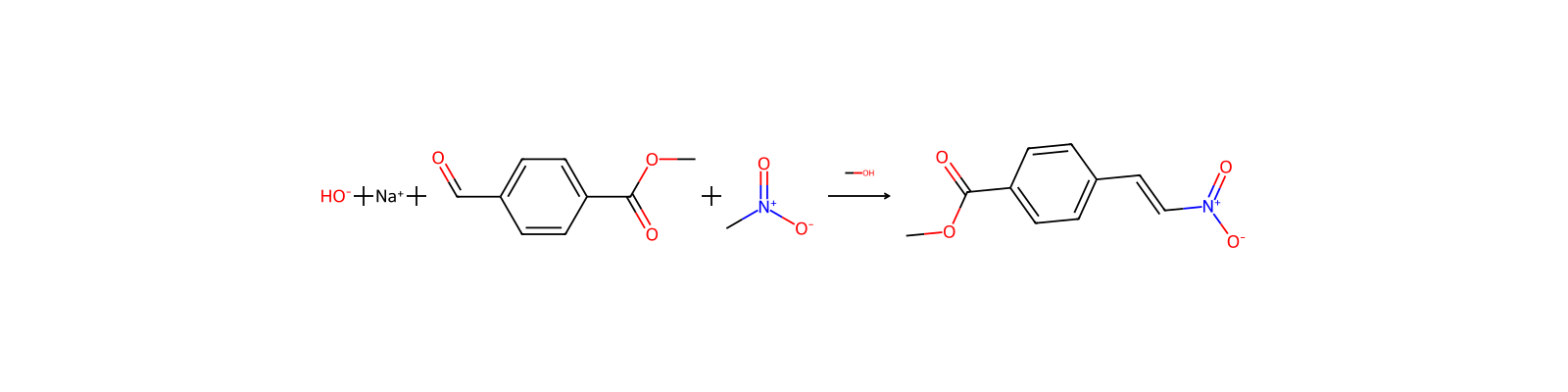
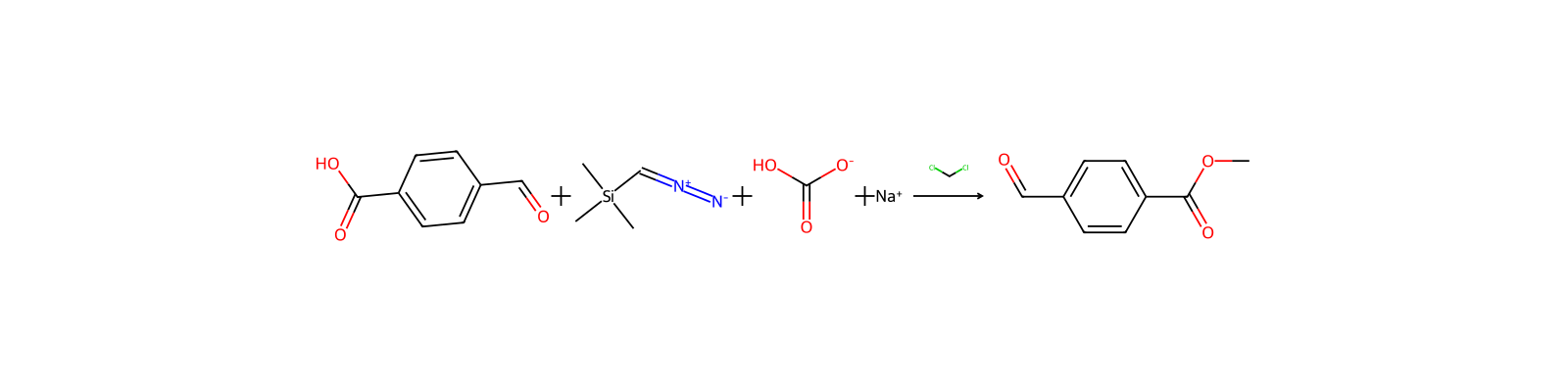
HRID 887 reaction equation
HRID 887As product
HRID 888 reaction equation
HRID 888As reactant
HRID 2734 reaction equation
HRID 2734As reactant
HRID 5053 reaction equation
HRID 5053As reactant
HRID 6731 reaction equation
HRID 6731As reactant
HRID 7356 reaction equation
HRID 7356As reactant
HRID 7372 reaction equation
HRID 7372As reactant
HRID 8311 reaction equation
HRID 8311As reactant
PreviousPage 1 of 64

Compound notes

On this pageBasic informationOverviewNames & identifiersPropertiesSafety & regulationChemistry & industryRelated reactionsCompound notes
UNII
NH766742VV
EC Number
216-385-5
Nikkaji
J47.044I
1.526 · 1.5260 (estimate)
Flash point
144 °C · 144 °C
storage temp.
30 °C · Store below +30°C.
solubility
0.1 g/mL, · methanol: 0.1 g/mL, clear
form
Crystalline Powder or Chunks
color
White to cream or slightly green
Water Solubility
insoluble
Sensitive
Air Sensitive
BRN
775895 · 775895
Stability
Stable, though possibly air-sensitive. Combustible. Incompatible with strong oxidizing agents.
InChI
1S/C9H8O3/c1-12-9(11)8-4-2-7(6-10)3-5-8/h2-6H,1H3
InChIKey
FEIOASZZURHTHB-UHFFFAOYSA-N
SMILES
[H]C(=O)c1ccc(cc1)C(=O)OC
LogP
2.05 · 2.050 (est)
CAS DataBase Reference
1571 · 1571-08-0(CAS DataBase Reference)
FDA UNII
766742 VV · NH766742VV
NIST Chemistry Reference
4 · 4-HC(O)-C6H4-COOCH3(1571-08-0)
EPA Substance Registry System
4 · Benzoic acid, 4-formyl-, methyl ester (1571-08-0)
UNSPSC Code
12352108 · 12352108
NACRES
22 · NA.22
Symbol(GHS)
7 · GHS07
Signal word
Warning
Hazard statements
315 · H315-H319
Precautionary statements
264 · P264-P280-P302+P352+P332+P313+P362+P364-P305+P351+P338+P337+P313
PPE
95 · Eyeshields, Gloves, type N95 (US)
Hazard Codes
Xn,Xi
Risk Statements
36 · 36/37/38-20/21/22
Safety Statements
22 · 22-24/25
WGK Germany
2 · 2
Autoignition Temperature
240 °C · 240°C
Hazard Note
Irritant
TSCA
TSCA listed
HS Code
2918300090 · 2918300090
Storage Class
11 · 11 - Combustible Solids
Hazardous Substances Data
1571 · 1571-08-0(Hazardous Substances Data)
REACH Registrations
Active

METHYL-P-FORMYLBENZOATE is an aldehyde/ester. Aldehydes are frequently involved in self-condensation or polymerization reactions. These reactions are exothermic; they are often catalyzed by acid. Aldehydes are readily oxidized to give carboxylic acids. Flammable and/or toxic gases are generated by the combination of aldehydes with azo, diazo compounds, dithiocarbamates, nitrides, and strong reducing agents. Aldehydes can react with air to give first peroxo acids, and ultimately carboxylic acids. These autoxidation reactions are activated by light, catalyzed by salts of transition metals, and are autocatalytic (catalyzed by the products of the reaction). The addition of stabilizers (antioxidants) to shipments of aldehydes retards autoxidation. Esters react with acids to liberate heat along with alcohols and acids. Strong oxidizing acids may cause a vigorous reaction that is sufficiently exothermic to ignite the reaction products. Heat is also generated by the interaction of esters with caustic solutions. Flammable hydrogen is generated by mixing esters with alkali metals and hydrides.

Air and Water ReactionsThis chemical may be sensitive to prolonged exposure to air. (NTP, 1992). Insoluble in water.
Hazard Classes and CategoriesAcute Tox. 4 (13.3%)

Safety & protection

Fire FightingFires involving this material can be controlled with a dry chemical, carbon dioxide or Halon extinguisher. (NTP, 1992)
First Aid · 1 item

EYES: First check the victim for contact lenses and remove if present. Flush victim's eyes with water or normal saline solution for 20 to 30 minutes while simultaneously calling a hospital or poison control center. Do not put any ointments, oils, or medication in the victim's eyes without specific instructions from a physician. IMMEDIATELY transport the victim after flushing eyes to a hospital even if no symptoms (such as redness or irritation) develop.

Nonfire Spill Response · 1 item

SMALL SPILLS AND LEAKAGE: Should a spill occur while you are handling this chemical, FIRST REMOVE ALL SOURCES OF IGNITION, then you should dampen the solid spill material with 60-70% ethanol and transfer the dampened material to a suitable container. Use absorbent paper dampened with 60-70% ethanol to pick up any remaining material. Seal the absorbent paper, and any of your clothes, which may be contaminated, in a vapor-tight plastic bag for eventual disposal. Solvent wash all contaminated surfaces with 60-70% ethanol followed by washing with a soap and water solution. Do not reenter the contaminated area until the Safety Officer (or other responsible person) has verified that the area has been properly cleaned.

Personal Protective Equipment (PPE) · 1 item

RECOMMENDED RESPIRATOR: Where the neat test chemical is weighed and diluted, wear a NIOSH-approved half face respirator equipped with an organic vapor/acid gas cartridge (specific for organic vapors, HCl, acid gas and SO2) with a dust/mist filter. (NTP, 1992)

Safety data

PPE
Eyeshields, Gloves, type N95 (US)
wgk
2
tsca
TSCA listed
hs_code
2918300090
risk_code
36/37/38-20/21/22
Signal word
Warning
Symbol(GHS)
GHS07
hazard_code
Xn,Xi
hazard_note
Irritant
safety_code
22-24/25
Storage Class
11 - Combustible Solids
Hazard statements
H315-H319
REACH Registrations
Active
Autoignition Temperature
240°C
Precautionary statements
P264-P280-P302+P352+P332+P313+P362+P364-P305+P351+P338+P337+P313
Hazardous Substances Data
1571-08-0(Hazardous Substances Data)

Upstream raw materials

Sodium2-NitropropaneMethyl 4-methylbenzoateBromineSodium carbonate4-Dibromomethyl-benzoic acid methyl ester4-(Hydroxyimino-methyl)-benzoic acid methyl esterMethyl 4-(diMethylcarbaMoyl)benzoateMethyl 4-(isopropylcarbaMoyl)benzoatemono-Methyl terephthalateMethyl 4-bromobenzoate4-Formylbenzoic acid

Downstream products

Micafungin Side Chain Methyl Ester3-[4-(Methoxycarbonyl)phenyl]propanoic acidMethyl 4-formyl-3-hydroxybenzoateTerephthalic acid 2-hydroxyethyl methyl ester(1r,4r)-methyl 4-formylcyclohexanecarboxylate1,3-Diphenyl-1,1,3,3-tetramethyldisiloxane