HomeMCPWorkbenchSkills
HomeWorkbenchNotificationsMe
llms.txt · MCP GuidePrivacy Policy · Terms of Service · Supportv1.8.3
  1. Home
  2. /Compound

2-Amino-2-methyl-1,3-propanediol

HCID 1531
New reaction
Print
Basic informationOverviewNames & identifiersPropertiesSafety & regulationChemistry & industryRelated reactionsCompound notes
Substructure searchFind similar structures

Basic information

CAS
115-69-5
Standard SMILES
CC(N)(CO)CO
InChIKey
UXFQFBNBSPQBJW-UHFFFAOYSA-N
Molecular formula
C4H11NO2
Average molar mass
105.14 g/mol
Monoisotopic mass
105.07897859

Overview

2-amino-2-methylpropane-1,3-diol is an aminodiol that is propane-1,3-diol substituted ny an amino and a methyl group at position 2.

Names & identifiers

Preferred name
2-Amino-2-methyl-1,3-propanediol
IUPAC
2-amino-2-methylpropane-1,3-diol
English name
2-Amino-2-methyl-1,3-propanediol
Molecular formula
C4H11NO2
Molecular weight
105.14

Names & synonyms

2-Amino-2-methyl-1,3-propanediol115-69-52-Amino-2-methylpropane-1,3-diolAMPDAminoglycolGentimonAminomethyl propanediol1,3-Propanediol, 2-amino-2-methyl-AmmediolIsobutandiol-2-amine1,1-Di(hydroxymethyl)ethylamine2-Amino-2-methyl-1,3-propandiol
Show more names
AMPD bufferAMPD AmmediolAmmediol, AMPDButanediolaMine
CZ7BU4QZJZDTXSID7059430NSC-6364CHEBI:991RefChem:557559DTXCID8033356204-100-7Pentaerythritol dichlorohydrin

Database identifiers

CAS
115-69-5
PubChem CID
1531
DTXSID
DTXSID7059430
ChEBI
CHEBI:991
UNII
CZ7BU4QZJZ
EC Number
204-100-7
Nikkaji
J35.183K

Properties

Computed structural properties

XLogP
-1.8
Topological polar surface area
66.5 Ų
Hydrogen bond donors
3
Hydrogen bond acceptors
3
Rotatable bonds
2
Heavy atoms
7
Formal charge
0
Complexity
51.7

Experimental & physicochemical properties

Chemical ClassesNitrogen Compounds -> Amino Alcohols, Other
Cosmetics · 3 items

Cosmetic ingredients (Aminomethyl Propanediol) -> CIR (Cosmetic Ingredient Review)

Cosmetic ingredients (Aminomethylpropanediol) -> CIR (Cosmetic Ingredient Review)

Buffering

SpringerMaterials PropertiesFusion temperature
Vapor Pressure0.00654 [mmHg]
Physical Description · 2 items

Large Crystals; Liquid

Solid; [Merck Index] Colorless crystalline solid; [Aldrich MSDS]

Physicochemical properties

Melting point
100 · 100-110 °C (lit.)
Boiling point
151 °C/10 · 151 °C/10 mmHg (lit.)
Density
1.0509 · 1.0509 (estimate)
vapor density
3.63 · 3.63 (vs air)

Safety & regulation

Safety information is for reference only and does not replace the supplier’s Safety Data Sheet (SDS), applicable regulations, or professional assessment.

GHS classification

GHS Classification · 4 items

Danger

H315 (89%): Causes skin irritation [Warning Skin corrosion/irritation]

P261, P264, P264+P265, P271, P280, P302+P352, P304+P340, P305+P351+P338, P305+P354+P338, P317, P319, P321, P332+P317, P337+P317, P362+P364, P403+P233, P405, and P501 (click each P-code to see the statement)

Aggregated GHS information provided per 228 reports by companies from 8 notifications to the ECHA C&L Inventory. Each notification may be associated with multiple companies.

Hazard information

Regulatory Information · 4 items

Chemical: 1,3-Propanediol, 2-amino-2-methyl-

1,3-Propanediol, 2-amino-2-methyl- is listed on the EPA's Chemical Data Reporting (CDR) system. Manufacturers and importers of 1,3-Propanediol, 2-amino-2-methyl- are required to report information about their production and use of this chemical to the EPA under the Toxic Substances Control Act (TSCA). (40 eCFR Part 711)

REACH registered substance: 2-amino-2-methylpropane-1,3-diol (EC: 204-100-7)

2-Amino-2-methyl-1,3-propanediol: Does not have an individual approval but may be used under an appropriate group standard

Hazards SummaryCauses somnolence, muscle weakness, and coma in oral lethal-dose studies of rabbits; [RTECS] A skin and strong eye irritant; [Aldrich MSDS]
Hazard Classes and CategoriesSkin Irrit. 2 (89%)

Toxicology

Adverse EffectsNeurotoxin - Other CNS neurotoxin
Toxicity Summary · 2 items

Chemistry & industry

Uses & manufacturing

Uses · 4 items

CIR ingredient: Aminomethyl Propanediol

CIR ingredient: Aminomethylpropanediol

Used to make surfactants, vulcanization accelerators, and pharmaceuticals; Also used as a biological buffer, absorbent for acidic gases, and emulsifying agent (cosmetics, mineral oil, leather dressings, textile specialties, and cleaning compounds; Also used in hair sprays and wave sets; [Merck Index]

Leather Tanning and Processing [Category: Industry]

U.S. Production2023: 107,056 lb
Consumer UsespH regulating agent
Industry UsesStabilizing agent
Household ProductsInformation on 1 consumer products that contain Aminomethyl propanediol in the following categories is provided:
Use ClassificationCosmetics -> Buffering
General Manufacturing Information · 2 items

Paint and Coating Manufacturing

1,3-Propanediol, 2-amino-2-methyl-: ACTIVE

Applications · 2 items

UsesEmulsifying agent (in soap form) for oils, fats, and waxes; absorbent for acidic gases; organic synthesis; cosmetics.

UsesA useful biological buffer2-Amino-2-methyl-1,3-propanediol is used to make surfactants, vulcanization accelerators and as a biological buffer. It acts as an absorbent for acidic gases and emulsifying agent for cosmetics, mineral oil, leather dressings, textile specialties and cleaning compounds. It is also used in hair sprays. It acts as a buffer for the determination of alkaline phosphatase activity and spacer in isotachophoresis of proteins. It serves as a reaction buffer for enzymes with an activity in the basic pH range such as alkaline phosphatase. Further, it is used in the preparation of 4-hydroxymethyl-4-methyl-oxazolidin-2-one.

Related reactions

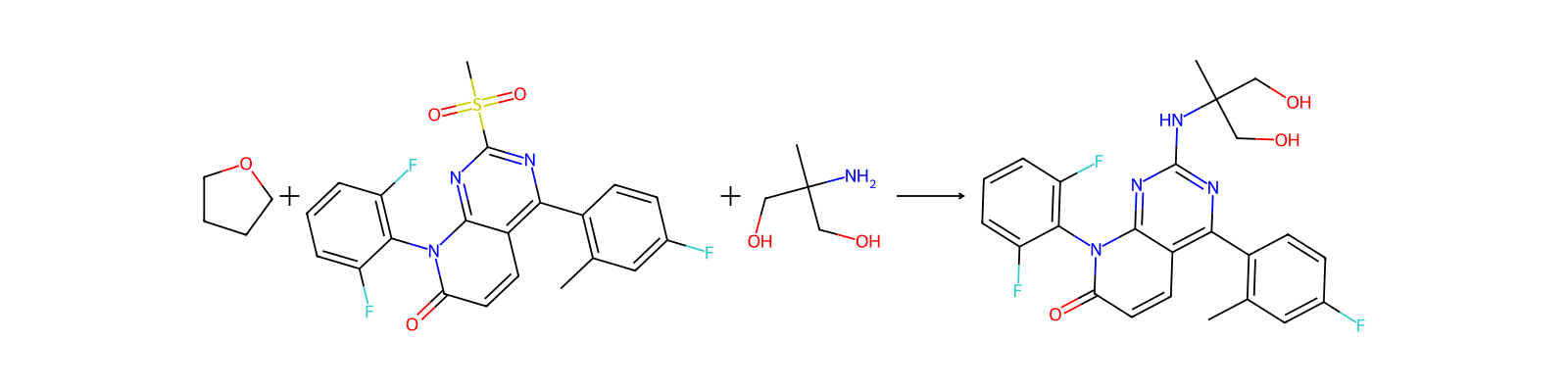
188 records
New reaction record
HRID 82251 reaction equation
HRID 82251As reactant
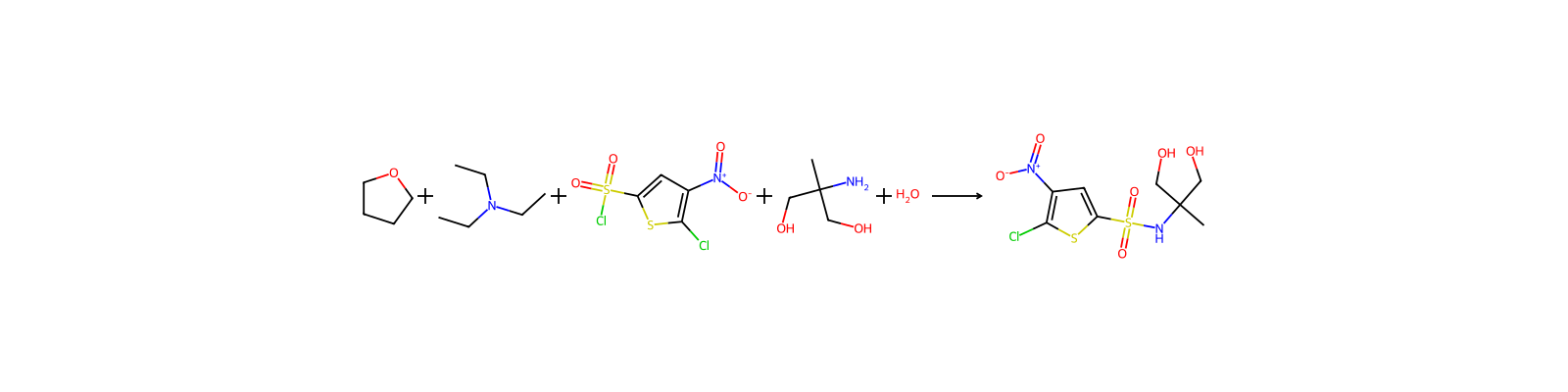
HRID 113946 reaction equation
HRID 113946As reactant
HRID 119015 reaction equation
HRID 119015As reactant
HRID 121730 reaction equation
HRID 121730As reactant
HRID 123737 reaction equation
HRID 123737As reactant
HRID 161189 reaction equation
HRID 161189As reactant
HRID 179819 reaction equation
HRID 179819As reactant
HRID 192380 reaction equation
HRID 192380As reactant
PreviousPage 1 of 24

Compound notes

On this pageBasic informationOverviewNames & identifiersPropertiesSafety & regulationChemistry & industryRelated reactionsCompound notes
vapor pressure
10 mm · ~10 mm Hg ( 152 °C)
refractive index
1.4754 · 1.4754 (estimate)
Flash point
100 °C · >100°C
storage temp.
30 °C · Store below +30°C.
solubility
2 O: · H2O: 1 M at 20 °C, clear, colorless
form
Crystalline Powder
color
White
PH
10 · 10.0-12.0 (20℃, 0.5M in H2O)
pka
8.8 · 8.8(at 25℃)
PH Range
7.8 · 7.8 - 9.7
Water Solubility
2500 g/L · 2500 g/L (20 ºC)
λmax
260 nm · λ: 260 nm Amax: 0.05λ: 280 nm Amax: 0.03
Merck
13 · 13,447
BRN
635708 · 635708
Stability
Stable. Combustible. May be moisture-sensitive. Incompatible with strong oxidizing agents, copper, aluminium, brass, strong acids.
Major Application
diagnostic assay manufacturing
Cosmetics Ingredients Functions
BUFFERING
Cosmetic Ingredient Review (CIR)
2 · 2-Amino-2-methyl-1,3-propanediol (115-69-5)
InChI
1S/C4H11NO2/c1-4(5,2-6)3-7/h6-7H,2-3,5H2,1H3
InChIKey
UXFQFBNBSPQBJW-UHFFFAOYSA-N
SMILES
CC(N)(CO)CO
LogP
-1.31 at · -1.31 at 22℃
CAS DataBase Reference
115 · 115-69-5(CAS DataBase Reference)
EWG's Food Scores
1 · 1
FDA UNII
7 BU4QZJZ · CZ7BU4QZJZ
NIST Chemistry Reference
2 · 2-Amino-2-methyl-1,3-propanediol(115-69-5)
EPA Substance Registry System
1 · 1,3-Propanediol, 2-amino-2-methyl- (115-69-5)
UNSPSC Code
12352104 · 12352104
NACRES
25 · NA.25
Symbol(GHS)
7 · GHS07
Signal word
Warning
Hazard statements
315 · H315-H319
Precautionary statements
264 · P264-P280-P302+P352-P305+P351+P338-P332+P313-P337+P313
PPE
95 · dust mask type N95 (US), Eyeshields, Gloves
Hazard Codes
Xi,Xn
Risk Statements
36 · 36/37/38-20/21/22
Safety Statements
26 · 26-36-37/39
RIDADR
3259 · UN 3259 8/PG 2
WGK Germany
1 · 1
RTECS
2975000 · TY2975000
F
3 · 3-23
TSCA
TSCA listed
HazardClass
8 · 8
PackingGroup
III
HS Code
2922199090 · 2922199090
Storage Class
11 · 11 - Combustible Solids
Hazard Classifications
2 Skin · Eye Irrit. 2Skin Irrit. 2
Toxicity
50 orally · LD50 orally in Rabbit: 17000 mg/kg
REACH Registrations
Active
Limited Quantities
5 kg · 5.0 kg (11 lbs) (solid)
Excepted Quantities
Max Inner Pack (30g or 30ml) and Max Outer Pack (1Kg or 1L)

Safe in the present practices of use and concentration. Ingredient, concentration, and use information are available in documents discoverable at https://cir-reports.cir-safety.org

Safe in the present practices of use and concentration. Ingredient, concentration, and use information are available in documents discoverable at https://cir-reports.cir-safety.org

Safety data

F
3-23
PPE
dust mask type N95 (US), Eyeshields, Gloves
wgk
1
tsca
TSCA listed
rtecs
TY2975000
ridadr
UN 3259 8/PG 2
hs_code
2922199090
Toxicity
LD50 orally in Rabbit: 17000 mg/kg
risk_code
36/37/38-20/21/22
Signal word
Warning
Symbol(GHS)
GHS07
hazard_code
Xi,Xn
safety_code
26-36-37/39
hazard_class
8
Storage Class
11 - Combustible Solids
packing_group
III
Hazard statements
H315-H319
Limited Quantities
5.0 kg (11 lbs) (solid)
Excepted Quantities
Max Inner Pack (30g or 30ml) and Max Outer Pack (1Kg or 1L)
REACH Registrations
Active
Hazard Classifications
Eye Irrit. 2Skin Irrit. 2
Precautionary statements
P264-P280-P302+P352-P305+P351+P338-P332+P313-P337+P313

Upstream & downstream products

Downstream products

1,3-Propanediol, 2-methyl-2-[(phenylmethyl)amino]-CrisnatolMFCD24849117

Additional notes

DefinitionChEBI: An aminodiol that is propane-1,3-diol substituted ny an amino and a methyl group at position 2.