HomeMCPWorkbenchSkills
HomeWorkbenchNotificationsMe
llms.txt · MCP GuidePrivacy Policy · Terms of Service · Supportv1.8.3
  1. Home
  2. /Compound

1,5-Diphenylpenta-1,4-dien-3-one;palladium

HCID 154270
New reaction
Print
Basic informationOverviewNames & identifiersPropertiesSafety & regulationChemistry & industryRelated reactionsCompound notes
Substructure searchFind similar structures

Basic information

CAS
32005-36-0
Standard SMILES
O=C(C=Cc1ccccc1)C=Cc1ccccc1.O=C(C=Cc1ccccc1)C=Cc1ccccc1.[Pd]
InChIKey
UKSZBOKPHAQOMP-UHFFFAOYSA-N
Molecular formula
C34H28O2Pd
Average molar mass
575 g/mol
Monoisotopic mass
574.11241

Overview

Bis(1,5-diphenyl-1,4-pentadien-3-one) palladium(0) is a chemical compound of palladium. Palladium is a chemical element with the chemical symbol Pd and an atomic number of 46. It is found as a free metal alloyed with gold and other platinum group metals and in the rare minerals cooperite and polarite. (L794)

Names & identifiers

Preferred name
1,5-Diphenylpenta-1,4-dien-3-one;palladium
IUPAC
bis(1,5-diphenylpenta-1,4-dien-3-one);palladium
English name
Bis(dibenzylideneacetone)palladium
Molecular formula
C34H20O2Pd
Molecular weight
566.95

Names & synonyms

32005-36-01,5-diphenylpenta-1,4-dien-3-one;palladiumBis((1,2,4,5-eta)-1,5-diphenyl-1,4-pentadien-3-one)palladiumC34H28O2PdPalladium(0) bis(dibenzylideneacetone)Bis(dibenzylideneacetone) Palladium(0)tris-(dibenzylideneacetone)dipalladium(0)SCHEMBL19685bis(dibenylideneacetone) palladiumbis(dibenzylidenacetone) palladiumDTXSID70953892UKSZBOKPHAQOMP-UHFFFAOYSA-N
Show more names
PD(DBA)2DBaPd(1E,4E)-1,5-diphenylpenta-1,4-dien-3-one,palladiumPd(C17H14O)2bis((1E,4E)-1,5-diphenylpenta-1,4-dien-3-one) palladiumBis(dibenzyLideneacetone)paLSucrose Impurity 12Bis(dba)palladium(0)
bis(dibenzylideneacetone) palladiumpalladium bis(dibenzylideneacetone)bis (dibenzylideneacetone) palladiumbis(dibenzylidene acetone) palladiumZH0006Bis-(dibenzylidene acetone) palladiumAKOS030228490bis(dibenzylideneacetone)palladium (0)

Properties

Computed structural properties

Topological polar surface area
34.1 Ų
Hydrogen bond donors
0
Hydrogen bond acceptors
2
Rotatable bonds
8
Heavy atoms
37
Formal charge
0
Complexity
272

Physicochemical properties

Melting point
150 °C · 150°C
storage temp.
2 · under inert gas (nitrogen or Argon) at 2–8 °C
solubility
Chloroform (Slightly)
form
Fine Powder
color
Red-brown to black
Water Solubility
insoluble
Sensitive
Air & Moisture Sensitive
Stability
Hygroscopic
InChI
InChI=1S/2C17H10O.Pd/c2*18-17(13-11-15-7-3-1-4-8-15)14-12-16-9-5-2-6-10-16;/h2*1-10H;
InChIKey
WTAPZWXVSZMMDG-JZOPPWQGSA-N
SMILES
O=C1C2=C(C3C=CC=CC=3)[Pd]34562(C(C2C=CC=CC=2)=C3C(=O)C4=C5C2C=CC=CC=2)C(C2C=CC=CC=2)=C16
CAS DataBase Reference
32005 · 32005-36-0(CAS DataBase Reference)
UNSPSC Code
12161600 · 12161600
NACRES
22 · NA.22
Symbol(GHS)
7 · GHS07
Signal word

Safety & regulation

Safety information is for reference only and does not replace the supplier’s Safety Data Sheet (SDS), applicable regulations, or professional assessment.

Toxicology

Health EffectsContact with palladium may cause palladium sensitivity and allergy. Animal studies have shown that palladium may damage the liver and kidney. (L798)
Toxicity Summary · 1 item

Due to their ability to form strong complexes with both inorganic and organic ligands, palladium ions can disturb cellular equilibria, replace other essential ions, and interact with functional groups of macromolecules, such as proteins or DNA. Palladium complexes binding to DNA and RNA leads to strand breakage. Palladium ions are able to inhibit most major cellular functions, including DNA and RNA synthesis. Palladium compounds have been shown to bind to and inhibit various enzymes, including creatine kinase and prolyl hydroxylase. (L798)

Signs and SymptomsSkin contact with palladium may cause contact dermatitis, erythema, and oedema. (L798)
Carcinogen ClassificationNo indication of carcinogenicity to humans (not listed by IARC).

Safety data

PPE
Eyeshields, Gloves, type N95 (US)
wgk
3
tsca
No
hs_code
28439000
risk_code
36/38
Signal word
Warning
Symbol(GHS)
GHS07
hazard_code
Xi
safety_code
22-24/25-37/39-26
Storage Class
11 - Combustible Solids
Hazard statements
H302+H312+H332-H315-H319

Chemistry & industry

Pharmacology

Metabolism/Metabolites · 1 item

Palladium may be absorbed through oral, dermal, and inhalation exposure. Once in the body it distributes to the kidney, liver, spleen, lymph nodes, adrenal gland, lung and bone. Palladium's ability to form complexes allows it the bind to amino acids, proteins, DNA, and other macromolecules. Palladium and its metabolites are excreted in the urine and faeces. (A21)

Applications · 3 items

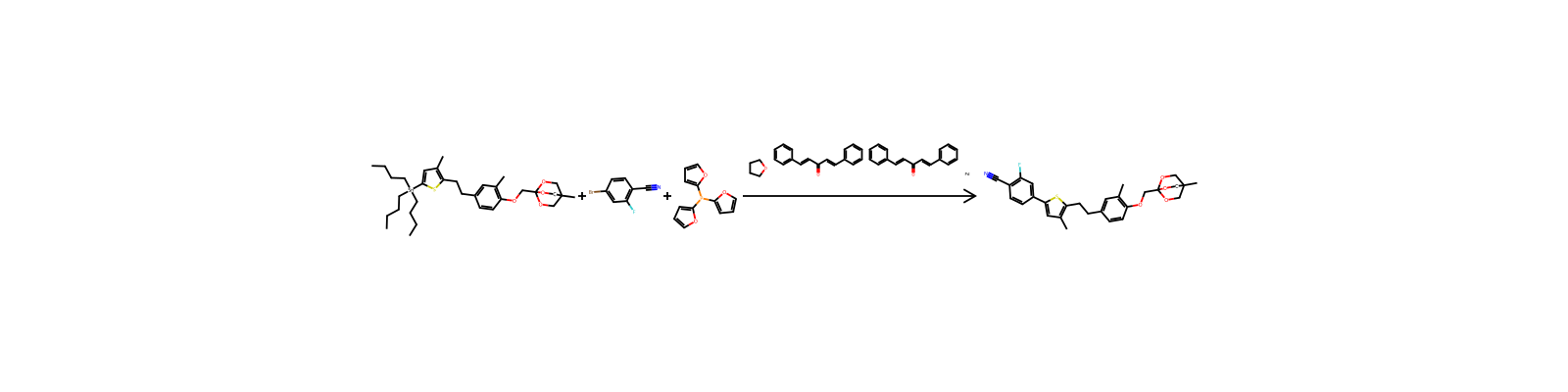
UsesHydrogenation, isomerization, carbonylation, oxidation, C-C bond formation.Bis(dibenzylideneacetone)palladium(0) is used as a reagent for the preparation of allylic substituted cyclopentadienes. It acts as a homogeneous catalyst as well as in the alkylation of allyl acetates by various nucleophiles. Further, it is used in Suzuki reaction.

UsesApplication Guide for Palladium Catalyzed Cross-Coupling Reactions

General DescriptionBis(dibenzylideneacetone)palladium(0) (Pd(dba)2) is an air stable Pd0 complex. It is a reagent for the synthesis of allylic substituted cyclopentadienes. It is a homogeneous catalyst. It catalyzes the alkylation of allyl acetates by various nucleophiles under mild conditions.

Upstream & downstream products

Upstream raw materials

Sodium acetateAcetonitrile1,3-DichloropropaneAcetoneTolueneBenzaldehydePalladium chlorideMethanol

Related reactions

55 records
New reaction record
HRID 9665 reaction equation
HRID 9665As catalyst
HRID 43354 reaction equation
HRID 43354As catalyst
HRID 67894 reaction equation
HRID 67894As reactant
HRID 331139 reaction equation
HRID 331139As catalyst
HRID 369029 reaction equation
HRID 369029As catalyst
HRID 369033 reaction equation
HRID 369033As catalyst
HRID 369035 reaction equation
HRID 369035As catalyst
HRID 369038 reaction equation
HRID 369038As catalyst
PreviousPage 1 of 7

Compound notes

On this pageBasic informationOverviewNames & identifiersPropertiesSafety & regulationChemistry & industryRelated reactionsCompound notes

Database identifiers

CAS
32005-36-0
PubChem CID
154270
DTXSID
DTXSID70953892
EC Number
608-691-6
Warning
Hazard statements
302 · H302+H312+H332-H315-H319
Precautionary statements
261 · P261-P264-P270-P271-P280-P301+P312+P330-P302+P352+P312+P362+P364-P304+P340+P312-P305+P351+P338+P337+P313-P501
PPE
95 · Eyeshields, Gloves, type N95 (US)
Hazard Codes
Xi
Risk Statements
36 · 36/38
Safety Statements
22 · 22-24/25-37/39-26
WGK Germany
3 · 3
TSCA
No
HS Code
28439000 · 28439000
Storage Class
11 · 11 - Combustible Solids
Precautionary statements
P261-P264-P270-P271-P280-P301+P312+P330-P302+P352+P312+P362+P364-P304+P340+P312-P305+P351+P338+P337+P313-P501

Downstream products

trans-Bis(triphenylphosphine)palladium dichlorideBis[Tris(2-methylphenyl)phosphine]palladium