

Basic information
- CAS
32981-86-5- Standard SMILES
CC(=O)O[C@@]12CO[C@@H]1C[C@H](O)[C@@]1(C)C(=O)[C@H](O)C3=C(C)[C@@H](O)C[C@@](O)([C@@H](OC(=O)c4ccccc4)[C@H]21)C3(C)C- InChIKey
YWLXLRUDGLRYDR-ZHPRIASZSA-N- Molecular formula
- C29H36O10
- Average molar mass
- 544.6 g/mol
- Monoisotopic mass
- 544.23084734
Names & identifiers
- Preferred name
- 10-deacetylbaccatin III
- IUPAC
- [(1S,2S,3R,4S,7R,9S,10S,12R,15S)-4-acetyloxy-1,9,12,15-tetrahydroxy-10,14,17,17-tetramethyl-11-oxo-6-oxatetracyclo[11.3.1.03,10.04,7]heptadec-13-en-2-yl] benzoate
- English name
- 10-Deacetylbaccatin III
- Molecular formula
- C29H36O10
- Molecular weight
- 544.59
Names & synonyms
10-Deacetylbaccatin III32981-86-510-Deacetylbaccatine IIIUNII-4K6EWW2Z45CHEBI:1819310-DEACETYL-BACCATIN III10.BETA.-DEACETYLBACCATIN IIINSC 251677NSC-2516775beta,20-epoxy-1,7beta,10beta,13alpha-tetrahydroxy-9-oxotax-11-ene-2alpha,4alpha-diyl 4-acetate 2-benzoate[(1S,2S,3R,4S,7R,9S,10S,12R,15S)-4-acetyloxy-1,9,12,15-tetrahydroxy-10,14,17,17-tetramethyl-11-oxo-6-oxatetracyclo[11.3.1.03,10.04,7]heptadec-13-en-2-yl] benzoate7,11-METHANO-5H-CYCLODECA(3,4)BENZ(1,2-B)OXET-5-ONE, 12B-(ACETYLOXY)-12-(BENZOYLOXY)-1,2A,3,4,4A,6,9,10,11,12,12A,12B-DODECAHYDRO-4,6,9,11-TETRAHYDROXY-4A,8,13,13-TETRAMETHYL-, (2AR,4S,4AS,6R,9S,11S,12S,12AR,12BS)
Show more names
10-DAB10-DEACETYLBACCATIN10-DAB Ⅲ10-DAB-III1-Deacetylbaccatin IIIDocetaxel EP Impurity E10-Deacetyl Baccatin lllóNH2484110DBA III
10-DB III((1S,2S,3R,4S,7R,9S,10S,12R,15S)-4-acetyloxy-1,9,12,15-tetrahydroxy-10,14,17,17-tetramethyl-11-oxo-6-oxatetracyclo(11.3.1.03,10.04,7)heptadec-13-en-2-yl) benzoate4-(Acetyloxy)-1,9,12,15-tetrahydroxy-10,14,17,17-tetramethyl-11-oxo-6-oxatetracyclo(11.3.1.0,.0,)heptadec-13-en-2-yl benzoic acid4-(Acetyloxy)-1,9,12,15-tetrahydroxy-10,14,17,17-tetramethyl-11-oxo-6-oxatetracyclo[11.3.1.0,.0,]heptadec-13-en-2-yl benzoic acidRefChem:7745910-Deacetyl-baccatine III10BETA-DEACETYLBACCATIN III7,11-Methano-5H-cyclodeca(3,4)benz(1,2-b)oxet-5-one, 12b-(acetyloxy)-12-(benzoyloxy)-1,2a,3,4,4a,6,9,10,11,12,12a,12b-dodecahydro-4,6,9,11-tetrahydroxy-4a,8,13,13-tetramethyl-, (2aR-(2aalpha,4beta,4aalpha,6beta,9alpha,11alpha,12alpha,12aalpha,12balpha))-
Database identifiers
- CAS
32981-86-5- PubChem CID
- 154272
- DTXSID
DTXSID80865659- ChEMBL
CHEMBL393912- ChEBI
CHEBI:18193- UNII
- 4K6EWW2Z45
- EC Number
- 608-810-1
- Nikkaji
- J510.941H
Properties
Computed structural properties
- XLogP
- 0.6
- Topological polar surface area
- 160 Ų
- Hydrogen bond donors
- 4
- Hydrogen bond acceptors
- 10
- Rotatable bonds
- 5
- Heavy atoms
- 39
- Formal charge
- 0
- Complexity
- 1,090
Physicochemical properties
- Melting point
- 231 · 231-236 °C
- alpha
- -44.5 · -44.5 º (c=1, methanol 25 ºC)
- Boiling point
- 717 ℃ · 717℃
- Density
- 1.2007 · 1.2007 (rough estimate)
- refractive index
- 1.5376 · 1.5376 (estimate)
- Flash point
- 110 ° · >110°(230°F)
- storage temp.
- Sealed in dry,Room Temperature
- solubility
- methanol: soluble, clear, colorless (5 mg + 0.1 mL MeOH)
- pka
- 11.5 · 11.50±0.70(Predicted)
- form
- Powder
- color
- white
- Water Solubility
- INSOLUBLE
- InChIKey
- YWLXLRUDGLRYDR-IYNRKYTHSA-N
- SMILES
- O1C[C@@]2(OC(C)=O)[C@@]3([H])[C@H](OC(=O)C4=CC=CC=C4)[C@@]4(O)C(C)(C)C(=C(C)[C@@H](O)C4)[C@@H](O)C(=O)[C@]3(C)[C@@H](O)C[C@@]12[H]
- LogP
- 0.156 · 0.156 (est)
- CAS DataBase Reference
- 32981 · 32981-86-5(CAS DataBase Reference)
- FDA UNII
- 4 K6EWW2Z45 · 4K6EWW2Z45
- UNSPSC Code
- 51102829 · 51102829
- NACRES
- 85 · NA.85
- Symbol(GHS)
- 7 · GHS07,GHS08
- Signal word
- Danger
- Hazard statements
- 315 · H315-H319-H335-H340-H350-H373
- Precautionary statements
- 201 · P201-P302+P352-P305+P351+P338-P308+P313
- target organs
- Respiratory system
- PPE
- 95 · Eyeshields, Gloves, type N95 (US)
- Hazard Codes
- T
- Risk Statements
- 23 · 23/24/25
- Safety Statements
- 45 · 45-38-36/37/39-28A-24/25
- RIDADR
- 1544 · 1544
- WGK Germany
- 3 · 3
- HazardClass
- 6.1 · 6.1(b)
- PackingGroup
- III
- HS Code
- 29329990 · 29329990
- Storage Class
- 6.1 C · 6.1C - Combustible acute toxic Cat.3toxic compounds or compounds which causing chronic effects
- Hazard Classifications
- 1 BEye · Carc. 1BEye Irrit. 2Muta. 1BSkin Irrit. 2STOT RE 2STOT SE 3
- REACH Registrations
- Active
Safety & regulation
GHS classification
GHS Classification
Danger
H301 (25%): Toxic if swallowed [Danger Acute toxicity, oral];H311 (25%): Toxic in contact with skin [Danger Acute toxicity, dermal];H315 (75%): Causes skin irritation [Warning Skin corrosion/irritation];H319 (75%): Causes serious eye irritation [Warning Serious eye damage/eye irritation];H331 (25%): Toxic if inhaled [Danger Acute toxicity, inhalation];H335 (75%): May cause respiratory irritation [Warning Specific target organ toxicity, single exposure; Respiratory tract irritation];H340 (50%): May cause genetic defects [Danger Germ cell mutagenicity];H350 (50%): May cause cancer [Danger Carcinogenicity];H373 (50%): May causes damage to organs through prolonged or repeated exposure [Warning Specific target organ toxicity, repeated exposure];H412 (25%): Harmful to aquatic life with long lasting effects [Hazardous to the aquatic environment, long-term hazard]
P203, P260, P261, P262, P264, P264+P265, P270, P271, P273, P280, P301+P316, P302+P352, P304+P340, P305+P351+P338, P316, P318, P319, P321, P330, P332+P317, P337+P317, P361+P364, P362+P364, P403+P233, P405, and P501 (click each P-code to see the statement)
Aggregated GHS information provided per 4 reports by companies from 4 notifications to the ECHA C&L Inventory. Each notification may be associated with multiple companies.;Information may vary between notifications depending on impurities, additives, and other factors. The percentage value in parenthesis indicates the notified classification ratio from companies that provide hazard codes. Only hazard codes with percentage values above 10% are shown. For more detailed information, please visit ECHA C&L website.
Hazard information
Hazard Classes and CategoriesAcute Tox. 3 (25%);Acute Tox. 3 (25%);Skin Irrit. 2 (75%);Eye Irrit. 2 (75%);Acute Tox. 3 (25%);STOT SE 3 (75%);Muta. 1B (50%);Carc. 1B (50%);STOT RE 2 (50%);Aquatic Chronic 3 (25%)
Safety data
- PPE
- Eyeshields, Gloves, type N95 (US)
- wgk
- 3
- ridadr
- 1544
- hs_code
- 29329990
- risk_code
- 23/24/25
- Signal word
- Danger
- Symbol(GHS)
- GHS07,GHS08
- hazard_code
- T
- safety_code
- 45-38-36/37/39-28A-24/25
- hazard_class
- 6.1(b)
- Storage Class
- 6.1C - Combustible acute toxic Cat.3toxic compounds or compounds which causing chronic effects
- packing_group
- III
- target organs
- Respiratory system
- Hazard statements
- H315-H319-H335-H340-H350-H373
- REACH Registrations
- Active
- Hazard Classifications
- Carc. 1BEye Irrit. 2Muta. 1BSkin Irrit. 2STOT RE 2STOT SE 3
- Precautionary statements
- P201-P302+P352-P305+P351+P338-P308+P313
Chemistry & industry
Applications
Uses10-Deacetylbaccatin III is a intermediate in the synthesis of Taxol and derivatives
Uses10-DAB (10-Deacetylbaccatin) is an antineoplastic agent and an anti-cancer intermediate. 10-DAB (10-Deacetylbaccatin) has gained great attention because of its partly excellent anti-cancer properties. 10-DAB (10-Deacetylbaccatin) can be gained from the le
Uses10-Deacetyl Baccatin III is an impurity of Paclitaxel (P132500) and derivatives.
General Description10-Deacetylbaccatin III, also known as Paclitaxel Impurity 19, is an impurity of Paclitaxel. Paclitaxel is a chemotherapy drug. Chemotherapy is a treatment that destroys cancer cells using anti-cancer drugs. Paclitaxel is the non-branded name of the drug, but you may hear it called by one of its brand names such as Taxol. Some people are given a drug called nab-paclitaxel (Abraxane).
Upstream & downstream products
Downstream products
Suppliers100 total
国药集团化学试剂有限公司86-21-63210123 · [email protected]
北京华美互利生物化工010-56205725 · [email protected]
梯希爱(上海)化成工业发展有限公司021-67121386 · [email protected]
上海阿拉丁生化科技股份有限公司400-6206333 13167063860 · [email protected]
INTATRADE GmbH+49 3493/605464 · [email protected]
上海如吉生物科技发展有限公司+86-21-65211385-8001 36031160 · [email protected]
上海迈瑞尔生化科技有限公司4006356688 18621169109 · [email protected]
北京华威锐科化工有限公司0757-86329057 18934348241 · [email protected]
武汉易泰科技有限公司上海分公司18930552037 · [email protected]
芷威(上海)化学科技有限公司021-20221225 13917446399 · [email protected]
宁波亿诺化学品有限公司86-574-27787657 · [email protected]
大连美仑生物技术有限公司0411-62910999 13889544652 · [email protected]
安耐吉化学&3A(安徽泽升科技股份有限公司)400-0056266 · [email protected]
上海瀚鸿科技股份有限公司021-54306202 13764082696 · [email protected]
上海柯维化学技术有限公司021-64609169 18901607656 · [email protected]
天津万象恒远科技有限公司15722085254 · [email protected]
成都普菲德生物技术有限公司028-82610909 13388174823 · [email protected]
上海融禾医药科技发展有限公司17301719108 13341702378 · [email protected]
Pure Chemistry Scientific Inc.001-857-928-2050 or 1-888-588-9418 · [email protected]
上海泰坦科技股份有限公司400-6009262 15618770481 · [email protected]
深圳虹彩祥根生物科技有限公司+86-0755-89668383 · [email protected]
上海瀚香生物科技有限公司177-54423994 17754423994 · [email protected]
武汉丰泰威远科技有限公司027-87465837 19945049750 · [email protected]
孝感深远化工有限公司15527621225; 15527621225 · [email protected]
云南西力生物技术股份有限公司0871-65217109 · [email protected]
山东西亚化学有限公司13355009207 13355009207 · [email protected]
四川库利南科技有限公司400-1166-196 18981987031 · [email protected]
天津希恩思生化科技有限公司400 638 7771 · [email protected]
成都健腾生物技术有限公司86-28-85159085 · [email protected]
上海源叶生物科技有限公司13636370518 · [email protected]
艾科试剂4008-755-333 18080918076 · [email protected]
深圳法默科技有限公司0755-86648230 · [email protected]
成都锦然生物科技有限公司028-83311324 1278112614 · [email protected]
赛默飞世尔科技(中国)有限公司800-810-5118 · [email protected]
Wuhan NCE Biomedical Co.,Ltd.4000-027-021 |24 +86-13986109188 | +86-15623472865 | +81-08033611988
TCI AMERICA800-4238616 · [email protected]
TOKYO CHEMICAL INDUSTRY CO., LTD.03-36680489 · [email protected]
TCI Europe320-37350700 · [email protected]
上海贤鼎生物科技有限公司4009209199 · [email protected]
深圳振强药物研发有限公司0755-66853366 13670046396 · [email protected]
广州爱纯医药科技有限公司020-39119399 18927568969 · [email protected]
南京生利德生物科技有限公司025-57798810 18652991625 · [email protected]
成都瑞芬思德丹生物科技有限公司2355253622; 18981954830 · [email protected]
上海倍卓生物科技有限公司021-61119791,13386096464 · [email protected]
Xunteng International Trading Co.,Limited—
北京环宇世纪化学科技有限公司hysj_bj.com
上海将来实业股份有限公司400-0066400 13621662912 · [email protected]
上海将来实业股份有限公司021-61552785 · [email protected]
HBCChem, Inc.+1-510-219-6317 · [email protected]
雷丁试剂0510-85629785 18013409632 · [email protected]
Additional notes
DefinitionChEBI: 10-deacetylbaccatin III is a tetracyclic diterpenoid and a secondary alpha-hydroxy ketone. It is functionally related to a baccatin III.
Related reactions
19 records

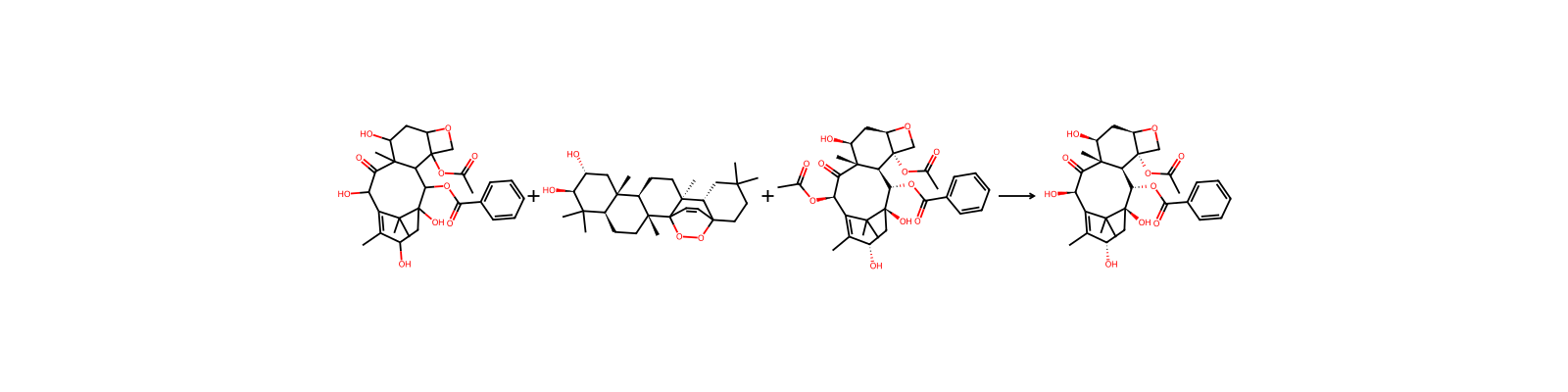


Compound notes
Loading…