
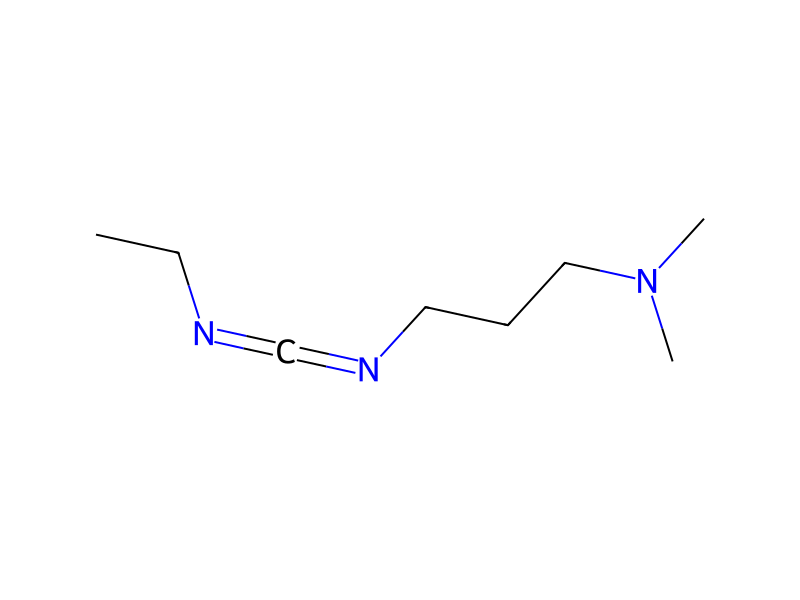
Basic information
- Standard SMILES
CCN=C=NCCCN(C)C- InChIKey
LMDZBCPBFSXMTL-UHFFFAOYSA-N- Molecular formula
- C8H17N3
- Average molar mass
- 155.24 g/mol
- Monoisotopic mass
- 155.14224754
Overview
Carbodiimide cross-linking reagent.
Names & identifiers
- Preferred name
- 1-Ethyl-3-(3'-dimethylaminopropyl)carbodiimide
- IUPAC
- 3-(ethyliminomethylideneamino)-N,N-dimethylpropan-1-amine
- English name
- 1-(3-Dimethylaminopropyl)-3-ethylcarbodiimide
- Molecular formula
- C8H17N3
- Molecular weight
- 155.24
Names & synonyms
1892-57-5EDACEDCIETHYLDIMETHYLAMINOPROPYL CARBODIIMIDERJ5OZG6I4A1,3-Propanediamine, N'-(ethylcarbonimidoyl)-N,N-dimethyl-1-Ethyl-3-(3-(dimethylamino)propyl)carbodiimide1-Ethyl-3-(3'-dimethylaminopropyl)carbodiimideDTXSID608652583-(3-dimethylaminopropyl)-1-ethylcarbodiimide1-ethyl-3-[3-(dimethylamino)propyl]carbodiimideEDAP-Carbodiimide
Show more names
1-ETHYL-3-(3-DIMETHYLAMINOPROPYL) CARBODIIMIDEWSCIWSCD({[3-(dimethylamino)propyl]imino}methylidene)(ethyl)amine1-(3-Dimethylaminopropyl)-3-WATER-SOLUBLE CARBODIIMIDE
EDAP CarbodiimideRefChem:596586DTXCID90813686Carbodiimide, Ethyldimethylaminopropyl217-579-21-(3-DIMETHYLAMINOPROPYL)-3-ETHYLCARBODIIMIDEN1-((Ethylimino)methylene)-N3,N3-dimethylpropane-1,3-diamine1-Ethyl-3-(3-dimethylaminopropyl)carbodiimide
Database identifiers
- CAS
1892-57-5- PubChem CID
- 15908
- DTXSID
DTXSID60865258- ChEMBL
CHEMBL1397523- UNII
- RJ5OZG6I4A
- EC Number
- 217-579-2
- Nikkaji
- J7.804B
Properties
Computed structural properties
- XLogP
- 1.9
- Topological polar surface area
- 28 Ų
- Hydrogen bond donors
- 0
- Hydrogen bond acceptors
- 3
- Rotatable bonds
- 5
- Heavy atoms
- 11
- Formal charge
- 0
- Complexity
- 134
Experimental & physicochemical properties
Chemical ClassesOther Uses -> Biochemical Research
Physical DescriptionLiquid; [Merck Index] Colorless to pale yellow liquid; [Alfa Aesar MSDS]
Physicochemical properties
- Boiling point
- 66 · 66-68°C/1mm
- Density
- 0.877 g/mL · 0.877 g/mL at 20 °C (lit.)
- refractive index
- 20 · n20/D 1.461
- Flash point
- 66 · 66-68°C/1mm
- storage temp.
- -20 °C · -20°C
- solubility
- Chloroform
- pka
- 9.52 · 9.52±0.28(Predicted)
- form
- Liquid
- Specific Gravity
- 0.885 · 0.885
- color
- Colorless to slightly yellow
- Water Solubility
- Soluble in water.
- Sensitive
- Air Sensitive
- BRN
- 507429 · 507429
- Major Application
- peptide synthesis
- InChI
- 1S/C8H17N3/c1-4-9-8-10-6-5-7-11(2)3/h4-7H2,1-3H3
- InChIKey
- LMDZBCPBFSXMTL-UHFFFAOYSA-N
- SMILES
- CCN=C=NCCCN(C)C
- CAS DataBase Reference
- 1892 · 1892-57-5(CAS DataBase Reference)
- FDA UNII
- 5 OZG6I4A · RJ5OZG6I4A
- NIST Chemistry Reference
- 1 · 1,3-Propanediamine, n'-(ethylcarbonimidoyl)-n,n-dimethyl-(1892-57-5)
- EPA Substance Registry System
- 1 · 1,3-Propanediamine, N'-(ethylcarbonimidoyl)-N,N-dimethyl- (1892-57-5)
- UNSPSC Code
- 12352116 · 12352116
- NACRES
- 22 · NA.22
- Symbol(GHS)
- 6 · GHS06,GHS08,GHS09
- Signal word
- Danger
- Hazard statements
- 302 · H302-H311-H315-H317-H373-H410
- Precautionary statements
- 260 · P260-P273-P280-P301+P312-P302+P352+P312-P314
- target organs
- Stomach,large intestine,lymph node
- PPE
- Faceshields, Gloves, Goggles, type ABEK (EN14387) respirator filter
- Hazard Codes
- C
- Risk Statements
- 34 · 34
- Safety Statements
- 26 · 26-36/37/39-45
- RIDADR
- 2735 · UN 2735 8/PG 3
- WGK Germany
- 3 · 3
- F
- 1 · 1-3-10
- TSCA
- TSCA listed
- HazardClass
- 8 · 8
- PackingGroup
- III
- HS Code
- 29252900 · 29252900
- Storage Class
- 6.1 A · 6.1A - Combustible acute toxic Cat. 1 and 2very toxic hazardous materials
- Hazard Classifications
- 3 DermalAcute · Acute Tox. 3 DermalAcute Tox. 4 OralAquatic Acute 1Aquatic Chronic 1Eye Dam. 1Skin Corr. 1ASkin Sens. 1ASTOT RE 2 Oral
Safety & regulation
GHS classification
GHS Classification
Danger
H302 (32.3%): Harmful if swallowed [Warning Acute toxicity, oral]
P233, P260, P261, P262, P264, P270, P271, P272, P273, P280, P284, P301+P317, P301+P330+P331, P302+P352, P302+P361+P354, P304+P340, P305+P354+P338, P316, P319, P321, P330, P332+P317, P333+P317, P342+P316, P361+P364, P362+P364, P363, P391, P403, P405, and P501 (click each P-code to see the statement)
Aggregated GHS information provided per 62 reports by companies from 9 notifications to the ECHA C&L Inventory. Each notification may be associated with multiple companies.
Hazard information
Hazards SummaryCorrosive; [Merck Index] Causes burns; [Alfa Aesar MSDS]
Hazard Classes and CategoriesAcute Tox. 4 (32.3%)
Toxicology
Adverse EffectsDermatotoxin - Skin burns.
Safety data
- F
- 1-3-10
- PPE
- Faceshields, Gloves, Goggles, type ABEK (EN14387) respirator filter
- wgk
- 3
- tsca
- TSCA listed
- ridadr
- UN 2735 8/PG 3
- hs_code
- 29252900
- risk_code
- 34
- Signal word
- Danger
- Symbol(GHS)
- GHS06,GHS08,GHS09
- hazard_code
- C
- safety_code
- 26-36/37/39-45
- hazard_class
- 8
- Storage Class
- 6.1A - Combustible acute toxic Cat. 1 and 2very toxic hazardous materials
- packing_group
- III
- target organs
- Stomach,large intestine,lymph node
- Hazard statements
- H302-H311-H315-H317-H373-H410
- Hazard Classifications
- Acute Tox. 3 DermalAcute Tox. 4 OralAquatic Acute 1Aquatic Chronic 1Eye Dam. 1Skin Corr. 1ASkin Sens. 1ASTOT RE 2 Oral
- Precautionary statements
- P260-P273-P280-P301+P312-P302+P352+P312-P314
Chemistry & industry
Uses & manufacturing
UsesUsed in crosslinking proteins to nucleic acids and DNA labeling in immunoconjugate preparations; [Merck Index]
General Manufacturing Information1,3-Propanediamine, N3-(ethylcarbonimidoyl)-N1,N1-dimethyl-: ACTIVE
Applications
Description1-(3-Dimethylaminopropyl)-3-ethylcarbodiimide is a water-soluble carbodiimide available as hydrochloride salt. This compound is a carboxyl- and amine-reactive crosslinker that is water soluble and can activate carboxyl residues for their reaction with primary amines to form O-acylisourea as a reaction intermediate, which reacts with amide bonds to release isourea as a by-product. It can crosslink the carboxy-group of glutamate and aspartate to the side-chain primary amine of lysine and the amino group at the N-terminus. The crosslinker readily reacts at a pH range of 4.5–7.2 and only crosslinks the residues within their van der Waals distance. 1-(3-Dimethylaminopropyl)-3-ethylcarbodiimide is also widely used in fabricating different nanosystems implemented in drug/protein delivery systems. It is mainly used for surface crosslinking/immobilization of drugs to increase stability against environmental changes, such as pH or temperature[1-2].
Uses1-(3-Dimethylaminopropyl)-3-ethylcarbodiimide is used as a carboxyl activating agent and activate phosphate groups in phospho mono and di esters. It is used in peptide synthesis, 3'-amino-3'-deoxyadenosine-5'-di- and triphosphates and in the preparation of antibodies like immunoconjugates. It plays a vital role for immobilization of large biomolecules in association with N-hydroxysuccinimide. It is also used in the acylation of phosphoranes.
General DescriptionN-(3-Dimethylaminopropyl)-N′-ethylcarbodiimide is commonly used in combination with N-hydroxysuccinimide (NHS) in carbodiimide coupling reaction to activate carboxyl group for coupling with amines to form amides.
Upstream & downstream products
Upstream raw materials
Downstream products
Suppliers50 total
国药集团化学试剂有限公司86-21-63210123 · [email protected]
梯希爱(上海)化成工业发展有限公司021-67121386 · [email protected]
Shandong chuangyingchemical Co., Ltd.18853181302 · [email protected]
广州隽沐生物科技股份有限公司020-36607679; 13502246435 · [email protected]
Dayang Chem (Hangzhou) Co.,Ltd.+86-0571-88938639 17705817739 · [email protected]
Hebei Yanxi Chemical Co., Ltd.+86-17531190177 · [email protected]
上海弘顺生物科技有限公司15901914505 · [email protected]
科瑞迪化学400-821-5857 021-64326257 · [email protected]
Syntechem Co.,Ltd[email protected]
上海迈瑞尔生化科技有限公司4006356688 18621169109 · [email protected]
上海晶抗生物工程有限公司021-54721350 13524668266 · [email protected]
阿法埃莎(中国)化学有限公司400-6106006 · [email protected]
安耐吉化学&3A(安徽泽升科技股份有限公司)400-0056266 · [email protected]
Allfluoro Pharmaceutical Company Limited+86-400-0216110 +86-15958047586 · [email protected]
上海瀚鸿科技股份有限公司021-54306202 13764082696 · [email protected]
上海柯维化学技术有限公司021-64609169 18901607656 · [email protected]
上海相辉医药科技有限公司13761987713 · [email protected]
嘉兴市艾森化工有限公司0573-85285100 18627885956 · [email protected]
武汉丰泰威远科技有限公司+86-27-8746-5837 +86-18627785180 · [email protected]
武汉丰泰威远科技有限公司027-87465837 19945049750 · [email protected]
孝感深远化工有限公司15527621225; 15527621225 · [email protected]
山东西亚化学有限公司13355009207 13355009207 · [email protected]
四川库利南科技有限公司400-1166-196 18981987031 · [email protected]
湖南汇百侍生物科技有限公司0731-85526065 13308475853 · [email protected]
南京维奥化工有限公司Please Send Email 18652950785 · [email protected]
上海源叶生物科技有限公司13636370518 · [email protected]
艾科试剂4008-755-333 18080918076 · [email protected]
上海思域化工科技有限公司86-21-34053660 · [email protected]
赛默飞世尔科技(中国)有限公司800-810-5118 · [email protected]
江苏艾康生物医药研发有限公司025-66113011 13913916777 · [email protected]
TCI AMERICA800-4238616 · [email protected]
TOKYO CHEMICAL INDUSTRY CO., LTD.03-36680489 · [email protected]
TCI Europe320-37350700 · [email protected]
上海将来实业股份有限公司021-61552785 · [email protected]
安徽科迪达化工有限公司0554-2106669 · [email protected]
上海笛柏生物科技有限公司400-008-9730,021-54359730 400-008-9730 · [email protected]
成都零六生物科技有限公司400-1166-196 13458535857 · [email protected]
湖南华腾制药有限公司400-8592883 · [email protected]
上海御略医药科技有限公司021-60345187 13671753212 · [email protected]
上海麦克林生化科技股份有限公司15221275939 15221275939 · [email protected]
杭州杰恒化工有限公司0571-87396432 · [email protected]
上海孚一生物科技有限公司+86 (21) 61124340
湖北巨胜科技有限公司027-59599241 18871490274 · [email protected]
池州凯隆进出口贸易有限公司[email protected]
Sigma-Aldrich西格玛奥德里奇(上海)贸易有限公司021-61415566 800-8193336 · [email protected]
江苏倍达医药科技有限公司0512-63009836 18994340901 · [email protected]
Alfa Chemistry1-516-6625404 · [email protected]
九鼎化学(上海)科技有限公司4009209199 · [email protected]
Alfa Chemistry+1-5166625404 · [email protected]
sgtlifesciences pvt ltd+91-8790379245 · [email protected]
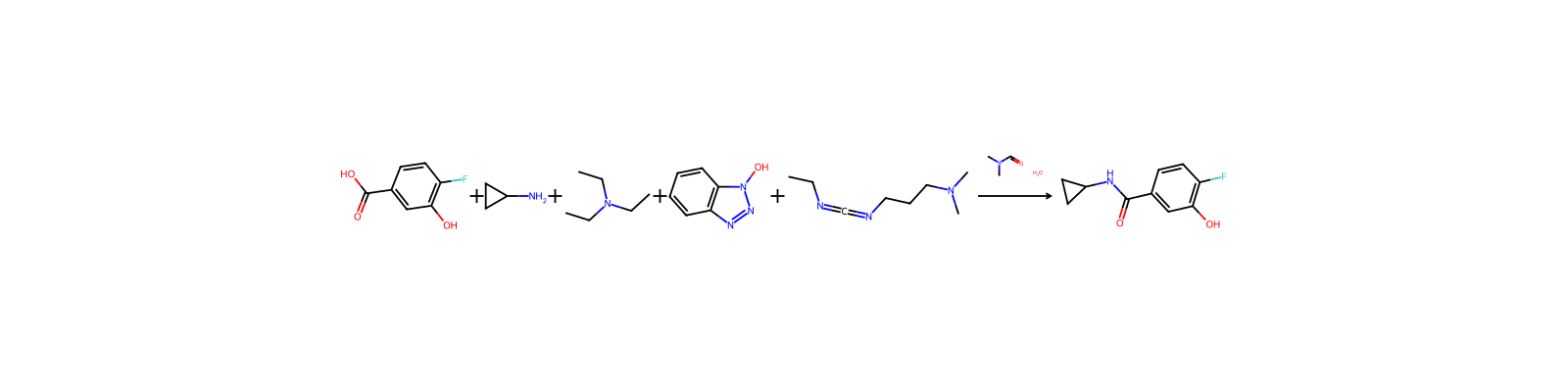
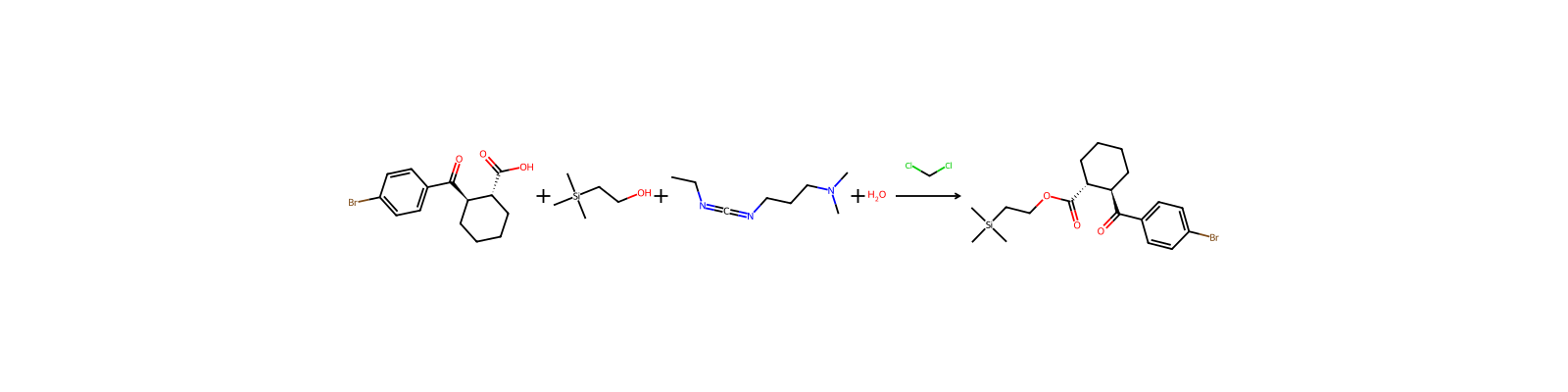
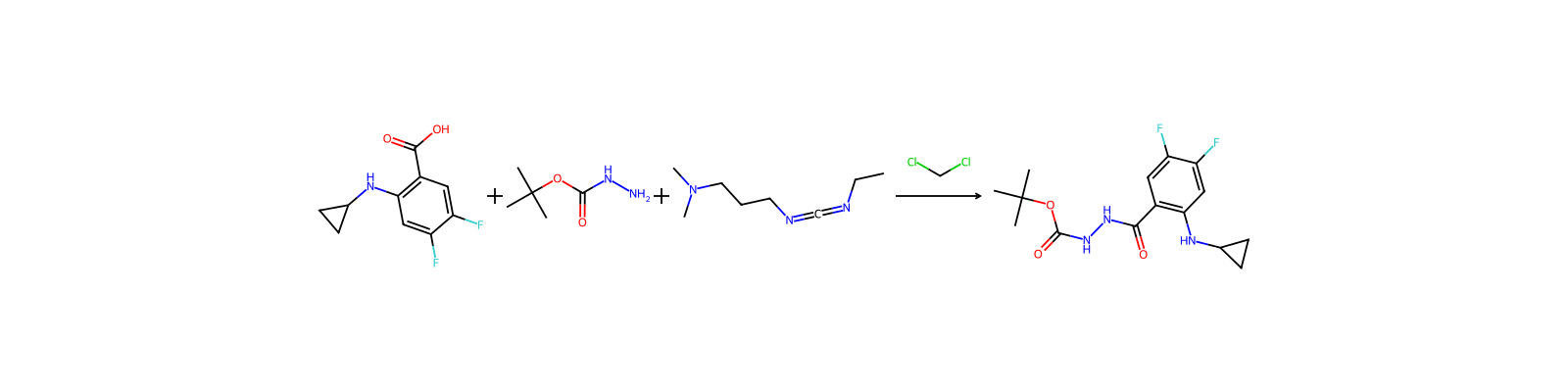
Related reactions
12,391 records




Linked notes
Loading…