HomeMCPWorkbenchSkills
HomeWorkbenchNotificationsMe
llms.txt · MCP GuidePrivacy Policy · Terms of Service · Supportv1.8.3
  1. Home
  2. /Compound

Methylene chloride-d2

HCID 160586
New reaction
Print

Completing data — refresh the page later to see the latest

Basic informationOverviewNames & identifiersPropertiesSafety & regulationChemistry & industryRelated reactionsCompound notes
Substructure searchFind similar structures

Basic information

CAS
1665-00-5
Standard SMILES
[2H]C([2H])(Cl)Cl
InChIKey
YMWUJEATGCHHMB-DICFDUPASA-N
Molecular formula
CH2Cl2
Average molar mass
86.94 g/mol
Monoisotopic mass
85.9659089

Overview

Dichloromethane-d2 is a volatile organic compound, a member of chloromethanes and a deuterated compound. It has a role as a NMR solvent.

Names & identifiers

Preferred name
Methylene chloride-d2
IUPAC
dichloro(dideuterio)methane
English name
DICHLOROMETHANE-D2
Molecular formula
CCl2D2
Molecular weight
86.94

Names & synonyms

Dichloromethane-d21665-00-5Methylene chloride-D2Dichloro(2H2)methaneMethane-d2, dichloro-EINECS 216-776-0Solaesthind2Solmethined2Narkotild2Dichloromethaned2Aerothene MMd2Methane dichlorided2
Show more names
DEUTERATED DICHLOROMETHANEDCM-D2freon 30-d2narkotil-d2solaesthin-d2solmethine-d2oromethane-d2aerothene mm-d2
Methaned2, dichloroDCMd2Freon 30d2Methylene bichlorided2Methylene dichlorided2RefChem:818586216-776-0dichloro(dideuterio)methane

Database identifiers

CAS
1665-00-5
PubChem CID
160586
DTXSID
DTXSID80937204
ChEBI
CHEBI:193042
EC Number
216-776-0
Nikkaji
J150.032E

Properties

Computed structural propertiesFilling in

XLogP
1.5
Topological polar surface area
0 Ų
Hydrogen bond donors
0
Hydrogen bond acceptors
0
Rotatable bonds
0
Heavy atoms
3
Formal charge
0
Complexity
2.8

Experimental & physicochemical properties

SolventsSolvents -> Chlorinated Aliphatics
Density1.325 @25 °C
Boiling Point40 °C @760 [mm Hg]
Vapor Pressure353.1 [mmHg]
Physical DescriptionColorless liquid with a penetrating odor like ether; Hygroscopic; [NTP]

Physicochemical properties

Melting point
-97 °C · -97 °C (lit.)
Boiling point
39 · 39,75°C
Density
1.362 g/mL · 1.362 g/mL at 25 °C (lit.)
vapor pressure
25.72 psi · 25.72 psi ( 55 °C)
refractive index
20 · n20/D 1.4217(lit.)
storage temp.
30 °C · Store below +30°C.
solubility

Safety & regulation

Safety information is for reference only and does not replace the supplier’s Safety Data Sheet (SDS), applicable regulations, or professional assessment.

GHS classification

GHS Classification · 4 items

Warning

H315 (83.3%): Causes skin irritation [Warning Skin corrosion/irritation]

P203, P260, P261, P264, P264+P265, P271, P280, P302+P352, P304+P340, P305+P351+P338, P318, P319, P321, P332+P317, P337+P317, P362+P364, P403+P233, P405, and P501 (click each P-code to see the statement)

Aggregated GHS information provided per 54 reports by companies from 9 notifications to the ECHA C&L Inventory. Each notification may be associated with multiple companies.

Hazard information

Regulatory InformationDichloromethane-D2: Does not have an individual approval but may be used under an appropriate group standard
Hazards Summary · 1 item

An eye and respiratory tract irritant; Skin contact may cause inflammation and burns; Inhalation of high concentrations can have narcotic effects; [NTP] A skin and strong eye irritant; May have narcotic effects; Carbon monoxide produced as metabolite in the body; [Alfa Aesar MSDS] See Methylene chloride. See Deuterium.

Hazard Classes and CategoriesSkin Irrit. 2 (83.3%)

Safety & protection

Protective Action Criteria (PAC) · 3 items

200 [ppm]

560 [ppm]

6900 [ppm]

Toxicology

Adverse EffectsNeurotoxin - Acute solvent syndrome

Chemistry & industry

Uses & manufacturing

Uses · 2 items

Used as a solvent for cellulose acetate, in degreasing and cleaning fluids, paint removers, plastics processing, solvent extraction, refrigeration, as a blowing agent in foams, for dewaxing, and as a fumigant; [NTP]

Painting (Solvents) [Category: Paint]

Applications · 4 items

UsesNMR solvent

UsesDichloromethane-d2 may be used to analyze the three-dimensional structure of (9S,11S)-11-amino-9-deoxo-11,12-deoxy-9,12-epoxyerythromycin by proton NMR derived constrained molecular mechanics.

UsesDICHLOROMETHANE-D2 is a labelled Methylene Chloride used in organic chemical reactions as a general solvent.

General DescriptionDichloromethane-d2 is a deuterated derivative of dichloromethane. It participates as a solvent during the NMR spectral analysis of polymers.

Upstream & downstream products

Upstream raw materials

DEUTERIUM

Downstream products

BROMOCHLOROMETHANE-D2, 99 ATOM % D

Additional notes

DefinitionChEBI: Dichloromethane-d2 is a deuterated compound, a member of chloromethanes and a volatile organic compound.

Related reactions

1 records
New reaction record
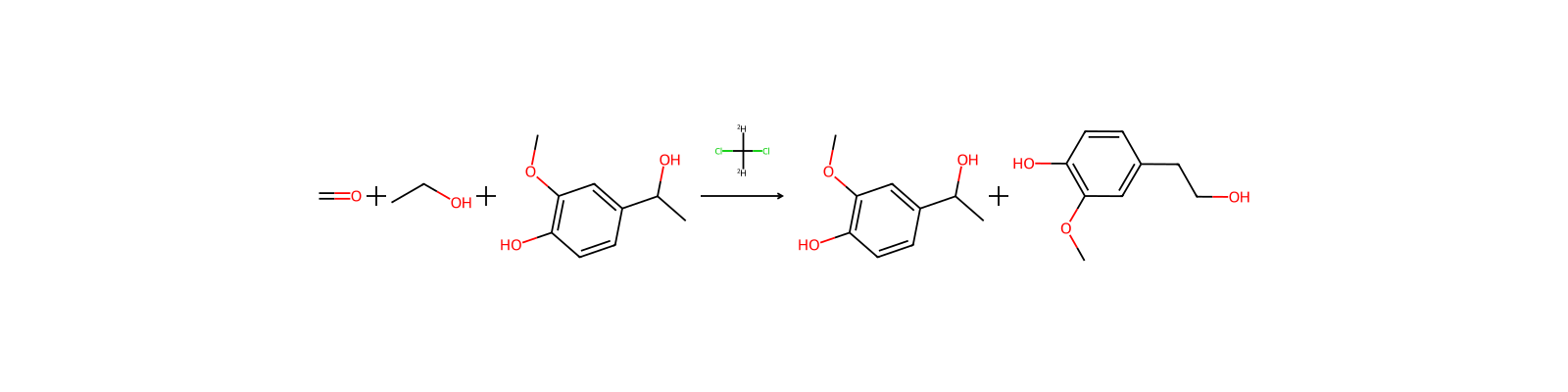
HRID 981007 reaction equation
HRID 981007As solvent

Compound notes

On this pageBasic informationOverviewNames & identifiersPropertiesSafety & regulationChemistry & industryRelated reactionsCompound notes
Miscible with alcohol, ether and dimethyl formamide.
form
Liquid
color
Colorless
Specific Gravity
1.362 · 1.362
PH
7 · 7 (20°C)
Solvent Residual Peak
1 H · 1H NMR:5.32 ppm (t)13C NMR:53.84 ppm (quint)
explosive limit
13 · 13-22%(V)
Water Solubility
Insoluble in water. Soluble in acetone, chloroform, tetrachloromethane, dimethylfomrarnide.
Sensitive
Moisture Sensitive
BRN
1733318 · 1733318
Henry's Law Constant
3.8 · 3.8×10-3 mol/(m3Pa) at 25℃, Hiatt (2013)
Stability
Volatile
InChI
1S/CH2Cl2/c2-1-3/h1H2/i1D2
InChIKey
YMWUJEATGCHHMB-DICFDUPASA-N
SMILES
[2H]C([2H])(Cl)Cl
CAS DataBase Reference
1665 · 1665-00-5(CAS DataBase Reference)
EPA Substance Registry System
2 · Dichloromethane-d2 (1665-00-5)
UNSPSC Code
12142201 · 12142201
NACRES
22 · NA.22
Symbol(GHS)
7 · GHS07,GHS08
Signal word
Warning
Hazard statements
315 · H315-H319-H336-H351
Precautionary statements
202 · P202-P261-P264-P302+P352-P305+P351+P338-P308+P313
target organs
Central nervous system
PPE
Eyeshields, Faceshields, Gloves
Hazard Codes
Xn
Risk Statements
40 · 40-67-36/37/38
Safety Statements
23 · 23-24/25-36/37-26
RIDADR
1593 · UN 1593 6.1/PG 3
WGK Germany
2 · 2
Autoignition Temperature
605 °C · 605 °C DIN 51794
HazardClass
6.1 · 6.1
PackingGroup
III
HS Code
28459000 · 28459000
Storage Class
6.1 C · 6.1C - Combustible acute toxic Cat.3toxic compounds or compounds which causing chronic effects
Hazard Classifications
2 Eye · Carc. 2Eye Irrit. 2Skin Irrit. 2STOT SE 3
Toxicity
50 orally · LD50 orally in Rabbit: 1600 mg/kg LD50 dermal Rat > 2000 mg/kg
Limited Quantities
5 L · 5.0 L (1.3 gallons) (liquid) or 5.0 kg (11 lbs) (solid)
Excepted Quantities
Max Inner Pack (30g or 30ml) and Max Outer Pack (1Kg or 1L)

Safety data

PPE
Eyeshields, Faceshields, Gloves
wgk
2
ridadr
UN 1593 6.1/PG 3
hs_code
28459000
Toxicity
LD50 orally in Rabbit: 1600 mg/kg LD50 dermal Rat > 2000 mg/kg
risk_code
40-67-36/37/38
Signal word
Warning
Symbol(GHS)
GHS07,GHS08
hazard_code
Xn
safety_code
23-24/25-36/37-26
hazard_class
6.1
Storage Class
6.1C - Combustible acute toxic Cat.3toxic compounds or compounds which causing chronic effects
packing_group
III
target organs
Central nervous system
Hazard statements
H315-H319-H336-H351
Limited Quantities
5.0 L (1.3 gallons) (liquid) or 5.0 kg (11 lbs) (solid)
Excepted Quantities
Max Inner Pack (30g or 30ml) and Max Outer Pack (1Kg or 1L)
Hazard Classifications
Carc. 2Eye Irrit. 2Skin Irrit. 2STOT SE 3
Autoignition Temperature
605 °C DIN 51794
Precautionary statements
P202-P261-P264-P302+P352-P305+P351+P338-P308+P313