Basic information
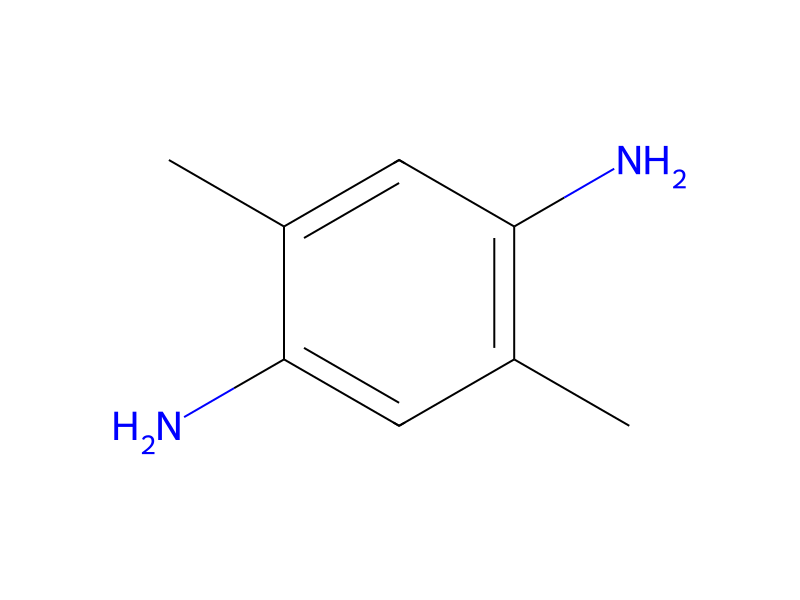
- Standard SMILES
Cc1cc(N)c(C)cc1N- InChIKey
BWAPJIHJXDYDPW-UHFFFAOYSA-N- Molecular formula
- C8H12N2
- Average molar mass
- 136.19 g/mol
- Monoisotopic mass
- 136.10004838
Overview
2,5-dimethyl-p-phenylenediamine is a primary arylamine that is p-xylene substituted at the 2 and 5 positions by amino groups. It is formally a reduction product of 2,5-dimethyl-1,4-benzoquinonediimine. It has a role as an allergen. It derives from a hydride of a p-xylene.
Names & identifiers
- Preferred name
- 2,5-Dimethyl-p-phenylenediamine
- IUPAC
- 2,5-dimethylbenzene-1,4-diamine
- English name
- 2,5-Dimethyl-1,4-benzenediamine
- Molecular formula
- C8H12N2
- Molecular weight
- 136.19
Names & synonyms
6393-01-72,5-Dimethylbenzene-1,4-diamine2,5-Dimethyl-1,4-benzenediamine2,5-DIMETHYL-P-PHENYLENEDIAMINE4-Amino-2,5-dimethylanilineCCRIS 81182,5-dimethylphenylene-1,4-diamineRE400VN2B4CHEBI:536131,4-dimethylphenylene-2,5-diamineEINECS 229-003-7DTXSID10213725
Show more names
0/7/93AURORA KA-65691,4-DIAMINO-2,5-XYLENE2,5-Dimethylbenzol-1,4-diamin
2,5-dimethyl-para-phenylenediamineAMINO-2,5-DIMETHYLANILINE, 4-RefChem:444561DTXCID401362162,5-Dimethyl-1,4-phenylenediamineMFCD000526752,5-dimethyl-1,4-benzoquinonediamine2,5-Diamino-p-xylene
Database identifiers
- CAS
6393-01-7- PubChem CID
- 160824
- DTXSID
DTXSID10213725- ChEMBL
CHEMBL1795410- ChEBI
CHEBI:53613- UNII
- RE400VN2B4
- EC Number
- 229-003-7
- Nikkaji
- J81.211K
Properties
Computed structural properties
- XLogP
- 1.3
- Topological polar surface area
- 52 Ų
- Hydrogen bond donors
- 2
- Hydrogen bond acceptors
- 2
- Rotatable bonds
- 0
- Heavy atoms
- 10
- Formal charge
- 0
- Complexity
- 99.8
Physicochemical properties
- Melting point
- 149 · 149-150 °C (lit.)
- Boiling point
- 281.1 · 281.1±35.0 °C(Predicted)
- Density
- 1.076 · 1.076±0.06 g/cm3(Predicted)
- storage temp.
- Keep in dark place,Sealed in dry,Room Temperature
- solubility
- Chloroform (Sparingly), DMSO (Slightly)
- form
- Solid
- pka
- 6.14 · 6.14±0.10(Predicted)
- color
- Brown to Dark Beige
- InChI
- InChI=1S/C8H12N2/c1-5-3-8(10)6(2)4-7(5)9/h3-4H,9-10H2,1-2H3
- InChIKey
- BWAPJIHJXDYDPW-UHFFFAOYSA-N
- SMILES
- C1(N)=CC(C)=C(N)C=C1C
- CAS DataBase Reference
- 6393 · 6393-01-7(CAS DataBase Reference)
- FDA UNII
- 400 VN2B4 · RE400VN2B4
- UNSPSC Code
- 12162002 · 12162002
- NACRES
- 23 · NA.23
- Symbol(GHS)
- 7 · GHS07
- Signal word
- Warning
- Hazard statements
- 302 · H302+H312+H332-H315-H319-H335
- Precautionary statements
- 261 · P261-P280-P301+P312-P302+P352+P312-P304+P340+P312-P305+P351+P338
- target organs
- Respiratory system
- PPE
- 95 · dust mask type N95 (US), Eyeshields, Gloves
- Hazard Codes
- Xn
- Risk Statements
- 20 · 20/21/22-36/37/38
- Safety Statements
- 26 · 26-37/39-36/37/39
- RIDADR
- 2811 · 2811
- WGK Germany
- 3 · 3
- HazardClass
- 6.1 · 6.1(a)
- PackingGroup
- II
- HS Code
- 29215900 · 29215900
- Storage Class
- 11 · 11 - Combustible Solids
- Hazard Classifications
- 4 DermalAcute · Acute Tox. 4 DermalAcute Tox. 4 InhalationAcute Tox. 4 OralEye Irrit. 2Skin Irrit. 2STOT SE 3
- REACH Registrations
- Active
Safety & regulation
GHS classification
GHS Classification
Warning
H302 (100%): Harmful if swallowed [Warning Acute toxicity, oral]
P261, P264, P264+P265, P270, P271, P280, P301+P317, P302+P352, P304+P340, P305+P351+P338, P317, P319, P321, P330, P332+P317, P337+P317, P362+P364, P403+P233, P405, and P501 (click each P-code to see the statement)
Aggregated GHS information provided per 41 reports by companies from 4 notifications to the ECHA C&L Inventory. Each notification may be associated with multiple companies.
Hazard information
Regulatory InformationStatus: Active Update: 20-02-2018 https://echa.europa.eu/registration-dossier/-/registered-dossier/22978
Hazard Classes and CategoriesAcute Tox. 4 (100%)
Safety data
- PPE
- dust mask type N95 (US), Eyeshields, Gloves
- wgk
- 3
- ridadr
- 2811
- hs_code
- 29215900
- risk_code
- 20/21/22-36/37/38
- Signal word
- Warning
- Symbol(GHS)
- GHS07
- hazard_code
- Xn
- safety_code
- 26-37/39-36/37/39
- hazard_class
- 6.1(a)
- Storage Class
- 11 - Combustible Solids
- packing_group
- II
- target organs
- Respiratory system
- Hazard statements
- H302+H312+H332-H315-H319-H335
- REACH Registrations
- Active
- Hazard Classifications
- Acute Tox. 4 DermalAcute Tox. 4 InhalationAcute Tox. 4 OralEye Irrit. 2Skin Irrit. 2STOT SE 3
- Precautionary statements
- P261-P280-P301+P312-P302+P352+P312-P304+P340+P312-P305+P351+P338
Chemistry & industry
Applications
Uses2,5-Dimethyl-1,4-phenylenediamine (cas# 6393-01-7) is a useful reagent for synthesis of novel Schiff-base type conjugative polymers.
Upstream & downstream products
Downstream products
Suppliers50 total
梯希爱(上海)化成工业发展有限公司021-67121386 · [email protected]
湖北永阔科技有限公司027-59223108 15972152991 · [email protected]
宁波君龙新材料有限公司0574 88552216 19032109277 · [email protected]
湖南韵邦生物科技股份有限公司85561037 15386497078 · [email protected]
湖北万得化工有限公司15377098680 15377098680 · [email protected]
合肥曼奇诺生物医药技术有限公司19719236623 · [email protected]
上海炎泽化工有限公司15345144255 19975051755 · [email protected]
河南赢创生物科技有限公司16650615803 · [email protected]
普善实业(陕西)有限公司029-81310890 18165209495 · [email protected]
环生美森医药技术(山东)有限公司0531-88762217 18301471076 · [email protected]
Dayang Chem (Hangzhou) Co.,Ltd.+86-0571-88938639 17705817739 · [email protected]
郑州鸿晟医药科技有限公司0371-55695890 15637198702 · [email protected]
衢州明锋化工有限公司0570-3062502 13819002126;13819008176 · [email protected]
毕佳索(上海毕得医药科技股份有限公司)400-6005915 · [email protected]
郑州德元凯化工有限公司17837139533 · [email protected]
上海迈瑞尔生化科技有限公司4006356688 18621169109 · [email protected]
安耐吉化学&3A(安徽泽升科技股份有限公司)400-0056266 · [email protected]
Allfluoro Pharmaceutical Company Limited+86-400-0216110 +86-15958047586 · [email protected]
湖北兴琰新材料科技有限公司13129948835 · [email protected]
广东方信生物科技有限公司0751-2838688 13376594225 · [email protected]
湖北广奥生物科技有限公司027-02702759223056 18162699093 · [email protected]
上海攀鸿化工科技有限公司021-56491756 13512199871 · [email protected]
湖北成海化工有限公司027-59220433 18327245847 · [email protected]
苏州启航生物科技有限公司18662190603;18151111370 · [email protected]
玛雅试剂+86 (573) 82222445 (0)18006601000 452520369 · [email protected]
天津希恩思生化科技有限公司400 638 7771 · [email protected]
赛默飞世尔科技(中国)有限公司800-810-5118 · [email protected]
北京伊诺凯科技有限公司400-810-7969 010-59572699 · [email protected]
上海遐瑞医药科技有限公司+86 21 61551611
江苏艾康生物医药研发有限公司025-66113011 13913916777 · [email protected]
TCI AMERICA800-4238616 · [email protected]
TOKYO CHEMICAL INDUSTRY CO., LTD.03-36680489 · [email protected]
TCI Europe320-37350700 · [email protected]
上海贤鼎生物科技有限公司4009209199 · [email protected]
上海毕得医药科技股份有限公司400-164-7117 18317119277 · [email protected]
成都零六生物科技有限公司400-1166-196 13458535857 · [email protected]
上海麦克林生化科技股份有限公司15221275939 15221275939 · [email protected]
上海永叶生物科技有限公司86-021-61559134 15921386130 · [email protected]
南京恰风和医药科技有限公司025-57018978 18251899859 · [email protected]
陕西缔都医药化工有限公司+86-29-87569262 +86-15003564040 · [email protected]
吉林中科研伸科技有限公司0431-80534353 19917294565 · [email protected]
Sigma-Aldrich西格玛奥德里奇(上海)贸易有限公司021-61415566 800-8193336 · [email protected]
Alfa Chemistry1-516-6625404 · [email protected]
Henan Alfa Chemical Co., Ltd+8618339805032 · [email protected]
上海谱振生物科技有限公司4001650900 13817534909 · [email protected]
湖北中隆康盛精细化工有限公司027-027-83850368 18140587623 · [email protected]
Alfa Chemistry+1-5166625404 · [email protected]
上海大然化学有限公司021-64478606 15900664856 · [email protected]
浙江珲达生物科技有限公司0571-89903022 18679456698 · [email protected]
陕西缔都医药化工有限公司029-029-81120477 17792793610 · [email protected]
Additional notes
DefinitionChEBI: A primary arylamine that is p-xylene substituted at the 2 and 5 positions by amino groups. It is formally a reduction product of 2,5-dimethyl-1,4-benzoquinonediimine.
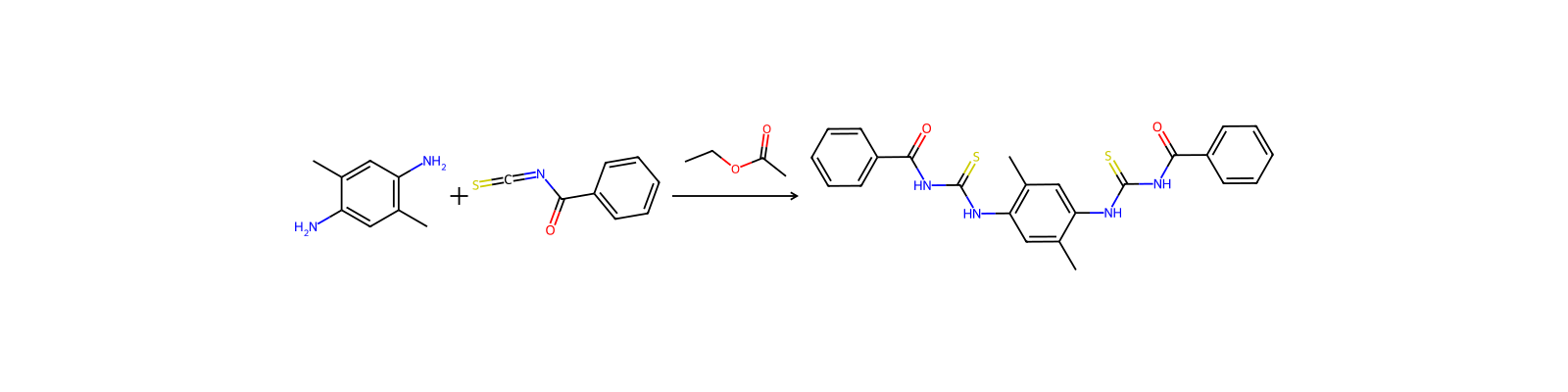
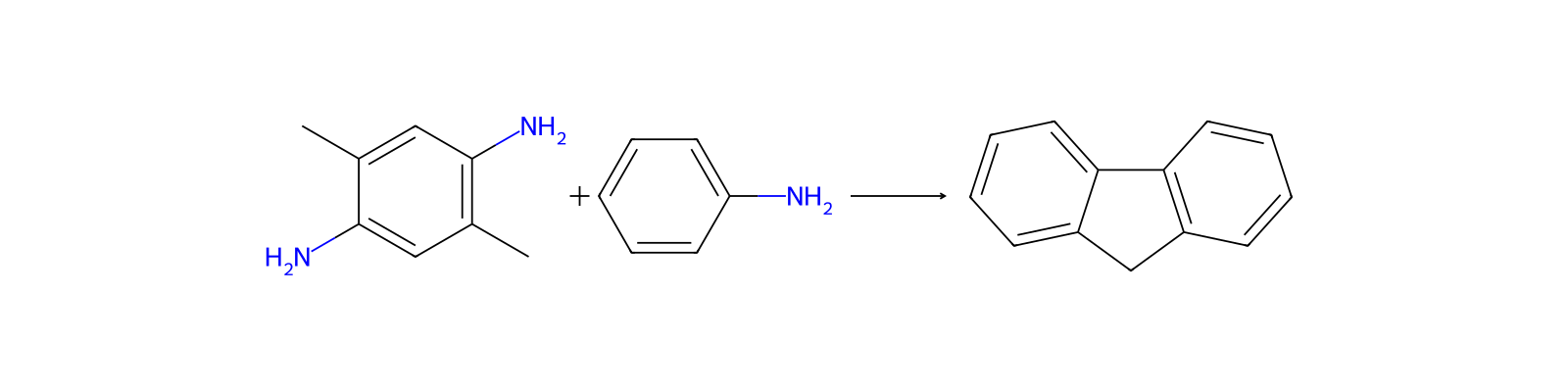
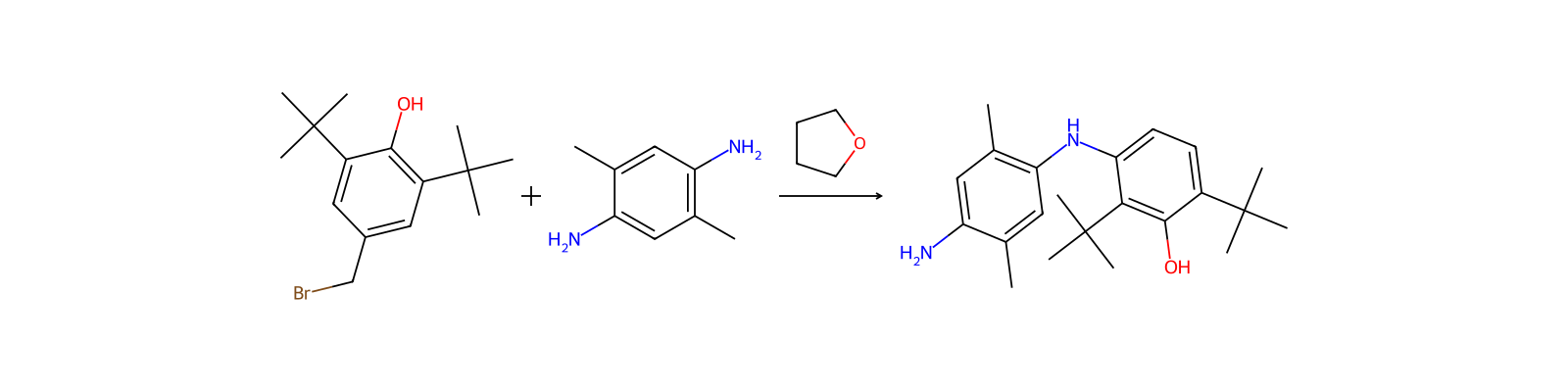
Related reactions
6 records



Linked notes
Loading…