HomeMCPSkillsWorkbenchOpenChem
HomeWorkbenchNotificationsMe
llms.txt · skill.md · MCP GuidePrivacy Policy · Terms of Service · Supportv1.8.4
  1. Home
  2. /Compound

Tributyltin fluoride

HCID 16120
New reaction
Print
Basic informationOverviewNames & identifiersPropertiesSafety & regulationChemistry & industryRelated reactionsCompound notes
Substructure searchFind similar structures

Basic information

CAS
1983-10-4
Standard SMILES
CCC[CH2][Sn]([F])([CH2]CCC)[CH2]CCC
InChIKey
DFNPRTKVCGZMMC-UHFFFAOYSA-M
Molecular formula
C12H27FSn
Average molar mass
309.05 g/mol
Monoisotopic mass
310.111882

Overview

Tributyltin fluoride appears as a liquid.

Names & identifiers

Preferred name
Tributyltin fluoride
IUPAC
tributyl(fluoro)stannane
English name
Tributyltin fluoride polymer
Molecular formula
C12H27FSn
Molecular weight
309.06

Names & synonyms

Tributyltin fluorideFluorotributyltin1983-10-4Stannane, tributylfluoro-FluorotributylstannaneTributylfluorostannaneTin, tributylfluoro-TRI-N-BUTYLTIN FLUORIDETri-n-butylstannyl fluorideTributylstannane fluoride1L36TLX6O0ACETO TBTF
Show more names
Stannane, tributylfluoro-, polymersTRIBUTYLTIN FLUORIDE POLYMER ISO 9001:2015 REACH
NSC-179737NSC-195319DTXSID1032480RefChem:190934DTXCID9012480217-847-9tributyl(fluoro)stannaneFluorotri-n-butyltin

Database identifiers

CAS
1983-10-4、27615-98-1
PubChem CID
16120
DTXSID
DTXSID1032480
UNII
1L36TLX6O0
EC Number
217-847-9

Properties

Computed structural properties

Topological polar surface area
0 Ų
Hydrogen bond donors
0
Hydrogen bond acceptors
1
Rotatable bonds
9
Heavy atoms
14
Formal charge
0
Complexity
104

Experimental & physicochemical properties

Chemical ClassesMetals -> Tin Compounds, Organic
Vapor Pressure0.00000352 [mmHg]
Physical Description · 2 items

Tributyltin fluoride appears as a liquid.

White powder with a pungent odor; [Alfa Aesar MSDS]

Physicochemical properties

Melting point
269 · 269-271 °C(lit.)
Density
1.28 · 1.280
EPA Substance Registry System
Stannane, tributylfluoro-, polymers (27615-98-1)
Hazard Codes
T,N
Risk Statements
21 · 21-25-36/38-48/23/25-50/53
Safety Statements
35 · 35-36/37/39-45-60-61
RIDADR
3261 · UN 3261 8/PG 2
WGK Germany
3 · 3
F
21 · 21
HazardClass
6.1 · 6.1(a)

Safety & regulation

Safety information is for reference only and does not replace the supplier’s Safety Data Sheet (SDS), applicable regulations, or professional assessment.

GHS classification

GHS Classification · 6 items

Danger

H301 (100%): Toxic if swallowed [Danger Acute toxicity, oral]

P260, P264, P264+P265, P270, P273, P280, P301+P316, P302+P352, P305+P351+P338, P317, P319, P321, P330, P332+P317, P337+P317, P362+P364, P391, P405, and P501 (click each P-code to see the statement)

Aggregated GHS information provided per 42 reports by companies from 2 notifications to the ECHA C&L Inventory. Each notification may be associated with multiple companies.

Danger

H301: Toxic if swallowed [Danger Acute toxicity, oral]

Hazard information

Regulatory Information · 2 items

Hazard Traits - Bioaccumulation; Environmental Persistence

Stannane, tributylfluoro-, polymers: Does not have an individual approval but may be used under an appropriate group standard

Other Safety InformationIMAP assessments - Stannane, tributylfluoro-: Environment tier I assessment
DOT LabelPoison
Fire HazardsExcerpt from ERG Guide 153 [Substances - Toxic and/or Corrosive (Combustible)]:
Health HazardsExcerpt from ERG Guide 153 [Substances - Toxic and/or Corrosive (Combustible)]:
Hazards Summary · 1 item

Symptoms reported from occupational exposure to tributyltin (TBT) compounds include skin, eye, and respiratory tract irritation, severe dermatitis, and skin and/or eye lesions; TBT compounds inhibit oxidative phosphorylation and alter mitochondrial structure and function. [Reference #1] An irritant; Harmful by skin absorption; Toxic by ingestion; May cause serious adverse health effects from prolonged ingestion and inhalation exposure; [Alfa Aesar MSDS] See Tin, organic compounds. See Bis(tri-n-butyltin)oxide. See Tributyltin maleate.

Chemistry & industry

Uses & manufacturing

Uses · 2 items

Formerly registered for use as an antimicrobial; [EPA]

Using Disinfectants or Biocides [Category: Clean]

Related reactions

19 records
New reaction record
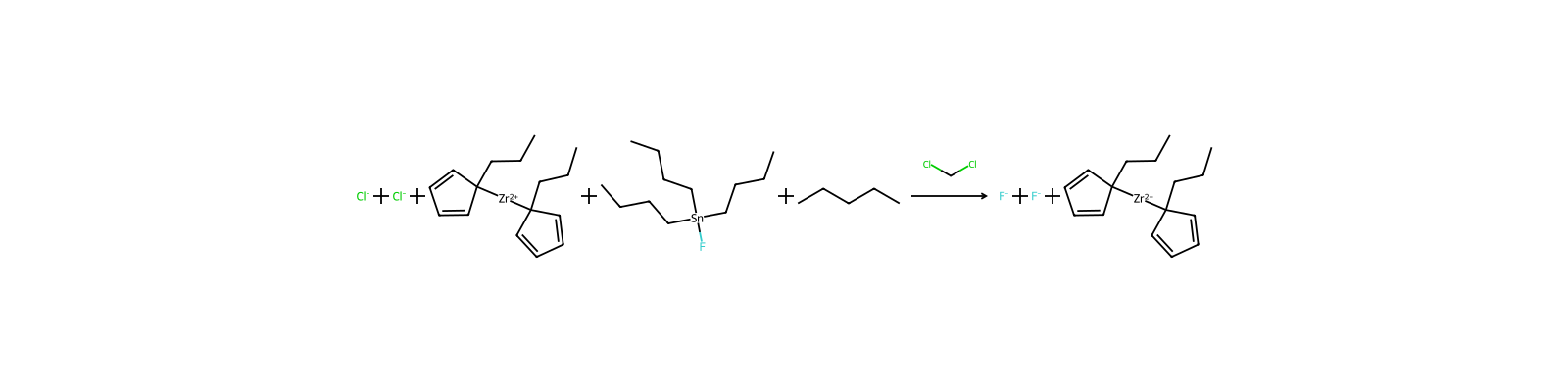
HRID 719081As reactant
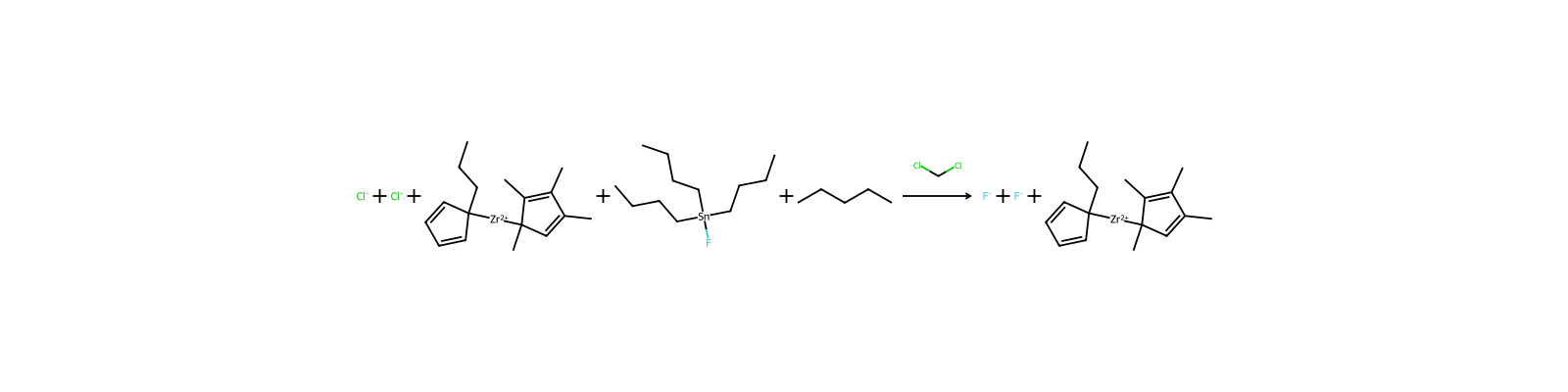
HRID 719082As reactant
HRID 719083As reactant
HRID 886306As reactant
HRID 987856As reactant
HRID 987857As reactant
HRID 987858As reactant
HRID 1349482As reactant
PreviousPage 1 of 3

Compound notes

On this pageBasic informationOverviewNames & identifiersPropertiesSafety & regulationChemistry & industryRelated reactionsCompound notes
PackingGroup
II
Reactive GroupSalts, Acidic
Reactivity Profile · 1 item

TRIBUTYLTIN FLUORIDE is in the family of tin compounds widely used as stabilizers for plastics, additives to paint(as antifouling agents). Some have catalytic properties. Examples include butyl tin, dibutyl tin oxide. Their main hazard is associated with their high toxicity, in skin adsorption or inhalation. This compound is incompatible with strong oxidizers like: ammonium nitrate, barium nitrate, barium chlorate, etc.

Air and Water ReactionsNo rapid reaction with air. No rapid reaction with water.
Hazard Classes and Categories · 3 items

Acute Tox. 3 (100%)

Acute toxicity (Oral) - Category 4

Acute toxicity (Oral) - Category 3

Safety & protection

Fire FightingExcerpt from ERG Guide 153 [Substances - Toxic and/or Corrosive (Combustible)]:
First AidExcerpt from ERG Guide 153 [Substances - Toxic and/or Corrosive (Combustible)]:
Exposure Control and Personal Protection · 2 items

Biological Exposure Indices (BEI) [ACGIH] - Fluorides in urine = 2 mg/L prior to shift or 3 mg/L at end of shift; (Repeated measurements recommended.)

0.02 [mg/m3], inhalable fraction, as Sn (1 mg/m3, inhalable fraction, as F)[German Research Foundation (DFG)]

Nonfire Spill ResponseExcerpt from ERG Guide 153 [Substances - Toxic and/or Corrosive (Combustible)]:
Isolation and EvacuationExcerpt from ERG Guide 153 [Substances - Toxic and/or Corrosive (Combustible)]:
Threshold Limit Values (TLV) · 2 items

0.1 [mg/m3], as Sn (2.5 mg/m3, as F)

0.2 [mg/m3], as Sn

Permissible Exposure Limit (PEL)0.1 [mg/m3], as Sn (2.5 mg/m3, as F)
Personal Protective Equipment (PPE)Excerpt from ERG Guide 153 [Substances - Toxic and/or Corrosive (Combustible)]:
Immediately Dangerous to Life or Health (IDLH)25.0 [mg/m3], as Sn

Toxicology

Adverse EffectsNeurotoxin - Other CNS neurotoxin

Safety data

F
21
wgk
3
ridadr
UN 3261 8/PG 2
risk_code
21-25-36/38-48/23/25-50/53
hazard_code
T,N
safety_code
35-36/37/39-45-60-61
hazard_class
6.1(a)
packing_group
II