

Basic information
- CAS
2114-00-3- Standard SMILES
CC(Br)C(=O)c1ccccc1- InChIKey
WPDWOCRJBPXJFM-UHFFFAOYSA-N- Molecular formula
- C9H9BrO
- Average molar mass
- 213.07 g/mol
- Monoisotopic mass
- 211.98367701
Names & identifiers
- Preferred name
- 2-Bromopropiophenone
- IUPAC
- 2-bromo-1-phenylpropan-1-one
- English name
- 2-Bromopropiophenone
- Molecular formula
- C9H9BrO
- Molecular weight
- 213.07
Names & synonyms
2-Bromopropiophenonealpha-Bromopropiophenone1-Propanone, 2-bromo-1-phenyl-alpha-Methylphenacyl bromide.alpha.-BromopropiophenoneEINECS 218-307-5BRN 0508550alpha-Bromoethyl phenyl ketone.alpha.-Methylphenacyl bromide.alpha.-Bromoethyl phenyl ketoneDTXSID108709384-07-00-00684 (Beilstein Handbook Reference)
Show more names
tl336TL 336NSC 89689WLN: EY1&VRBROMPROPIOPHENONEBromophenylacetone-BromopropiophenoneB-Bromopropiophenone
RefChem:85901DTXCID90818616218-307-5WPDWOCRJBPXJFM-UHFFFAOYSA-N2114-00-32-bromo-1-phenylpropan-1-one1-Benzoyl-1-bromoethane2-Bromo-1-phenyl-1-propanone
Database identifiers
- CAS
2114-00-3- PubChem CID
- 16452
- DTXSID
DTXSID10870938- UNII
- 75SCT47BB6
- EC Number
- 218-307-5
- Nikkaji
- J31.122G
Properties
Computed structural properties
- XLogP
- 2.8
- Topological polar surface area
- 17.1 Ų
- Hydrogen bond donors
- 0
- Hydrogen bond acceptors
- 1
- Rotatable bonds
- 2
- Heavy atoms
- 11
- Formal charge
- 0
- Complexity
- 138
Experimental & physicochemical properties
SpringerMaterials PropertiesOptical coefficient
Physicochemical properties
- Boiling point
- 245 · 245-250 °C (lit.)
- Density
- 1.4 g/mL · 1.4 g/mL at 25 °C (lit.)
- refractive index
- 20 · n20/D 1.571(lit.)
- Flash point
- 230 °F · >230 °F
- storage temp.
- 2 · 2-8°C
- solubility
- Chloroform (Slightly), Ethyl Acetate (Slightly), Methanol
- form
- Oil
- Specific Gravity
- 1.4 · 1.4
- color
- Clear Pale Yellow to Green
- Water Solubility
- Insoluble
- BRN
- 508550 · 508550
- Stability
- Light Sensitive
- LogP
- 2.54 · 2.540 (est)
- CAS DataBase Reference
- 2114 · 2114-00-3(CAS DataBase Reference)
- EWG's Food Scores
- 1 · 1
- NIST Chemistry Reference
- 1 · 1-Propanone, 2-bromo-1-phenyl-(2114-00-3)
- EPA Substance Registry System
- 1 · 1-Propanone, 2-bromo-1-phenyl- (2114-00-3)
- Symbol(GHS)
- 7 · GHS07
- Signal word
- Warning
- Hazard statements
- 319 · H319
- Precautionary statements
- 305 · P305+P351+P338
- Hazard Codes
- Xi,Xn
- Risk Statements
- 36 · 36/37/38-22
- Safety Statements
- 26 · 26-36/37/39-37/39
- RIDADR
- 2810 · UN 2810 6.1/PG 2
- WGK Germany
- 3 · 3
- RTECS
- 8400000 · UG8400000
- F
- 19 · 19
- TSCA
- TSCA listed
- HazardClass
- 6.1 · 6.1
- PackingGroup
- Ⅲ
- HS Code
- 29147090 · 29147090
- Toxicity
- 1600 mg/m3/10M · mouse,LCLo,inhalation,1600mg/m3/10M (1600mg/m3),National Defense Research Committee, Office of Scientific Research and Development, Progress Report.Vol. NDCrc-132, Pg. AUG1942,
- Limited Quantities
- 5 L · 5.0 L (1.3 gallons) (liquid) or 5.0 kg (11 lbs) (solid)
- Excepted Quantities
- Max Inner Pack (30g or 30ml) and Max Outer Pack (1Kg or 1L)
Safety & regulation
GHS classification
GHS Classification
Danger
H315 (89.1%): Causes skin irritation [Warning Skin corrosion/irritation]
P261, P264, P264+P265, P271, P280, P302+P352, P304+P340, P305+P351+P338, P316, P319, P321, P332+P317, P337+P317, P362+P364, P403+P233, P405, and P501 (click each P-code to see the statement)
Aggregated GHS information provided per 46 reports by companies from 6 notifications to the ECHA C&L Inventory. Each notification may be associated with multiple companies.
Hazard information
Regulatory Information2-Bromopropiophenone: Does not have an individual approval but may be used under an appropriate group standard
Hazard Classes and CategoriesSkin Irrit. 2 (89.1%)
Safety data
- F
- 19
- wgk
- 3
- tsca
- TSCA listed
- rtecs
- UG8400000
- ridadr
- UN 2810 6.1/PG 2
- hs_code
- 29147090
- Toxicity
- mouse,LCLo,inhalation,1600mg/m3/10M (1600mg/m3),National Defense Research Committee, Office of Scientific Research and Development, Progress Report.Vol. NDCrc-132, Pg. AUG1942,
- risk_code
- 36/37/38-22
- Signal word
- Warning
- Symbol(GHS)
- GHS07
- hazard_code
- Xi,Xn
- safety_code
- 26-36/37/39-37/39
- hazard_class
- 6.1
- packing_group
- Ⅲ
- Hazard statements
- H319
- Limited Quantities
- 5.0 L (1.3 gallons) (liquid) or 5.0 kg (11 lbs) (solid)
- Excepted Quantities
- Max Inner Pack (30g or 30ml) and Max Outer Pack (1Kg or 1L)
- Precautionary statements
- P305+P351+P338
Chemistry & industry
Uses & manufacturing
General Manufacturing Information1-Propanone, 2-bromo-1-phenyl-: INACTIVE
Applications
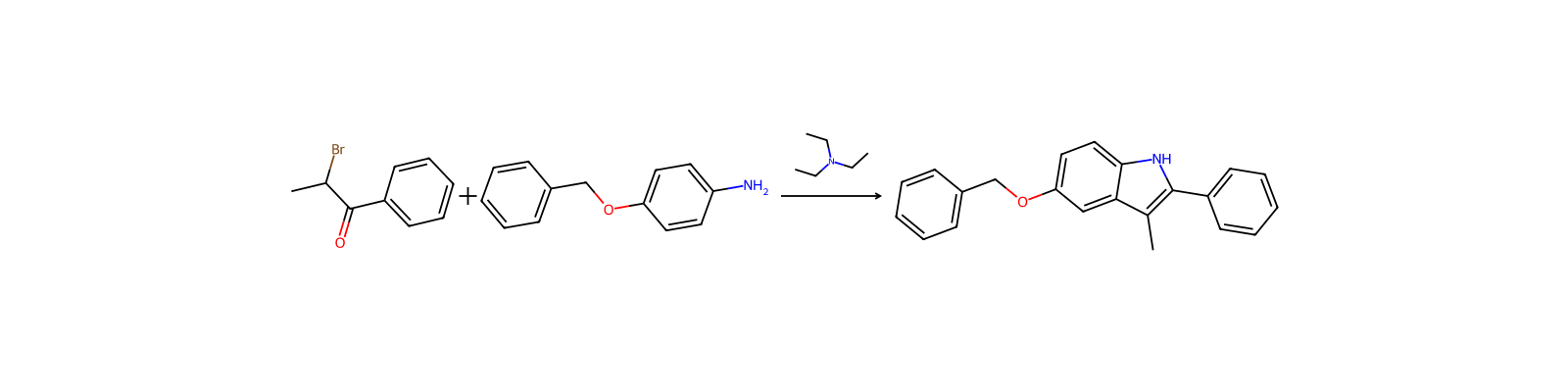
Uses2-Bromopropiophenone (α-Bromopropiophenone) may be used for the synthesis of 2-phenylmorpholinols. It may also be used in the synthesis of N-phenacylammonium salts [N-(α-benzoylbenzyl)-, N-(1-benzoylethyl)-, N-phenacyl-, pyrazinium, 3-bromoquinolinium, benzothiazolium, or p-cyanopyridinium hexafluoroantimonates].
General Description2-Bromopropiophenone (α-Bromopropiophenone) is an α-bromoketone. It participates in the manufacturing process of 1-acetamido-3-methyl-2-phenylimidazo[1,2-a]pyridinium bromide.
Upstream & downstream products
Downstream products
Related reactions
88 records



Compound notes
Loading…