
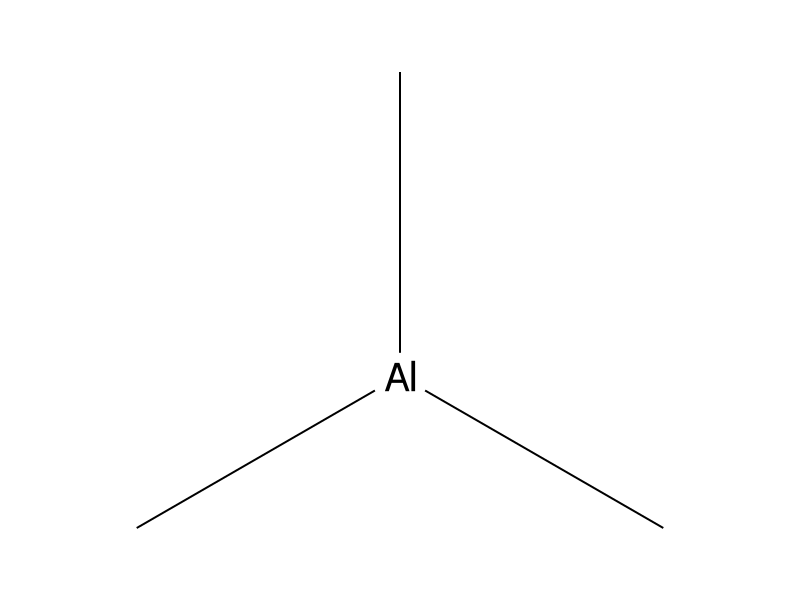
Basic information
- Standard SMILES
[CH3][Al]([CH3])[CH3]- InChIKey
JLTRXTDYQLMHGR-UHFFFAOYSA-N- Molecular formula
- C3H9Al
- Average molar mass
- 72.09 g/mol
- Monoisotopic mass
- 72.05196392
Overview
Trimethylaluminium (TMA) is an organoaluminium compound. It is used in the production of methylaluminoxane and Tebbe's reagent, as well as in semiconductor fabrication to grow thin film, high-k dielectrics. Aluminum is the most abundant metal in the earth's crust and is always found combined with other elements such as oxygen, silicon, and fluorine. (L739, L740, L782)
Names & identifiers
- Preferred name
- Trimethylaluminum
- IUPAC
- trimethylalumane
- English name
- Trimethylaluminium
- Molecular formula
- C3H9Al
- Molecular weight
- 72.09
Names & synonyms
Trimethylaluminum75-24-1TRIMETHYLALUMINIUMAluminum, trimethyl-trimethylalumaneTrimethylalanetrimethyl aluminumALUMINUM TRIMETHYLAluminum trimethanide(CH3)3AlEINECS 200-853-0BRN 3587197
Show more names
ATMtrimethyl-aluminuTrimethylaluminum solutionTrimethylaluminum, min. 98%, 93-1360, contained in 50 ml Swagelok cylinder for CVD/ALDA-T mutatedTMA 99,999%
AV210LG46JTRIMETHYLALUMINUM [MI]DTXSID9058787EC 200-853-04-04-00-04397 (Beilstein Handbook Reference)TRIMETHYLALUMINUM (AL(CH3)3)Aluminum, trimethylRefChem:899800
Database identifiers
- CAS
75-24-1- PubChem CID
- 16682925
- DTXSID
DTXSID9058787- UNII
- AV210LG46J
- EC Number
- 200-853-0
- Nikkaji
- J1.445A
Properties
Computed structural properties
- Topological polar surface area
- 0 Ų
- Hydrogen bond donors
- 0
- Hydrogen bond acceptors
- 0
- Rotatable bonds
- 0
- Heavy atoms
- 4
- Formal charge
- 0
- Complexity
- 8
Experimental & physicochemical properties
Chemical Classes
Metals -> Metals, Organic Compounds
Flammable agents - 3rd degree
Density0.752 @25 °C
Vapor Pressure
12.4 [mmHg]
69.3 [mm Hg] @60 °C
Physical Description
Liquid; CBI
Clear colorless liquid; mp = 15 deg C; [Merck Index]
Physicochemical properties
- Melting point
- 15 °C · 15 °C
- Boiling point
- 126 °C · 126 °C
- Density
- 0.81 g/mL · 0.81 g/mL at 25 °C
- vapor pressure
- 69.3 mmHg · 69.3 mmHg ( 60 °C)
- Flash point
- 40 °F · 40 °F
- storage temp.
- 0 · 0-6°C
- solubility
- Soluble in aromatic, saturated aliphatic and cycloaliphatic hydrocarbons.
- form
- Liquid
- color
- Clear colorless
- Specific Gravity
- 0.688 · 0.688
- Odor
- Corrosive odor and "taste" may be detectable from trimethylaluminum fires
- Water Solubility
- REACTS
- Specific Heat Capacity
- 2.16 J/ · Cp(liquid): 2.16 J/(g·K), at 25℃
- Sensitive
- Air & Moisture Sensitive
- Hydrolytic Sensitivity
- 9 · 9: reacts extremely rapidly with atmospheric moisture - may be pyrophoric - glove box or sealed system required
- BRN
- 3587197 · 3587197
- InChI
- 1S/3CH3.Al/h3*1H3;
- InChIKey
- JLTRXTDYQLMHGR-UHFFFAOYSA-N
- SMILES
- C[Al](C)C
- CAS DataBase Reference
- 75 · 75-24-1(CAS DataBase Reference)
- FDA UNII
- 210 LG46J · AV210LG46J
- NIST Chemistry Reference
- Trimethylaluminum(75-24-1)
- EPA Substance Registry System
- Aluminum, trimethyl- (75-24-1)
- UNSPSC Code
- 12352103 · 12352103
- NACRES
- 22 · NA.22
- Symbol(GHS)
- 2 · GHS02,GHS05
- Signal word
- Danger
- Hazard statements
- 250 · H250-H260-H314
- Precautionary statements
- 210 · P210-P222-P231+P232-P233-P280-P223-P260-P264-P302+P334-P370+P378-P301+P330+P331-P303+P361+P353-P363-P304+P340-P310-P305+P351+P338-P402+P404-P405-P501
- target organs
- Central nervous system
- PPE
- Faceshields, Gloves, Goggles, type ABEK (EN14387) respirator filter
- Hazard Codes
- F,C,N
- Risk Statements
- 11 · 11-14-17-34-50/53-65-67-14/15-63-48/20-51/53-20-62
- Safety Statements
- 26 · 26-36/37/39-45-61-62-6A-43A-24/25-16-43-60-33-25-24
- RIDADR
- 3399 · UN 3399 4.3/PG 1
- WGK Germany
- 3 · 3
- RTECS
- 2204000 · BD2204000
- F
- 1 · 1-10
- Autoignition Temperature
- Spontaneously ignites in air (even as a frozen solid)
- TSCA
- TSCA listed
- HazardClass
- 4.3 · 4.3
- PackingGroup
- I
- HS Code
- 29319090 · 29319090
- Storage Class
- 4.2 · 4.2 - Pyrophoric and self-heating hazardous materials
- Hazard Classifications
- 3 Asp · Aquatic Chronic 3Asp. Tox. 1Eye Dam. 1Flam. Liq. 2Pyr. Liq. 1Repr. 2Skin Corr. 1BSTOT RE 2STOT SE 3Water-react 1
- Toxicity
- 2 mg · TLV-TWA (ACGIH) 2 mg (Al)/m3
- REACH Registrations
- Active
- Excepted Quantities
- Forbidden
Safety & regulation
GHS classification
GHS Classification
Danger
H250 (98.9%): Catches fire spontaneously if exposed to air [Danger Pyrophoric liquids]
P210, P222, P223, P231, P231+P232, P233, P260, P264, P264+P265, P280, P301+P330+P331, P302+P335+P334, P302+P361+P354, P304+P340, P305+P354+P338, P316, P317, P321, P363, P370+P378, P402+P404, P405, and P501 (click each P-code to see the statement)
Aggregated GHS information provided per 350 reports by companies from 12 notifications to the ECHA C&L Inventory. Each notification may be associated with multiple companies.
Hazard information
Regulatory Information
Chemical: Aluminium, trimethyl-
Aluminum, trimethyl- is listed on the EPA's Chemical Data Reporting (CDR) system. Manufacturers and importers of Aluminum, trimethyl- are required to report information about their production and use of this chemical to the EPA under the Toxic Substances Control Act (TSCA). (40 eCFR Part 711)
Status: Active Update: 04-01-2022 https://echa.europa.eu/registration-dossier/-/registered-dossier/11385
Trimethylaluminum: HSNO Approval: HSR006351 Approved with controls
The New Jersey Worker and Community Right to Know Act requires public and private employers to provide information about hazardous substances at their workplaces. (N.J.S.A. 34:5A-1 et. seq.)
Other Safety InformationIMAP assessments - Aluminium, trimethyl-: Human health tier I assessment
Hazards Summary
Pyrophoric and corrosive; Reacts violently with water; [Merck Index] Pyrophoric; Reacts violently with water evolving flammable gases; Causes burns; Inhalation may cause corrosive injuries to upper respiratory tract; [Sigma-Aldrich MSDS] See Triethylaluminum.
Hazard Classes and Categories
Pyr. Liq. 1 (98.9%)
Flammable agents - 3rd degree, Reactive agents - 3rd degree
CSL Reaction Information
CSL00130
TETRAFLUORO-1,4-BENZOQUINONE + TRIMETHYLALUMINUM
Chemical & Engineering News (20 May 1996) Vol. 74, No. 21, pp. 4. Aluminum compounds with perfluorophenol substituents have been identified as potentially explosive [Organometallics, 10, 1917 (1991)]. I wish to communicate my experience as well as that of my colleagues. Adding 1,4-tetrafluorodihydroquinone (1 mol equivalent) in toluene to a toluene solution of trimethyl aluminum (1.1 mol equivalents) resulted in a gel-like reaction mixture. Filtration and drying gave a white solid that was isolated in a nitrogen-filled glove box. A 50-mg sample of this solid detonated violently when pressed gently between a stainless-steel spatula and a glass surface. Fortunately, no one was hurt in this incident. Tris(pentafluorophenyl)aluminum etherate has been reported to be explosive when heated [Naturforschg., 20b, 5 (1965)]. Clearly, extreme caution should be used when handling compounds of aluminum with fluorinated ligands.
Explosive
Aluminum complexes with fluorinated ligands
Not Available
Safety & protection
Minimum Risk LevelIntermediate Oral: 1.0 mg/kg/day (L134)
Chronic Oral: 1.0 mg/kg/day (L134)
Protective Action Criteria (PAC)
11 [mg/m3]
120 [mg/m3]
710 [mg/m3]
Toxicology
Health Effects
Aluminum targets the nervous system and causes decreased nervous system performance and is associated with altered function of the blood-brain barrier. The accumulation of aluminum in the body may cause bone or brain diseases. High levels of aluminum have been linked to Alzheimer's disease. A small percentage of people are allergic to aluminium and experience contact dermatitis, digestive disorders, vomiting or other symptoms upon contact or ingestion of products containing aluminium. (L739, L740)
Adverse EffectsDermatotoxin - Skin burns.
Exposure RoutesOral (L739) ; inhalation (L739)
Toxicity Summary
The main target organs of aluminum are the central nervous system and bone. Aluminum binds with dietary phosphorus and impairs gastrointestinal absorption of phosphorus. The decreased phosphate body burden results in osteomalacia (softening of the bones due to defective bone mineralization) and rickets. Aluminum's neurotoxicity is believed to involve several mechanisms. Changes in cytoskeletal protein functions as a results of altered phosphorylation, proteolysis, transport, and synthesis are believed to be one cause. Aluminum may induce neurobehavioral effects by affecting permeability of the blood-brain barrier, cholinergic activity, signal transduction pathways, lipid peroxidation, and impair neuronal glutamate nitric oxide-cyclic GMP pathway, as well as interfere with metabolism of essential trace elements because of similar coordination chemistries and consequent competitive interactions. It has been suggested that aluminum's interaction with estrogen receptors increases the expression of estrogen-related genes and thereby contributes to the progression of breast cancer (A235), but studies have not been able to establish a clear link between aluminum and increased risk of breast cancer (A15468). Certain aluminum salts induce immune responses by activating inflammasomes. (L739, A235, A236)
Signs and Symptoms
Inhalating aluminum dust causes coughing and abnormal chest X-rays. A small percentage of people are allergic to aluminium and experience contact dermatitis, digestive disorders, vomiting or other symptoms upon contact or ingestion of products containing aluminium. (L739, L740)
Carcinogen Classification
Not listed by IARC. IARC classified aluminum production as carcinogenic to humans (Group 1), but did not implicate aluminum itself as a human carcinogen. (L135) A link between use of aluminum-containing antiperspirants and increased risk of breast cancer has been proposed (A235), but studies have not been able to establish a clear link (A15468).
Safety data
- F
- 1-10
- PPE
- Faceshields, Gloves, Goggles, type ABEK (EN14387) respirator filter
- wgk
- 3
- tsca
- TSCA listed
- rtecs
- BD2204000
- ridadr
- UN 3399 4.3/PG 1
- hs_code
- 29319090
- Toxicity
- TLV-TWA (ACGIH) 2 mg (Al)/m3
- risk_code
- 11-14-17-34-50/53-65-67-14/15-63-48/20-51/53-20-62
- Signal word
- Danger
- Symbol(GHS)
- GHS02,GHS05
- hazard_code
- F,C,N
- safety_code
- 26-36/37/39-45-61-62-6A-43A-24/25-16-43-60-33-25-24
- hazard_class
- 4.3
- Storage Class
- 4.2 - Pyrophoric and self-heating hazardous materials
- packing_group
- I
- target organs
- Central nervous system
- Hazard statements
- H250-H260-H314
- Excepted Quantities
- Forbidden
- REACH Registrations
- Active
- Hazard Classifications
- Aquatic Chronic 3Asp. Tox. 1Eye Dam. 1Flam. Liq. 2Pyr. Liq. 1Repr. 2Skin Corr. 1BSTOT RE 2STOT SE 3Water-react 1
- Autoignition Temperature
- Spontaneously ignites in air (even as a frozen solid)
- Precautionary statements
- P210-P222-P231+P232-P233-P280-P223-P260-P264-P302+P334-P370+P378-P301+P330+P331-P303+P361+P353-P363-P304+P340-P310-P305+P351+P338-P402+P404-P405-P501
Chemistry & industry
Pharmacology
Metabolism/Metabolites
Aluminum is poorly absorbed following either oral or inhalation exposure and is essentially not absorbed dermally. The bioavailability of aluminum is strongly influenced by the aluminum compound and the presence of dietary constituents which can complex with aluminum and enhance or inhibit its absorption. Aluminum binds to various ligands in the blood and distributes to every organ, with highest concentrations found in bone and lung tissues. In living organisms, aluminum is believed to exist in four different forms: as free ions, as low-molecular-weight complexes, as physically bound macromolecular complexes, and as covalently bound macromolecular complexes. Absorbed aluminum is excreted principally in the urine and, to a lesser extent, in the bile, while unabsorbed aluminum is excreted in the faeces. (L739)
Uses & manufacturing
Uses
Used as a reagent and catalyst in organic chemistry and as a source of aluminum in semiconductors; [Merck Index]
Semiconductor Manufacturing [Category: Industry]
Trimethylaluminium is used in the production of methylaluminoxane and Tebbe's reagent, as well as in semiconductor fabrication to grow thin film, high-k dielectrics. (L782)
U.S. Production2023: 850,000 - <1,000,000 lb
Consumer UsesCatalyst
Industry UsesCBI
General Manufacturing Information
Electrical Equipment, Appliance, and Component Manufacturing
Aluminum, trimethyl-: ACTIVE
Applications
UsesTrimethyl aluminum is a highly reactivereducing and alkylating agent. It is used in aZiegler-Natta catalyst for polymerization andhydrogenation.
UsesTrimethylaluminum can be used in the pretreatment of Al2O3/p-type GaSb capacitors.
UsesTrimethylaluminium can be used as catalyst for olefin polymerization, pyrophoric fuel, manufacture of straight-chain primary alcohols and olefins, to produce luminous trails in upper atmosphere to track rockets.
Upstream & downstream products
Upstream raw materials
Downstream products
Suppliers50 total
国药集团化学试剂有限公司86-21-63210123 · [email protected]
上海阿拉丁生化科技股份有限公司400-6206333 13167063860 · [email protected]
上海遐瑞医药科技有限公司+86-021-61551413 · [email protected]
爱斯特(成都)生物制药股份有限公司+86-28-85122536 85324413 · [email protected]
南京镭普化工有限公司13585202130 · [email protected]
Dayang Chem (Hangzhou) Co.,Ltd.+86-0571-88938639 17705817739 · [email protected]
科瑞迪化学400-821-5857 021-64326257 · [email protected]
上海迈瑞尔生化科技有限公司4006356688 18621169109 · [email protected]
阿法埃莎(中国)化学有限公司400-6106006 · [email protected]
安耐吉化学&3A(安徽泽升科技股份有限公司)400-0056266 · [email protected]
广东云星生物技术有限公司0751-18902340975/189023400307 18902340307 · [email protected]
上海瀚鸿科技股份有限公司021-54306202 13764082696 · [email protected]
山东洛克化工有限公司17653113209 13065062079 · [email protected]
上海景颜化工科技有限公司13817811078 · [email protected]
上海辅欣医药科技有限公司021-50872116 13391048226 · [email protected]
山东西亚化学有限公司13355009207 13355009207 · [email protected]
Hunan russell chemicals technology co ltd731-88557738 13739093081 · [email protected]
玛雅试剂+86 (573) 82222445 (0)18006601000 452520369 · [email protected]
南京维奥化工有限公司Please Send Email 18652950785 · [email protected]
艾科试剂4008-755-333 18080918076 · [email protected]
上海思域化工科技有限公司86-21-34053660 · [email protected]
赛默飞世尔科技(中国)有限公司800-810-5118 · [email protected]
上海特伯化学科技有限公司+86-21-60341587 · [email protected]
TOKYO CHEMICAL INDUSTRY CO., LTD.03-36680489 · [email protected]
深圳康特腾科技有限公司86-0755-86635001 · [email protected]
越林试剂021-62960152 · [email protected]
武汉普洛夫生物科技有限公司17612776928 · [email protected]
上海乐晨国际贸易有限公司021-67256163 · [email protected]
Xunteng International Trading Co.,Limited—
北京环宇世纪化学科技有限公司hysj_bj.com
上海湄水化工科技有限公司021-60549325 18616193163
上海将来实业股份有限公司021-61552785 · [email protected]
安徽科迪达化工有限公司0554-2106669 · [email protected]
HBCChem, Inc.+1-510-219-6317 · [email protected]
成都零六生物科技有限公司400-1166-196 13458535857 · [email protected]
雷丁试剂0510-85629785 18013409632 · [email protected]
上海御略医药科技有限公司021-60345187 13671753212 · [email protected]
上海麦克林生化科技股份有限公司15221275939 15221275939 · [email protected]
杭州杰恒化工有限公司0571-87396432 · [email protected]
上海嵩爰化工科技有限公司010-1234567 18521000990 · [email protected]
上海有朋化工有限公司021-69005955 13701776567 · [email protected]
上海凯赛化工有限公司021-33516722 13701817765 · [email protected]
上海彤源化工有限公司021-021-69182866 13701855675 · [email protected]
上海蓝润化学有限公司021-69515658 ; 69515628 13701998368 · [email protected]
上海容立化学科技有限公司021-69992220 13701886816 · [email protected]
上海康拓化工有限公司021-69185552 13701777608 · [email protected]
Sigma-Aldrich西格玛奥德里奇(上海)贸易有限公司021-61415566 800-8193336 · [email protected]
盘锦研峰科技有限公司400-1062016 18612996721 · [email protected]
九鼎化学(上海)科技有限公司4009209199 · [email protected]
广东翁江化学试剂有限公司0751-2815987 13927875076 · [email protected]
Additional notes
DefinitionA colorless liquid produced by the sodium reduction of dimethyl aluminum chloride. It ignites spontaneously on contact with air and reacts violently with water, acids, halogens, alcohols, and amines. Aluminum alkyls are used in the Ziegler process for the manufacture of high-density polyethene.
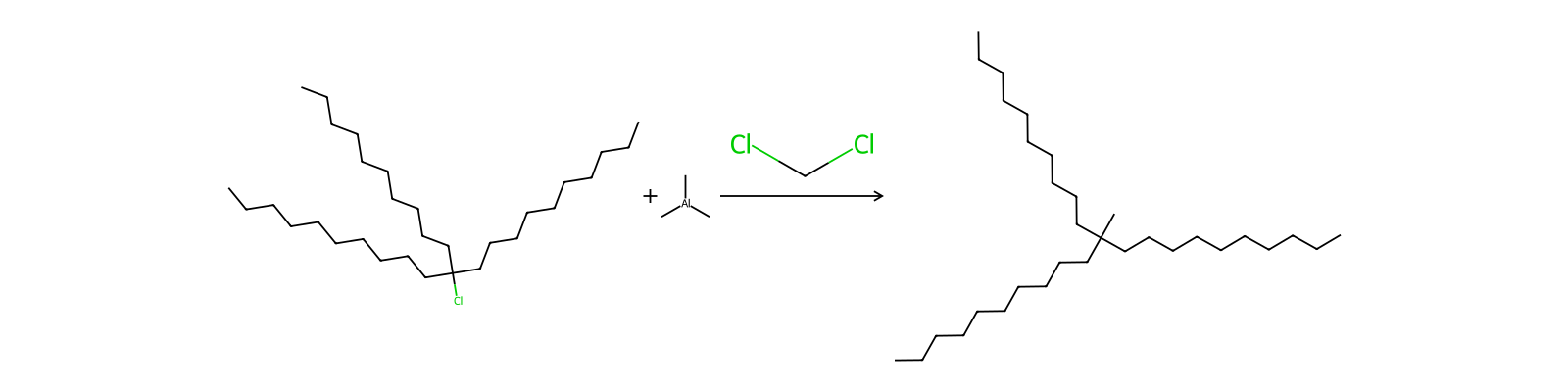
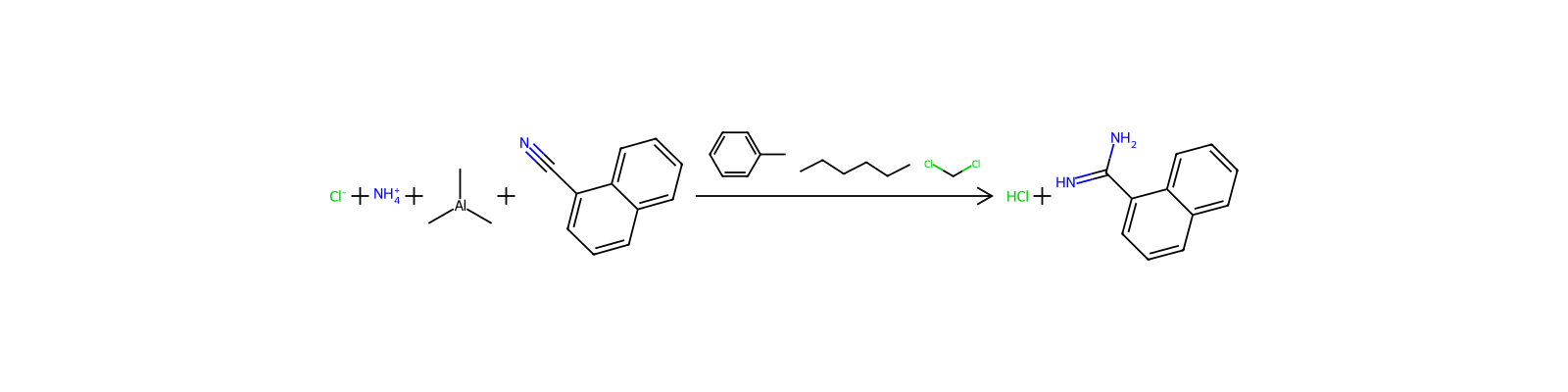
Related reactions
2,697 records




Linked notes
Loading…