HomeMCPWorkbenchSkills
HomeWorkbenchNotificationsMe
llms.txt · MCP GuidePrivacy Policy · Terms of Service · Supportv1.8.0
  1. Home
  2. /Compound

Trimethylsilyldiazomethane

HCID 167693
New noteNew reactionRequest quotes
Print preview

Completing data — refresh the page later to see the latest

Basic informationOverviewNames & identifiersPropertiesSafety & regulationChemistry & industryRelated reactionsCompound notes
Substructure searchFind similar structures

Basic information

CAS
18107-18-1
Standard SMILES
C[Si](C)(C)C=[N+]=[N-]
InChIKey
ONDSBJMLAHVLMI-UHFFFAOYSA-N
Molecular formula
C4H10N2Si
Average molar mass
114.22 g/mol

Overview

reagent for organic synthesis

Names & identifiers

Preferred name
Trimethylsilyldiazomethane
IUPAC
diazomethyl(trimethyl)silane
English name
(Trimethylsilyl)diazomethane
Molecular formula
C4H10N2Si
Molecular weight
114.22

Names & synonyms

18107-18-1Trimethylsilyldiazomethane(Trimethylsilyl)diazomethaneSilane, (diazomethyl)trimethyl-Tmschn2TMSDdiazomethyltrimethyl silaneQI98HQO8C4diazo((trimethylsilyl))methaneDTXSID8074653RefChem:191818DTXCID0035748
Show more names
TMSCH2N2(trimethylsilyl)diazomethanesolution2.0 M in hexanesACROS Organics™TriMethylsilyl)diazoMethaniazomethyl(trimethyl)silaneDiazo(trimethylsilyl)methane
605-915-4diazomethyl(trimethyl)silane(Diazomethyl)trimethylsilaneTMS-Diazomethanetrimethylsilyl diazomethaneC4H10N2SiMFCD00053946Trimethylsilyldiazomethane, 2M in hexane

Database identifiers

CAS
18107-18-1
PubChem CID
167693
DTXSID
DTXSID8074653
UNII
QI98HQO8C4
EC Number
605-915-4
Nikkaji
J261.098A

Properties

Computed structural propertiesFilling in

Topological polar surface area
2 Ų
Hydrogen bond donors
0
Hydrogen bond acceptors
1
Rotatable bonds
1
Heavy atoms
7
Formal charge
0
Complexity
96.7

Experimental & physicochemical properties

Chemical ClassesMetals -> Metalloid Compounds (Silicon)
Color/FormGreenish-yellow liquid
Solubility · 2 items

Soluble in most organic solvents

Insoluble in water

Boiling Point96 °C at 775 mm Hg
Decomposition · 2 items

Hazardous decomposition products - Trimethylsilyl diazomethane in alcoholic solvents under acidic or basic conditions can lead to the formation of diazomethane. Hazardous decomposition products formed under fire conditions. - Carbon oxides, nitrogen oxides (NOx), silicon oxide. /(Trimethylsilyl)diazomethane solution in diethyl ether/

Trimethylsilyl diazomethane in alcoholic solvents under acidic or basic conditions can lead to the formation of diazomethane.. /(Trimethylssilyl)diazomethane solution in n-Hexane/

Refractive IndexIndex of Refraction: 1.4362 at 25 °C
Physical DescriptionGreenish-yellow liquid; [HSDB]
Stability/Shelf Life · 2 items

Safety & regulation

Safety information is for reference only and does not replace the supplier’s Safety Data Sheet (SDS), applicable regulations, or professional assessment.

GHS classification

GHS Classification · 4 items

Danger

H225 (11.4%): Highly Flammable liquid and vapor [Danger Flammable liquids]

P203, P210, P233, P240, P241, P242, P243, P260, P261, P264, P270, P271, P273, P280, P284, P302+P352, P303+P361+P353, P304+P340, P308+P316, P316, P318, P319, P320, P321, P332+P317, P362+P364, P370+P378, P391, P403+P233, P403+P235, P405, and P501 (click each P-code to see the statement)

Aggregated GHS information provided per 44 reports by companies from 4 notifications to the ECHA C&L Inventory. Each notification may be associated with multiple companies.

Hazard information

Hazards SummaryTo this day, it is unknown whether TMSD itself was the proximal cause of death in two workers, or whether conditions of use led to the evolution of diazomethane. [Reference #1] See Diazomethane.
Toxic Combustion ProductsHazardous decomposition products formed under fire conditions. - Carbon oxides, nitrogen oxides (NOx), silicon oxide. /(Trimethylsilyl)diazomethane solution in diethyl ether/
Hazard Classes and CategoriesFlam. Liq. 2 (11.4%)
Hazardous Reactivities and Incompatibilities · 2 items

Vapors may form explosive mixture with air. /Avoid/ heat, flames and sparks; extremes of temperature and direct sunlight. /(Trimethylsilyl)diazomethane solution in diethyl ether/

Vapors may form explosive mixture with air. /Avoid/ heat, flames and sparks /and/ oxidizing agents. /(Trimethylssilyl)diazomethane solution in n-Hexane/.

Safety & protection

Chemistry & industry

Uses & manufacturing

Uses · 5 items

Used as an alternative derivatizing agent for analysis of contaminants in drinking water, in the derivatization of phenols, and in organic synthesis; [HSDB]

In 1994, TMSD was approved for use as an alternative derivatizing agent for analytical methods previously approved by the U.S. Environmental Protection Agency for several regulated contaminants in drinking water (specifically, Methods 515.1 and 515.2) with one exception. TMSD cannot be used as such for the analysis of dalapon.

Used in the derivatization of phenols in the presence of diisopropylamine as a safe, non-explosive, and less-toxic alternative...to diazomethane.

Used in organic synthesis for the esterification of various naturally occurring carboxylic acids. Also converts highly sterically hindered alcohols to the corresponding methyl ether.

The preparation of methyl esters from carboxylic acids in the presence of methanol at room temperature is accomplished with trimethylsilyldiazomethane. Also used in the Arndt-Eistert synthesis and the homologation of ketones and aldehydes.

Methods of Manufacturing · 4 items

... TMSD /can/ be prepared from either ethyl N-nitroso-N-(trimethylsilylmethyl)urethane or N-nitroso-N-(trimethylsilylmethyl)urea, with the latter giving better product yield. Using the urea compound, addition of potassium hydroxide yields the desired product with hexamethyldisiloxane as a side product; typical preparations reportedly contain 61% and 17% of each, respectively. The reaction can occur at room temperature or below and in various organic solvents (e.g., benzene, decalin, and carbon tetrachloride) or neat. ... /In a similar method/ chloromethyltrimethylsilane /is treated/ with potassium cyanate followed by ammonia to produce the urea compound. The resulting urea was then treated using the method described above to produce TMSD.

... Chloromethyltrimethylsilane is reacted with magnesium to produce trimethylsilylmethylmagnesium chloride. This compound is then reacted with diphenyl phosphorazidate and cold water to yield TMSD.

Prepared by the diazo-transfer reaction of /trimethylsilylmethylmagnesium chloride/ with diphenyl phosphorazidate

Prepared from chloromethyltrimethylsilane using magnesium turnings in diethyl ether to form the corresponding Grignard reagent, trimethylsilylmethylmagnesium chloride. To form trimethylsilyldiazomethane the Grignard reagent is added slowly at low temp to a solution of diphenyl phosphorazidate.

Related reactions

1,893 records
New reaction record
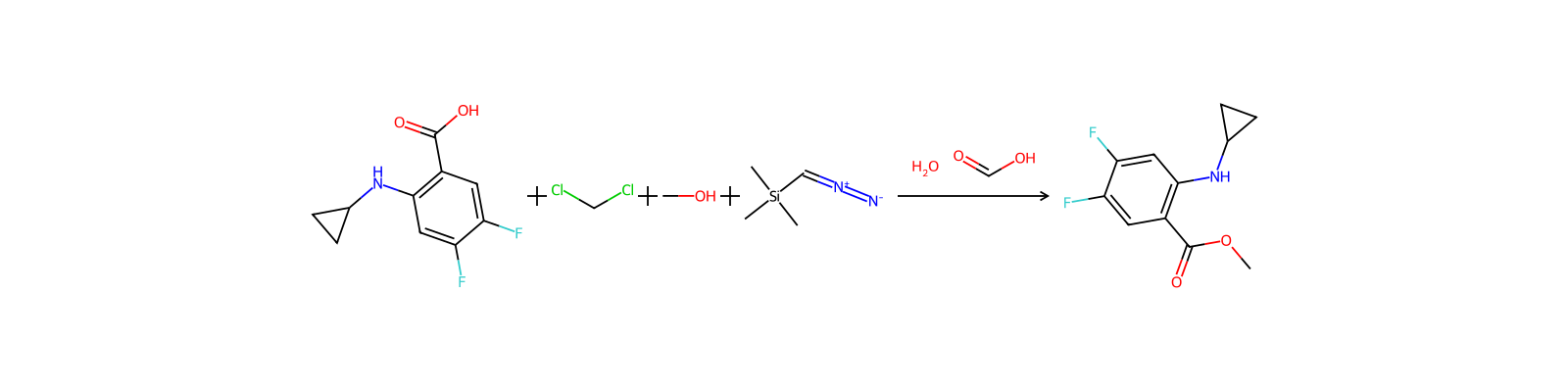
HRID 887 reaction equation
HRID 887As reactantuspto-grants-1998_03
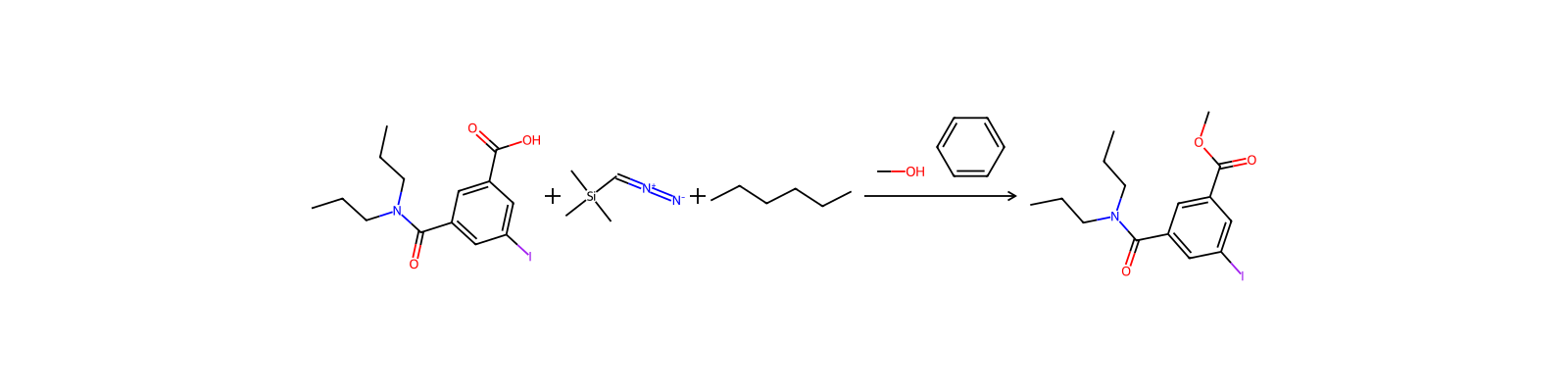
HRID 5923 reaction equation
HRID 5923As reactantuspto-grants-1993_09
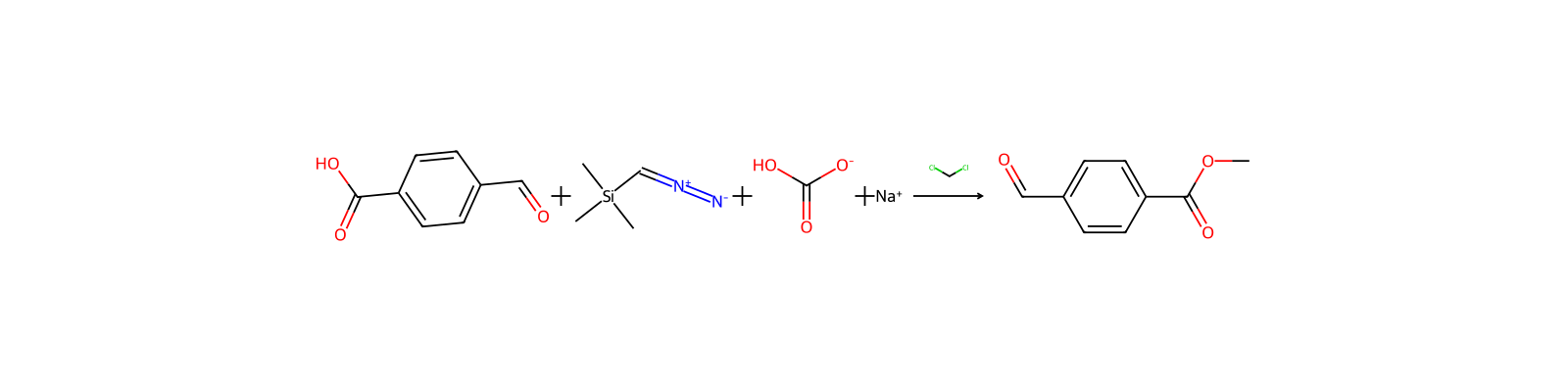
HRID 8743 reaction equation
HRID 8743As reactantuspto-grants-2006_08
HRID 8747 reaction equation
HRID 8747As reactantuspto-grants-2006_08
HRID 9298 reaction equation
HRID 9298As reactantuspto-grants-2006_08
HRID 10319 reaction equation
HRID 10319As reactantuspto-grants-2006_08
HRID 12622 reaction equation
HRID 12622As reactantuspto-grants-2010_06
HRID 14071 reaction equation
HRID 14071As reactantuspto-grants-2010_06
Page 1 of 237

Compound notes

Loading…

On this pageBasic informationOverviewNames & identifiersPropertiesSafety & regulationChemistry & industryRelated reactionsCompound notes
More actions
New noteNew reactionRequest quotes

Stable under recommended storage conditions./(Trimethylsilyl)diazomethane solution in diethyl ether/

Stable under recommended storage conditions.. /(Trimethylssilyl)diazomethane solution in n-Hexane/

Other Experimental Properties · 3 items

Liquid; 0.773 g/cu cm at 25 °C /2.0 molar solution in diethyl ether/

Yellow liquid /solution of Trimethylsilyldiazomethane in hexanes/

Stable in neat or in hydrocarbon solution but is decomposed quickly when in carbon tetrachloride and exposed to light. It is not hydrolyzed by neutral water or by 20% potassium hydroxide solution. It can undergo a number of reactions such as with carboxylic acids, cyclohexene, and activated olefins.

Physicochemical properties

Boiling point
96 °C · 96 °C
Density
0.773 g/mL · 0.773 g/mL at 25 °C
refractive index
1.4362 · 1.4362
Flash point
31 °F · −31 °F
storage temp.
Refrigerator
solubility
2 O · Sol most organic solvents; insol H2O.
form
Solution
color
White
Water Solubility
Immiscible with water. Miscible with organic solvents.
Sensitive
Moisture & Light Sensitive
BRN
1902903 · 1902903
Stability
Shock Sensitive
InChI
InChI=1S/C4H10N2Si/c1-7(2,3)4-6-5/h4H,1-3H3
InChIKey
ONDSBJMLAHVLMI-UHFFFAOYSA-N
SMILES
C(=[N+]=[N-])[Si](C)(C)C
CAS DataBase Reference
18107 · 18107-18-1(CAS DataBase Reference)
FDA UNII
98 HQO8C4 · QI98HQO8C4
EPA Substance Registry System
Silane, (diazomethyl)trimethyl- (18107-18-1)
UNSPSC Code
12352302 · 12352302
NACRES
22 · NA.22
Symbol(GHS)
2 · GHS02,GHS06,GHS08,GHS09
Signal word
Danger
Hazard statements
331 · H331-H361-H225-H304-H315-H330-H336-H350-H361f-H370-H373-H411-H302
Precautionary statements
201 · P201-P210-P280-P308+P311-P370+P378-P403+P235-P260-P301+P310a-P303+P361+P353-P405-P501a
target organs
Central nervous system, Lungs
PPE
Eyeshields, Faceshields, Gloves, type ABEK (EN14387) respirator filter
Hazard Codes
F+,Xn,N,F,T,T+
Risk Statements
12 · 12-19-22-66-67-65-62-51/53-48/20-38-11-23-39/26-26-45
Safety Statements
9 · 9-16-29-33-36/37-61-62-45-28-53
RIDADR
1208 · UN 1208 3/PG 2
WGK Germany
3 · 3
F
10 · 10
TSCA
Yes
HazardClass
3 · 3
PackingGroup
II
HS Code
29270000 · 29270000
Storage Class
3 · 3 - Flammable liquids
Hazard Classifications
2 InhalationAcute · Acute Tox. 2 InhalationAcute Tox. 4 OralCarc. 1BFlam. Liq. 2STOT SE 1 InhalationSTOT SE 3
Hazardous Substances Data
18107 · 18107-18-1(Hazardous Substances Data)
Limited Quantities
1 L · 1.0 L (0.3 gallon) (liquid)
Excepted Quantities
Max Inner Pack (30g or 30ml) and Max Outer Pack (500g or 500ml)
Fire Fighting Procedures · 2 items

Flammable in the presence of a source of ignition when the temperature is above the flash point. Keep away from heat/sparks/open flame/hot surface. No smoking. Use water spray, alcohol-resistant foam, dry chemical or carbon dioxide. Wear self contained breathing apparatus for fire fighting if necessary. Use water spray to cool unopened containers. /(Trimethylsilyl)diazomethane solution in diethyl ether/

For small (incipient) fires, use media such as "alcohol" foam, dry chemical, or carbon dioxide. For large fires, apply water from as far as possible. Use very large quantities (flooding) of water applied as a mist or spray; solid streams of water may be ineffective. Cool all affected containers with flooding quantities of water. Wear self contained breathing apparatus for fire fighting if necessary. Use water spray to cool unopened containers. /(Trimethylssilyl)diazomethane solution in n-Hexane/

Storage Conditions · 2 items

Keep container tightly closed in a dry and well-ventilated place. Containers which are opened must be carefully resealed and kept upright to prevent leakage. /(Trimethylsilyl)diazomethane solution in diethyl ether/

Keep container tightly closed in a dry and well-ventilated place. Containers which are opened must be carefully resealed and kept upright to prevent leakage. Store in cool place. /(Trimethylssilyl)diazomethane solution in n-Hexane/

Cleanup Methods · 2 items

Wear respiratory protection. Avoid breathing vapors, mist or gas. Ensure adequate ventilation. Remove all sources of ignition. Evacuate personnel to safe areas. Beware of vapors accumulating to form explosive concentrations. Vapors can accumulate in low areas. Prevent further leakage or spillage if safe to do so. Do not let product enter drains. Discharge into the environment must be avoided. Contain spillage, and then collect with an electrically protected vacuum cleaner or by wet-brushing and place in container for disposal according to local regulations. /(Trimethylsilyl)diazomethane solution in diethyl ether/

Wear respiratory protection. Avoid breathing vapors, mist or gas. Ensure adequate ventilation. Remove all sources of ignition. Evacuate personnel to safe areas. Beware of vapors accumulating to form explosive concentrations. Vapors can accumulate in low areas. Prevent further leakage or spillage if safe to do so. Do not let product enter drains. Discharge into the environment must be avoided. Contain spillage, soak up with non-combustible absorbent material, (e.g. sand, earth, diatomaceous earth, vermiculite) and transfer to a container for disposal according to local / national regulations./(Trimethylssilyl)diazomethane solution in n-Hexane/

Disposal Methods · 3 items

SRP: The most favorable course of action is to use an alternative chemical product with less inherent propensity for occupational harm/injury/toxicity or environmental contamination. Recycle any unused portion of the material for its approved use or return it to the manufacturer or supplier. Ultimate disposal of the chemical must consider: the material's impact on air quality; potential migration in soil or water; effects on animal and plant life; and conformance with environmental and public health regulations.

Burn in a chemical incinerator equipped with an afterburner and scrubber but exert extra care in igniting as this material is highly flammable. Offer surplus and non-recyclable solutions to a licensed disposal company. Contact a licensed professional waste disposal service to dispose of this material. Dispose of as unused product. /(Trimethylsilyl)diazomethane solution in diethyl ether/

Burn in a chemical incinerator equipped with an afterburner and scrubber but exert extra care in igniting as this material is highly flammable. Observe all federal, state, and local environmental regulations. Contact a licensed professional waste disposal service to dispose of this material. Dispose of as unused product. /(Trimethylssilyl)diazomethane solution in n-Hexane/

Preventive Measures · 2 items

Handle products containing trimethylsilyl diazomethane only in a closed system or effectively ventilated laboratory hood. Avoid contact with skin and eyes. Avoid inhalation of vapor or mist. Use explosion-proof equipment. Keep away from sources of ignition - No smoking. Take measures to prevent the build up of electrostatic charge. /(Trimethylsilyl)diazomethane solution in diethyl ether/

Handle products containing trimethylsilyl diazomethane only in a closed system or effectively ventilated laboratory hood. Avoid contact with skin and eyes. Avoid inhalation of vapor or mist. Keep away from sources of ignition - No smoking. Take measures to prevent the build up of electrostatic charge. /(Trimethylssilyl)diazomethane solution in n-Hexane/

Personal Protective Equipment (PPE) · 2 items

Where risk assessment shows air-purifying respirators are appropriate use a full-face respirator with multi-purpose combination (US) or type ABEK (EN 14387) respirator cartridges as a backup to engineering controls. If the respirator is the sole means of protection, use a full-face supplied air respirator. Use respirators and components tested and approved under appropriate government standards such as NIOSH (US) or CEN (EU). Handle with gloves. Gloves must be inspected prior to use. Use proper glove removal technique (without touching glove's outer surface) to avoid skin contact with this product. Dispose of contaminated gloves after use in accordance with applicable laws and good laboratory practices. Wash and dry hands. /Use/ face shield and safety glasses /for eye protection/. Use equipment for eye protection tested and approved under appropriate government standards such as NIOSH (US) or EN 166(EU). /For/ skin and body protection /use/ complete suit protecting against chemicals /and/ flame retardant antistatic protective clothing. The type of protective equipment must be selected according to the concentration and amount of the dangerous substance at the specific workplace. Avoid contact with skin, eyes and clothing. Wash hands before breaks and immediately after handling the product. /(Trimethylsilyl)diazomethane solution in diethyl ether/

Where risk assessment shows air-purifying respirators are appropriate use a full-face respirator with multi-purpose combination (US) or type ABEK (EN 14387) respirator cartridges as a backup to engineering controls. If the respirator is the sole means of protection, use a full-face supplied air respirator. Use respirators and components tested and approved under appropriate government standards such as NIOSH (US) or CEN (EU). Handle with gloves. Gloves must be inspected prior to use. Use proper glove removal technique (without touching glove's outer surface) to avoid skin contact with this product. Dispose of contaminated gloves after use in accordance with applicable laws and good laboratory practices. Wash and dry hands. /Use/ face shield and safety glasses. Use equipment for eye protection tested and approved under appropriate government standards such as NIOSH (US) or EN 166(EU).Choose body protection according to the amount and concentration of the dangerous substance at the work place. Avoid contact with skin, eyes and clothing. Wash hands before breaks and immediately after handling the product. /(Trimethylssilyl)diazomethane solution in n-Hexane/

Toxicology

Environmental Fate · 1 item

ATMOSPHERIC FATE: According to a model of gas/particle partitioning of semivolatile organic compounds in the atmosphere(1), trimethylsilyldiazomethane, which has an estimated vapor pressure of 1.19X10⁻⁵ mm Hg at 25 °C(SRC), determined from a fragment constant method(2), will exist in both the vapor and particulate phases in the ambient atmosphere. Vapor-phase trimethylsilyldiazomethane may undergo a hydrolysis reaction with atmospheric water vapor but may also be degraded by reaction with photochemically-produced hydroxyl radicals(SRC); the half-life for this reaction in air is estimated to be 6 days(SRC), calculated from its rate constant of 2.58X10⁻¹² cu cm/molecule-sec at 25 °C(SRC) that was derived using a structure estimation method(3) Particulate-phase trimethylsilyldiazomethane may be removed from the air by wet or dry deposition(SRC). Trimethylsilyldiazomethane does not contain chromophores that absorb at wavelengths >290 nm(4), and therefore is not expected to be susceptible to direct photolysis by sunlight(SRC).

Adverse EffectsToxic Pneumonitis - Inflammation of the lungs induced by inhalation of metal fumes or toxic gases and vapors.
Soil Adsorption/MobilityAdsorption to soil is not an important fate since trimethylsilyldiazomethane reacts rapidly with water. (SRC)
Human Toxicity Excerpts · 1 item

/CASE REPORTS/ A 46 year-old male pharmaceutical chemist presented to the emergency department (ED) with progressive dyspnea. At noon on the prior day, as part of a chemical analysis, he had mixed 2 mL of acetone with 25 mL of L-Malic acid to which was added trimethylsilyldiazomethane (TSDM) dissolved in n-hexane. After 1 hour this mix was combined with an inert gas and a small amount of methylene chloride under a fume hood that was later reported to be nonfunctioning. Although he experienced no immediate mucous membrane irritation, 8 hours post-exposure he developed cough, pleuritic chest pain, hemoptysis, and progressive shortness of breath; by 15 hours, he presented to the ED in respiratory distress, hypoxic (PaO2 67), hypercarbic (PaCO2 46), and acidemic (pH 7.26). A chest radiograph showed an acute lung injury pattern. By 23 hours he required intubation. At 26 hours postexposure he developed profound bradycardia, refractory hypotension, and asystole. Diazomethane (DM) inhalation is known to cause fatal pulmonary edema without an immediate irritant prodrome and with a similar time course to this case. Structural modification of DM with an added trimethylsilyl group makes TSDM less explosive, but its propensity for lung injury is unclear. The chemical admixture as described in this case may have liberated nitrogen gas, but this should not have led to pulmonary injury; nitrogen dioxide should not have evolved. The toxicity may stem from residual DM present in the reagent or a direct effect of TSDM, its metabolites or breakdown products, or potential intracellular formaldehyde formation. The temporal relationship to exposure with inadequate ventilation and clinical effects similar to the analogue toxicant DM support a causal relationship between TSDM and acute lung injury.

Artificial Pollution Sources · 1 item

Trimethylsilyldiazomethane's production and use as a reagent in organic synthesis(1) for the esterification of carboxylic acids, etherifcation of sterically hindered alcohols and as an alternative to diazomethane(2) may result in its release to the environment through various waste streams(SRC).

Environmental BiodegradationNo biodegradation data are available since trimethylsilyldiazomethane reacts rapidly with water. (SRC)
Environmental BioconcentrationBioconcentration is not an important fate since trimethylsilyldiazomethane reacts rapidly with water. (SRC)
Volatilization from Water/SoilVolitalization from water/soil is not an important fate since trimethylsilyldiazomethane reacts rapidly with water. (SRC)
Environmental Abiotic Degradation · 1 item

The rate constant for the vapor-phase reaction of trimethylsilyldiazomethane with photochemically-produced hydroxyl radicals has been estimated as 2.58X10⁻¹² cu cm/molecule-sec at 25 °C(SRC) using a structure estimation method(1). This corresponds to an atmospheric half-life of about 6 days at an atmospheric concentration of 5X10+5 hydroxyl radicals per cu cm(1). Trimethylsilyldiazomethane reacts rapidly with water, and therefore hydrolysis is not expected. Trimethylsilyldiazomethane does not contain chromophores that absorb at wavelengths >290 nm(2), and therefore is not expected to be susceptible to direct photolysis by sunlight(SRC).

Probable Routes of Human Exposure · 1 item

Occupational exposure to trimethylsilyldiazomethane may occur through inhalation of solvent vapors in which trimethylsilyldiazomethane is dissolved during organic syntheses. Dermal contact with solutions of this compound in organic solvents may also occur at workplaces where trimethylsilyldiazomethane is produced or used. The general population is not likely to be exposed to trimethylsilyldiazomethane since it is primarily used in a laboratory setting. (SRC)

Environmental Fate/Exposure Summary · 1 item

Trimethylsilyldiazomethane's production and use, primarily in a laboratory setting, as a reagent in organic synthesis for the esterification of carboxylic acids may result in its release to the environment through various waste streams. If released to air, an estimated vapor pressure of 1.19X10⁻⁵ mm Hg at 25 °C indicates trimethylsilyldiazomethane will exist in both the vapor phase and particulate phase in the atmosphere. Vapor-phase trimethylsilyldiazomethane may react with atmospheric water vapor and may be degraded in the atmosphere by reaction with photochemically-produced hydroxyl radicals; the half-life for this reaction in air is estimated to be 6 days. Particulate-phase trimethylsilyldiazomethane may be removed from the air by wet or dry deposition. Trimethylsilyldiazomethane does not contain chromophores that absorb at wavelengths >290 nm, and therefore is not expected to be susceptible to direct photolysis by sunlight. Since trimethylsilyldiazomethane reacts rapidly with polar functional groups, volatilization from water or soil are not relevant environmental fate processes. Similarly, adsorption to soil/sediments, bioconcentration, and biodegradation are not expected due to the potential for decomposition under environmental conditions. Occupational exposure to trimethylsilyldiazomethane may occur through inhalation of solvent vapors in which trimethylsilyldiazomethane is dissolved during organic syntheses. Dermal contact with solutions of this compound in organic solvents may also occur at workplaces where trimethylsilyldiazomethane is produced or used. The general population is not likely to be exposed to trimethylsilyldiazomethane since it is primarily used in a laboratory setting. (SRC)

Antidote and Emergency Treatment · 3 items

/SRP:/ Immediate first aid: Ensure that adequate decontamination has been carried out. If patient is not breathing, start artificial respiration, preferably with a demand valve resuscitator, bag-valve-mask device, or pocket mask, as trained. Perform CPR if necessary. Immediately flush contaminated eyes with gently flowing water. Do not induce vomiting. If vomiting occurs, lean patient forward or place on the left side (head-down position, if possible) to maintain an open airway and prevent aspiration. Keep patient quiet and maintain normal body temperature. Obtain medical attention. /Poisons A and B/

/SRP:/ Basic treatment: Establish a patent airway (oropharyngeal or nasopharyngeal airway, if needed). Suction if necessary. Watch for signs of respiratory insufficiency and assist ventilations if needed. Administer oxygen by nonrebreather mask at 10 to 15 L/min. Monitor for pulmonary edema and treat if necessary ... . Monitor for shock and treat if necessary ... . Anticipate seizures and treat if necessary ... . For eye contamination, flush eyes immediately with water. Irrigate each eye continuously with 0.9% saline (NS) during transport ... . Do not use emetics. For ingestion, rinse mouth and administer 5 mL/kg up to 200 mL of water for dilution if the patient can swallow, has a strong gag reflex, and does not drool ... . Cover skin burns with dry sterile dressings after decontamination ... . /Poisons A and B/

/SRP:/ Advanced treatment: Consider orotracheal or nasotracheal intubation for airway control in the patient who is unconscious, has severe pulmonary edema, or is in severe respiratory distress. Positive-pressure ventilation techniques with a bag valve mask device may be beneficial. Consider drug therapy for pulmonary edema ... . Consider administering a beta agonist such as albuterol for severe bronchospasm ... . Monitor cardiac rhythm and treat arrhythmias as necessary ... . Start IV administration of D5W /SRP: "To keep open", minimal flow rate/. Use 0.9% saline (NS) or lactated Ringer's if signs of hypovolemia are present. For hypotension with signs of hypovolemia, administer fluid cautiously. Watch for signs of fluid overload ... . Treat seizures with diazepam or lorazepam ... . Use proparacaine hydrochloride to assist eye irrigation ... . /Poisons A and B/

Safety data

F
10
PPE
Eyeshields, Faceshields, Gloves, type ABEK (EN14387) respirator filter
wgk
3
tsca
Yes
ridadr
UN 1208 3/PG 2
hs_code
29270000
risk_code
12-19-22-66-67-65-62-51/53-48/20-38-11-23-39/26-26-45
Signal word
Danger
Symbol(GHS)
GHS02,GHS06,GHS08,GHS09
hazard_code
F+,Xn,N,F,T,T+
safety_code
9-16-29-33-36/37-61-62-45-28-53
hazard_class
3
Storage Class
3 - Flammable liquids
packing_group
II
target organs
Central nervous system, Lungs
Hazard statements
H331-H361-H225-H304-H315-H330-H336-H350-H361f-H370-H373-H411-H302
Limited Quantities
1.0 L (0.3 gallon) (liquid)
Excepted Quantities
Max Inner Pack (30g or 30ml) and Max Outer Pack (500g or 500ml)
Hazard Classifications
Acute Tox. 2 InhalationAcute Tox. 4 OralCarc. 1BFlam. Liq. 2STOT SE 1 InhalationSTOT SE 3
Precautionary statements
P201-P210-P280-P308+P311-P370+P378-P403+P235-P260-P301+P310a-P303+P361+P353-P405-P501a
Hazardous Substances Data
18107-18-1(Hazardous Substances Data)
Formulations/PreparationsSold as a solution in hexanes or diethyl ether (2.0 molar)
Applications · 4 items

UsesTrimethylsilyldiazomethane is used as one-carbon homologation reagent; stable, safe substitute for diazomethane;participating in the synthesis reactions of insertion reactions;ketenylation reactions;preparation of homoallylic sulfides;pericyclic reactions;[C-N-N] 1,3-dipole for the preparation of azoles.

Uses(Trimethylsilyl)diazomethane is used as an analyte in the determination of some phenolic organohalogens in human serum by GC-MS.

UsesReactant for preparation of: &bull Macrolactam analogs of the natural product macrolide (-)-A26771B with improved metabolic stability and antibacterial activity &bull Aigialomycin D analogues as protein kinase inhibitors for cancer treatment &bull Unnatural α-amino acid derivatives containing gem-bisphosphonates via Michael addition reaction &bull Capped 4-methylumbelliferyl hyaluronan disaccharides and tetrasaccharides as potential hyaluronidase substrates &bull Stictamides A-C as matrix metallopeptidase 12 (MMP12) inhibitors with antitumor invasion activity &bull Endothelin converting enzyme (ECE) Inhibitors WS 75624A and WS 75624B via a cross-metathesis approach &bull Ent-kaurene derivatives as anti-inflammatory agents &bull Desmosdumotin C analogs as potent antitumor agents acting via activation of spindle assembly checkpoint &bull Imidazolo[2,1-b]benzothiazole derivatives as potential p53 inhibitors

General Description(Trimethylsilyl)diazomethane is considered as a non-explosive substitute to diazomethane for the homologation of carbonyl derivatives, mainly ketones, via reactions such as Tiffeneau-Demjanov rearrangement.

Preparation methods

PreparationTrimethylsilyldiazomethane is prepared by the diazo-transfer reaction of trimethylsilylmethylmagnesium chloride with diphenyl phosphorazidate (DPPA) (eq 1).

Upstream & downstream products

Upstream raw materials

HexaneSodium azideAcetoneDiphenylphosphoryl azidePhenolPhosphorus oxitrichloride1,2-DibromoethaneTetrahydrofuranN,N-DimethylanilineChloromethyltrimethylsilaneDiethyl etherDiphenyl chlorophosphateMagnesium

Downstream products

PYRETHRIN 2Dimethyl Glutarate4-Methoxystyrene2-bromo-1-(4-bromo-3-fluorophenyl)ethanoneBenzoic acid,4-bromo-2-methyl-,methyl ester