HomeMCPWorkbenchSkills
HomeWorkbenchNotificationsMe
llms.txt · MCP GuidePrivacy Policy · Terms of Service · Supportv1.8.0
  1. Home
  2. /Compound

Methyl Thioglycolate

HCID 16907
New noteNew reactionRequest quotes
Print preview

Completing data — refresh the page later to see the latest

Basic informationOverviewNames & identifiersPropertiesSafety & regulationChemistry & industryRelated reactionsCompound notes
Substructure searchFind similar structures

Basic information

CAS
2365-48-2
Standard SMILES
COC(=O)CS
InChIKey
MKIJJIMOAABWGF-UHFFFAOYSA-N
Molecular formula
C3H6O2S
Average molar mass
106.15 g/mol
Monoisotopic mass
106.00885043

Overview

Based on the available data, the CIR Expert Panel concluded that ... Methyl Thioglycolate is safe for use in hair straighteners, permanent waves, tonics, dressings, and so forth, wave sets, other non-coloring hair products, and hair dyes and colors, as described in this safety assessment, at concentrations up to 15.2% (as Thioglycolic Acid). Hairdressers should avoid skin contact and minimize consumer skin exposure.

Names & identifiers

Preferred name
Methyl Thioglycolate
IUPAC
methyl 2-sulfanylacetate
English name
Methyl thioglycolate
Molecular formula
C3H6O2S
Molecular weight
106.14

Names & synonyms

METHYL THIOGLYCOLATE2365-48-2Methyl mercaptoacetateMethyl 2-mercaptoacetateThioglycolic acid methyl esterMethylthioglycolateAcetic acid, mercapto-, methyl esterMethanethiol, methoxy-MethylmercaptoacetateUSAF EK-7119Acetic acid, 2-mercapto-, methyl esterDTXSID0033673
Show more names
MTGMETGmethyl2-mercaptoacetateusafek-7119
O1608LA9ELNSC-75117DTXCID8013673RefChem:818100219-121-7methyl 2-sulfanylacetateMercaptoacetic acid methyl esterMethyl sulfanylacetate

Database identifiers

CAS
2365-48-2
PubChem CID
16907
DTXSID
DTXSID0033673
ChEMBL
CHEMBL1341329
UNII
O1608LA9EL
EC Number
219-121-7
Nikkaji
J54.943F

Properties

Computed structural propertiesFilling in

XLogP
0.4
Topological polar surface area
27.3 Ų
Hydrogen bond donors
1
Hydrogen bond acceptors
3
Rotatable bonds
2
Heavy atoms
6
Formal charge
0
Complexity
52.8

Experimental & physicochemical properties

Chemical ClassesOther Classes -> Thioglycolates
Cosmetics · 2 items

Cosmetic ingredients (Methyl Thioglycolate) -> CIR (Cosmetic Ingredient Review)

Hair waving or straightening

SpringerMaterials PropertiesSchoenflies notation
Boiling Point148 °C
DecompositionWhen heated to decomposition it emits toxic fumes of sulfoxides.
Physical DescriptionColorless liquid with a stench; [MSDSonline]
Dissociation ConstantspKa= 8.08 @ 25 °C

Physicochemical properties

Melting point
-24 °C · -24 °C
Boiling point
42 · 42-43 °C/10 mmHg (lit.)

Safety & regulation

Safety information is for reference only and does not replace the supplier’s Safety Data Sheet (SDS), applicable regulations, or professional assessment.

GHS classification

GHS Classification · 6 items

Danger

H226 (72.2%): Flammable liquid and vapor [Warning Flammable liquids]

P210, P233, P240, P241, P242, P243, P261, P264, P264+P265, P270, P271, P272, P280, P301+P316, P301+P317, P302+P352, P303+P361+P353, P304+P340, P305+P351+P338, P316, P317, P319, P321, P330, P332+P317, P333+P317, P337+P317, P362+P364, P370+P378, P403+P233, P403+P235, P405, and P501 (click each P-code to see the statement)

Aggregated GHS information provided per 90 reports by companies from 11 notifications to the ECHA C&L Inventory. Each notification may be associated with multiple companies.

Danger

H301: Toxic if swallowed [Danger Acute toxicity, oral]

Hazard information

Regulatory Information · 3 items

Chemical: Acetic acid, mercapto-, methyl ester

Status: Active Update: 22-12-2022 https://echa.europa.eu/registration-dossier/-/registered-dossier/18423

Methyl thioglycolate: Does not have an individual approval but may be used under an appropriate group standard

Other Safety InformationIMAP assessments - Acetic acid, mercapto-, methyl ester: Human health tier II assessment
Hazards SummaryCauses somnolence and tremor in lethal-dose studies of rats; [RTECS] An irritant; Toxic if swallowed; May be harmful by inhalation or skin absorption; [MSDSonline]
Hazard Classes and Categories · 2 items

Flam. Liq. 3 (72.2%)

Specific target organ toxicity (repeated exposure) - category 2

Safety & protection

Chemistry & industry

Pharmacology

Mechanism of Action · 1 item

METHYL THIOGLYCOLATE PRODUCED REVERSIBLE ANTAGONISM OF OXYTOCIN ON ISOLATED UTERUS OF RAT, AN ANTAGONISM THAT OCCURRED AT RECEPTOR LEVEL. IT WAS SUGGESTED THAT THIS WAS CAUSED BY REVERSIBLE INACTIVATION OF ESSENTIAL DISULFIDE GROUPS IN THE RECEPTORS.

Uses & manufacturing

Uses · 3 items

CIR ingredient: Methyl Thioglycolate

Used as chemical intermediate; [HSDB]

Chemical intermediate

Use ClassificationCosmetics -> Hair waving or straightening
General Manufacturing Information · 3 items

Acetic acid, 2-mercapto-, methyl ester: ACTIVE

/Has/ shown promise as raw material in several fine chemicals.

Can be used as the starting material to obtain methyl 3-amino-2- thiophenecarboxylate ... by reaction with 2-chloroacrylonitrile.

Applications · 3 items

UsesMethyl thioglycolate was used in the preparation of 3-carbomethoxy-4- oxotetrahydrothiopyran, 2- and 4-carbomethoxy-3-oxotetrahydrothiophene. It is used to prepare methyl thioglycolate and aminoethanethiol conjugated gold nanorods.

UsesMethyl Thioglycolate is an derivative of Thioglycolic Acid (T350760), an organic compound containing both a thiol and a carboxylic acid functional groups. Thioglycolic Acid and its derivatives are oft en used in organic synthesis as a nucleophile in thioglycolysis reactions and is also used as a S transfer agent for sulfonyl chloride synthesis. Methyl Thioglycolate have been studied for the its inf luence on neocarzinostatin activation and expression of DNA damage.

General DescriptionMethyl thioglycolate reacts with nonprotein component of the antitumor antibiotic neocarzinostatin to form 1:1 adduct. It reacts with isothiocyanate to form Rhodanine.

Related reactions

616 records
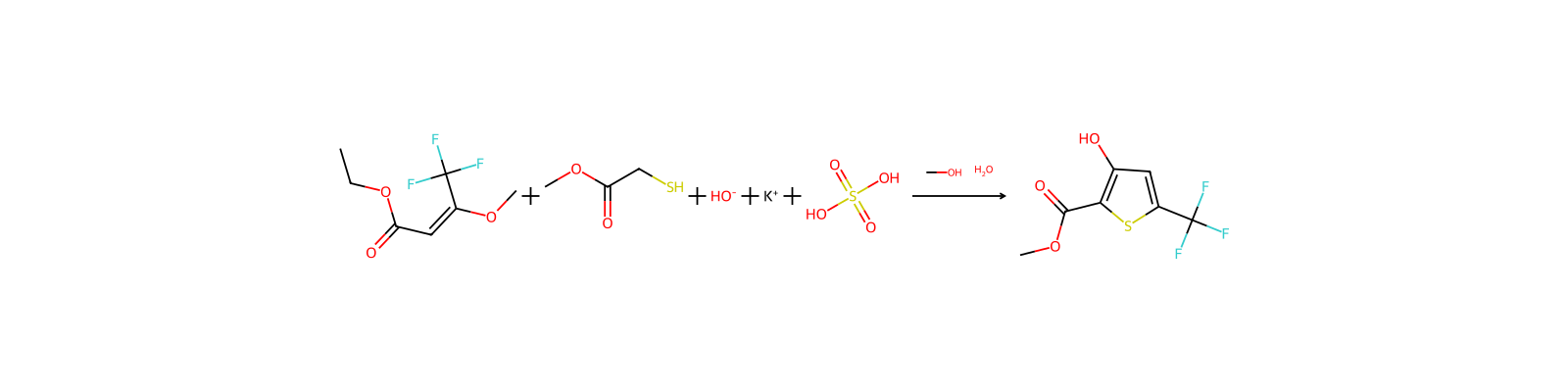
New reaction record
HRID 4278 reaction equation
HRID 4278As reactantuspto-grants-1988_02
HRID 6972 reaction equation
HRID 6972As reactantuspto-grants-2006_08
HRID 11692 reaction equation
HRID 11692As reactantuspto-grants-2006_08
HRID 15401 reaction equation
HRID 15401As reactantuspto-grants-2010_06
HRID 15422 reaction equation
HRID 15422As reactantuspto-grants-2010_06
HRID 15425 reaction equation
HRID 15425As reactantuspto-grants-2010_06
HRID 15426 reaction equation
HRID 15426As reactantuspto-grants-2010_06
HRID 15427 reaction equation
HRID 15427As reactantuspto-grants-2010_06
Page 1 of 77

Compound notes

Loading…

On this pageBasic informationOverviewNames & identifiersPropertiesSafety & regulationChemistry & industryRelated reactionsCompound notes
More actions
New noteNew reactionRequest quotes
Density
1.187 g/mL · 1.187 g/mL at 25 °C (lit.)
refractive index
20 · n20/D 1.466(lit.)
Flash point
86 °F · 86 °F
storage temp.
30 °C · Store below +30°C.
solubility
40 g/l · 40g/l
form
Liquid
pka
8.04 · 8.04±0.10(Predicted)
color
Clear colorless
Odor
Strong, unpleasant, garlic-like
Water Solubility
40 g/L · 40 g/L (20 ºC)
Sensitive
Air Sensitive
BRN
506259 · 506259
Henry's Law Constant
1.6 · 1.6×100 mol/(m3Pa) at 25℃, HSDB (2015)
Cosmetics Ingredients Functions
HAIR WAVING OR STRAIGHTENING
Cosmetic Ingredient Review (CIR)
Methyl thioglycolate (2365-48-2)
InChI
1S/C3H6O2S/c1-5-3(4)2-6/h6H,2H2,1H3
InChIKey
MKIJJIMOAABWGF-UHFFFAOYSA-N
SMILES
COC(=O)CS
CAS DataBase Reference
2365 · 2365-48-2(CAS DataBase Reference)
EWG's Food Scores
1 · 1-3
FDA UNII
1608 LA9EL · O1608LA9EL
NIST Chemistry Reference
Acetic acid, mercapto-, methyl ester(2365-48-2)
EPA Substance Registry System
Acetic acid, mercapto-, methyl ester (2365-48-2)
UNSPSC Code
12352100 · 12352100
NACRES
22 · NA.22
Symbol(GHS)
2 · GHS02,GHS06
Signal word
Danger
Hazard statements
226 · H226-H301-H315-H319-H332-H335
Precautionary statements
210 · P210-P233-P301+P310-P303+P361+P353-P304+P340+P312-P305+P351+P338
target organs
Respiratory system
PPE
Eyeshields, Faceshields, Gloves, type ABEK (EN14387) respirator filter
Hazard Codes
Xn,T
Risk Statements
10 · 10-20/22-36/37/38-25
Safety Statements
26 · 26-36/37-45-36/37/39-28A
RIDADR
1992 · UN 1992 3/PG 3
WGK Germany
1 · 1
RTECS
7350000 · AI7350000
TSCA
TSCA listed
HazardClass
3 · 3
PackingGroup
III
HS Code
29309070 · 29309070
Storage Class
3 · 3 - Flammable liquids
Hazard Classifications
3 OralAcute · Acute Tox. 3 OralAcute Tox. 4 InhalationEye Irrit. 2Flam. Liq. 3Skin Irrit. 2STOT SE 3
Hazardous Substances Data
2365 · 2365-48-2(Hazardous Substances Data)
Toxicity
50 · mouse,LD50,intraperitoneal,100mg/kg (100mg/kg),National Technical Information Service. Vol. AD277-689,
REACH Registrations
Active
Limited Quantities
5 L · 5.0 L (1.3 gallons) (liquid)
Excepted Quantities
Max Inner Pack (30g or 30ml) and Max Outer Pack (1Kg or 1L)
Disposal Methods · 1 item

SRP: At the time of review, criteria for land treatment or burial (sanitary landfill) disposal practices are subject to significant revision. Prior to implementing land disposal of waste residue (including waste sludge), consult with environmental regulatory agencies for guidance on acceptable disposal practices.

Toxicology

Environmental Fate · 3 items

TERRESTRIAL FATE: Based on a classification scheme(1), an estimated Koc value of 6.4(SRC), determined from a structure estimation method(2), indicates that methyl thioglycolate is expected to have very high mobility in soil(SRC). Volatilization of the undissociated form of methyl thioglycolate from moist soil surfaces is expected to be an important fate process(SRC) given an estimated Henry's Law constant of 6.22X10⁻⁶ atm-cu m/mole(SRC), using a fragment constant estimation method(3). However, a pKa of 8.08(5) indicates methyl thioglycolate will exist mostly in the ionized form at pH values above 8 and therefore at these pHs, volatilization from moist surfaces is not expected to be an important fate process. The potential for volatilization of methyl thioglycolate from dry soil surfaces may exist(SRC) based upon an estimated vapor pressure of 7.5 mm Hg(SRC), determined from a fragment constant method(4).

AQUATIC FATE: Based on a classification scheme(1), an estimated Koc value of 6.4(SRC), determined from an estimation method(2), indicates that methyl thioglycolate is not expected to adsorb to suspended solids and sediment in water(SRC). Volatilization from water surfaces is expected(3) based upon an estimated Henry's Law constant of 6.22X10⁻⁶ atm-cu m/mole(SRC) for the unionized form, developed using a fragment constant estimation method(4). Using this Henry's Law constant and an estimation method(3), volatilization half-lives for a model river and model lake are 4 and 48 days, respectively(SRC). A pKa of 8.08(8) indicates methyl thioglycolate will exist mostly in the ionized form at pH values above 8 and therefore volatilization from water surfaces at these pHs is not expected to be an important fate process. According to a classification scheme(5), an estimated BCF of 3.1(SRC), from an estimated log Kow of 0.32(6) and a regression-derived equation(7), suggests the potential for bioconcentration in aquatic organisms is low.

ATMOSPHERIC FATE: According to a model of gas/particle partitioning of semivolatile organic compounds in the atmosphere(1), methyl thioglycolate, which has an estimated vapor pressure of 7.5 mm Hg at 25 °C(2), is expected to exist solely as a vapor in the ambient atmosphere. Vapor-phase methyl thioglycolate is degraded in the atmosphere by reaction with photochemically-produced hydroxyl radicals(SRC); the half-life for this reaction in air is estimated to be 11 hrs(SRC), calculated from its rate constant of 3.5X10⁻¹³ cu cm/molecule-sec at 25 °C, determined using a structure estimation method(3).

Adverse EffectsNeurotoxin - Other CNS neurotoxin
Toxicity Summary · 2 items

Based on the available data, the CIR Expert Panel concluded that ... Methyl Thioglycolate is safe for use in hair straighteners, permanent waves, tonics, dressings, and so forth, wave sets, other non-coloring hair products, and hair dyes and colors, as described in this safety assessment, at concentrations up to 15.2% (as Thioglycolic Acid). Hairdressers should avoid skin contact and minimize consumer skin exposure.

Safe for use in cosmetics, with qualifications

Soil Adsorption/Mobility · 1 item

Using a structure estimation method based on molecular connectivity indices(1), the Koc for methyl thioglycolate can be estimated to be 6.4(SRC). According to a classification scheme(2), this estimated Koc value suggests that methyl thioglycolate is expected to have very high mobility in soil. The pKa of methyl thioglycolate is 8.08(3), indicating that this compound will exist in the dissociated form in the environment at basic conditions and anions generally do not adsorb to organic carbon and clay more strongly than their neutral counterparts.

TSCA Test Submissions · 2 items

Methyl mercaptoacetate (CAS # 2365-48-2) was evaluated for acute dermal toxicity in guinea pigs (strain unspecified) administered occluded applications (dosage, volume unspecified) to depilated abdominal skin for 24 hours. Treatment was associated with signs of "moderate" dermal irritation in 2/2 animals including slight to moderate erythema and edema, necrosis at 24 hours, and scars at 14 days post-exposure. In 6 guinea pigs, unspecified dermal doses administered by the same method produced mortality (4/6) consistent with a dermal LD50 of 0.5-1 ml/kg. No further information regarding method or results was provided.

Methyl mercaptoacetate (CAS # 2365-48-2) was evaluated for subchronic oral toxicity in groups of 5 male rats (strain unspecified) fed 10, 100, and 300 mg/kg doses in corn oil by oral gavage on 5 days/week over a period of 15 days (11 treatments). After 2 doses of 300 mg/kg, 3/5 rats died, while the remaining 2 were sacrificed due to poor body condition. Clinical signs of toxicity included dehydration, hypoactivity, weakness, hypothermia, and poor body condition. No overt toxicity was noted among rats receiving 10 or 100 mg/kg doses, save a solitary 100 mg/kg male which exhibited transient inactivity after an initial dose only. In 100 mg/kg rats, the rate of weight gain during Days 1-4 and the terminal mean weight gain were significantly lower than those of controls. The 2 sacrificed rats of 300 mg/kg doses demonstrated depressed white cell and glucose levels, while aspartate aminotransferase, alanine aminotransferase, lactic dehydrogenase, and urea nitrogen values were elevated. Both hematological and clinical chemistry values were comparable to those of controls in rats fed 100 mg/kg doses. Upon necropsy of 300 mg/kg rats, gross lesions included hemorrhagic stomachs, unilateral testicular atrophy, adipose atrophy, discolored liver and spleen, and corneal opacity. Cellular changes were characterized by thymic lymphocytic necrosis, lipoid degeneration, hypertrophic hepatocytes and nuclear changes in the liver; glomerular casts, cytoplasmic vacuolization, and degeneration of the proximal convoluted tubules in the kidney; serous atrophy of adipose tissue; degenerated spermatids or atrophied seminiferous epithelium of the testicle, and degenerated spermatids in the epididymis. Terminal necropsy of lower dosed rats identified only eosinophilic cytoplasmic changes in the liver at 100 mg/kg (4/5). Rats dosed with 10 mg/kg showed no toxicity by the criteria and methods of this study.

Artificial Pollution SourcesMethyl thioglycolate's production and use as a chemical intermediate(1) may result in its release to the environment through various waste streams(SRC).
Environmental Bioconcentration · 1 item

An estimated BCF of 3.2 was calculated for methyl thioglycolate(SRC), using an estimated log Kow of 0.32(1,SRC) and a regression-derived equation(2). According to a classification scheme(3), this BCF suggests the potential for bioconcentration in aquatic organisms is low.

Volatilization from Water/Soil · 1 item

The Henry's Law constant for methyl thioglycolate is estimated as 6.22X10⁻⁶ atm-cu m/mole(SRC) for the undissociated form using a fragment constant estimation method(1). This Henry's Law constant indicates that methyl thioglycolate is expected to volatilize from water surfaces(2). Based on this Henry's Law constant, the volatilization half-life from a model river (1 m deep, flowing 1 m/sec, wind velocity of 3 m/sec)(2) is estimated as 4 days(SRC). The volatilization half-life from a model lake (1 m deep, flowing 0.05 m/sec, wind velocity of 0.5 m/sec)(2) is estimated as 48 days(SRC). A pKa of 8.08(4) indicates methyl thioglycolate will exist mostly in the ionized form at pH values above 8 and therefore volatilization from water surfaces at these pHs is not expected to be an important fate process. Methyl thioglycolate's Henry's Law constant(1) indicates that volatilization from moist soil surfaces may occur(SRC). The potential for volatilization of methyl thioglycolate from dry soil surfaces may exist(SRC) based upon an estimated vapor pressure of 7.5 mm Hg(SRC), determined from a fragment constant method(3).

Environmental Abiotic Degradation · 1 item

The rate constant for the vapor-phase reaction of methyl thioglycolate with photochemically-produced hydroxyl radicals has been estimated as 3.5X10⁻¹³ cu cm/molecule-sec at 25 °C(SRC) using a structure estimation method(1). This corresponds to an atmospheric half-life of about 11 hours at an atmospheric concentration of 5X10+5 hydroxyl radicals per cu cm(1). A base-catalyzed second-order hydrolysis rate constant of 1.7 L/mole-sec(SRC) was estimated using a structure estimation method(2); this corresponds to half-lives of 48 and 5 days at pH values of 7 and 8, respectively(2). Methyl thioglycolate is not expected to undergo hydrolysis in the environment due to the lack of hydrolyzable functional groups(3) nor to directly photolyze due to the lack of absorption in the environmental UV spectrum (>290 nm).

Probable Routes of Human ExposureOccupational exposure to methyl thioglycolate may occur through inhalation at workplaces where methyl thioglycolate is produced or used. (SRC)
Environmental Fate/Exposure Summary · 1 item

Methyl thioglycolate's production and use as chemical intermediate may result in its release to the environment through various waste streams. If released to air, an estimated vapor pressure of 7.5 mm Hg at 25 °C indicates methyl thioglycolate will exist solely as a vapor in the ambient atmosphere. Vapor-phase methyl thioglycolate will be degraded in the atmosphere by reaction with photochemically-produced hydroxyl radicals; the half-life for this reaction in air is estimated to be 11 hrs. If released to soil, methyl thioglycolate is expected to have very high mobility based upon an estimated Koc of 6.4. Volatilization from moist soil surfaces is expected to be an important fate process based upon an estimated Henry's Law constant of 6.22X10⁻⁶ atm-cu m/mole for the undissociated form. The pKa of methyl thioglycolate is 8.08 indicating that this compound will exist in the dissociated form in the environment at basic conditions and anions generally do not adsorb to organic carbon and clay more strongly than their neutral counterparts. Methyl thioglycolate may volatilize from dry soil surfaces based upon its vapor pressure. If released into water, methyl thioglycolate is not expected to adsorb to suspended solids and sediment in water based upon the estimated Koc. Volatilization from water surfaces is expected to be an important fate process based upon this compound's estimated Henry's Law constant. A pKa of 8.08 indicates methyl thioglycolate will exist mostly in the ionized form at pH values above 8 and therefore at these pHs, volatilization from water surfaces is not expected to be an important fate process. Estimated volatilization half-lives for a model river and model lake are 4 and 48 days, respectively. An estimated BCF of 3.2 suggests the potential for bioconcentration in aquatic organisms is low. Occupational exposure to methyl thioglycolate may occur through inhalation of this compound at workplaces where methyl thioglycolate is produced or used. (SRC)

Non-Human Toxicity Values · 3 items

LD50 Rat oral 209 mg/kg

LD50 Rat ip 252 mg/kg

LD50 Mouse ip 100 mg/kg

Safety data

PPE
Eyeshields, Faceshields, Gloves, type ABEK (EN14387) respirator filter
wgk
1
tsca
TSCA listed
rtecs
AI7350000
ridadr
UN 1992 3/PG 3
hs_code
29309070
Toxicity
mouse,LD50,intraperitoneal,100mg/kg (100mg/kg),National Technical Information Service. Vol. AD277-689,
risk_code
10-20/22-36/37/38-25
Signal word
Danger
Symbol(GHS)
GHS02,GHS06
hazard_code
Xn,T
safety_code
26-36/37-45-36/37/39-28A
hazard_class
3
Storage Class
3 - Flammable liquids
packing_group
III
target organs
Respiratory system
Hazard statements
H226-H301-H315-H319-H332-H335
Limited Quantities
5.0 L (1.3 gallons) (liquid)
Excepted Quantities
Max Inner Pack (30g or 30ml) and Max Outer Pack (1Kg or 1L)
REACH Registrations
Active
Hazard Classifications
Acute Tox. 3 OralAcute Tox. 4 InhalationEye Irrit. 2Flam. Liq. 3Skin Irrit. 2STOT SE 3
Precautionary statements
P210-P233-P301+P310-P303+P361+P353-P304+P340+P312-P305+P351+P338
Hazardous Substances Data
2365-48-2(Hazardous Substances Data)

Upstream & downstream products

Upstream raw materials

Thioglycolic acid

Downstream products

Methyl 3-amino-4-methylthiophene-2-carboxylateMETHYL 3-CHLORO-4-METHYLTHIOPHENE-2-CARBOXYLATEMETHYL 3-AMINO-6-METHYLTHIOPHENO[2,3-B]PYRIDINE-2-CARBOXYLATE5-CHLORO-4-METHOXYTHIOPHENE-3-CARBOXYLIC ACID3-AMINO-6-METHYLTHIENO[2,3-B]PYRIDINE-2-CARBOXAMIDEMethyl 3-amino-4-phenylthiophene-2-carboxylate5-CHLORO-4-METHOXYTHIOPHENE-3-CARBONYL CHLORIDEMethyl 4-oxotetrahydrothiophene-3-carboxylate5-BROMO-4-METHOXYTHIOPHENE-3-CARBOXYLIC ACID3-AMINO-4,5,6,7-TETRAHYDRO-BENZO[B]THIOPHENE-2-CARBOXYLIC ACID METHYL ESTERRhodanine-3-acetic acid3-AMINOTHIOPHENE-2-CARBOXAMIDEDimethyl 4-aminothiophene-2,3-dicarboxylate hydrochlorideMethyl 3-amino-2-thiophenecarboxylate3-CHLORO-4-METHYL-2-THIOPHENECARBOXYLIC ACIDMETHYL 3-CHLOROTHIOPHENE-2-CARBOXYLATEMethyl 3-hydroxythiophene-2-carboxylateS-Methyl isovalerate4-METHYL-3-AMINO-2-(METHOXYCARBONYL)-4,5-DIHYDROTHIOPHENE1-Benzothiophen-5-amineMETHYL 3-AMINO-5-(TERT-BUTYL)THIOPHENE-2-CARBOXYLATEThifensulfuron methyl5-BROMO-4-METHOXYTHIOPHENE-3-CARBONYL CHLORIDE4-METHOXYTHIOPHENE-3-CARBOXAMIDE4-METHOXYTHIOPHENE-3-CARBOXYLIC ACID4-Chlorothieno[3,2-d]pyrimidine3-AMINO-5-(TERT-BUTYL)THIOPHENE-2-CARBOXAMIDEMETHYL 4-METHOXYTHIOPHENE-3-CARBOXYLATE5-NITRO-1-BENZOTHIOPHENE-2-CARBOXYLIC ACIDMETHYL 7-AMINOTHIENO[2,3-B]PYRAZINE-6-CARBOXYLATE
Additional notes · 1 item

DefinitionMethyl thioglycolate are widely used in free-radical photoinitiated polymerization reactions. In particular, the use of methyl thioglycolate (MTG), CH3OC(O)CH2SH, results in greater photopolymerization reaction rates, attributed to a weakening of the sulfur–hydrogen bond by hydrogen bonding of the thiol group. MTG constitutes the smaller exponent of the series of CH3OC(O)(CH2)nSH compounds, reported as intermediated in the organic sulfur cycle in marine environments, produced by marine phytoplankton.