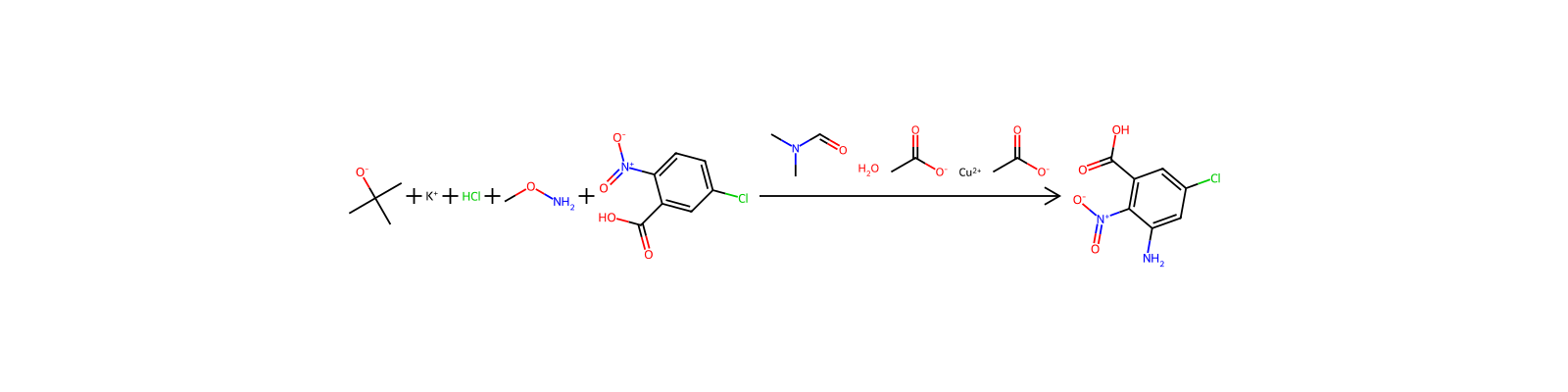
HRID 16921As reactant

2516-95-2O=C(O)c1cc(Cl)ccc1[N+](=O)[O-]ZKUYSJHXBFFGPU-UHFFFAOYSA-N2516-95-2DTXSID4062484Safety information is for reference only and does not replace the supplier’s Safety Data Sheet (SDS), applicable regulations, or professional assessment.
Danger
H302 (82.4%): Harmful if swallowed [Warning Acute toxicity, oral]
P261, P264, P264+P265, P270, P271, P273, P280, P301+P317, P302+P352, P304+P340, P305+P351+P338, P305+P354+P338, P317, P319, P321, P330, P332+P317, P337+P317, P362+P364, P391, P403+P233, P405, and P501 (click each P-code to see the statement)
Aggregated GHS information provided per 51 reports by companies from 9 notifications to the ECHA C&L Inventory. Each notification may be associated with multiple companies.
REACH registered substance: 5-chloro-2-nitrobenzoic acid (EC: 219-738-1)
5-Chloro-2-nitrobenzoic acid: Does not have an individual approval but may be used under an appropriate group standard
Uses5-Chloro-2-nitrobenzoic acid was used as a component of 5,5′-dithiobis-2-nitrobenzoic acid, which found application to the determination of the acid-soluble disulphide content of the blood. Benzene and some of its derivatives (e.g. chloronitrobenzoic acids) have been shown to cause alterations in heme and globin synthesis. Chloronitrobenzoic acids inhibited the activity of δ-aminolevulinic acid (δ-ALA) and enhanced ferrochelatase (FC) activity. 5-Chloro-2-nitrobenzoic acid was also used as component of synthesis of 2-aryl 4(3H)-quinazolinones and 6-pyrrolidinyl-2-(2-substituted phenyl)-4-quinazolinones, which are potential anticancer candidates[1].