HomeMCPWorkbenchSkills
HomeWorkbenchNotificationsMe
llms.txt · MCP GuidePrivacy Policy · Terms of Service · Supportv1.8.3
  1. Home
  2. /Compound

2,4-Dimethoxyaniline

HCID 17652
New reaction
Print
Basic informationOverviewNames & identifiersPropertiesSafety & regulationChemistry & industryRelated reactionsCompound notes
Substructure searchFind similar structures

Basic information

CAS
2735-04-8
Standard SMILES
COc1ccc(N)c(OC)c1
InChIKey
GEQNZVKIDIPGCO-UHFFFAOYSA-N
Molecular formula
C8H11NO2
Average molar mass
153.18 g/mol
Monoisotopic mass
153.07897859

Overview

2,4-dimethoxyaniline is a black crystalline solid. (NTP, 1992)

Names & identifiers

Preferred name
2,4-Dimethoxyaniline
IUPAC
2,4-dimethoxyaniline
English name
2,4-Dimethoxyaniline
Molecular formula
C8H11NO2
Molecular weight
153.18

Names & synonyms

2,4-DIMETHOXYANILINEBenzenamine, 2,4-dimethoxy-Aniline, 2,4-dimethoxy-2,4-dimethoxyphenylamine2,4-dimethoxybenzenamineDTXSID70438292,4-DomethoxyanilineNSC 620191-Amino-2,4-dimethoxybenzene4-Aminoresorcinol dimethyl etherHSDB 4125EINECS 220-355-7
Show more names
AKOS BBS-000036274-AMINORESORCINOL4-DiMethoxyaniline2,4-dimethoxy-anilin2,4-Dimethoxyaniline C2,4-DIMETHOXY BENZAMINE2,4-Dimethoxyaniline>2,4-dimethoxybenzenamine
BRN 0638704DTXCID5023829I079354GSI2,4-DIMETHOXYANILINE [HSDB]NSC-62019UNII-I079354GSI4-13-00-02529 (Beilstein Handbook Reference)Aniline, 2,4dimethoxy

Database identifiers

CAS
2735-04-8
PubChem CID
17652
DTXSID
DTXSID7043829
ChEMBL
CHEMBL1622132
UNII
I079354GSI
EC Number
220-355-7
Nikkaji
J55.221F

Properties

Computed structural properties

XLogP
1.2
Topological polar surface area
44.5 Ų
Hydrogen bond donors
1
Hydrogen bond acceptors
3
Rotatable bonds
2
Heavy atoms
11
Formal charge
0
Complexity
119

Experimental & physicochemical properties

Chemical ClassesNitrogen Compounds -> Amines, Aromatic
Color/FormPLATES FROM PETROLEUM ETHER
Solubility · 2 items

less than 1 mg/mL at 63 °F (NTP, 1992)

SLIGHTLY SOL IN WATER; SOL IN ETHER, ALC, BENZENE, HOT PETROLEUM ETHER

Melting Point · 2 items

92.3 °F (NTP, 1992)

33.5 °C

Physical Description · 2 items

2,4-dimethoxyaniline is a black crystalline solid. (NTP, 1992)

Black solid; [CAMEO] Black solid; mp = 34-37 deg C; [MSDSonline]

Other Experimental PropertiesUV: 6158 (Sadtler Research Laboratories Spectral Collection) /3,4-Dimethoxyaniline/

Physicochemical properties

Melting point
33 · 33-36 °C (lit.)
Boiling point
75 · 75-80 C

Safety & regulation

Safety information is for reference only and does not replace the supplier’s Safety Data Sheet (SDS), applicable regulations, or professional assessment.

GHS classification

GHS Classification · 4 items

Warning

H302 (100%): Harmful if swallowed [Warning Acute toxicity, oral]

P260, P261, P264, P264+P265, P270, P271, P280, P301+P317, P302+P352, P304+P340, P305+P351+P338, P317, P319, P321, P330, P332+P317, P337+P317, P362+P364, P403+P233, P405, and P501 (click each P-code to see the statement)

Aggregated GHS information provided per 46 reports by companies from 6 notifications to the ECHA C&L Inventory. Each notification may be associated with multiple companies.

Hazard information

Regulatory Information · 2 items

Chemical: Benzenamine, 2,4-dimethoxy-

2,4-Dimethoxyaniline: Does not have an individual approval but may be used under an appropriate group standard

DOT LabelPoison
Fire HazardsExcerpt from ERG Guide 154 [Substances - Toxic and/or Corrosive (Non-Combustible)]:
Health HazardsACUTE/CHRONIC HAZARDS: This compound is a local irritant. (NTP, 1992)
Hazards SummaryEmergency treatment: Methemoglobinemia; No evidence of carcinogenicity in rats or mice; [HSDB] A local irritant; [CAMEO] An irritant; May induce methemoglobinemia; [MSDSonline]
Reactive GroupAmines, Aromatic
Special ReportsDHEW/NCI; Bioassay of 2,4-Dimethoxyaniline hydrochloride for Possible Carcinogenicity (1979) Technical Rpt Series No. 171 DHEW Pub No. (NIH) 79-1727
Reactivity Profile

Chemistry & industry

Uses & manufacturing

Uses · 2 items

Used as an intermediate for C.I. basic yellow 11; Not currently manufactured in the US; [HSDB]

CHEMICAL INTERMEDIATE FOR C.I. BASIC YELLOW 11

U.S. Exports · 2 items

(1977) No Data

(1979) No Data

U.S. Imports · 2 items

(1977) 3.28X10+7 G (PRINCPL CUSTMS DISTS)

(1979) 1.62X10+7 G (PRINCPL CUSTMS DISTS)

U.S. Production · 2 items

(1976) PROBABLY GREATER THAN 2.27X10+6 GRAMS

(1979) NOT PRODUCED COMMERCIALLY IN US

General Manufacturing InformationBenzenamine, 2,4-dimethoxy-: ACTIVE
Applications · 2 items

UsesVarious 2,4-dimethoxyphenylsemicarbazones were synthesized starting from 2,4-dimethoxyaniline via a phenylcarbamate intermediate. The hydrochloride of 2,4-dimethoxyaniline was prepared by intro- ducing hydrogen chloride gas into an etheral solution and washing the precipitate with absolute diethyl ether.

General DescriptionBlack crystalline solid.

Upstream & downstream products

Downstream products

BASIC YELLOW 11Acetic acid, 2-[(2,4-dimethoxyphenyl)amino]-2-oxo-, ethyl ester2-cyano-N-(2,4-dimethoxyphenyl)acetamide

Related reactions

125 records
New reaction record
HRID 2425 reaction equation
HRID 2425As reactant
HRID 36438 reaction equation
HRID 36438As reactant
HRID 38410 reaction equation
HRID 38410As reactant
HRID 62123 reaction equation
HRID 62123As reactant
HRID 71509 reaction equation
HRID 71509As reactant
HRID 76619 reaction equation
HRID 76619As reactant
HRID 81825 reaction equation
HRID 81825As reactant
HRID 117088 reaction equation
HRID 117088As reactant
PreviousPage 1 of 16

Compound notes

On this pageBasic informationOverviewNames & identifiersPropertiesSafety & regulationChemistry & industryRelated reactionsCompound notes
Density
1.075 g/mL · 1.075 g/mL at 25 °C (lit.)
refractive index
1.464 · 1.4640 (estimate)
Flash point
230 °F · >230 °F
storage temp.
Keep in dark place,Inert atmosphere,Room temperature
pka
5.14 · 5.14±0.10(Predicted)
form
Crystalline Solid
color
Dark brown
Water Solubility
7 g/L · 7 g/L (20 ºC)
BRN
638704 · 638704
Henry's Law Constant
1.6 · 1.6×101 mol/(m3Pa) at 25℃, Ebert et al. (2023)
Stability
Stability Stable, but sensitive to prolonged exposure to light. Incompatible with acids.
InChI
1S/C8H11NO2/c1-10-6-3-4-7(9)8(5-6)11-2/h3-5H,9H2,1-2H3
InChIKey
GEQNZVKIDIPGCO-UHFFFAOYSA-N
SMILES
COc1ccc(N)c(OC)c1
CAS DataBase Reference
2735 · 2735-04-8(CAS DataBase Reference)
EWG's Food Scores
1 · 1
FDA UNII
79354 GSI · I079354GSI
NIST Chemistry Reference
2 · Benzenamine, 2,4-dimethoxy-(2735-04-8)
EPA Substance Registry System
2 · 2,4-Dimethoxyaniline (2735-04-8)
UNSPSC Code
12352100 · 12352100
NACRES
22 · NA.22
Symbol(GHS)
7 · GHS07
Signal word
Warning
Hazard statements
302 · H302-H315-H319-H335
Precautionary statements
261 · P261-P264-P270-P301+P312-P302+P352-P305+P351+P338
target organs
Respiratory system
PPE
95 · dust mask type N95 (US), Eyeshields, Faceshields, Gloves
Hazard Codes
Xn
Risk Statements
22 · 22-36/37/38-20/21/22
Safety Statements
26 · 26-36-36/37/39-22
RIDADR
2811 · 2811
WGK Germany
3 · 3
RTECS
4200000 · BX4200000
F
8 · 8-10-23
TSCA
TSCA listed
HazardClass
6.1 · 6.1(b)
PackingGroup
III
HS Code
2922299090 · 2922299090
Storage Class
11 · 11 - Combustible Solids
Hazard Classifications
4 OralEye · Acute Tox. 4 OralEye Irrit. 2Skin Irrit. 2STOT SE 3
Hazardous Substances Data
2735 · 2735-04-8(Hazardous Substances Data)
Toxicity
50 · mouse,LD50,oral,1gm/kg (1000mg/kg),Progress Report for Contract No. NIH-NCI-E-C-72-3252, Submitted to the National Cancer Institute by Litton Bionetics, Inc. Vol. NCI-E-C-72-3252, Pg. 1973,
· 1 item

2,4-DIMETHOXYANILINE neutralizes acids in exothermic reactions to form salts plus water. May be incompatible with isocyanates, halogenated organics, peroxides, phenols (acidic), epoxides, anhydrides, and acid halides. Flammable gaseous hydrogen may be generated in combination with strong reducing agents, such as hydrides.

Air and Water ReactionsInsoluble in water.
Hazard Classes and CategoriesAcute Tox. 4 (100%)

Safety & protection

Fire FightingExcerpt from ERG Guide 154 [Substances - Toxic and/or Corrosive (Non-Combustible)]:
First Aid · 1 item

EYES: First check the victim for contact lenses and remove if present. Flush victim's eyes with water or normal saline solution for 20 to 30 minutes while simultaneously calling a hospital or poison control center. Do not put any ointments, oils, or medication in the victim's eyes without specific instructions from a physician. IMMEDIATELY transport the victim after flushing eyes to a hospital even if no symptoms (such as redness or irritation) develop.

Nonfire Spill Response · 1 item

SMALL SPILLS AND LEAKAGE: If a spill of this chemical occurs, FIRST REMOVE ALL SOURCES OF IGNITION, then you should dampen the solid spill material with acetone and transfer the dampened material to a suitable container. Use absorbent paper dampened with acetone to pick up any remaining material. Seal your contaminated clothing and the absorbent paper in a vapor-tight plastic bag for eventual disposal. Solvent wash all contaminated surfaces with acetone followed by washing with a soap and water solution. Do not reenter the contaminated area until the Safety Officer (or other responsible person) has verified that the area has been properly cleaned.

Isolation and EvacuationExcerpt from ERG Guide 154 [Substances - Toxic and/or Corrosive (Non-Combustible)]:
Personal Protective Equipment (PPE) · 1 item

RECOMMENDED RESPIRATOR: Where the neat test chemical is weighed and diluted, wear a NIOSH-approved half face respirator equipped with an organic vapor/acid gas cartridge (specific for organic vapors, HCl, acid gas and SO2) with a dust/mist filter. (NTP, 1992)

Toxicology

Adverse EffectsMethemoglobinemia - The presence of increased methemoglobin in the blood; the compound is classified as secondary toxic effect
Ongoing Test Status · 1 item

The following link will take the user to the National Toxicology Program (NTP) Test Agent Search Results page, which tabulates all of the "Standard Toxicology & Carcinogenesis Studies", "Developmental Studies", and "Genetic Toxicity Studies" performed with this chemical. Clicking on the "Testing Status" link will take the user to the status (i.e., in review, in progress, in preparation, on test, completed, etc.) and results of all the studies that the NTP has done on this chemical. /2,4-Dimethoxyaniline hydrochloride/ [http://ntp-apps.niehs.nih.gov/ntp_tox/index.cfm?fuseaction=ntpsearch.searchresults&searchterm=54150-69-5]

Non-Human Toxicity Excerpts · 1 item

... Under the conditions of this bioassay there was no convincing evidence for the carcinogenicity of 2,4-dimethoxyaniline HCl in Fischer 344 rats or B6C3F1 mice. Levels of Evidence of Carcinogenicity: Male Rats: Negative; Female Rats: Negative; Male Mice: Negative; Female Mice: Negative.

National Toxicology Program Studies · 1 item

A bioassay for the possible carcinogenicity of 2,4-dimethoxyaniline HCl was conducted using Fischer 344 rats and B6C3F1 mice. 2,4-Dimethoxyaniline HCl was admin in the feed, at either of two concn, to groups of 50 male and 50 female animals of each species. Twenty animals of each sex and species were placed on test as controls. The high and low dietary concn of 2,4-dimethoxyaniline HCl were, respectively, 3,000 and 1,500 ppm for rats and 5,000 and 2,500 ppm for mice. The cmpd was admin in the diet for 104 wk to rats and 103 wk to mice, followed by a l wk observation period for both species. ... Adequate numbers of animals in all groups survived sufficiently long to be at risk from late-developing tumors. ... Under the conditions of this bioassay there was no convincing evidence for the carcinogenicity of 2,4-dimethoxyaniline HCl in Fischer 344 rats or B6C3F1 mice. Levels of Evidence of Carcinogenicity: Male Rats: Negative; Female Rats: Negative; Male Mice: Negative; Female Mice: Negative.

Safety data

F
8-10-23
PPE
dust mask type N95 (US), Eyeshields, Faceshields, Gloves
wgk
3
tsca
TSCA listed
rtecs
BX4200000
ridadr
2811
hs_code
2922299090
Toxicity
mouse,LD50,oral,1gm/kg (1000mg/kg),Progress Report for Contract No. NIH-NCI-E-C-72-3252, Submitted to the National Cancer Institute by Litton Bionetics, Inc. Vol. NCI-E-C-72-3252, Pg. 1973,
risk_code
22-36/37/38-20/21/22
Signal word
Warning
Symbol(GHS)
GHS07
hazard_code
Xn
safety_code
26-36-36/37/39-22
hazard_class
6.1(b)
Storage Class
11 - Combustible Solids
packing_group
III
target organs
Respiratory system
Hazard statements
H302-H315-H319-H335
Hazard Classifications
Acute Tox. 4 OralEye Irrit. 2Skin Irrit. 2STOT SE 3
Precautionary statements
P261-P264-P270-P301+P312-P302+P352-P305+P351+P338
Hazardous Substances Data
2735-04-8(Hazardous Substances Data)
N-(2,4-dimethoxyphenyl)benzenesulfonamide
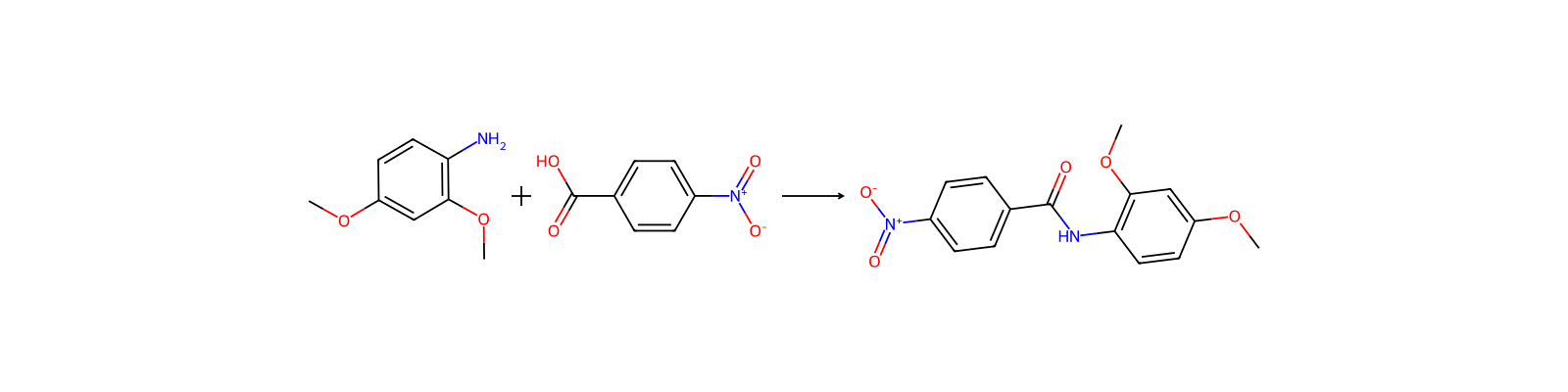
N-(2,4-Dimethoxyphenyl)-4-nitrobenzamide
5-Chloro-N-(2,4-dimethoxyphenyl)pyrazine-2-carboxamide
CHEMBRDG-BB 5537391
6,8-Dimethoxy-4-methylquinoline
2-Amino-N-(2,4-dimethoxy-phenyl)-benzamide