

Basic information
- CAS
2783-17-7- Standard SMILES
NCCCCCCCCCCCCN- InChIKey
QFTYSVGGYOXFRQ-UHFFFAOYSA-N- Molecular formula
- C12H28N2
- Average molar mass
- 200.36 g/mol
- Monoisotopic mass
- 200.2252489
Names & identifiers
- Preferred name
- 1,12-Dodecanediamine
- IUPAC
- dodecane-1,12-diamine
- English name
- 1,12-Dodecanediamine
- Molecular formula
- C12H28N2
- Molecular weight
- 200.36
Names & synonyms
1,12-Diaminododecane2783-17-71,12-DODECANEDIAMINEDodecamethylenediamineDodecyldiamine1,12-Dodecamethylenediamine1,12'-Dodecylenediamine1,12'-DodecamethylenediamineJ3LM80W9NTNSC-55050NSC-59861DTXSID2044636
Show more names
DODECANEDIAMINEN12N,N-12NDiaminododecane1,12-DODECANEDIAMERARECHEM AL BW 0116Decanethylenediamine
RefChem:410376DTXCID0024636220-489-6Dodecane-1,12-diamine1,12-DiamindodecaneN12NNSC 55050NSC 59861
Database identifiers
- CAS
2783-17-7- PubChem CID
- 17727
- DTXSID
DTXSID2044636- ChEMBL
CHEMBL69590- ChEBI
CHEBI:49385- UNII
- J3LM80W9NT
- EC Number
- 220-489-6
- Nikkaji
- J42.964C
Properties
Computed structural properties
- XLogP
- 3
- Topological polar surface area
- 52 Ų
- Hydrogen bond donors
- 2
- Hydrogen bond acceptors
- 2
- Rotatable bonds
- 11
- Heavy atoms
- 14
- Formal charge
- 0
- Complexity
- 82
Experimental & physicochemical properties
Physical DescriptionAqueous solution (90% water); [Aldrich MSDS]
Physicochemical properties
- Melting point
- 67 · 67-69 °C(lit.)
- Boiling point
- 304 °C · 304°C
- Density
- 0.8417 · 0.8417 (rough estimate)
- vapor pressure
- 0.04 Pa · 0.04Pa at 25℃
- refractive index
- 1.4383 · 1.4383 (estimate)
- Flash point
- 311 °F · 311 °F
- storage temp.
- Keep in dark place,Inert atmosphere,Room temperature
- solubility
- Soluble in ethanol.
- form
- powder to lump
- pka
- 10.97 · 10.97±0.10(Predicted)
- color
- White to Almost white
- Water Solubility
- 520 mg/L · 520mg/L at 19.5℃
- BRN
Safety & regulation
GHS classification
GHS Classification
This chemical does not meet GHS hazard criteria for 7.1% (4 of 56) of reports.
Danger
H302 (92.9%): Harmful if swallowed [Warning Acute toxicity, oral];H314 (82.1%): Causes severe skin burns and eye damage [Danger Skin corrosion/irritation];H315 (10.7%): Causes skin irritation [Warning Skin corrosion/irritation];H317 (73.2%): May cause an allergic skin reaction [Warning Sensitization, Skin];H318 (12.5%): Causes serious eye damage [Danger Serious eye damage/eye irritation];H331 (12.5%): Toxic if inhaled [Danger Acute toxicity, inhalation];H400 (10.7%): Very toxic to aquatic life [Warning Hazardous to the aquatic environment, acute hazard]
P260, P261, P264, P264+P265, P270, P271, P272, P273, P280, P301+P317, P301+P330+P331, P302+P352, P302+P361+P354, P304+P340, P305+P354+P338, P316, P317, P321, P330, P332+P317, P333+P317, P362+P364, P363, P391, P403+P233, P405, and P501 (click each P-code to see the statement)
Aggregated GHS information provided per 56 reports by companies from 8 notifications to the ECHA C&L Inventory. Each notification may be associated with multiple companies.;Reported as not meeting GHS hazard criteria per 4 of 56 reports by companies.;There are 6 notifications provided by 52 of 56 reports by companies with hazard statement code(s).;Information may vary between notifications depending on impurities, additives, and other factors. The percentage value in parenthesis indicates the notified classification ratio from companies that provide hazard codes. Only hazard codes with percentage values above 10% are shown. For more detailed information, please visit ECHA C&L website.
Hazard information
Regulatory Information
Status: Active Update: 28-02-2020 https://echa.europa.eu/registration-dossier/-/registered-dossier/29535;Status: Active Update: 31-05-2018 https://echa.europa.eu/registration-dossier/-/registered-dossier/25721
1,12-Dodecanediamine: Does not have an individual approval but may be used under an appropriate group standard
Hazards Summary
A mild eye irritant; Causes hypermotility, weight loss, and respiratory depression in inhalation studies of rats; Causes inflammation of trachea and bronchi in 2-week intermittent inhalation studies of rats; [RTECS] Causes burns; May cause skin sensitization; Inhalation may cause corrosive injuries to upper respiratory tract and lungs; Harmful by ingestion; [Aldrich MSDS] See 1,8-Octamethylenediamine and 1,6-Diaminohexane.
Chemistry & industry
Uses & manufacturing
General Manufacturing Information1,12-Dodecanediamine: ACTIVE
Applications
UsesFeedstock for polymer synthesis. Source of twelve carbon chain for medicinal drugs.1
Uses1,12-Diaminododecane is used for synthesis of medicinal drugs, polymers.
Upstream & downstream products
Downstream products
Suppliers100 total
国药集团化学试剂有限公司86-21-63210123 · [email protected]
梯希爱(上海)化成工业发展有限公司021-67121386 · [email protected]
郑州阿尔法化工有限公司+86-18530059196 · [email protected]
湖北永阔科技有限公司027-59223108 15972152991 · [email protected]
上海阿拉丁生化科技股份有限公司400-6206333 13167063860 · [email protected]
Related reactions
39 records

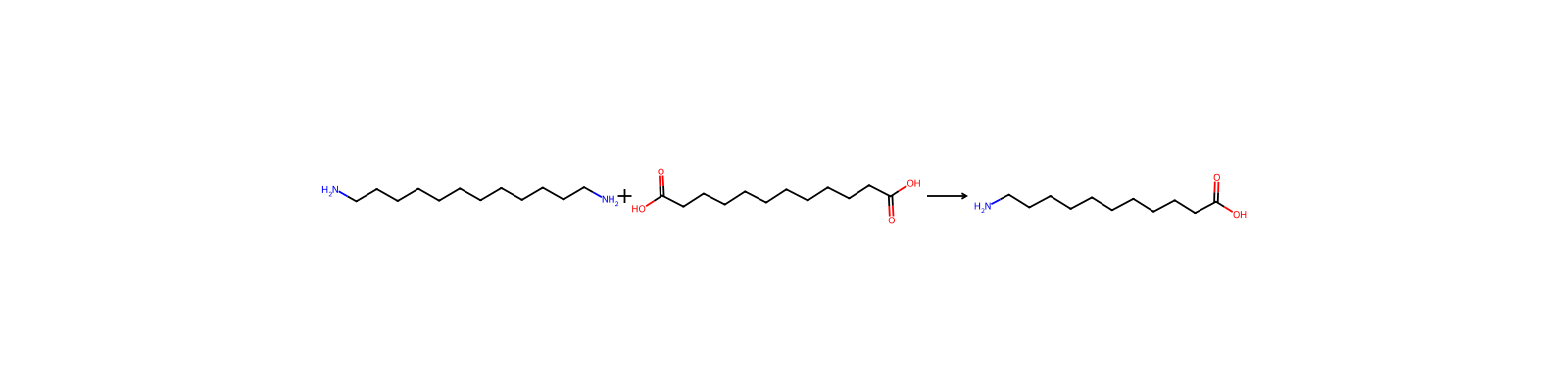


Compound notes
Loading…