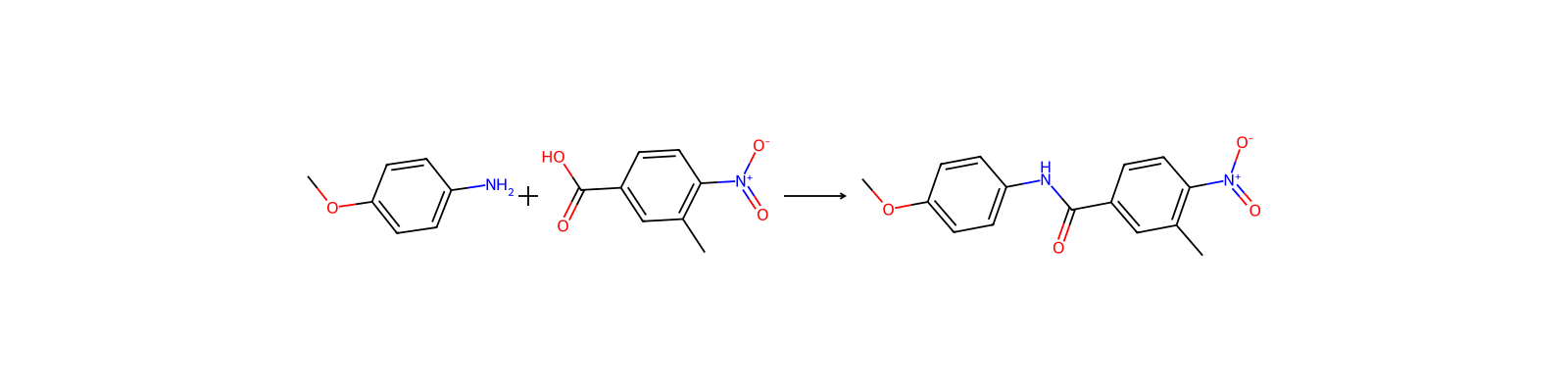
3-Methyl-4-nitrobenzoic acid
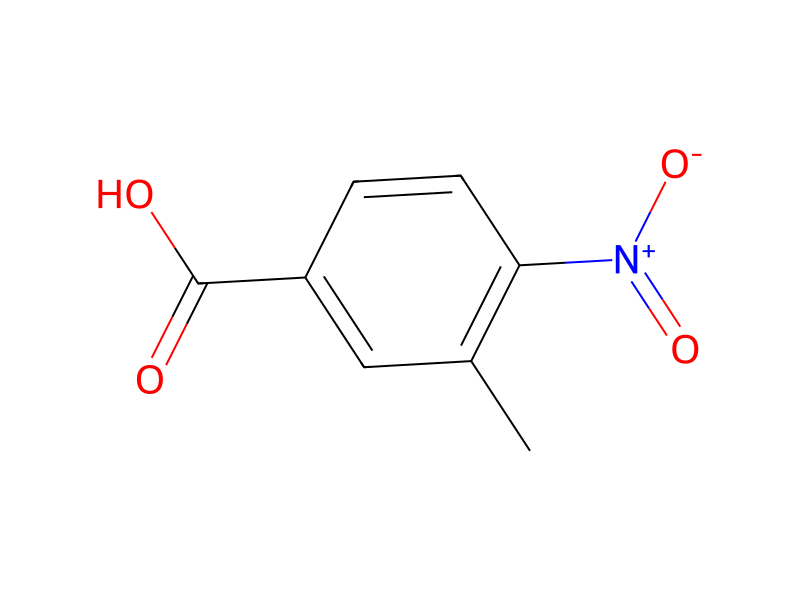
Basic information
- CAS
3113-71-1- Standard SMILES
Cc1cc(C(=O)O)ccc1[N+](=O)[O-]- InChIKey
XDTTUTIFWDAMIX-UHFFFAOYSA-N- Molecular formula
- C8H7NO4
- Average molar mass
- 181.15 g/mol
- Monoisotopic mass
- 181.0375077
Overview
3-methyl-4-nitrobenzoic acid appears as needles or off white powder. (NTP, 1992)
Names & identifiers
- Preferred name
- 3-Methyl-4-nitrobenzoic acid
- IUPAC
- 3-methyl-4-nitrobenzoic acid
- English name
- 3-Methyl-4-nitrobenzoic acid
- Molecular formula
- C8H7NO4
- Molecular weight
- 181.15
Names & synonyms
3-Methyl-4-nitrobenzoic acid4-Nitro-m-toluic acidBenzoic acid, 3-methyl-4-nitro-m-Toluic acid, 4-nitro-4-nitro-3-methylbenzoic acidNSC 28455DTXSID1025641UNII-ELP258JXH0EINECS 221-479-4ELP258JXH0NSC-28455DTXCID305641
Show more names
4-Nitro-m-toluylsureMethyl-4-nitrobenzoicRMA-1094,3-NMBAFluralaner-027RARECHEM AL BO 0346-4-nitrobenzoic AcidFluralaner Impurity 48
M-METHYL-P-NITROBENZOIC ACIDMETHYL-4-NITROBENZOIC ACID, 3-RefChem:947703-methyl-4-nitrobenzoateBENZOIC ACID, 3-METHYL-4-NITROXDTTUTIFWDAMIX-UHFFFAOYSA-N3113-71-1MFCD00007168
Database identifiers
- CAS
3113-71-1- PubChem CID
- 18370
- DTXSID
DTXSID1025641- ChEMBL
CHEMBL1329280- UNII
- ELP258JXH0
- EC Number
- 221-479-4
- Nikkaji
- J208.697B
Properties
Computed structural properties
- XLogP
- 2.4
- Topological polar surface area
- 83.1 Ų
- Hydrogen bond donors
- 1
- Hydrogen bond acceptors
- 4
- Rotatable bonds
- 1
- Heavy atoms
- 13
- Formal charge
- 0
- Complexity
- 223
Experimental & physicochemical properties
LogP2.42
Solubilityless than 1 mg/mL at 72 °F (NTP, 1992)
Melting Point421 to 424 °F (NTP, 1992)
Physical Description3-methyl-4-nitrobenzoic acid appears as needles or off white powder. (NTP, 1992)
Physicochemical properties
- Melting point
- 216 · 216-218 °C (lit.)
- Boiling point
- 314.24 °C · 314.24°C (rough estimate)
- Density
- 1.4283 · 1.4283 (rough estimate)
- refractive index
- 1.5468 · 1.5468 (estimate)
- storage temp.
- Sealed in dry,Room Temperature
- solubility
- slightly sol. in Alcohol
- pka
- 3.49 · 3.49±0.10(Predicted)
- form
- Amorphous Powder
- color
Safety & regulation
Safety information is for reference only and does not replace the supplier’s Safety Data Sheet (SDS), applicable regulations, or professional assessment.
GHS classification
GHS Classification
Warning
H315 (100%): Causes skin irritation [Warning Skin corrosion/irritation]
P261, P264, P264+P265, P271, P280, P302+P352, P304+P340, P305+P351+P338, P319, P321, P332+P317, P337+P317, P362+P364, P403+P233, P405, and P501 (click each P-code to see the statement)
Aggregated GHS information provided per 82 reports by companies from 6 notifications to the ECHA C&L Inventory. Each notification may be associated with multiple companies.
Hazard information
DOT LabelPoison
Fire HazardsFlash point data for this chemical are not available; however, it is probably combustible. (NTP, 1992)
Health HazardsExcerpt from ERG Guide 154 [Substances - Toxic and/or Corrosive (Non-Combustible)]:
Reactive GroupAcids, Carboxylic
Reactivity Profile
3-METHYL-4-NITROBENZOIC ACID is a nitrated carboxylic acid. Carboxylic acids donate hydrogen ions if a base is present to accept them. They react in this way with all bases, both organic (for example, the amines) and inorganic. Their reactions with bases, called "neutralizations", are accompanied by the evolution of substantial amounts of heat. Neutralization between an acid and a base produces water plus a salt. Carboxylic acids with six or fewer carbon atoms are freely or moderately soluble in water; those with more than six carbons are slightly soluble in water. Soluble carboxylic acid dissociate to an extent in water to yield hydrogen ions. The pH of solutions of carboxylic acids is therefore less than 7.0. Many insoluble carboxylic acids react rapidly with aqueous solutions containing a chemical base and dissolve as the neutralization generates a soluble salt. Carboxylic acids in aqueous solution and liquid or molten carboxylic acids can react with active metals to form gaseous hydrogen and a metal salt. Such reactions occur in principle for solid carboxylic acids as well, but are slow if the solid acid remains dry.
Chemistry & industry
Uses & manufacturing
General Manufacturing InformationBenzoic acid, 3-methyl-4-nitro-: ACTIVE
Applications
DescriptionIn organic synthesis, 3-Methyl-4-nitrobenzoic acid (abbreviated as MNBA) is the fine chemical product that adds value is higher; many critical organic products are obtained for raw material can synthesize further with it, as 4-chloro-quinazoline-6-ethyl formate, 2-n-propyl-4-methyl-6-carboxy benzimidazole, 4-methyl-2-ethyl-1H-benzoglyoxaline-6-methyl-formiate, 3,4-dihydro-4-quinazoline is with-6-formic acid, 4-aminophenyl-1,3-dioctyl phthalate, 4-Amino-3-methylbenzoic acid methyl esters, 4-nitrophenyl-1,3-dioctyl phthalate etc. In medicine, it is an essential intermediate in the synthesis of telmisartan (via esterification, reduction, butyrylation, nitration, reduction and cyclization), which is used to treat essential hypertension. Telmisartan is a drug belonging to the group of antagonists of angiotensin II receptors. The active ingredient telmisartan counteracts the effect of angiotensin II, allowing the arteries to relax, thereby reducing blood pressure. As a precursor, pharmaceutical researchers have also synthesized anti-cancer substances and AIDS drugs with MNBA[1].
Uses3-Methyl-4-nitrobenzoic Acid is used as a reagent in the synthesis of influenza neuraminidase inhibitors with pyrrolidinobenzoic acid scaffold containing lipophilic side chains.
General DescriptionNeedles or off white powder.
Preparation methods
Preparation3-Methyl-4-nitrobenzoic acid was synthesized via oxidation of 2,4-(dimethylnitrobenzene) with mole-(cular) oxygen catalyzed by cobalt acetate in acetic acid in the presence of an initiator.It was found that the yield of 3-methyl-4-nitrobenzoic acid increased remarkably with the addition of sodium bromide as a co-(catalyst).The reaction was carried out at 130 ℃ for 8 h at 0.8 MPa of oxygen in the presence of 0.017 mol of cobalt acetate,(0.017 mol) of sodium bromide,and 0.30 mol of 2-butanone with 1.00 mole of 2,4-dimethylnitrobenzene.(Under) these conditions 99% of the reactant converted with a selectivity of 52% to 3-methyl-4-(nitrobenzoic) acid,and the yield of 3methyl-4-(nitrobenzoic) acid was 51%.The reaction mechanism and the function of(sodium) bromide were discussed.According to the fact that the reaction could not proceed without the presence of an initiator,it was proposed that the reaction took place via a free radical mechanism,and(sodium) bromide reacted with Co(Ⅲ) to generate bromine radicals,which promoted the formation of benzyl radicals.Synthesis of 3-Methyl-4-nitrobenzoic Acid via Catalytic Oxidation with Molecular OxygenMethod for preparing 3-methyl-4-nitrobenzoic acid by oxidizing with nitric acid
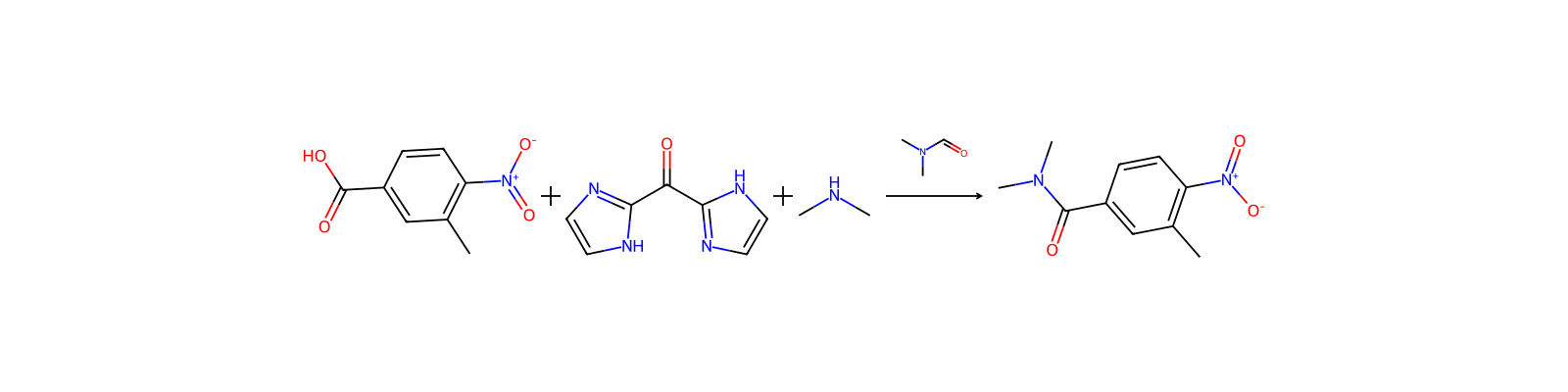
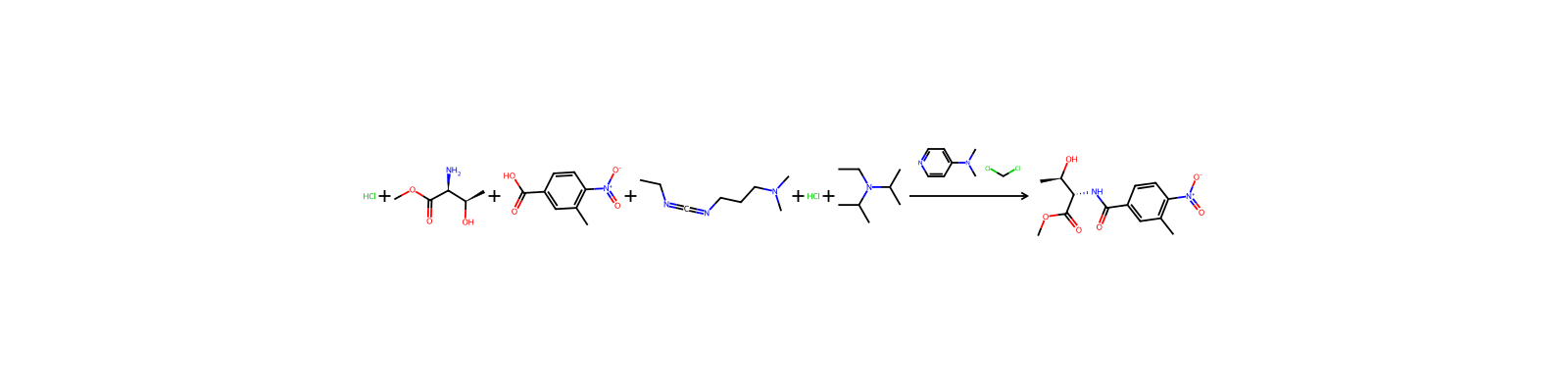
Related reactions
57 records
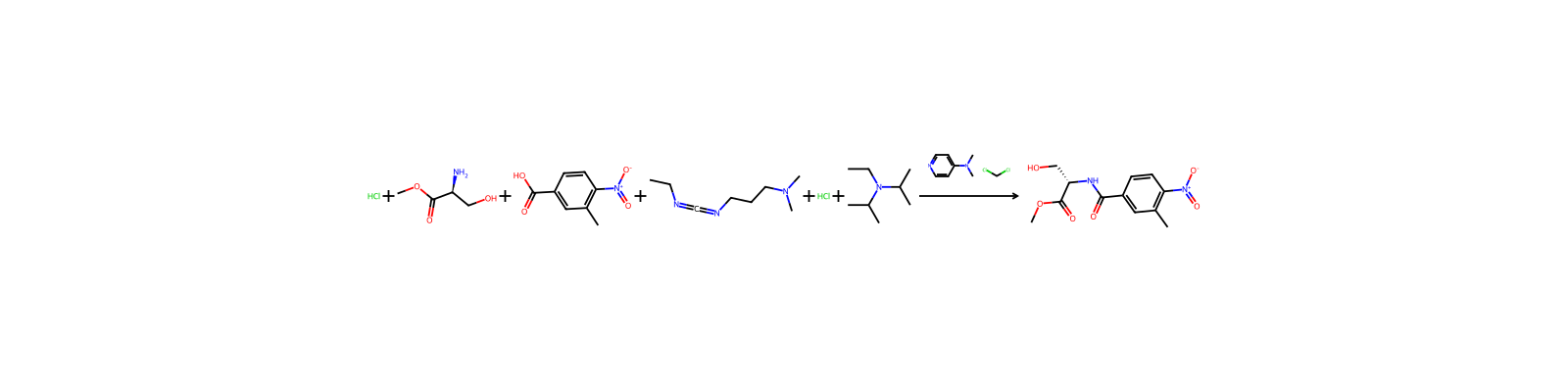
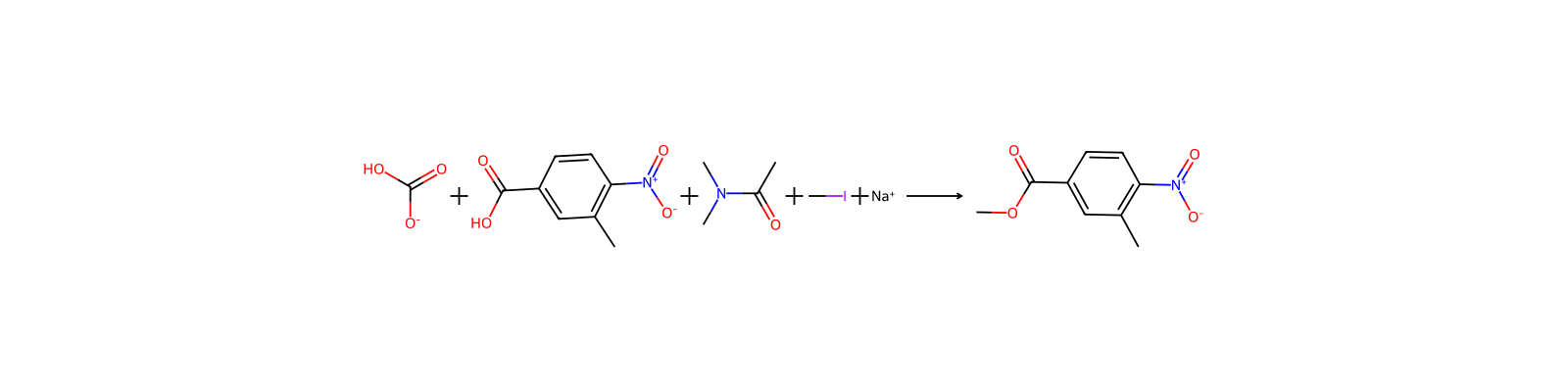

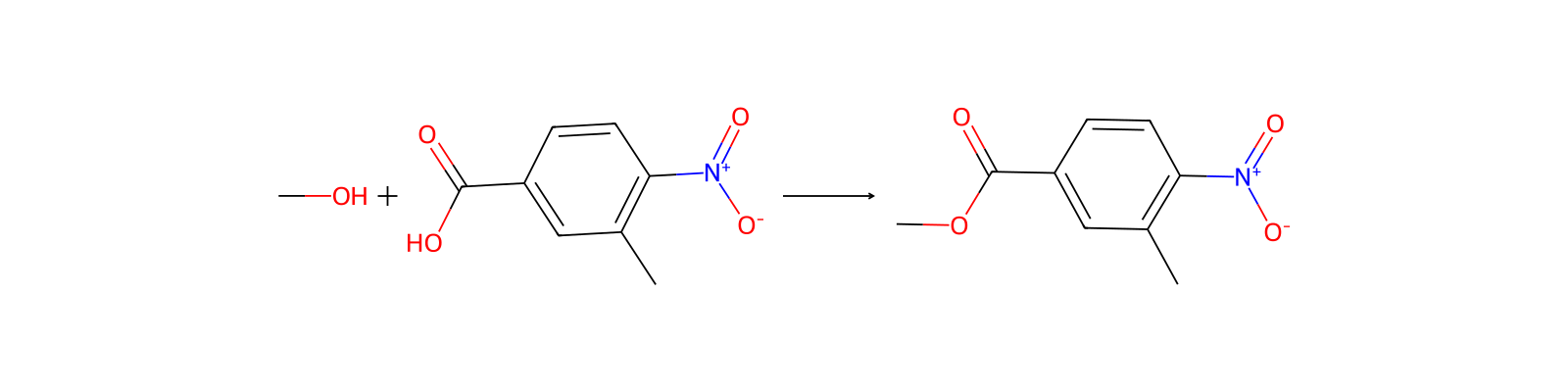
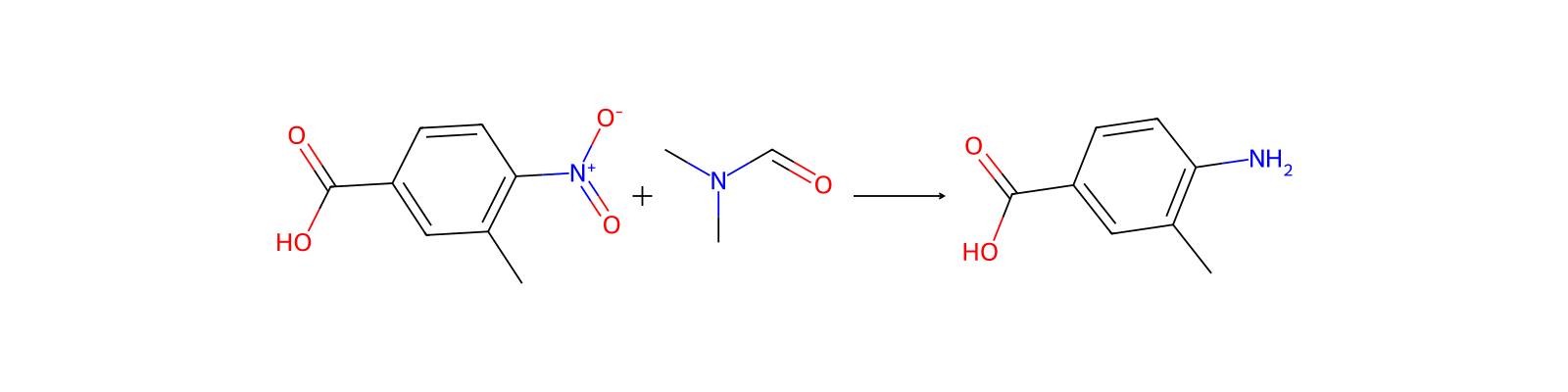
Compound notes
Loading…