
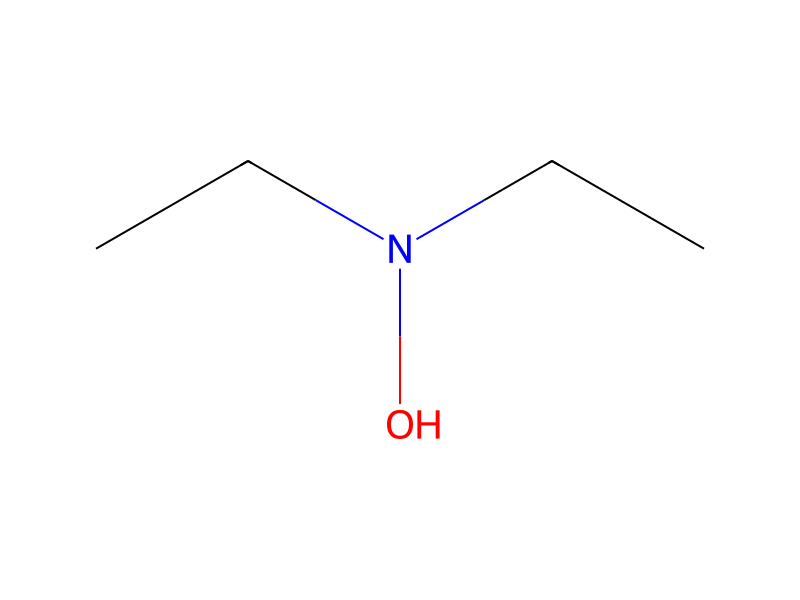
Basic information
- Standard SMILES
CCN(O)CC- InChIKey
FVCOIAYSJZGECG-UHFFFAOYSA-N- Molecular formula
- C4H11NO
- Average molar mass
- 89.14 g/mol
- Monoisotopic mass
- 89.08406397
Overview
RN given refers to parent cpd
Names & identifiers
- Preferred name
- Diethylhydroxylamine
- IUPAC
- N,N-diethylhydroxylamine
- English name
- N,N-Diethylhydroxylamine
- Molecular formula
- C4H11NO
- Molecular weight
- 89.14
Names & synonyms
N,N-Diethylhydroxylamine3710-84-7DIETHYLHYDROXYLAMINEEthanamine, N-ethyl-N-hydroxy-DTXSID2027543314I05EDVHDTXCID107543RefChem:161197223-055-4N-HydroxydiethylamineN,N-DiethylhydroxyamineHydroxylamine, N,N-diethyl-
Show more names
DEHADIETHYL HYDROXYLAMINEN-DiethylhydroxylaMineDiethylhydroxyaminepennstoplpha-Cypermethrin(C2H5)2NOHPennstop 1866
N-ethyl-N-hydroxyethanamineMFCD00002126hydroxydiethylamineCCRIS 964EINECS 223-055-4BRN 1731349UNII-314I05EDVHAI3-28026
Database identifiers
- CAS
3710-84-7- PubChem CID
- 19463
- DTXSID
DTXSID2027543- ChEMBL
CHEMBL3184786- UNII
- 314I05EDVH
- EC Number
- 223-055-4
- Nikkaji
- J35.165B
Properties
Computed structural properties
- XLogP
- 0.5
- Topological polar surface area
- 23.5 Ų
- Hydrogen bond donors
- 1
- Hydrogen bond acceptors
- 2
- Rotatable bonds
- 2
- Heavy atoms
- 6
- Formal charge
- 0
- Complexity
- 26.7
Experimental & physicochemical properties
Chemical ClassesNitrogen Compounds -> Hydroxylamines
SpringerMaterials PropertiesChemical shift
LogPlog Kow = -0.17
Density0.8669 at 20 °C
Color/FormLiquid
Flash Point113 °F
Boiling Point130 °C
DecompositionWhen heated to decomposition it emits toxic fumes of /nitrogen oxides/.
Melting Point10 °C
Vapor Pressure
0.02 [mmHg]
3.36 mm Hg at 25 °C
Food Contact Substances
FCS -> FDA Cumulative Estimated Daily Intake (CEDI)
FCS -> FDA Inventory of Effective Food Contact Substance (FCS) Notifications
Refractive IndexIndex of refraction = 1.4195 at 20 °C
Physicochemical properties
- Melting point
- 26 · −26-−25 °C(lit.)
- Boiling point
- 125 · 125-130 °C
- Density
- 0.902 g/mL · 0.902 g/mL at 25 °C
- vapor density
- 3.07 · 3.07 (vs air)
- vapor pressure
- 4 mm · 4 mm Hg ( 0 °C)
- refractive index
- 20 · n20/D 1.420(lit.)
- Flash point
- 115 °F · 115 °F
- storage temp.
- 30 °C · Store below +30°C.
- form
- Liquid
- pka
- 14.19 · 14.19±0.69(Predicted)
- color
- Clear
- Specific Gravity
- 0.867 · 0.867
- explosive limit
- 1.9 · 1.9-10%(V)
- Water Solubility
- soluble
- Sensitive
- Hygroscopic
- BRN
- 1731349 · 1731349
- Exposure limits
- 2 ppm · ACGIH: TWA 2 ppm
- Stability
- Stable. Hygroscopic. Flammable. Incompatible with strong oxidizing agents, strong acids.
- InChI
- 1S/C4H11NO/c1-3-5(6)4-2/h6H,3-4H2,1-2H3
- InChIKey
- FVCOIAYSJZGECG-UHFFFAOYSA-N
- SMILES
- CCN(O)CC
- LogP
- 0.5 at · 0.5 at 23℃
- CAS DataBase Reference
- 3710 · 3710-84-7(CAS DataBase Reference)
- EWG's Food Scores
- 1 · 1
- FDA UNII
- 314 I05EDVH · 314I05EDVH
- NIST Chemistry Reference
- Ethanamine, N-ethyl-N-hydroxy-(3710-84-7)
- EPA Substance Registry System
- Diethylhydroxylamine (3710-84-7)
- UNSPSC Code
- 12352116 · 12352116
- NACRES
- 22 · NA.22
- Symbol(GHS)
- 2 · GHS02,GHS07
- Signal word
- Warning
- Hazard statements
- 226 · H226-H312+H332-H315-H319
- Precautionary statements
- 210 · P210-P233-P280-P303+P361+P353-P304+P340+P312-P305+P351+P338
- PPE
- Eyeshields, Faceshields, Gloves, type ABEK (EN14387) respirator filter
- Hazard Codes
- Xn
- Risk Statements
- 10 · 10-21-38-40-36/37/38-20/21-53-36/38
- Safety Statements
- 36 · 36/37-45-36/37/39-26-16
- RIDADR
- 1993 · UN 1993 3/PG 3
- WGK Germany
- 1 · 1
- RTECS
- 3500000 · NC3500000
- F
- 3 · 3
- TSCA
- TSCA listed
- HazardClass
- 3 · 3
- PackingGroup
- III
- HS Code
- 29280090 · 29280090
- Storage Class
- 3 · 3 - Flammable liquids
- Hazard Classifications
- 4 DermalAcute · Acute Tox. 4 DermalAcute Tox. 4 InhalationEye Irrit. 2Flam. Liq. 3Skin Irrit. 2
- Hazardous Substances Data
- 3710 · 3710-84-7(Hazardous Substances Data)
- Toxicity
- 50 orally · LD50 orally in Rabbit: 2190 mg/kg LD50 dermal Rabbit 1300 mg/kg
- REACH Registrations
- Active
- Limited Quantities
- 5 L · 5.0 L (1.3 gallons) (liquid)
- Excepted Quantities
- Max Inner Pack (30g or 30ml) and Max Outer Pack (1Kg or 1L)
Safety & regulation
GHS classification
GHS Classification
This chemical does not meet GHS hazard criteria for 8.6% (50 of 582) of reports.
Warning
H226 (91.2%): Flammable liquid and vapor [Warning Flammable liquids]
P210, P233, P240, P241, P242, P243, P261, P264, P264+P265, P270, P271, P273, P280, P301+P317, P302+P352, P303+P361+P353, P304+P340, P305+P351+P338, P317, P319, P321, P330, P332+P317, P337+P317, P362+P364, P370+P378, P391, P403+P233, P403+P235, P405, and P501 (click each P-code to see the statement)
Aggregated GHS information provided per 582 reports by companies from 29 notifications to the ECHA C&L Inventory. Each notification may be associated with multiple companies.
Warning
Hazard information
Regulatory Information
Chemical: Ethanamine, N-ethyl-N-hydroxy-
Ethanamine, N-ethyl-N-hydroxy- is listed on the EPA's Chemical Data Reporting (CDR) system. Manufacturers and importers of Ethanamine, N-ethyl-N-hydroxy- are required to report information about their production and use of this chemical to the EPA under the Toxic Substances Control Act (TSCA). (40 eCFR Part 711)
Status: Active Update: 22-03-2023 https://echa.europa.eu/registration-dossier/-/registered-dossier/13535
Ethanamine, N-ethyl-N-hydroxy-: Does not have an individual approval but may be used under an appropriate group standard
Fire PotentialCombustible
Hazards Summary
TLV basis is upper respiratory tract irritant; No adverse effects in rats at 15 ppm, 6 hours/day, 5 days/week for 4 weeks; Fetus not more sensitive than maternal animal; [ACGIH] A mild eye and mild to moderate skin irritant in rabbits; Not a skin sensitizer in guinea pigs; Decreased body weights/food consumption, hypoactivity, changes in white blood cell counts, reduced thymus weight, increased liver weight, and transient microscopic changes of the nasal mucosa observed in 28-day inhalation study of rats (NOAEL of 150 ppm/6 hrs/day); No histopathological changes observed in male or female reproductive organs; No reproductive toxicity observed in rats at doses maternally toxic (reduced weight gain/food consumption); [EPA ChAMP: Submission] Reacts exothermically with water; An eye and respiratory tract irritant; Vapor may reduce available oxygen for respiration; [Arkema MSDS] See Hydroxylamine.
Special Reports
EPA/Office of Pollution Prevention and Toxics; High Production Volume (HPV) Challenge Program's Robust Summaries and Test Plans. Available from the Database Query page at: http://www.epa.gov/hpv/pubs/hpvrstp.htm on Diethylhydroxylamine as of March 11, 2008.
Hazard Classes and Categories
Flam. Liq. 3 (91.2%)
Flammable liquids - Category 3
Flammable liquids - Category 3
Critical Temperature and PressureCritical temperature = 567 Kelvin; Critical pressure = 4.13X10+6 Pa
Safety & protection
Fire Fighting Procedures
If material on fire or involved in fire: Do not extinguish fire unless flow can be controlled. Use water in flooding quantities as fog. Solid streams of water may be ineffective. Cool all affected containers with flooding quantities of water. Apply water from as far a distance as possible. Use "alcohol" foam, dry chemical or carbon dioxide.
Disposal Methods
SRP: The most favorable course of action is to use an alternative chemical product with less inherent propensity for occupational exposure or environmental contamination. Recycle any unused portion of the material for its approved use or return it to the manufacturer or supplier. Ultimate disposal of the chemical must consider: the material's impact on air quality; potential migration in soil or water; effects on animal, aquatic, and plant life; and conformance with environmental and public health regulations.
Preventive Measures
If material not on fire and not involved in fire: Keep sparks, flames, and other sources of ignition away. Keep material out of water sources and sewers. Build dikes to contain flow as necessary. Use water spray to knock-down vapors.
Personnel protection: Avoid breathing vapors. Keep upwind. Avoid bodily contact with the material. ... Do not handle broken packages unless wearing appropriate personal protective equipment. Wash away any material which may have contacted the body with copious amounts of water or soap and water. ... If contact with material anticipated, wear appropriate chemical protective clothing.
SRP: Contaminated protective clothing should be segregated in such a manner so that there is no direct personal contact by personnel who handle, dispose, or clean the clothing. Quality assurance to ascertain the completeness of the cleaning procedures should be implemented before the decontaminated protective clothing is returned for reuse by the workers. Contaminated clothing should not be taken home at end of shift, but should remain at employee's place of work for cleaning.
Threshold Limit Values (TLV)2.0 [ppm]
Personal Protective Equipment (PPE)Personnel protection: ... Wear appropriate chemical protective gloves, boots and goggles. ... Wear positive pressure self-contained breathing apparatus when fighting fires involving this material.
Toxicology
Ecotoxicity ValuesEC50 Daphnia Magna (water flea) 110.56 mg/L/48 hr; Conditions: static bioassay; Effect: inhibition of mobility
Environmental Fate
TERRESTRIAL FATE: Based on a classification scheme(1), an estimated Koc value of 74(SRC), determined from a structure estimation method(2), indicates that diethylhydroxylamine is expected to have high mobility in soil(SRC). The estimated pKa of diethylhydroxylamine is 5.7(3), indicating it will partially exist in the protonated form in moist soils. The mobility of diethylhydroxylamine may be overestimated since cations generally adsorb more strongly to soils containing organic carbon and clay than neutral species(4). Volatilization from moist soil surfaces is not expected to be an important fate process(SRC) based upon an estimated Henry's Law constant of 5.9X10⁻⁸ atm cu m/mol atm-cu m/mole(SRC), developed using a fragment constant estimation method(5), and the fact that cations do not volatilize. The potential for volatilization of diethylhydroxylamine from dry soil surfaces may exist(SRC) based upon an extrapolated vapor pressure of 3.36 mm Hg at 25 °C(6). Diethylhydroxylamine was biodegraded between 1-9% in the Japanese MITI test(7), suggesting it may be slow to biodegrade in soil.
AQUATIC FATE: Based on a classification scheme(1), an estimated Koc value of 74(SRC), determined from a structure estimation method(2), indicates that diethylhydroxylamine is not expected to adsorb to suspended solids and sediment(SRC). The estimated pKa of diethylhydroxylamine is 5.7(3), indicating it will partially exist in the protonated form in water. As a result, diethylhydroxylamine may have greater adsorption to suspended solids and sediment than its estimated Koc value indicates(SRC). Volatilization from water surfaces is not expected(4) based upon an estimated Henry's Law constant of 5.9X10⁻⁸ atm cu m/mol atm-cu m/mole(SRC), developed using a fragment constant estimation method(5), and the fact that cations do not volatilize. According to a classification scheme(6), an estimated BCF of 3(SRC), from a log Kow of -0.17(7) and a regression-derived equation(8), suggests the potential for bioconcentration in aquatic organisms is low(SRC). Diethylhydroxylamine was biodegraded between 1-9% in the Japanese MITI test(7), suggesting it may be slow to biodegrade in water.
ATMOSPHERIC FATE: According to a model of gas/particle partitioning of semivolatile organic compounds in the atmosphere(1), diethylhydroxylamine, which has a vapor pressure of 3.36 mm Hg at 25 °C(2), is expected to exist solely in the vapor phase in the ambient atmosphere. Vapor-phase diethylhydroxylamine is degraded in the atmosphere by reaction with photochemically-produced hydroxyl radicals(SRC); the half-life for this reaction in air is estimated to be 4 hours(SRC), calculated from its rate constant of 1.01X10⁻¹⁰ cu cm/molecule-sec at 25 deg(3). Diethylhydroxylamine does not contain chromophores that absorb at wavelengths >290 nm and therefore is not expected to undergo direct photolysis by sunlight(4).
Soil Adsorption/Mobility
Using an estimation method based on molecular connectivity indices(1), the Koc for diethylhydroxylamine is estimated to be 74(SRC). According to a suggested classification scheme(2), this Koc value suggests that diethylhydroxylamine will have high mobility in soil(SRC). The estimated pKa of diethylhydroxylamine is 5.7(3), indicating it will partially exist in the protonated form in moist soils. As a result, the mobility of diethylhydroxylamine may be overestimated since cations generally adsorb more strongly to soils containing organic carbon and clay than neutral species(4).
Human Toxicity Excerpts
/CASE REPORTS/ A 39-year-old man committed suicide by ingesting a large quantity of SH792. SH792 is a silicone resin precursor used as a hardener for waterproof paints. It is polymerized in water; this process is then followed by the formation of silicone resin and the release of N,N-diethylhydroxylamine. In this decedent, analysis by infrared spectroscopy showed that polymerized silicone resin was present in the stomach contents. The amount of silica in his tissues was within levels seen in control subjects. N,N-diethylhydroxylamine was detected in the urine (0.7 microliters/mL) but not in the stomach contents ...
Artificial Pollution Sources
Diethylhydroxylamine's production and use as photographic developer, antioxidant, corrosion inhibitor(1) and as a shortstopping agent in synthetic rubber production(2), may result in its release to the environment through various waste streams(SRC).
Environmental Biodegradation
AEROBIC: Microorganisms isolated from soils were capable of growing in media containing diethylhydroxylamine as a sole nitrogen source(1). Diethylhydroxylamine at 100 mg/L achieved 1-9% of its theoretical BOD over a 4 week incubation period using an activated sludge inoculum at 30 mg/L and the Japanese MITI test(2).
Environmental Bioconcentration
An estimated BCF of 3 was calculated in fish for diethylhydroxylamine(SRC), using a log Kow of -0.17(1) and a regression-derived equation(2). According to a classification scheme(3), this BCF suggests the potential for bioconcentration in aquatic organisms is low(SRC).
Volatilization from Water/Soil
Diethylhydroxylamine is a weak base with an estimated pKa of 5.7(1). This estimated pKa indicates diethylhydroxylamine will partially exist in the protonated form in the environment. Volatilization from moist soil and water is not expected since cations do not volatilize and the estimated Henry's Law constant for the neutral species (free base) of diethylhydroxylamine is 5.9X10⁻⁸ atm cu m/mol(SRC), using a fragment constant estimation method(2). The potential for volatilization of diethylhydroxylamine from dry soil surfaces may exist(SRC) based upon an extrapolated vapor pressure of 3.36 mm Hg at 25 °C(3).
Non-Human Toxicity Excerpts
/LABORATORY ANIMALS: Subchronic or Prechronic Exposure/ Potential subchronic toxic effects of the test article, Diethylhydroxylamine (DEHA), were evaluated in a 28-day study in rats. The test article was administered via nose-only inhalation to three groups, each comprised of 15 male and 15 female Crl:CDBR rats, for a period of six hours per day, five days per week, for four consecutive weeks (minimum of 20 total exposures). The targeted exposure concentrations were 15, 150 and 1500 ppm. The test atmosphere concentrations were monitored by infrared absorbance and were found to be 15, 150 and 1506 ppm. ... 1-2 animals in the control, 15, 150 and 1500 ppm groups were found dead during the study. The deaths did not occur in an exposure-related manner and were not related to exposure to the test article. All other animals survived to the scheduled necropsies. The predominant treatment-related clinical signs were dried yellow dorsal posterior and urogenital matting, lack of grooming, eye closure and hypoactivity in males and females in the 1500 ppm group, and ataxia, paleness in color, walking on tiptoes and hunched posture in the females in this group. ... toxicity was exhibited in the 1500 ppm group by clinical signs, inhibition of body weight gain and food consumption, changes in white blood cell differential counts, various serum chemistry changes, reduced thymus gland weights-and increased liver weights. Medullary plasmacytosis was noted in the iliac and popliteal lymph nodes in males in the 1500 ppm group. Systemic effects in the 150 ppm group were limited to slight decreases in albumin and A/G ratio (females only). Based on data collected following a two-week nonexposure (recovery) period, all of these effects were considered to be reversible. Microscopic changes were noted in the nasal passages of male and female rats in the 150 and 1500 ppm groups; these effects were considered to be due to local irritation, not systemic toxicity, and reversible. The hematological, serum chemistry and organ weight (thymus and liver) effects in the 1500 ppm group indicate that the liver and thymus were the target organs, however, no test article related histomorphological changes were seen in these tissues.
/LABORATORY ANIMALS: Subchronic or Prechronic Exposure/ Not sensitizing in guinea pigs. After establishing the highest non-irritating dose concentration, a 3 week induction period was initiated during which 10 young adult, male, guinea pigs were treated with the test material applied as a 30% w/w solution in deionized water and 10 were treated with 0.08% Dinitrochlorobenzene (DNCB) in 95% ethyl alcohol (positive controls). During the induction period the animals were dosed on alternate days until a total of nine dose applications was achieved. Seventeen days after the ninth application a challenge dose (30%) was applied to a naive site on each guinea pig and approximately 24 and 48 hours later the animals were scored for a sensitization response (erythema and edema). INDUCTION PHASE: Test Animals: By the 4th induction many animals exhibited very mild erythema at both 24 and 48 hours post-dose. A slight increase in the severity of irritation was noted at several sites after inductions 8 and 9. . Positive Control Animals (0.08% DNCB): Varying degrees of erythema were observed throughout induction, increasing in severity toward the end of this period. CHALLENGE PHASE: Test Animals: No irritation was noted after challenge. . Naive Control Animals: No irritation was noted after challenge. Positive Control Animals (0.08% DNCB): Twenty-four and 48 hours after challenge all sites were erythemic, showing a faint to moderate response.
/LABORATORY ANIMALS: Chronic Exposure or Carcinogenicity/ Groups of 20 male and 20 female CD-1(ICR)Br mice were treated either with 0, 3, 30, or 300 mg diethylhydroxylamine (DEHA)/kg-day (administered via the drinking water) from 57-112 days of age. For the four week period between 70 to 98 days of age, all animals received (via gavage) eight 1 mg doses of benzo(a)pyrene at 4 day intervals. One hundred thirty-seven animals survived the dosing period. Of these, 132 survived to 211 days of age at which time they were euthanized and necropsied. Gross lesions were observed only in the lungs and squamous portion of the stomach. Treatment with DEHA produced no significant effect on the lung tumor incidence of either sex. However, a significant increase in stomach tumors was observed in the females.
/LABORATORY ANIMALS: Developmental or Reproductive Toxicity/ Female CD (SD) female rats were dosed once daily from GD6-GD15 with 87.4, 393 or 568 mg/kg diethylhydroxylamine by gavage. Animals were sacrificed on GD20. During gestation days 6 -9, a reduced mean body weight gain occurred in the 393 mg/kg/day group and a mean body weight loss occurred in the 568 mg/kg/day group; the differences from the control group were statistically significant. Food consumption, evaluated as g/animal/day and g/kg/day, was reduced in the 393 and 568 mg/kg/day groups throughout the entire treatment period (gestation days 6-9, 9-12 and 12-16); the differences from the control group were statistically significant. All maternal animals survived to the scheduled necropsy on gestation day 20. Intrauterine growth and survival were unaffected by test article administration at any dose level. Parameters evaluated included postimplantation loss, live litter size, mean fetal body weights, fetal sex ratios and the mean numbers of corpora lutea and implantation sites. Fetuses (litters) available for morphological evaluation numbered 354(24), 326(22), 353(23) and 356(24) in the control, 87.4, 393 and 568 mg/kg/day groups, respectively. In conclusion, maternal toxicity was expressed by inhibition of body weight gain and food consumption at dose levels of 393 and 568 mg/kg/day. No maternal toxicity was evident at a dose level of 87.4 mg/kg/day. No developmental toxicity was apparent at any dose level. Based on the results of this study, the NOAEL (no observable adverse effect level) for maternal toxicity was considered to be 87.4 mg/kg/day, and the NOAEL for developmental toxicity was considered to be 568 mg/kg/day.
For more Non-Human Toxicity Excerpts (Complete) data for DIETHYLHYDROXYLAMINE (11 total), please visit the HSDB record page.
Environmental Abiotic Degradation
The rate constant for the vapor-phase reaction of diethylhydroxylamine with photochemically-produced hydroxyl radicals has been measured as 1.01X10⁻¹⁰ cu cm/molecule-sec at 25 °C(1). This corresponds to an atmospheric half-life of about 4 hours(SRC) at an atmospheric concentration of 5X10+5 hydroxyl radicals per cu cm(1). Diethylhydroxylamine is not expected to undergo hydrolysis in the environment due to the lack of hydrolyzable functional groups(2). Diethylhydroxylamine does not contain chromophores that absorb at wavelengths >290 nm and therefore is not expected to undergo direct photolysis by sunlight(2).
Probable Routes of Human Exposure
NIOSH (NOES Survey 1981-1983) has statistically estimated that 950 workers (14 of these were female) were potentially exposed to diethylhydroxylamine in the US(1). Occupational exposure to diethylhydroxylamine may occur through inhalation and dermal contact with this compound at workplaces where diethylhydroxylamine is produced or used(SRC).
Environmental Fate/Exposure Summary
Diethylhydroxylamine's production and use as photographic developer, antioxidant, corrosion inhibitor and as a shortstopping agent in synthetic rubber production, may result in its release to the environment through various waste streams. If released to air, an extrapolated vapor pressure of 3.36 mm Hg at 25 °C, indicates that diethylhydroxylamine is expected to exist solely in the vapor phase in the ambient atmosphere. Vapor-phase diethylhydroxylamine is degraded in the atmosphere by reaction with photochemically-produced hydroxyl radicals; the half-life for this reaction in air is estimated to be 4 hours. Diethylhydroxylamine does not contain chromophores that absorb at wavelengths >290 nm and therefore is not expected to undergo direct photolysis by sunlight. If released to soil, diethylhydroxylamine is expected to have high mobility based upon an estimated Koc of 74. The estimated pKa of diethylhydroxylamine is 5.7, indicating it will partially exist in the protonated form in moist soils. The mobility of diethylhydroxylamine may be overestimated since cations generally adsorb more strongly to soils containing organic carbon and clay than neutral species. Volatilization from moist soil surfaces is not expected to be an important fate process based upon an estimated Henry's Law constant of 5.9X10⁻⁸ atm cu m/mol atm-cu m/mole for the free base, and the fact that cations do not volatilize. The potential for volatilization of diethylhydroxylamine from dry soil surfaces may exist based upon the extrapolated vapor pressure. Diethylhydroxylamine was biodegraded between 1-9% in the Japanese MITI test, suggesting it may be slow to biodegrade in the environment. If released to water, diethylhydroxylamine (free base) is not expected to adsorb to suspended solids and sediment based upon the estimated Koc; however, the protonated form (conjugate acid) may be more likely to adsorb to sediment. Volatilization from water surfaces is not expected to be an important environmental fate process based on the Henry's Law constant for the neutral species and the fact that cations do not volatilize. Hydrolysis is not expected to be an important environmental fate process since this compound lacks functional groups that hydrolyze under environmental conditions. An estimated BCF value of 3, suggests the potential for bioconcentration in aquatic organisms is low. Occupational exposure may occur through inhalation and dermal contact with this compound at workplaces where diethylhydroxylamine is produced or used. (SRC)
Safety data
- F
- 3
- PPE
- Eyeshields, Faceshields, Gloves, type ABEK (EN14387) respirator filter
- wgk
- 1
- tsca
- TSCA listed
- rtecs
- NC3500000
- ridadr
- UN 1993 3/PG 3
- hs_code
- 29280090
- Toxicity
- LD50 orally in Rabbit: 2190 mg/kg LD50 dermal Rabbit 1300 mg/kg
- risk_code
- 10-21-38-40-36/37/38-20/21-53-36/38
- Signal word
- Warning
- Symbol(GHS)
- GHS02,GHS07
- hazard_code
- Xn
- safety_code
- 36/37-45-36/37/39-26-16
- hazard_class
- 3
- Storage Class
- 3 - Flammable liquids
- packing_group
- III
- Hazard statements
- H226-H312+H332-H315-H319
- Limited Quantities
- 5.0 L (1.3 gallons) (liquid)
- Excepted Quantities
- Max Inner Pack (30g or 30ml) and Max Outer Pack (1Kg or 1L)
- REACH Registrations
- Active
- Hazard Classifications
- Acute Tox. 4 DermalAcute Tox. 4 InhalationEye Irrit. 2Flam. Liq. 3Skin Irrit. 2
- Precautionary statements
- P210-P233-P280-P303+P361+P353-P304+P340+P312-P305+P351+P338
- Hazardous Substances Data
- 3710-84-7(Hazardous Substances Data)
Chemistry & industry
Pharmacology
Mechanism of Action
The effects of diethylhydroxylamine (DEHA), a potent free-radical scavenger, on lipid peroxidation of rat liver microsomes were investigated in vitro. DEHA strongly inhibited ascorbate-dependent nonenzymatic microsomal lipid peroxidation. DEHA also completely inhibited nonenzymatic lipid peroxidation of heat-denatured microsomes, indicating that inhibition is protein-independent. DEHA only moderately inhibited NADPH-dependent enzymatic microsomal lipid peroxidation. DEHA has been shown to exhibit antitumorigenic properties. However, it had no significant effect on hepatic glutathione S-transferase, selenium-independent glutathione peroxidase, or selenium-dependent glutathione peroxidase activity in the DEHA-treated CD-1 (lCR) Br male mouse. This suggests that the mode of action of DEHA as an antitumorigenic agent may be different from that of butylated hydroxyanisole, whose antitumor function is attributed to induction of glutathione S-transferase activity.
Uses & manufacturing
Uses
Used as a photographic developer, antioxidant, corrosion inhibitor, in synthetic rubber production, and emulsion polymerization; [HSDB] Used as a free radical scavenger (short-stopping agent) and oxygen scavenger for boiler water; [EPA ChAMP: Submission] Permitted for use as an inert ingredient in non-food pesticide products; [EPA]
Photographic Processing [Category: Other]
Photographic developer, antioxidant, corrosion inhibitor
Shortstopping agent in synthetic rubber production
Used as a stopper in the process of emulsin polymerization.
U.S. Production
2023: 1,000,000 - <5,000,000 lb
Production volumes for non-confidential chemicals reported under the Inventory Update Rule. [Table#6312]
Ethanamine, N-ethyl-N-hydroxy- is listed as a High Production Volume (HPV) chemical (65FR81686). Chemicals listed as HPV were produced in or imported into the U.S. in >1 million pounds in 1990 and/or 1994. The HPV list is based on the 1990 Inventory Update Rule. (IUR) (40 CFR part 710 subpart B; 51FR21438).
Consumer UsesEtching agent
Industry UsesTerminator/Blocker
Formulations/PreparationsGrade: 85%
General Manufacturing Information
Synthetic Rubber Manufacturing
Ethanamine, N-ethyl-N-hydroxy-: ACTIVE
Applications
DescriptionN,N-Diethylhydroxylamine is a colorless and transparent liquid with a boiling point of 125-130 °C and an ammonia odor. It is easily soluble in water, soluble in ethanol, ether, chloroform and benzene.
UsesN,N-Diethylhydroxylamine has the following various uses:1.As a vinyl monomer, used in efficient inhibitor agent of conjugate olefins. 2.In liquid or gas phase, if end gather seed is existed,it can be used as inhibitors of end gather. 3.It's a excellent end agent in process of Emulsion-polymerized styrene butadiene rubber. 4.It's a antioxidants of the unsaturated oil and resin. 5.In the environmental protection,it’s good photochemical smoke inhibitors. 6.It's used as corrosion inhibitors in the equipment of the boiler feed water and steam heat exchange. 7.It's used as antioxidant in photography screens potions.
UsesN,N-Diethylhydroxylamine may be employed as a ligand in the preparation of unsymmetric mixed ligand oxadiazoline and/or imine platinum complexes. It may be used in the synthesis of organometallic clusters of mixed hydrazide/hydroxylamide clusters of zinc.
UsesDiethylhydroxylamine has been suggested as a stabilizer for color formation for monoalkylphenols and phenolic antioxidants. It has also been reported to stabilize emulsions used in the latex industry and for Spandex rubber, as well as a reducing agent for quinones and a monomer stabilizer or inhibitor.
General DescriptionThe product is 85wt.% solution of N,N-diethylhydroxylamine. The reaction of N,N-diethylhydroxylamine with tert-butylhydroperoxide has been studied. It participates in the preparation of symmetrical and an isomeric mixture of unsymmetrical phthalocyanines. It undergoes degradation on exposure to radiation and affords light hydrocarbons. Qualitative and quantitative analyses of the produced hydrocarbons have been reported. It also participates in the conversion of quinones and quinonemonosulfonimide to the corresponding hydroquinones and sulfonylaminophenols, respectively.
Upstream & downstream products
Upstream raw materials
Suppliers50 total
国药集团化学试剂有限公司86-21-63210123 · [email protected]
梯希爱(上海)化成工业发展有限公司021-67121386 · [email protected]
上海阿拉丁生化科技股份有限公司400-6206333 13167063860 · [email protected]
上海协瑞实业发展有限公司021-64695700 · [email protected]
爱斯特(成都)生物制药股份有限公司+86-28-85122536 85324413 · [email protected]
南京兰亚化工贸易有限公司+86-25-8331-5620 · [email protected]
科瑞迪化学400-821-5857 021-64326257 · [email protected]
Syntechem Co.,Ltd[email protected]
上海迈瑞尔生化科技有限公司4006356688 18621169109 · [email protected]
武汉易泰科技有限公司上海分公司18930552037 · [email protected]
阿法埃莎(中国)化学有限公司400-6106006 · [email protected]
太原市瑞和丰科贸有限公司+86 351 7031519 · [email protected]
安耐吉化学&3A(安徽泽升科技股份有限公司)400-0056266 · [email protected]
上海瀚鸿科技股份有限公司021-54306202 13764082696 · [email protected]
嘉兴市艾森化工有限公司0573-85285100 18627885956 · [email protected]
Pure Chemistry Scientific Inc.001-857-928-2050 or 1-888-588-9418 · [email protected]
上海隆盛化工有限公司58099637 13585536065 · [email protected]
合肥天健化工有限公司551-65418679 15856988503;15837135945 · [email protected]
山东西亚化学有限公司13355009207 13355009207 · [email protected]
玛雅试剂+86 (573) 82222445 (0)18006601000 452520369 · [email protected]
四川库利南科技有限公司400-1166-196 18981987031 · [email protected]
上海耐士化工科技有限公司400-188-0725 +86 21 34310725 13611771617
天津希恩思生化科技有限公司400 638 7771 · [email protected]
嘉兴信思得进出口有限公司+86 (573) 8203-0555 · [email protected]
Connect Chemicals GmbH+49 2102 2077 19 · [email protected]
艾科试剂4008-755-333 18080918076 · [email protected]
嘉兴市东亮医药科技有限公司573-84772883 18857389309
上海思域化工科技有限公司86-21-34053660 · [email protected]
赛默飞世尔科技(中国)有限公司800-810-5118 · [email protected]
北京伊诺凯科技有限公司400-810-7969 010-59572699 · [email protected]
上海遐瑞医药科技有限公司+86 21 61551611
TCI AMERICA800-4238616 · [email protected]
TOKYO CHEMICAL INDUSTRY CO., LTD.03-36680489 · [email protected]
TCI Europe320-37350700 · [email protected]
上海贤鼎生物科技有限公司4009209199 · [email protected]
上海将来实业股份有限公司021-61552785 · [email protected]
HBCChem, Inc.+1-510-219-6317 · [email protected]
日照力德士化工有限公司010-51268198 · [email protected]
郑州阿尔法化工有限公司0371-53732842 15981811963 · [email protected]
美岚实业(上海)有限公司021-58958189 · [email protected]
上海爱蝶实业有限公司021-58957966 18930537195 · [email protected]
成都零六生物科技有限公司400-1166-196 13458535857 · [email protected]
广拓化学(上海)有限公司021-60899189-8001 18918189673 · [email protected]
上海麦克林生化科技股份有限公司15221275939 15221275939 · [email protected]
上海乾劲化工科技有限公司021-20900665 17321230821 · [email protected]
杭州杰恒化工有限公司0571-87396432 · [email protected]
北京欣赛维化学科技有限公司010-56218822 13717722232 · [email protected]
菏泽市金沃泰化工有限公司+86-15157335533 13505737768 · [email protected]
上海凯赛化工有限公司021-33516722 13701817765 · [email protected]
上海孚一生物科技有限公司+86 (21) 61124340
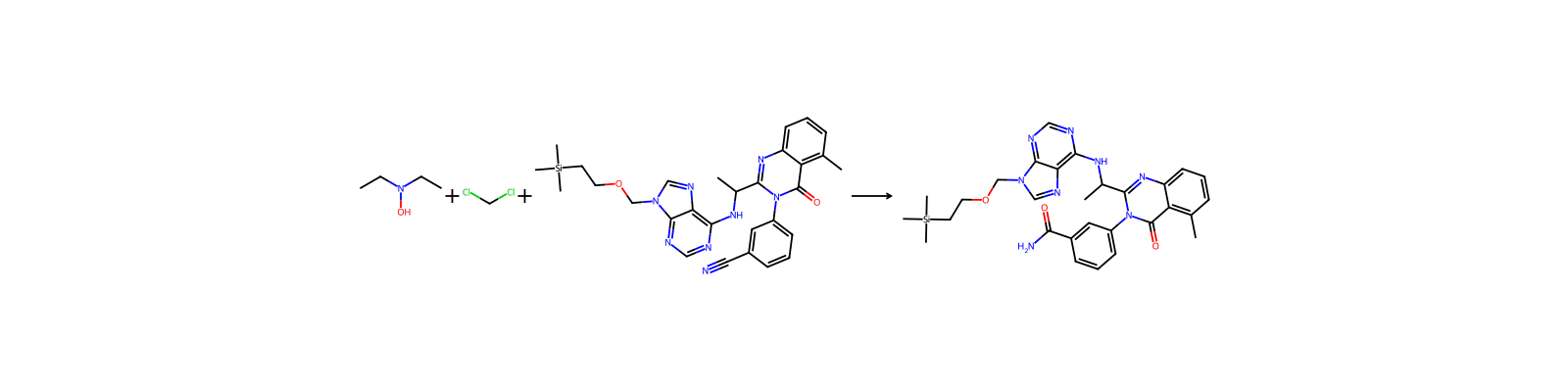
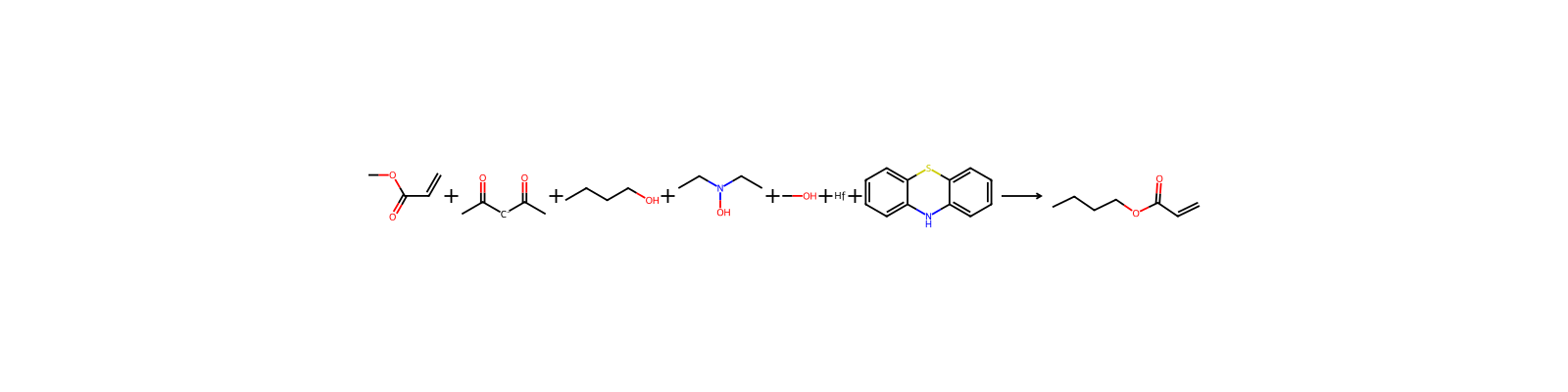
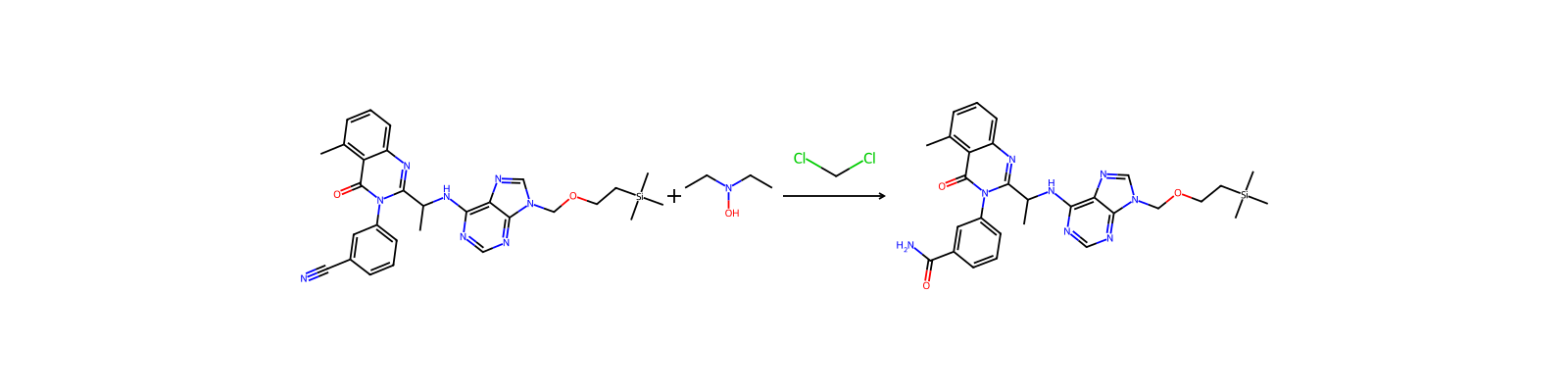
Related reactions
46 records




Linked notes
Loading…