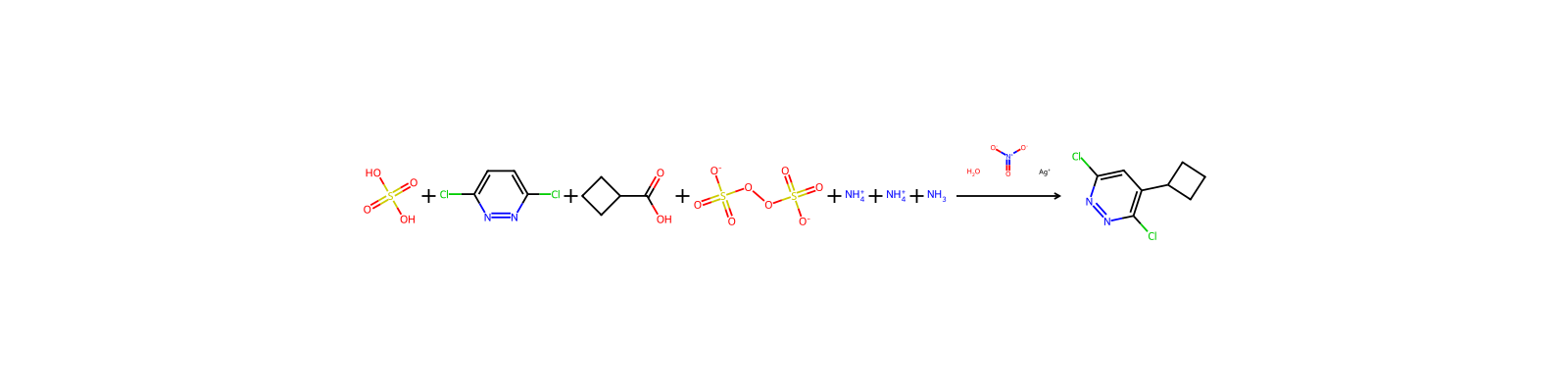
Cyclobutanecarboxylic acid
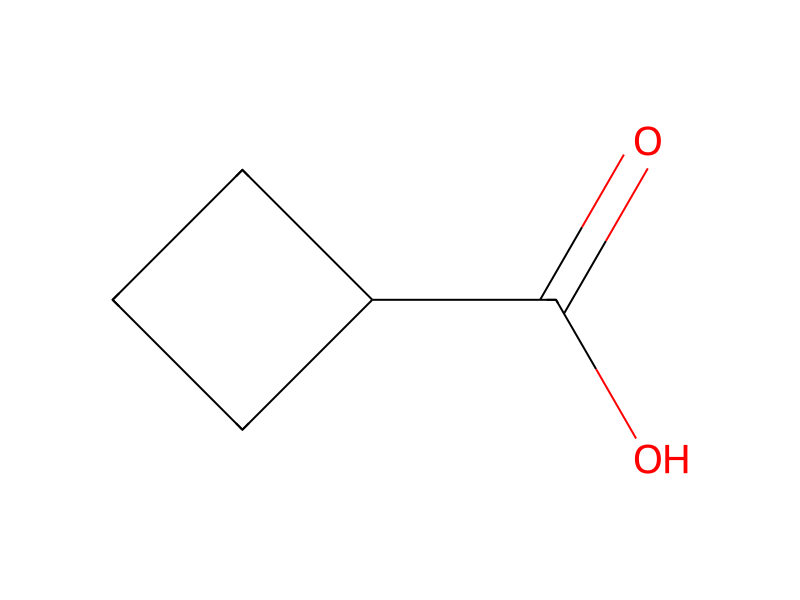
Basic information
- CAS
3721-95-7- Standard SMILES
O=C(O)C1CCC1- InChIKey
TXWOGHSRPAYOML-UHFFFAOYSA-N- Molecular formula
- C5H8O2
- Average molar mass
- 100.12 g/mol
- Monoisotopic mass
- 100.0524295
Names & identifiers
- Preferred name
- Cyclobutanecarboxylic acid
- IUPAC
- cyclobutanecarboxylic acid
- English name
- Cyclobutanecarboxylic acid
- Molecular formula
- C5H8O2
- Molecular weight
- 100.12
Names & synonyms
CYCLOBUTANECARBOXYLIC ACID3721-95-7Cyclobutylcarboxylic acidDTXSID3057725NSC 4535EINECS 223-072-7cyclobutane-1-carboxylic acidBRN 18167770RDJ7C51O0NSC-4535DTXCID40315144-09-00-00006 (Beilstein Handbook Reference)
Show more names
cyclobutanecarboxylateobutanecarboxyLRing butyl forMateRARECHEM AL BO 0291Cyclo-butyl formic aCyclobutancarbonsureCYCLO-BUTYL FORMIC ACIDCyclobutanecarbonyl acid
RefChem:580233223-072-7MFCD00001323cyclobutane carboxylic acidCarboplatin Impurity 6UNII-0RDJ7C51O0Cyclobutanecarboxylic Acid; Cyclobutane-1-carboxylic acid; Cyclobutylcarboxylic Acid; NSC 4535Carboplatin Impurity 21
Database identifiers
- CAS
3721-95-7- PubChem CID
- 19494
- DTXSID
DTXSID3057725- ChEMBL
CHEMBL3560137- UNII
- 0RDJ7C51O0
- EC Number
- 223-072-7
- Nikkaji
- J67.761B
Properties
Computed structural properties
- XLogP
- 0.8
- Topological polar surface area
- 37.3 Ų
- Hydrogen bond donors
- 1
- Hydrogen bond acceptors
- 2
- Rotatable bonds
- 1
- Heavy atoms
- 7
- Formal charge
- 0
- Complexity
- 84.1
Experimental & physicochemical properties
Chemical ClassesOther Classes -> Organic Acids
SpringerMaterials PropertiesDiamagnetic susceptibility
Physical DescriptionColorless liquid with a stench; [Alfa Aesar MSDS]
Collision Cross Section121.73 Ų [M+Na]+ [CCS Type: TW; Method: calibrated with polyalanine and drug standards]
Physicochemical properties
- Melting point
- 7.5 °C · −7.5 °C(lit.)
- Boiling point
- 195 °C · 195 °C(lit.)
- Density
- 1.047 g/mL · 1.047 g/mL at 25 °C(lit.)
- refractive index
- 20 · n20/D 1.444(lit.)
- Flash point
- 183 °F · 183 °F
- storage temp.
- Sealed in dry,Room Temperature
- solubility
- soluble in Chloroform, Methanol
Safety & regulation
Safety information is for reference only and does not replace the supplier’s Safety Data Sheet (SDS), applicable regulations, or professional assessment.
GHS classification
GHS Classification
Danger
H302 (37.5%): Harmful if swallowed [Warning Acute toxicity, oral]
P260, P261, P264, P264+P265, P270, P271, P280, P301+P317, P301+P330+P331, P302+P352, P302+P361+P354, P304+P340, P305+P354+P338, P316, P317, P321, P330, P362+P364, P363, P405, and P501 (click each P-code to see the statement)
Aggregated GHS information provided per 104 reports by companies from 8 notifications to the ECHA C&L Inventory. Each notification may be associated with multiple companies.
Hazard information
Regulatory Information
Chemical: Cyclobutanecarboxylic acid
Status: Active Update: 28-05-2018 https://echa.europa.eu/registration-dossier/-/registered-dossier/24735
Cyclobutanecarboxylic acid: Does not have an individual approval but may be used under an appropriate group standard
Hazards SummaryIntraperitoneal LD50 (mouse) = 1,270 mg/kg; [RTECS] Causes burns; Inhalation may cause corrosive injuries to upper respiratory tract; [Alfa Aesar MSDS]
Hazard Classes and CategoriesAcute Tox. 4 (37.5%)
Toxicology
Adverse EffectsDermatotoxin - Skin burns.
Safety data
- F
- 13
- PPE
- Faceshields, Gloves, Goggles, type ABEK (EN14387) respirator filter
- wgk
- 3
- tsca
Chemistry & industry
Uses & manufacturing
General Manufacturing InformationCyclobutanecarboxylic acid: INACTIVE
Applications
UsesCyclobutanecarboxylic acid is used in water treatment, row materials for sodium fluosilicate potassium fluosilicateammonium fluosilicatecopper fluosilicatebarium fluosilicate and other fluosilicates and silicic tetrafluoride. It is also used in refining lead of electrolysis, as mordant and in the treatment of metal surface.
Preparation methods
PreparationCyclobutanecarboxylic acid synthesis: Put 1,1-Cyclobutanedicarboxylic acid into a distillation device for heating, decarboxylate at about 160°C to release carbon dioxide, then heat for distillation, collect 189-195°C fractions as crude product, and re-distill to obtain the finished product cyclobutanecarboxylic acid. Yield 86%-91%.
Upstream & downstream products
Upstream raw materials
Downstream products
Related reactions
161 records


Compound notes
Loading…