
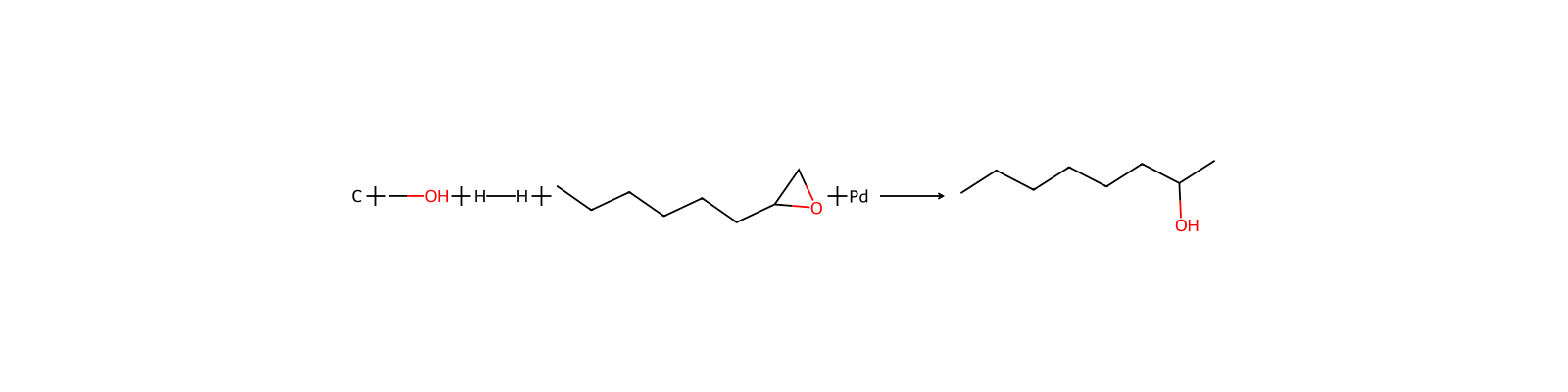
HRID 64504As reactant

123-96-6CCCCCCC(C)OSJWFXCIHNDVPSH-UHFFFAOYSA-NOctan-2-ol is an octanol carrying the hydroxy group at position 2. It has a role as a volatile oil component and a plant metabolite. It is a secondary alcohol and an octanol.
123-96-6、25339-16-6、4128-31-8DTXSID0027014CHEMBL510068CHEBI:37869log Kow = 2.90
2.900
2.72
2.9
0.8193 g/cu cm at 20 °C
Relative density (water = 1): 0.82
0.817-0.820 (20 °C)
0.8193 @ 20°C
Safety information is for reference only and does not replace the supplier’s Safety Data Sheet (SDS), applicable regulations, or professional assessment.
This chemical does not meet GHS hazard criteria for 0.3% (6 of 1874) of reports.
Danger
H315 (12.3%): Causes skin irritation [Warning Skin corrosion/irritation]
P264, P264+P265, P280, P302+P352, P305+P351+P338, P305+P354+P338, P317, P321, P332+P317, P337+P317, and P362+P364 (click each P-code to see the statement)
Aggregated GHS information provided per 1874 reports by companies from 14 notifications to the ECHA C&L Inventory. Each notification may be associated with multiple companies.
This chemical does not meet GHS hazard criteria for 75% (3 of 4) of all reports.
Chemical: 2-Octanol
Regulation (EC) No 1831/2003 (amended)
2-Octanol is listed on the EPA's Chemical Data Reporting (CDR) system. Manufacturers and importers of 2-Octanol are required to report information about their production and use of this chemical to the EPA under the Toxic Substances Control Act (TSCA). (40 eCFR Part 711)
REACH registered substance: Octan-2-ol (EC: 204-667-0)
2-Octanol: Does not have an individual approval but may be used under an appropriate group standard
An eye and respiratory tract irritant; A mild skin irritant; Defats the skin; May cause chemical pneumonitis if swallowed and aspirated; [ICSC] An irritant; [MSDSonline]
The major hazards encountered in the use and handling of 2-octanol stem from its toxicologic properties. Toxic by all routes (ie, inhalation, ingestion, and dermal contact), exposure to this colorless, aromatic, oily liquid may occur from its production and use as a solvent for fats and waxes; in the manufacture of lacquers, enamels, plasticizers, wetting agents, antifoaming agents, hydraulic oils, petroleum additives, and perfumes; and in the masking of industrial odors. Effects from exposure may include headache, nausea, dizziness, eye irritation, drying of the skin, pulmonary tract irritation, and CNS depression. In activities and situations where over-exposure may occur, wear a self-contained breathing apparatus. If contact should occur, irrigate exposed eyes with copious amounts of tepid water for at least 15 minutes and wash exposed skin thoroughly with soap and water. 2-Octanol must be moderately heated before ignition will occur. Normal firefighting procedures may be used to fight 2-octanol fires, including the use of water spray to cool the substance to below its flashpoint.
Used in perfumes, disinfectant soaps, solvents (fats, waxes, lacquers, and enamels) and to make other organic compounds; [HSDB] Use as paint solvent, textile wetting agent, and component of brake fluid; [Ullmann]
Painting (Solvents) [Category: Paint]
In manufacture of perfumes; in disinfectant soaps. To prevent foaming. Solvent for fats and waxes.
CHEM INT FOR ALCOHOL-DERIVED SURFACTANTS.
Solvent, manufacture of plasticizers, wetting agents, foam-control agents, hydraulic oils, petroleum additives, perfume intermediates, masking of industrial odors.
It is used as a solvent in the paint industry, as a wetting agent in the textile industry, and as a component of brake fluids.
2023: 1,000,000 - <5,000,000 lb
(1979) PROBABLY GREATER THAN 2.27X10+6 GRAMS
2-Octanol is listed as a High Production Volume (HPV) chemical (65FR81686). Chemicals listed as HPV were produced in or imported into the U.S. in >1 million pounds in 1990 and/or 1994. The HPV list is based on the 1990 Inventory Update Rule. (IUR) (40 CFR part 710 subpart B; 51FR21438).
Production volume for non-confidential chemicals reported under the 2006 Inventory Update Rule. Chemical: 2-Octanol. Aggregated National Production Volume: < 500,000 pounds.
Non-confidential 2012 Chemical Data Reporting (CDR) information on the production and use of chemicals manufactured or imported into the United States. Chemical: 2-Octanol. National Production Volume: 1,000,000 - 10,000,000 lb/yr.




Liquid
Colorless liquid
In water, 1120 mg/L at 25 C
Soluble in ethanol, ethyl ether, acetic acetone
MISCIBLE WITH AROMATIC AND ALIPHATIC HYDROCARBONS
SOL IN MOST COMMON ORGANIC SOLVENTS
1.2 mg/mL at 25 °C
Solubility in water, ml/100ml: 0.096 (none)
76 °C
76 °C
2-Octanol is a food additive permitted for direct addition to food for human consumption as a synthetic flavoring substance and adjuvant in accordance with the following conditions: a) they are used in the minimum quantity required to produce their intended effect, and otherwise in accordance with all the principles of good manufacturing practice, and b) they consist of one or more of the following, used alone or in combination with flavoring substances and adjuvants generally recognized as safe in food, prior-sanctioned for such use, or regulated by an appropriate section in this part.
1 - Materials that, under emergency conditions, can cause significant irritation.
2 - Materials that must be moderately heated or exposed to relatively high ambient temperatures before ignition can occur. Materials would not under normal conditions form hazardous atmospheres with air, but under high ambient temperatures or under moderate heating could release vapor in sufficient quantities to produce hazardous atmospheres with air.
0 - Materials that in themselves are normally stable, even under fire conditions.
2-Octanol
B*: Compounds that form peroxides on concentration (distillation/evaporation)
2 samples, >1yrs, 2-20 ppm
Management of time-sensitive chemicals (JCHAS)
Flam. Liq. 3 (25%)
Skin Irrit. 2 (12.3%)
Flammable liquids - Category 4
Flammable liquids - Category 3
Fresh air, rest.
Rinse and then wash skin with water and soap.
First rinse with plenty of water for several minutes (remove contact lenses if easily possible), then refer for medical attention.
Rinse mouth. Do NOT induce vomiting. Give one or two glasses of water to drink.
Advice for firefighters: Wear self-contained breathing apparatus for firefighting if necessary. Use water spray to cool unopened containers.
Suitable extinguishing media: Use water spray, alcohol-resistant foam, dry chemical or carbon dioxide.
Control of environmental exposure: Prevent further leakage or spillage if safe to do so. Do not let product enter drains. Discharge into the environment must be avoided.
ACCIDENTAL RELEASE MEASURES. Personal precautions, protective equipment and emergency procedures: Use personal protective equipment. Avoid breathing vapors, mist or gas. Ensure adequate ventilation. Remove all sources of ignition. Beware of vapors accumulating to form explosive concentrations. Vapors can accumulate in low areas.; Environmental precautions: Prevent further leakage or spillage if safe to do so. Do not let product enter drains. Discharge into the environment must be avoided; Methods and materials for containment and cleaning up: Contain spillage, and then collect with an electrically protected vacuum cleaner or by wet-brushing and place in container for disposal according to local regulations. Keep in suitable, closed containers for disposal.
SRP: Recycle any unused portion of the material for its approved use or return it to the manufacturer or supplier. Ultimate disposal of the chemical must consider: the material's impact on air quality; potential migration in air, soil or water; effects on animal, aquatic and plant life; and conformance with environmental and public health regulations. If it is possible or reasonable use an alternative chemical product with less inherent propensity for occupational harm/injury/toxicity or environmental contamination.
Personal protection: filter respirator for organic gases and vapours adapted to the airborne concentration of the substance. Collect leaking and spilled liquid in covered containers as far as possible. Absorb remaining liquid in sand or inert absorbent. Then store and dispose of according to local regulations. Do NOT let this chemical enter the environment.
Appropriate engineering controls: Handle in accordance with good industrial hygiene and safety practice. Wash hands before breaks and at the end of workday.
Precautions for safe handling: Avoid contact with skin and eyes. Avoid inhalation of vapor or mist. Keep away from sources of ignition - No smoking.Take measures to prevent the build up of electrostatic charge.
Gloves must be inspected prior to use. Use proper glove removal technique (without touching glove's outer surface) to avoid skin contact with this product. Dispose of contaminated gloves after use in accordance with applicable laws and good laboratory practices. Wash and dry hands.
TERRESTRIAL FATE: Based on a classification scheme(1), an estimated Koc value of 32(SRC), determined from a structure estimation method(2), indicates that 2-octanol is expected to have very high mobility in soil(SRC). Volatilization of 2-octanol from moist soil surfaces is expected given a Henry's Law constant of 3.23X10⁻⁵ atm-cu m/mole(3). 2-Octanol is not expected to volatilize from dry soil surfaces(SRC) based upon a vapor pressure of 0.242 mm Hg at 25 °C(4). A 76% of theoretical BOD using activated sludge in the Japanese MITI test(5) suggests that biodegradation is an important environmental fate process in soil(SRC).
AQUATIC FATE: Based on a classification scheme(1), an estimated Koc value of 32(SRC), determined from a structure estimation method(2), indicates that 2-octanol is not expected to adsorb to suspended solids and sediment(SRC). Volatilization from water surfaces is expected(3) based upon a Henry's Law constant of 3.23X10⁻⁵ atm-cu m/mole(4). Using this Henry's Law constant and an estimation method(3), volatilization half-lives for a model river and model lake are 34 hours and 14 days, respectively(SRC). 2-Octanol is not expected to undergo hydrolysis in the environment due to the lack of functional groups that hydrolyze under environmental conditions(3). According to a classification scheme(5), an estimated BCF of 38(SRC), from its log Kow of 2.90(6) and a regression-derived equation(2), suggests the potential for bioconcentration in aquatic organisms is moderate(SRC). First order rate constants for the biodegradation of 2-octanol using an activated sludge inoculum were measured as 1120 1/hour(7) and 388 1/hour(8), indicating that biodegradation may be an important environmental fate process in water(SRC).
ATMOSPHERIC FATE: According to a model of gas/particle partitioning of semivolatile organic compounds in the atmosphere(1), 2-octanol, which has a vapor pressure of 0.242 mm Hg at 25 °C(2), is expected to exist solely as a vapor in the ambient atmosphere. Vapor-phase 2-octanol is degraded in the atmosphere by reaction with photochemically-produced hydroxyl radicals(SRC); the half-life for this reaction in air is estimated to be 32 hours(SRC), calculated from its rate constant of 1.21X10⁻¹¹ cu cm/molecule-sec at 25 °C(3). 2-Octanol does not contain chromophores that absorb at wavelengths >290 nm(4) and, therefore, is not expected to be susceptible to direct photolysis by sunlight(SRC).
2-Octanol was identified as a volatile component of mountain(1) and blue(2) cheeses, and fresh ginger root(3). 2-Octanol was identified in oil of Reunion geranium, a few species of mint and lavender; it is reported in apple, banana, kumquat peel oil, cranberry, asparagus, peas, thyme, cheeses, chicken and beef fat, hop oil, beer, cognac, rum, grape wines, tea, oats, soybeans, coconut meat, Brazil nut, buckwheat, loquat, sweet corn and bilberry wine(4). 2-Octanol has been detected in beer, wine and spirits(5).
IDENTIFICATION AND USE: 2-Octanol is a colorless liquid used in the manufacture of perfumes, disinfectant soaps and to prevent foaming. It is also used as a solvent for fats and waxes. HUMAN EXPOSURE AND TOXICITY: No human toxicity studies have been found to date. ANIMAL STUDIES: 2-Octanol is slightly irritating to guinea pig skin. Rats were exposed by inhalation to 34 to 56 ppm 2-octanol, 2hr/day, 6 days/week for 4.5 months. Mild reversible central nervous system effects (not described) were reported, as well as hematologic changes (decreased hemoglobin and erythrocyte numbers) and minor changes in heart, liver and kidney. 2-Octanol (2 mL/day) applied for 6 days to the shaven skin of rabbits caused erythema, inflammation, and cracking of the skin, which healed in 10 to 12 days. The application of 2-octanol to the eyes of rabbits caused pronounced erythema.
2-Octanol was identified as a volatile component of fresh ginger root(1). 2-Octanol was identified in oil of Reunion geranium, a few species of mint and lavender; it is reported in apple, banana, kumquat peel oil, cranberry, asparagus, peas, thyme, hop oil, tea, oats, soybeans, coconut meat, Brazil nut, buckwheat, loquat and sweet corn(2). 2-Octanol was detected in the leaf of tomato plants(3).
2-Octanol detections in plants(1).[Table#5453]
Cough. Sore throat.
Dry skin.
Redness. Pain.
Burning sensation.
EPA has released the first beta version (version 0.5) of the Interactive Chemical Safety for Sustainability (iCSS) Dashboard. The beta version of the iCSS Dashboard provides an interactive tool to explore rapid, automated (or in vitro high-throughput) chemical screening data generated by the Toxicity Forecaster (ToxCast) project and the federal Toxicity Testing in the 21st century (Tox21) collaboration. /The title compound was tested by ToxCast and/or Tox21 assays; Click on the "Chemical Explorer" button on the tool bar to see the data./[USEPA; ICSS Dashboard Application; Available from, as of April 22, 2015: http://actor.epa.gov/dashboard/]
2-Octanol is a food additive permitted for direct addition to food for human consumption as a synthetic flavoring substance and adjuvant in accordance with the following conditions: a) they are used in the minimum quantity required to produce their intended effect, and otherwise in accordance with all the principles of good manufacturing practice, and b) they consist of one or more of the following, used alone or in combination with flavoring substances and adjuvants generally recognized as safe in food, prior-sanctioned for such use, or regulated by an appropriate section in this part.
Prepared by heating sodium ricinoleate with caustic soda in a copper vessel and distilling.
By distilling sodium ricinoleate with an excess of sodium hydroxide.
... Obtained by the alkaline hydrolysis of castor oil.
Fragrance Ingredients
Flavouring Agent -> FLAVOURING_AGENT -> JECFA Functional Classes
Flavoring Agents -> JECFA Flavorings Index
Flavouring Agent -> FLAVOURING_AGENT -> JECFA Functional Classes
Flavouring Agent -> FLAVOURING_AGENT -> JECFA Functional Classes
Environmental transformation -> Pesticide transformation products (metabolite, successor)
Soap, Cleaning Compound, and Toilet Preparation Manufacturing
2-Octanol: ACTIVE
Description2-Octanol has a characteristic disagreeable but aromatic odor. This substance may be prepared by distilling sodium ricinoleate with an excess of sodium hydroxide.
OccurrenceTwo optically active isomers of the alcohol have been found; reported in the oil of Réunion geranium; also identified in a few species of mint and lavender. Reported found in apple, banana, kumquat peel oil, cranberry, asparagus, peas, thyme, cheeses, chicken and beef fat, hop oil, beer, cognac, rum, grape wines, tea, oats, soybean, coconut meat, Brazil nut, buckwheat, loquat, sweet corn and bilberry wine.
UsesIt is used in the paint industry, as a wetting agent in the textile industry, and as a component of brake fluids.
Uses2-Octanol is used as a chemical reagent in the synthesis of a variety of pharmaceutical compounds usually through its oxidation to a ketone or aldehyde. Used in the synthesis of piperine derivates as MAO A & B inhibitors.
General Description2-Octanol is a fatty alcohol mainly found in castor oil, tomato leaves and wine.
PreparationBy distilling sodium ricinoleate with an excess of sodium hydroxide.
DefinitionChEBI: An octanol carrying the hydroxy group at position 2.