

Basic information
- CAS
4318-76-7- Standard SMILES
Nc1ccc(N)nc1- InChIKey
MIROPXUFDXCYLG-UHFFFAOYSA-N- Molecular formula
- C5H7N3
- Average molar mass
- 109.13 g/mol
- Monoisotopic mass
- 109.06399722
Names & identifiers
- Preferred name
- 2,5-Pyridinediamine
- IUPAC
- pyridine-2,5-diamine
- English name
- 2,5-Diaminopyridine
- Molecular formula
- C5H7N3
- Molecular weight
- 109.13
Names & synonyms
2,5-DIAMINOPYRIDINE4318-76-7PYRIDINE-2,5-DIAMINE2,5-PyridinediaminePyridine, 2,5-diamino-H6OLZ060HINSC 175741BRN 0108741NSC-175741J51.294JDTXSID201957655-22-11-00252 (Beilstein Handbook Reference)
Show more names
TIMTEC-BB SBB0043422,5-diamino-pyridinFampridine Impurity 2872,5-Diaminopyridine,98+%2,5-Diaminopyridine, 97+%Pyridine-2,5-diamine - [D4727]2,5-Diaminopyridine ISO 9001:2015 REACH
RefChem:4450452,5-Pyridinediamine (9CI)DTXCID60118256626-246-4MFCD00129023Diaminopyridine (VAN)UNII-H6OLZ060HIPyridine,5-diamino-
Database identifiers
- CAS
4318-76-7- PubChem CID
- 20314
- DTXSID
DTXSID20195765- UNII
- H6OLZ060HI
- EC Number
- 626-246-4
- Nikkaji
- J51.294J
Properties
Computed structural properties
- XLogP
- -0.2
- Topological polar surface area
- 64.9 Ų
- Hydrogen bond donors
- 2
- Hydrogen bond acceptors
- 3
- Rotatable bonds
- 0
- Heavy atoms
- 8
- Formal charge
- 0
- Complexity
- 74.1
Physicochemical properties
- Melting point
- 110.3 °C · 110.3°C
- Boiling point
- 180 °C/12 · 180 °C/12 mmHg (lit.)
- Density
- 1.1118 · 1.1118 (rough estimate)
- refractive index
- 1.534 · 1.5340 (estimate)
- Flash point
- 180 °C/12mm · 180°C/12mm
- storage temp.
- Keep in dark place,Inert atmosphere,Room temperature
- pka
- 6.48 · 6.48(at 20℃)
- Appearance
- Brown to black Solid
- InChI
- 1S/C5H7N3/c6-4-1-2-5(7)8-3-4/h1-3H,6H2,(H2,7,8)
- InChIKey
- MIROPXUFDXCYLG-UHFFFAOYSA-N
- SMILES
- Nc1ccc(N)nc1
- CAS DataBase Reference
- 4318 · 4318-76-7(CAS DataBase Reference)
- FDA UNII
- 6 OLZ060HI · H6OLZ060HI
- UNSPSC Code
- 12352100 · 12352100
- NACRES
- 22 · NA.22
- Symbol(GHS)
- 7 · GHS07
- Signal word
- Warning
- Hazard statements
- 315 · H315-H319-H335
- Precautionary statements
- 261 · P261-P264-P271-P280-P302+P352-P305+P351+P338
- target organs
- Respiratory system
- PPE
- 95 · dust mask type N95 (US), Eyeshields, Gloves
- Hazard Codes
- Xi
- Risk Statements
- 36 · 36/37/38
- Safety Statements
- 26 · 26-36
- RIDADR
- 2671 · UN2671
- WGK Germany
- 3 · 3
- RTECS
- 7555000 · US7555000
- HazardClass
- 6.1 · 6.1
- PackingGroup
- II
- HS Code
- 29333999 · 29333999
- Storage Class
- 11 · 11 - Combustible Solids
- Hazard Classifications
- 2 Skin · Eye Irrit. 2Skin Irrit. 2STOT SE 3
Safety & regulation
GHS classification
GHS Classification
Danger
H301 (13%): Toxic if swallowed [Danger Acute toxicity, oral]
P261, P262, P264, P264+P265, P270, P271, P280, P301+P316, P302+P352, P304+P340, P305+P351+P338, P316, P319, P321, P330, P332+P317, P337+P317, P361+P364, P362+P364, P403+P233, P405, and P501 (click each P-code to see the statement)
Aggregated GHS information provided per 46 reports by companies from 5 notifications to the ECHA C&L Inventory. Each notification may be associated with multiple companies.
Hazard information
Hazard Classes and CategoriesAcute Tox. 3 (13%)
Safety data
- PPE
- dust mask type N95 (US), Eyeshields, Gloves
- wgk
- 3
- rtecs
- US7555000
- ridadr
- UN2671
- hs_code
- 29333999
- risk_code
- 36/37/38
- Signal word
- Warning
- Symbol(GHS)
- GHS07
- hazard_code
- Xi
- safety_code
- 26-36
- hazard_class
- 6.1
- Storage Class
- 11 - Combustible Solids
- packing_group
- II
- target organs
- Respiratory system
- Hazard statements
- H315-H319-H335
- Hazard Classifications
- Eye Irrit. 2Skin Irrit. 2STOT SE 3
- Precautionary statements
- P261-P264-P271-P280-P302+P352-P305+P351+P338
Chemistry & industry
Applications
Uses2,5-Diaminopyridine may be used in the preparation of 6-acetamidoimidazo[ 1,2-a]pyridine. It may be used in the preparation of organo-soluble polyimides by reacting with different dianhydride monomers. These polyimides form the precursor for preparing novel polyimide-silica composites.
General Description2,5-Diaminopyridine is a disubstituted pyridine that can be prepared by the reduction of 5-nitro-2-aminopyridine using 10%Pd/C.
Upstream & downstream products
Upstream raw materials
Downstream products
Suppliers100 total
上海阿拉丁生化科技股份有限公司400-6206333 13167063860 · [email protected]
武汉英诺医药科技有限公司+86-027-59232304 15387063101 · [email protected]
毕佳索(上海毕得医药科技股份有限公司)400-6005915 · [email protected]
合肥翰刚医药科技有限公司+8618062405514 · [email protected]
咸宁深蓝生物医药研发有限公司18171815831 · [email protected]
INTATRADE GmbH+49 3493/605464 · [email protected]
湖北科乐精细化工有限公司027-59101668 19945030958 · [email protected]
Dayang Chem (Hangzhou) Co.,Ltd.+86-0571-88938639 17705817739 · [email protected]
郑州鸿晟医药科技有限公司0371-55695890 15637198702 · [email protected]
郑州德元凯化工有限公司17837139533 · [email protected]
上海迈瑞尔生化科技有限公司4006356688 18621169109 · [email protected]
安耐吉化学&3A(安徽泽升科技股份有限公司)400-0056266 · [email protected]
武汉凯威斯科技有限公司86-027-67849912 · [email protected]
北京亿思研科技开发中心010-56645598 13366904824 · [email protected]
常州科化生物科技有限公司0519-68985668 13685222090 · [email protected]
上海瀚鸿科技股份有限公司021-54306202 13764082696 · [email protected]
上海景颜化工科技有限公司13817811078 · [email protected]
Pure Chemistry Scientific Inc.001-857-928-2050 or 1-888-588-9418 · [email protected]
郑州研德生物科技有限公司0371-63682289 15538176268 · [email protected]
郑州泰丰制药有限公司182-3786-0830 19913859908 · [email protected]
山东西亚化学有限公司13355009207 13355009207 · [email protected]
赛默飞世尔科技(中国)有限公司800-810-5118 · [email protected]
上海遐瑞医药科技有限公司+86 21 61551611
卡迪亚医药科技有限公司0371-86615086 18203638366 0371-86159066 13526786601
苏州爱斯鹏药物研发有限责任公司+86-512-86881668
越林试剂021-62960152 · [email protected]
贵州易妥化学科技有限公司18628235590 · [email protected]
上海毕得医药科技股份有限公司400-164-7117 18317119277 · [email protected]
郑州阿尔法化工有限公司0371-53732842 15981811963 · [email protected]
郑州鸿晟医药科技有限公司0371-0371-13526885213 15637198702 · [email protected]
上海石洋化工有限公司021-56795766 · [email protected]
郑州萃智医药科技有限公司19943855286 · [email protected]
上海御略医药科技有限公司021-60345187 13671753212 · [email protected]
上海鑫圭生物科技有限公司15121041756 · [email protected]
上海麦克林生化科技股份有限公司15221275939 15221275939 · [email protected]
上海寰川实业有限公司021-61478794 · [email protected]
上海嵩爰化工科技有限公司010-1234567 18521000990 · [email protected]
上海孚一生物科技有限公司+86 (21) 61124340
陕西缔都医药化工有限公司029-81024372 17792795018 · [email protected]
吉林中科研伸科技有限公司0431-80534353 19917294565 · [email protected]
Sigma-Aldrich西格玛奥德里奇(上海)贸易有限公司021-61415566 800-8193336 · [email protected]
诺尔凯立科技有限公司86-(0)21-31261262 373522135 · [email protected]
成都瑞欧克科技有限公司028-64353063 · [email protected]
河南普赛化工产品有限公司0371-63357898 · [email protected]
厦门志信化学有限公司+86-5922680277 +86-13806087780 · [email protected]
上海大然化学有限公司021-64478606 15900664856 · [email protected]
江西弗莱医药科技有限公司15870833005 · [email protected]
武汉多普乐生物医药有限公司+86-02787215551 19945035818 · [email protected]
嘉兴市浙嘉生物科技有限公司0573-85609002 · [email protected]
陕西缔都医药化工有限公司+86-29-81139210 +86-17392587031 · [email protected]
Related reactions
28 records
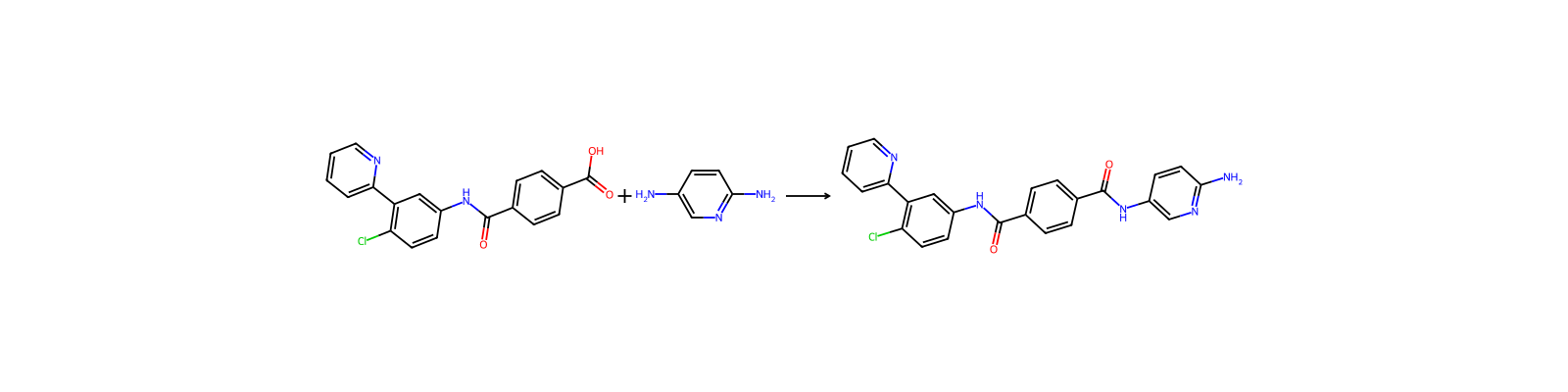


Compound notes
Loading…