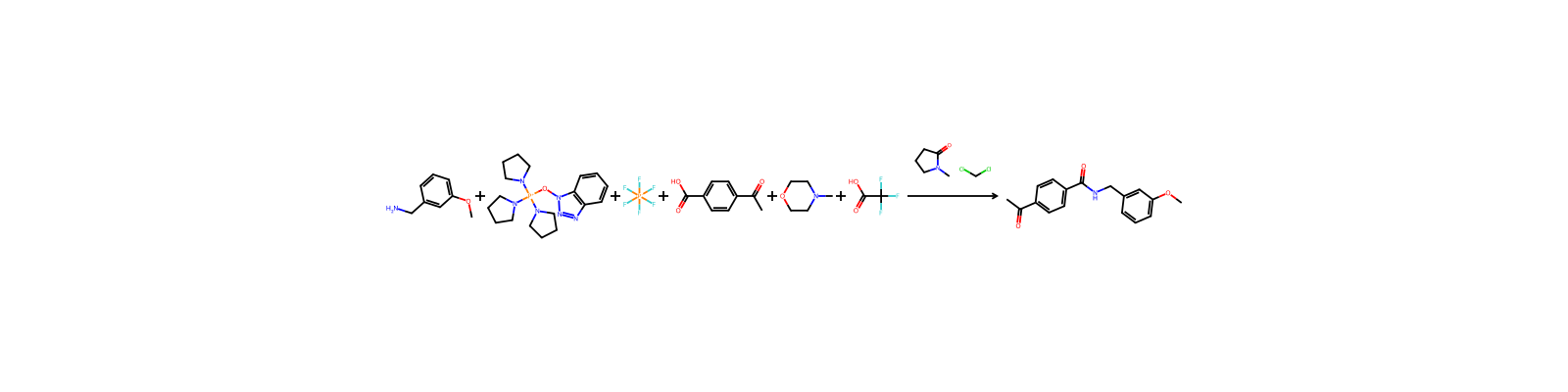
HRID 600As reactant

5071-96-5COc1cccc(CN)c1GRRIMVWABNHKBX-UHFFFAOYSA-N5071-96-5DTXSID10198765CHEMBL468622Safety information is for reference only and does not replace the supplier’s Safety Data Sheet (SDS), applicable regulations, or professional assessment.
Danger
H302 (87.2%): Harmful if swallowed [Warning Acute toxicity, oral]
P260, P261, P264, P264+P265, P270, P271, P280, P301+P317, P301+P330+P331, P302+P352, P302+P361+P354, P304+P340, P305+P351+P338, P305+P354+P338, P316, P319, P321, P330, P332+P317, P337+P317, P362+P364, P363, P403+P233, P405, and P501 (click each P-code to see the statement)
Aggregated GHS information provided per 47 reports by companies from 7 notifications to the ECHA C&L Inventory. Each notification may be associated with multiple companies.
Uses3-Methoxybenzylamine is a 3-methoxy derivative of benzylamine. 3-Methoxybenzylamine is one the the metabolites detected in urine after metabolism of dopamine analogues. 3-Methoxybenzylamine showed pla smin inhibitory activity as well as weak inhibition of the essential bacterial cell division protein FtsZ
Uses3-Methoxybenzylamine was used in the preparation of 6-substituted purines.
PreparationPdNPore (2.7 mg, 5 mol%) catalyst and ammonia borane complex (30.86 mg, 1 mmol) were added to a mesoporous reactor. Methanol (3 mL) was added under nitrogen purging, followed by the substrate m-methoxybenzonitrile (58.5 mg, 0.5 mmol). The reactor was placed in an oil bath and reacted at 50 °C for 12 h. The mixture was then purified by column chromatography (silica gel, 200-300 mesh; developing solvent: ethyl acetate:methanol = 2:1) to obtain 65.4 mg of 3-methoxybenzylamine, with a yield of 95%.