Basic information
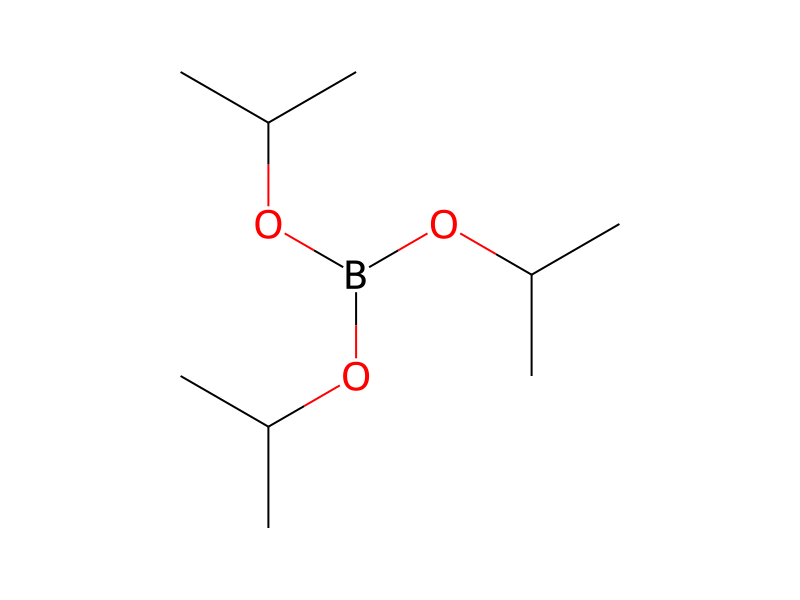
- Standard SMILES
CC(C)OB(OC(C)C)OC(C)C- InChIKey
NHDIQVFFNDKAQU-UHFFFAOYSA-N- Molecular formula
- C9H21BO3
- Average molar mass
- 188.07 g/mol
- Monoisotopic mass
- 188.1583747
Names & identifiers
- Preferred name
- Triisopropyl borate
- IUPAC
- tripropan-2-yl borate
- English name
- Triisopropyl borate
- Molecular formula
- C9H21BO3
- Molecular weight
- 188.07
Names & synonyms
TRIISOPROPYL BORATE5419-55-6Isopropyl borateTriisopropyl orthoboratetri-i-PropylborateBoric acid (H3BO3), tris(1-methylethyl) esterBoric acid, tris(1-methylethyl) esterDTXSID7027598Tris(1-methylethyl) borateEINECS 226-529-9YWV817MXF3UN2616
Show more names
TIPBB(OiPr)3Triisopropyl boratTriisoproyl borateBORON ISOPROPOXIDETRIISOPROPOXYBORANEtripropan-2-yl borateTRIISOPROPYL BORATE, 98+%BORIC ACID TRIISOPROPYL ESTER
BRN 1701469AI3-61082NSC-9779UNII-YWV817MXF3Boric acid, (H3BO3), triisopropyl esterDTXCID607598EC 226-529-94-01-00-01488 (Beilstein Handbook Reference)
Database identifiers
- CAS
5419-55-6- PubChem CID
- 21531
- DTXSID
DTXSID7027598- ChEMBL
CHEMBL1902909- UNII
- YWV817MXF3
- EC Number
- 226-529-9
- Nikkaji
- J35.126A
Properties
Computed structural properties
- Topological polar surface area
- 27.7 Ų
- Hydrogen bond donors
- 0
- Hydrogen bond acceptors
- 3
- Rotatable bonds
- 6
- Heavy atoms
- 13
- Formal charge
- 0
- Complexity
- 102
Experimental & physicochemical properties
Flash Point82 °F (NFPA, 2010)
Vapor Pressure8.6 [mmHg]
Physical Description
Triisopropyl borate appears as a colorless liquid. Less dense than water and insoluble in water. Vapors heavier than air. Used to make other chemicals.
Liquid
Colorless liquid; [CAMEO] Colorless liquid with an alcohol-like odor; [Alfa Aesar MSDS]
Physicochemical properties
- Melting point
- -59 °C · -59 °C
- Boiling point
- 139 · 139-141 °C (lit.)
- Density
- 0.815 g/mL · 0.815 g/mL at 25 °C (lit.)
- vapor pressure
- 76 mm · 76 mm Hg ( 75 °C)
- refractive index
- 20 · n20/D 1.376(lit.)
- Flash point
- 62.6 °F · 62.6 °F
- storage temp.
- 30 °C · Store below +30°C.
- solubility
- Miscible with ether, ethanol, isopropanol and benzene.
- form
- Liquid
- Specific Gravity
- 0.815 · 0.815
- color
- Clear colorless
- Water Solubility
- decomposes
- Sensitive
- Moisture Sensitive
- Hydrolytic Sensitivity
- 7 · 7: reacts slowly with moisture/water
- BRN
- 1701469 · 1701469
- InChI
- 1S/C9H21BO3/c1-7(2)11-10(12-8(3)4)13-9(5)6/h7-9H,1-6H3
- InChIKey
- NHDIQVFFNDKAQU-UHFFFAOYSA-N
- SMILES
- CC(C)OB(OC(C)C)OC(C)C
- CAS DataBase Reference
- 5419 · 5419-55-6(CAS DataBase Reference)
- EWG's Food Scores
- 1 · 1
- FDA UNII
- 817 MXF3 · YWV817MXF3
- NIST Chemistry Reference
- Boric acid (h3bo3), tris(1-methylethyl) ester(5419-55-6)
- EPA Substance Registry System
- Triisopropyl orthoborate (5419-55-6)
- UNSPSC Code
- 12352108 · 12352108
- NACRES
- 22 · NA.22
- Symbol(GHS)
- 2 · GHS02
- Signal word
- Danger
- Hazard statements
- 303 · H303-H320-H225
- Precautionary statements
- 501 · P501-P240-P210-P233-P243-P241-P242-P264-P280-P370+P378-P312-P337+P313-P305+P351+P338-P303+P361+P353-P403+P235
- PPE
- Eyeshields, Faceshields, Gloves, type ABEK (EN14387) respirator filter
- Hazard Codes
- F,Xi
- Risk Statements
- 11 · 11
- Safety Statements
- 7 · 7-16-23-24/25-33-9
- RIDADR
- 2616 · UN 2616 3/PG II/III (TRIISOPROPYL BORATE)
- WGK Germany
- 2 · 2
- RTECS
- 5950000 · ED5950000
- F
- 10 · 10-21
- TSCA
- TSCA listed
- HazardClass
- 3 · 3
- PackingGroup
- II
- HS Code
- 29209085 · 29209085
- Storage Class
- 3 · 3 - Flammable liquids
- Hazard Classifications
- 2 · Flam. Liq. 2
- REACH Registrations
- Active
- Limited Quantities
- 1 L · 1.0 L (0.3 gallon) (liquid)
- Excepted Quantities
- Max Inner Pack (30g or 30ml) and Max Outer Pack (500g or 500ml)
Safety & regulation
GHS classification
GHS Classification
Danger
H225 (93.5%): Highly Flammable liquid and vapor [Danger Flammable liquids];H319 (59.7%): Causes serious eye irritation [Warning Serious eye damage/eye irritation]
P210, P233, P240, P241, P242, P243, P264+P265, P280, P303+P361+P353, P305+P351+P338, P337+P317, P370+P378, P403+P235, and P501 (click each P-code to see the statement)
Aggregated GHS information provided per 154 reports by companies from 13 notifications to the ECHA C&L Inventory. Each notification may be associated with multiple companies.;Information may vary between notifications depending on impurities, additives, and other factors. The percentage value in parenthesis indicates the notified classification ratio from companies that provide hazard codes. Only hazard codes with percentage values above 10% are shown. For more detailed information, please visit ECHA C&L website.
Hazard information
Regulatory Information
Boric acid (H3BO3), tris(1-methylethyl) ester is listed on the EPA's Chemical Data Reporting (CDR) system. Manufacturers and importers of Boric acid (H3BO3), tris(1-methylethyl) ester are required to report information about their production and use of this chemical to the EPA under the Toxic Substances Control Act (TSCA). (40 eCFR Part 711)
Status: Active Update: 26-07-2021 https://echa.europa.eu/registration-dossier/-/registered-dossier/19978;Status: Active Update: 14-02-2011 https://echa.europa.eu/registration-dossier/-/registered-dossier/1764
Boric acid, tris(1-methylethyl) ester: Does not have an individual approval but may be used under an appropriate group standard
The New Jersey Worker and Community Right to Know Act requires public and private employers to provide information about hazardous substances at their workplaces. (N.J.S.A. 34:5A-1 et. seq.)
DOT LabelFlammable Liquid
Fire Hazards
Excerpt from ERG Guide 129 [Flammable Liquids (Water-Miscible / Noxious)]:;HIGHLY FLAMMABLE: Will be easily ignited by heat, sparks or flames. Vapors may form explosive mixtures with air. Vapors may travel to source of ignition and flash back. Most vapors are heavier than air. They will spread along the ground and collect in low or confined areas (sewers, basements, tanks, etc.). Vapor explosion hazard indoors, outdoors or in sewers. Those substances designated with a (P) may polymerize explosively when heated or involved in a fire. Runoff to sewer may create fire or explosion hazard. Containers may explode when heated. Many liquids will float on water. (ERG, 2024)
· HIGHLY FLAMMABLE: Will be easily ignited by heat, sparks or flames.;· Vapors may form explosive mixtures with air.;· Vapors may travel to source of ignition and flash back.;· Most vapors are heavier than air. They will spread along the ground and collect in low or confined areas (sewers, basements, tanks, etc.).;· Vapor explosion hazard indoors, outdoors or in sewers.;· Those substances designated with a (P) may polymerize explosively when heated or involved in a fire.;· Runoff to sewer may create fire or explosion hazard.;· Containers may explode when heated.;· Many liquids will float on water.
Health Hazards
Excerpt from ERG Guide 129 [Flammable Liquids (Water-Miscible / Noxious)]:;May cause toxic effects if inhaled or absorbed through skin. Inhalation or contact with material may irritate or burn skin and eyes. Fire will produce irritating, corrosive and/or toxic gases. Vapors may cause dizziness or asphyxiation, especially when in closed or confined areas. Runoff from fire control or dilution water may cause environmental contamination. (ERG, 2024)
· May cause toxic effects if inhaled or absorbed through skin.;· Inhalation or contact with material may irritate or burn skin and eyes.;· Fire will produce irritating, corrosive and/or toxic gases.;· Vapors may cause dizziness or asphyxiation, especially when in closed or confined areas.;· Runoff from fire control or dilution water may cause environmental contamination.
Hazards Summary
A mild eye irritant; Causes somnolence, respiratory depression, and diarrhea in oral lethal-dose studies of rats; Oral LD50 (mouse) = 2,500 mg/kg; [RTECS] May cause irritation; [Alfa Aesar MSDS] See Isopropyl alcohol and Boric acid. See Triethyl borate.
DOT ID and Guide2616 129
Reactive GroupEsters, Sulfate Esters, Phosphate Esters, Thiophosphate Esters, and Borate Esters
Reactivity AlertsHighly Flammable
Reactivity Profile
Borates, such as TRIISOPROPYL BORATE, behave similarly to esters in that they react with acids to liberate heat along with alcohols and acids. Strong oxidizing acids may cause a vigorous reaction that is sufficiently exothermic to ignite the reaction products. Heat is also generated by the interaction of esters with caustic solutions. Flammable hydrogen is generated by mixing esters/borates with alkali metals and hydrides.
DOT Hazard Classification
Triisopropyl borate
UN2616
Class 3 Flammable and combustible liquid (49 eCFR § 173.120)
PG II: the degree of danger presented by the material is medium;PG III: the degree of danger presented by the material is minor;For more information about the packing group assignment, please visit 49 eCFR § 173
Air and Water ReactionsHighly flammable. Insoluble in water.
Hazard Classes and Categories
Flam. Liq. 2 (93.5%);Eye Irrit. 2 (59.7%)
Flammable agents - 3rd degree, Reactive agents - 1st degree
Safety & protection
Fire Fighting
Excerpt from ERG Guide 129 [Flammable Liquids (Water-Miscible / Noxious)]:;CAUTION: The majority of these products have a very low flash point. Use of water spray when fighting fire may be inefficient.;SMALL FIRE: Dry chemical, CO2, water spray or alcohol-resistant foam. Do not use dry chemical extinguishers to control fires involving nitromethane (UN1261) or nitroethane (UN2842).;LARGE FIRE: Water spray, fog or alcohol-resistant foam. Avoid aiming straight or solid streams directly onto the product. If it can be done safely, move undamaged containers away from the area around the fire.;FIRE INVOLVING TANKS, RAIL TANK CARS OR HIGHWAY TANKS: Fight fire from maximum distance or use unmanned master stream devices or monitor nozzles. Cool containers with flooding quantities of water until well after fire is out. Withdraw immediately in case of rising sound from venting safety devices or discoloration of tank. ALWAYS stay away from tanks in direct contact with flames. For massive fire, use unmanned master stream devices or monitor nozzles; if this is impossible, withdraw from area and let fire burn. (ERG, 2024)
Accidental Release Measures
· CALL 911. Then call emergency response telephone number on shipping paper. If shipping paper not available or no answer, refer to appropriate telephone number listed on the inside back cover.;· Keep unauthorized personnel away.;· Stay upwind, uphill and/or upstream.;· Ventilate closed spaces before entering, but only if properly trained and equipped.
· ELIMINATE all ignition sources (no smoking, flares, sparks or flames) from immediate area.;· All equipment used when handling the product must be grounded.;· Do not touch or walk through spilled material.;· Stop leak if you can do it without risk.;· Prevent entry into waterways, sewers, basements or confined areas.;· A vapor-suppressing foam may be used to reduce vapors.;· Absorb or cover with dry earth, sand or other non-combustible material and transfer to containers.;· Use clean, non-sparking tools to collect absorbed material.;Large Spill;· Dike far ahead of liquid spill for later disposal.;· Water spray may reduce vapor, but may not prevent ignition in closed spaces.
First Aid
Excerpt from ERG Guide 129 [Flammable Liquids (Water-Miscible / Noxious)]:;Refer to the "General First Aid" section. Specific First Aid: Wash skin with soap and water. In case of burns, immediately cool affected skin for as long as possible with cold water. Do not remove clothing if adhering to skin. (ERG, 2024)
General First Aid:;· Call 911 or emergency medical service.;· Ensure that medical personnel are aware of the material(s) involved, take precautions to protect themselves and avoid contamination.;· Move victim to fresh air if it can be done safely.;· Administer oxygen if breathing is difficult.;· If victim is not breathing:;-- DO NOT perform mouth-to-mouth resuscitation; the victim may have ingested or inhaled the substance.;-- If equipped and pulse detected, wash face and mouth, then give artificial respiration using a proper respiratory medical device (bag-valve mask, pocket mask equipped with a one-way valve or other device).;-- If no pulse detected or no respiratory medical device available, provide continuous compressions. Conduct a pulse check every two minutes or monitor for any signs of spontaneous respirations.;· Remove and isolate contaminated clothing and shoes.;· For minor skin contact, avoid spreading material on unaffected skin.;· In case of contact with substance, remove immediately by flushing skin or eyes with running water for at least 20 minutes.;· For severe burns, immediate medical attention is required.;· Effects of exposure (inhalation, ingestion, or skin contact) to substance may be delayed.;· Keep victim calm and warm.;· Keep victim under observation.;· For further assistance, contact your local Poison Control Center.;· Note: Basic Life Support (BLS) and Advanced Life Support (ALS) should be done by trained professionals.;Specific First Aid:;· Wash skin with soap and water.
Exposure Control and Personal Protection· Wear positive pressure self-contained breathing apparatus (SCBA).;· Structural firefighters' protective clothing provides thermal protection but only limited chemical protection.
Nonfire Spill Response
Excerpt from ERG Guide 129 [Flammable Liquids (Water-Miscible / Noxious)]:;ELIMINATE all ignition sources (no smoking, flares, sparks or flames) from immediate area. All equipment used when handling the product must be grounded. Do not touch or walk through spilled material. Stop leak if you can do it without risk. Prevent entry into waterways, sewers, basements or confined areas. A vapor-suppressing foam may be used to reduce vapors. Absorb or cover with dry earth, sand or other non-combustible material and transfer to containers. Use clean, non-sparking tools to collect absorbed material.;LARGE SPILL: Dike far ahead of liquid spill for later disposal. Water spray may reduce vapor, but may not prevent ignition in closed spaces. (ERG, 2024)
Isolation and Evacuation
Excerpt from ERG Guide 129 [Flammable Liquids (Water-Miscible / Noxious)]:;IMMEDIATE PRECAUTIONARY MEASURE: Isolate spill or leak area for at least 50 meters (150 feet) in all directions.;LARGE SPILL: Consider initial downwind evacuation for at least 300 meters (1000 feet).;FIRE: If tank, rail tank car or highway tank is involved in a fire, ISOLATE for 800 meters (1/2 mile) in all directions; also, consider initial evacuation for 800 meters (1/2 mile) in all directions. (ERG, 2024)
Immediate precautionary measure;· Isolate spill or leak area for at least 50 meters (150 feet) in all directions.;Large Spill;· Consider initial downwind evacuation for at least 300 meters (1000 feet).;Fire;· If tank, rail tank car or highway tank is involved in a fire, ISOLATE for 800 meters (1/2 mile) in all directions; also, consider initial evacuation for 800 meters (1/2 mile) in all directions.
Personal Protective Equipment (PPE)
Excerpt from ERG Guide 129 [Flammable Liquids (Water-Miscible / Noxious)]:;Wear positive pressure self-contained breathing apparatus (SCBA). Structural firefighters' protective clothing provides thermal protection but only limited chemical protection. (ERG, 2024)
Emergency Response Planning Guidelines
CAUTION: The majority of these products have a very low flash point. Use of water spray when fighting fire may be inefficient.;Small Fire;· Dry chemical, CO2, water spray or alcohol-resistant foam.;· Do not use dry chemical extinguishers to control fires involving nitromethane (UN1261) or nitroethane (UN2842).;Large Fire;· Water spray, fog or alcohol-resistant foam.;· Avoid aiming straight or solid streams directly onto the product.;· If it can be done safely, move undamaged containers away from the area around the fire.;Fire Involving Tanks, Rail Tank Cars or Highway Tanks;· Fight fire from maximum distance or use unmanned master stream devices or monitor nozzles.;· Cool containers with flooding quantities of water until well after fire is out.;· Withdraw immediately in case of rising sound from venting safety devices or discoloration of tank.;· ALWAYS stay away from tanks in direct contact with flames.;· For massive fire, use unmanned master stream devices or monitor nozzles; if this is impossible, withdraw from area and let fire burn.
Regulatory information
Regulatory Information
Boric acid (H3BO3), tris(1-methylethyl) ester is listed on the EPA's Chemical Data Reporting (CDR) system. Manufacturers and importers of Boric acid (H3BO3), tris(1-methylethyl) ester are required to report information about their production and use of this chemical to the EPA under the Toxic Substances Control Act (TSCA). (40 eCFR Part 711)
Status: Active Update: 26-07-2021 https://echa.europa.eu/registration-dossier/-/registered-dossier/19978;Status: Active Update: 14-02-2011 https://echa.europa.eu/registration-dossier/-/registered-dossier/1764
Boric acid, tris(1-methylethyl) ester: Does not have an individual approval but may be used under an appropriate group standard
The New Jersey Worker and Community Right to Know Act requires public and private employers to provide information about hazardous substances at their workplaces. (N.J.S.A. 34:5A-1 et. seq.)
Safety data
- F
- 10-21
- PPE
- Eyeshields, Faceshields, Gloves, type ABEK (EN14387) respirator filter
- wgk
- 2
- tsca
- TSCA listed
- rtecs
- ED5950000
- ridadr
- UN 2616 3/PG II/III (TRIISOPROPYL BORATE)
- hs_code
- 29209085
- risk_code
- 11
- Signal word
- Danger
- Symbol(GHS)
- GHS02
- hazard_code
- F,Xi
- safety_code
- 7-16-23-24/25-33-9
- hazard_class
- 3
- Storage Class
- 3 - Flammable liquids
- packing_group
- II
- Hazard statements
- H303-H320-H225
- Limited Quantities
- 1.0 L (0.3 gallon) (liquid)
- Excepted Quantities
- Max Inner Pack (30g or 30ml) and Max Outer Pack (500g or 500ml)
- REACH Registrations
- Active
- Hazard Classifications
- Flam. Liq. 2
- Precautionary statements
- P501-P240-P210-P233-P243-P241-P242-P264-P280-P370+P378-P312-P337+P313-P305+P351+P338-P303+P361+P353-P403+P235
Chemistry & industry
Uses & manufacturing
UsesUsed to make other chemicals; [CAMEO] Used to make pharmaceuticals and as a lubricant additive; [Reference #1]
U.S. Production2023: <75,000 lb;2022: <75,000 lb;2021: <75,000 lb;2020: 1,000,000 - <8,500,000 lb
Industry UsesIntermediate
General Manufacturing Information
Pharmaceutical and Medicine Manufacturing
Boric acid (H3BO3), tris(1-methylethyl) ester: ACTIVE
Applications
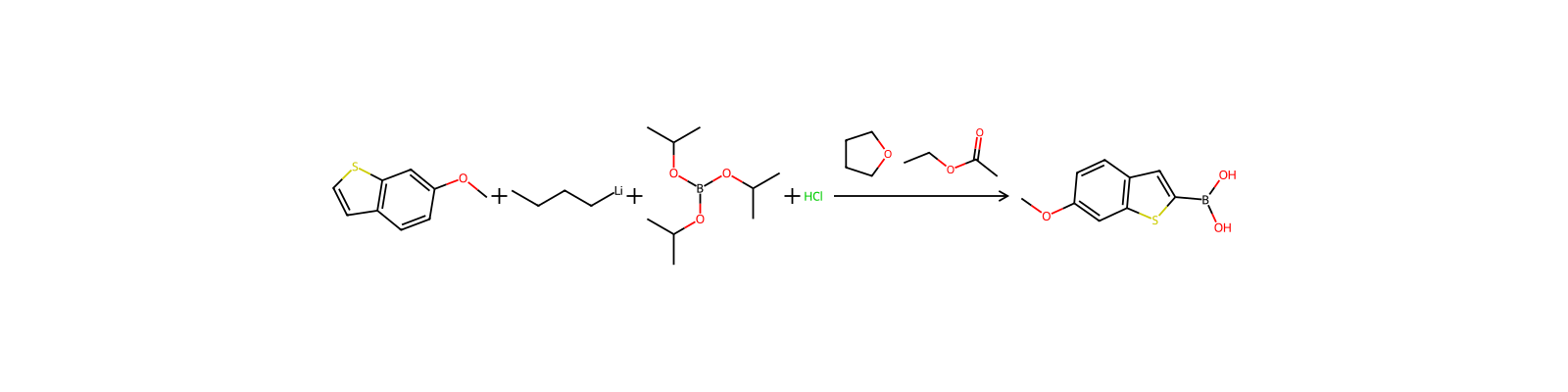
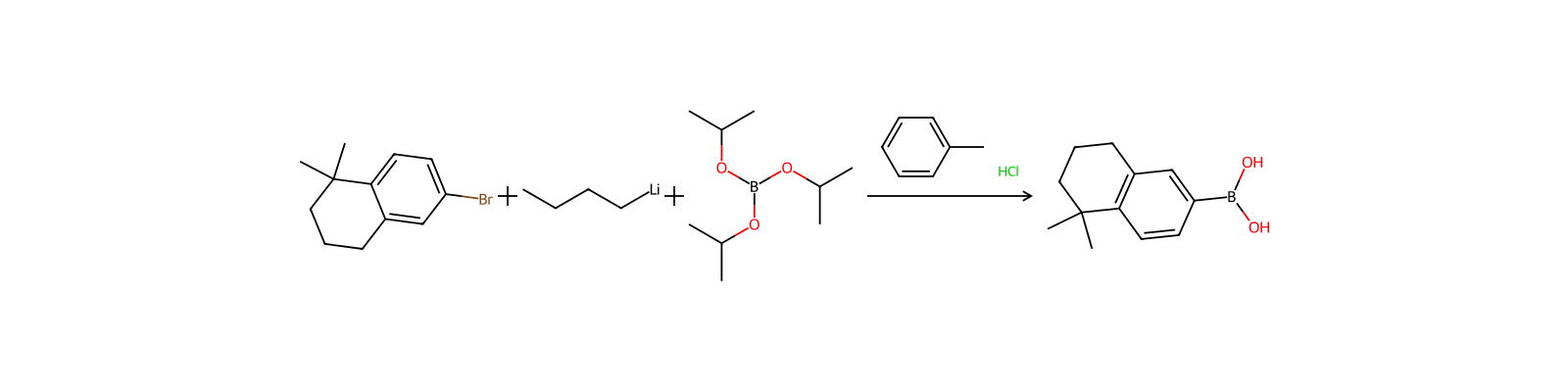
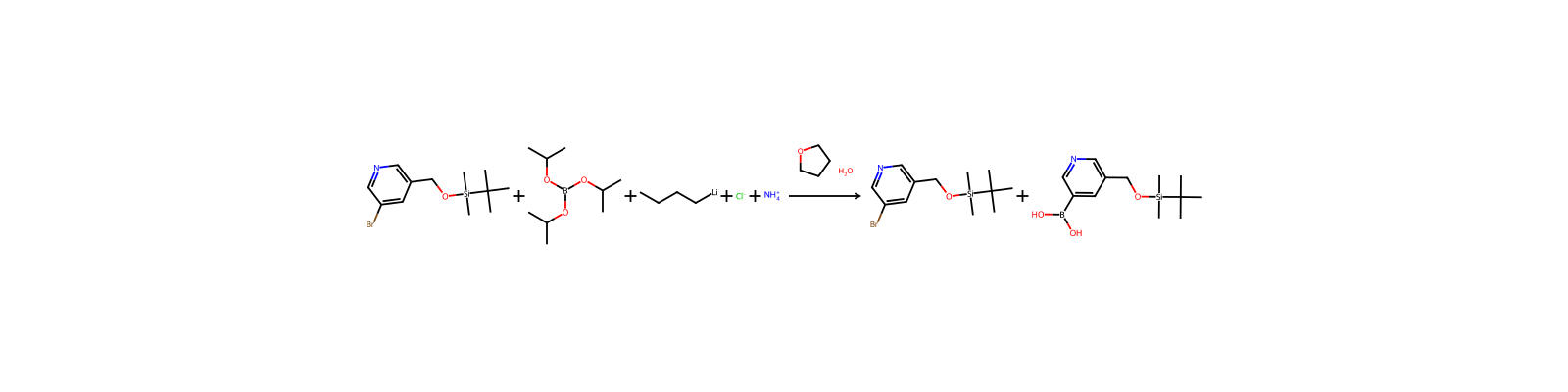
UsesTriisopropyl borate is used as reagent in Pd-catalyzed coupling reaction with aryl halides such as Suzuki reaction. It is used as a reagent for the preparation of the boronic acids and esters; as a Lewis acid catalyst and involved in the ortho-borylation of 1-substituted naphthalenes. Furthermore, it plays an important role as a catalyst for the production of resins, waxes, paints and varnishes.
General DescriptionA colorless liquid. Flash point 93°F. Less dense than water and insoluble in water. Vapors heavier than air. Used to make other chemicals.
Upstream & downstream products
Downstream products
Suppliers50 total
国药集团化学试剂有限公司86-21-63210123 · [email protected]
梯希爱(上海)化成工业发展有限公司021-67121386 · [email protected]
衢州润东化工有限公司0570-8789886 18892685668 · [email protected]
上海阿拉丁生化科技股份有限公司400-6206333 13167063860 · [email protected]
爱斯特(成都)生物制药股份有限公司+86-28-85122536 85324413 · [email protected]
北京安司莫森技术有限公司010-82954736 13391601435 · [email protected]
科瑞迪化学400-821-5857 021-64326257 · [email protected]
Syntechem Co.,Ltd[email protected]
上海迈瑞尔生化科技有限公司4006356688 18621169109 · [email protected]
上海铭熠医药化工有限公司021-51200341 18717810934 · [email protected]
阿法埃莎(中国)化学有限公司400-6106006 · [email protected]
安耐吉化学&3A(安徽泽升科技股份有限公司)400-0056266 · [email protected]
上海瀚鸿科技股份有限公司021-54306202 13764082696 · [email protected]
上海景颜化工科技有限公司13817811078 · [email protected]
嘉兴市艾森化工有限公司0573-85285100 18627885956 · [email protected]
池州捷峰生物科技有限公司0566-8928158 · [email protected]
上海隆盛化工有限公司58099637 13585536065 · [email protected]
合肥天健化工有限公司551-65418679 15856988503;15837135945 · [email protected]
上海忆嵘生物科技有限公司18049974220 · [email protected]
上海三牧化工技术有限公司021-38681880 13817889927
玛雅试剂+86 (573) 82222445 (0)18006601000 452520369 · [email protected]
四川库利南科技有限公司400-1166-196 18981987031 · [email protected]
天津希恩思生化科技有限公司400 638 7771 · [email protected]
艾科试剂4008-755-333 18080918076 · [email protected]
上海思域化工科技有限公司86-21-34053660 · [email protected]
赛默飞世尔科技(中国)有限公司800-810-5118 · [email protected]
北京伊诺凯科技有限公司400-810-7969 010-59572699 · [email protected]
上海纳谦化学科技有限公司13598610367 0373-7129549 · [email protected]
Wuhan NCE Biomedical Co.,Ltd.4000-027-021 |24 +86-13986109188 | +86-15623472865 | +81-08033611988
TCI AMERICA800-4238616 · [email protected]
TOKYO CHEMICAL INDUSTRY CO., LTD.03-36680489 · [email protected]
TCI Europe320-37350700 · [email protected]
上海贤鼎生物科技有限公司4009209199 · [email protected]
天津思博宁医药科技有限公司0086-22-60330256
上海卓锐化工有限公司021-69180038
深圳康特腾科技有限公司86-0755-86635001 · [email protected]
越林试剂021-62960152 · [email protected]
Clearsynth Labs Limited+91-22-26355700 · [email protected]
淄博爱肯新材料科技有限公司0533-4915568 18653327685 · [email protected]
上海湄水化工科技有限公司021-60549325 18616193163
上海将来实业股份有限公司021-61552785 · [email protected]
HBCChem, Inc.+1-510-219-6317 · [email protected]
日照力德士化工有限公司010-51268198 · [email protected]
郑州阿尔法化工有限公司0371-53732842 15981811963 · [email protected]
美岚实业(上海)有限公司021-58958189 · [email protected]
上海石洋化工有限公司021-56795766 · [email protected]
上海爱蝶实业有限公司021-58957966 18930537195 · [email protected]
广拓化学(上海)有限公司021-60899189-8001 18918189673 · [email protected]
雷丁试剂0510-85629785 18013409632 · [email protected]
上海御略医药科技有限公司021-60345187 13671753212 · [email protected]
Related reactions
1,375 records


Linked notes
Loading…