HomeMCPWorkbenchSkills
HomeWorkbenchNotificationsMe
llms.txt · MCP GuidePrivacy Policy · Terms of Service · Supportv1.8.0
  1. Home
  2. /Compound

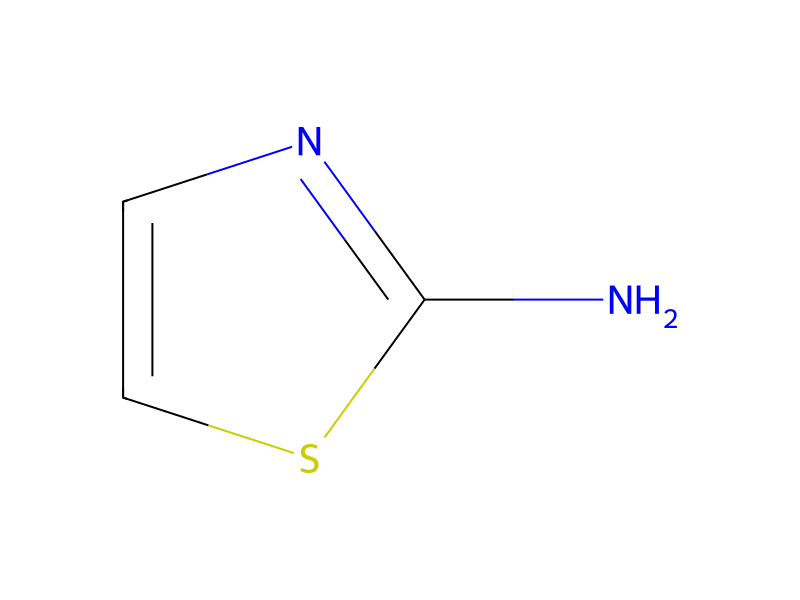
2-Aminothiazole

HCID 2155
New noteNew reactionRequest quotes
Print preview
Basic informationOverviewNames & identifiersPropertiesSafety & regulationChemistry & industryRelated reactionsCompound notes
Substructure searchFind similar structures

Basic information

CAS
96-50-4
Standard SMILES
Nc1nccs1
InChIKey
RAIPHJJURHTUIC-UHFFFAOYSA-N
Molecular formula
C3H4N2S
Average molar mass
100.14 g/mol
Monoisotopic mass
100.00951931

Overview

2-aminothiazole appears as light brown crystals or brown granular solid. (NTP, 1992)

Names & identifiers

Preferred name
2-Aminothiazole
IUPAC
1,3-thiazol-2-amine
English name
2-Aminothiazole
Molecular formula
C3H4N2S
Molecular weight
100.14

Names & synonyms

2-AMINOTHIAZOLEaminothiazole96-50-42-ThiazolamineAbadole2-ThiazolylamineBasedolAbadol2-ThiazylamineAminothiazolAminotiazol4-Thiazolin-2-onimine
Show more names
1,3-Thiazol-2-amine2-Amino-1,3-thiazolecp1585
AminothiazolumThiazole, 2-amino-AminotiazoloUSAF EK-P-5501RP 2921DTXSID5024508NSC-19005K8WKN668K

Database identifiers

CAS
96-50-4
PubChem CID
2155
DTXSID
DTXSID5024508
ChEMBL
CHEMBL344760
ChEBI
CHEBI:40782
UNII
5K8WKN668K
EC Number
202-511-6
Nikkaji
J3.972A

Properties

Computed structural properties

XLogP
0.4
Topological polar surface area
67.2 Ų
Hydrogen bond donors
1
Hydrogen bond acceptors
3
Rotatable bonds
0
Heavy atoms
6
Formal charge
0
Complexity
48.1

Experimental & physicochemical properties

SpringerMaterials PropertiesChemical shift
LogP0.38
Solubilityless than 1 mg/mL at 68 °F (NTP, 1992)
Boiling PointDecomposes (NTP, 1992)
Melting Point194 °F (NTP, 1992)
Physical Description2-aminothiazole appears as light brown crystals or brown granular solid. (NTP, 1992)
Collision Cross Section · 2 items

117.2 Ų [M+H]+ [CCS Type: TW; Method: calibrated with polyalanine and drug standards]

141.48 Ų [M+K]+ [CCS Type: TW; Method: calibrated with polyalanine and drug standards]

Autoignition Temperature212 °F after 3.5 hours (NTP, 1992)

Physicochemical properties

Safety & regulation

Safety information is for reference only and does not replace the supplier’s Safety Data Sheet (SDS), applicable regulations, or professional assessment.

GHS classification

GHS Classification · 4 items

Warning

H302 (100%): Harmful if swallowed [Warning Acute toxicity, oral]

P261, P264, P264+P265, P270, P271, P280, P301+P317, P304+P340, P305+P351+P338, P319, P330, P337+P317, P403+P233, P405, and P501 (click each P-code to see the statement)

Aggregated GHS information provided per 87 reports by companies from 12 notifications to the ECHA C&L Inventory. Each notification may be associated with multiple companies.

Hazard information

Regulatory Information · 3 items

Chemical: 2-Thiazolamine

REACH registered substance: Aminothiazole (EC: 202-511-6)

2-Aminothiazole: Does not have an individual approval but may be used under an appropriate group standard

Fire HazardsFlash point data for this chemical are not available; however, it is probably combustible. (NTP, 1992)
Health HazardsSYMPTOMS: Symptoms of exposure to this compound may include nausea, headache and weakness. It may also cause irritation.
Reactive GroupAmines, Phosphines, and Pyridines
Reactivity Profile2-AMINOTHIAZOLE reacts violently when nitrated with nitric or nitric-sulfuric acids. It is also incompatible with strong oxidizing agents, strong acids, acid chlorides and acid anhydrides. (NTP, 1992)
Air and Water ReactionsInsoluble in water.
Hazard Classes and CategoriesAcute Tox. 4 (100%)

Chemistry & industry

Uses & manufacturing

General Manufacturing Information2-Thiazolamine: ACTIVE
Applications · 4 items

Usesantithyroid agent

UsesUsually used in the synthesis of 2-aminothiazole-modified silica gel,and aslo used in Ulmann coupling with 2-chlorobenzoic acids mediated by ultrasonic irradiation.

Uses2-Aminothiazole is a heterocyclic amine and is the beginning reagent for the synthesis of many pharmaceutical and agricultural related compounds.

General DescriptionLight brown crystals or brown granular solid.

Upstream & downstream products

Upstream raw materials

ChloroacetaldehydeThiourea

Downstream products

2-Chloro-5-nitrothiazoleethyl 2-(2-aminothiazol-5-ylthio)acetate2-Amino-((1-carboxy-1-methyl ethoxy)imino)-4-thiazoleacetic acidCationic Violet 3BL3-(-Hydroxyphenethyl)-2-imino thiazolidineBASIC RED 291,3-Thiazole-2-carbaldehyde

Related reactions

1,965 records
New reaction record
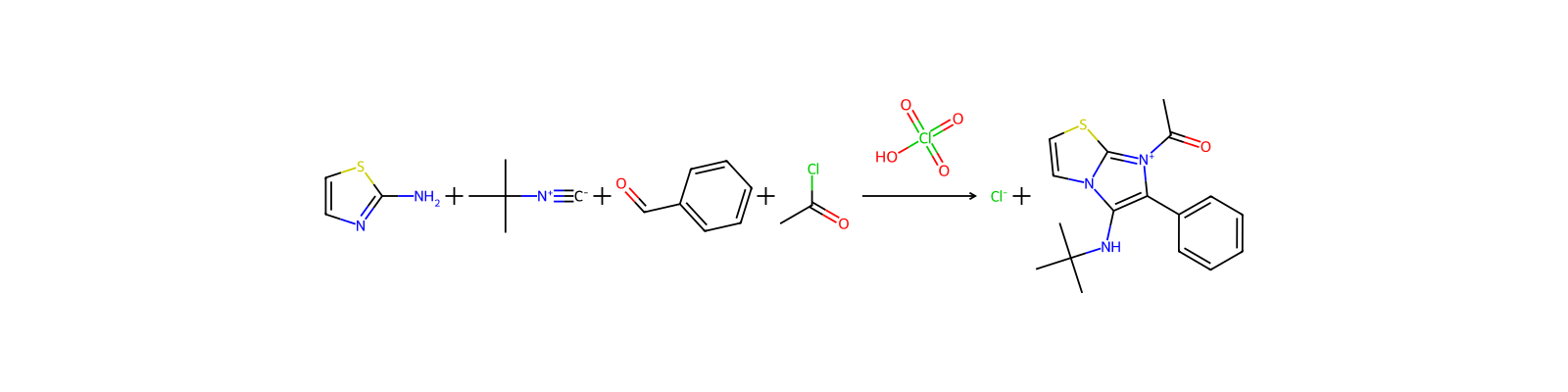
HRID 5149 reaction equation
HRID 5149As catalystAs reactantuspto-grants-1993_09
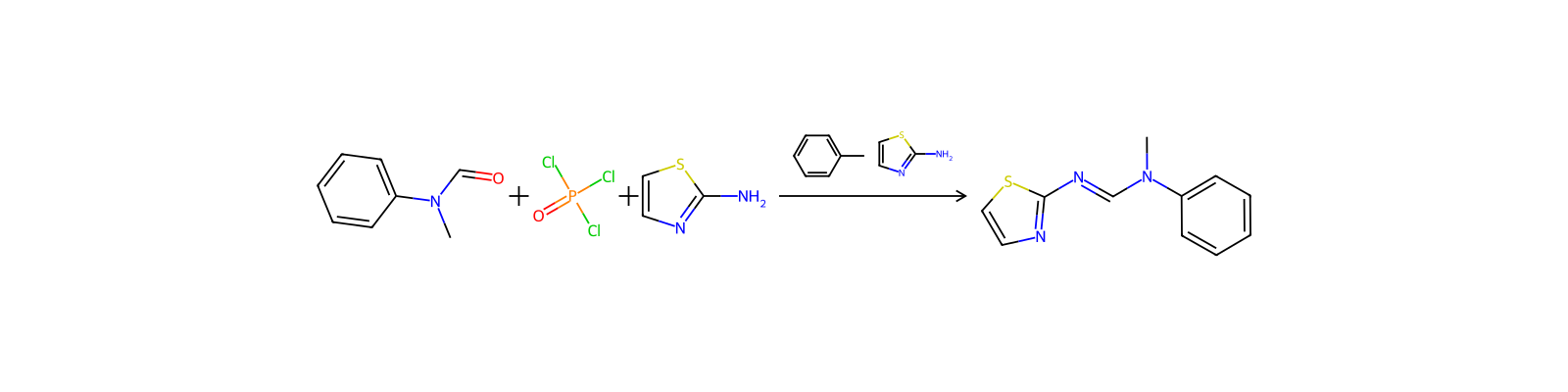
HRID 7510 reaction equation
HRID 7510As reactantuspto-grants-2006_08
HRID 7528 reaction equation
HRID 7528As reactantuspto-grants-2006_08
HRID 14989 reaction equation
HRID 14989As reactantuspto-grants-2010_06
HRID 20487 reaction equation
HRID 20487As reactantuspto-grants-2010_06
HRID 20600 reaction equation
HRID 20600As reactantuspto-grants-2010_06
HRID 20602 reaction equation
HRID 20602As reactantuspto-grants-2010_06
HRID 26885 reaction equation
HRID 26885As reactantuspto-grants-1979_04
Page 1 of 246

Compound notes

Loading…

On this pageBasic informationOverviewNames & identifiersPropertiesSafety & regulationChemistry & industryRelated reactionsCompound notes
More actions
New noteNew reactionRequest quotes
Melting point
91 · 91-93 °C (lit.)
Boiling point
117 °C · 117 °C (15.002 mmHg)
Density
1.241 · 1.241 (estimate)
bulk density
600 kg/m3 · 600kg/m3
vapor pressure
1 hPa · <1 hPa (20 °C)
refractive index
1.53 · 1.5300 (estimate)
Flash point
117 °C/15mm · 117°C/15mm
storage temp.
30 °C · Store below +30°C.
solubility
1 M · 1 M HCl: soluble50mg/mL, clear (dark yellow-brown)
pka
5.36 · 5.36(at 20℃)
form
Crystalline Powder, Grains, Lumps or Flakes
color
Brown
PH
9.6 · 9.6 (100g/l, H2O, 20℃)
Water Solubility
100 g/L · 100 g/L (20 ºC)
Merck
14 · 14,479
BRN
105738 · 105738
InChI
1S/C3H4N2S/c4-3-5-1-2-6-3/h1-2H,(H2,4,5)
InChIKey
RAIPHJJURHTUIC-UHFFFAOYSA-N
SMILES
[s]1[c]([nH]cc1)=N
LogP
0.38 · 0.380
CAS DataBase Reference
96 · 96-50-4(CAS DataBase Reference)
EWG's Food Scores
1 · 1
FDA UNII
5 K8WKN668K · 5K8WKN668K
NIST Chemistry Reference
2 · 2-Aminothiazole(96-50-4)
EPA Substance Registry System
2 · 2-Aminothiazole (96-50-4)
UNSPSC Code
12352116 · 12352116
NACRES
22 · NA.22
Symbol(GHS)
7 · GHS07
Signal word
Warning
Hazard statements
302 · H302
Precautionary statements
301 · P301+P312+P330
Hazard Codes
Xn,Xi
Risk Statements
22 · 22-36-36/37-20/21/22
Safety Statements
26 · 26-36/37-39-36
WGK Germany
3 · 3
RTECS
2100000 · XJ2100000
F
8 · 8-9
Autoignition Temperature
600 °C · 600 °C
Hazard Note
Irritant
TSCA
TSCA listed
HS Code
29341000 · 29341000
Storage Class
11 · 11 - Combustible Solids
Hazard Classifications
4 Oral · Acute Tox. 4 Oral
Toxicity
50 orally · LD50 orally in Rabbit: 480 mg/kg
REACH Registrations
Active

Safety & protection

Fire FightingFires involving this material can be controlled with a dry chemical, carbon dioxide or Halon extinguisher. (NTP, 1992)
First Aid · 1 item

EYES: First check the victim for contact lenses and remove if present. Flush victim's eyes with water or normal saline solution for 20 to 30 minutes while simultaneously calling a hospital or poison control center. Do not put any ointments, oils, or medication in the victim's eyes without specific instructions from a physician. IMMEDIATELY transport the victim after flushing eyes to a hospital even if no symptoms (such as redness or irritation) develop.

Nonfire Spill Response · 1 item

SMALL SPILLS AND LEAKAGE: Should a spill occur while you are handling this chemical, FIRST REMOVE ALL SOURCES OF IGNITION, then you should dampen the solid spill material with 60-70% ethanol and transfer the dampened material to a suitable container. Use absorbent paper dampened with 60-70% ethanol to pick up any remaining material. Seal the absorbent paper, and any of your clothes, which may be contaminated, in a vapor-tight plastic bag for eventual disposal. Solvent wash all contaminated surfaces with 60-70% ethanol followed by washing with a soap and water solution. Do not reenter the contaminated area until the Safety Officer (or other responsible person) has verified that the area has been properly cleaned.

Personal Protective Equipment (PPE) · 1 item

RECOMMENDED RESPIRATOR: Where the neat test chemical is weighed and diluted, wear a NIOSH-approved half face respirator equipped with an organic vapor/acid gas cartridge (specific for organic vapors, HCl, acid gas and SO2) with a dust/mist filter. (NTP, 1992)

Safety data

F
8-9
wgk
3
tsca
TSCA listed
rtecs
XJ2100000
hs_code
29341000
Toxicity
LD50 orally in Rabbit: 480 mg/kg
risk_code
22-36-36/37-20/21/22
Signal word
Warning
Symbol(GHS)
GHS07
hazard_code
Xn,Xi
hazard_note
Irritant
safety_code
26-36/37-39-36
Storage Class
11 - Combustible Solids
Hazard statements
H302
REACH Registrations
Active
Hazard Classifications
Acute Tox. 4 Oral
Autoignition Temperature
600 °C
Precautionary statements
P301+P312+P330
2-Amino-5-nitrothiazole
2-Amino-5-bromothiazole
2-Amino-5-bromothiazole monohydrobromide
Imidazo[2,1-b][1,3]thiazole-6-carboxylic acid
Nitazoxanide Impurity
Oxazole-2-amine
CHEMBRDG-BB 4024592
4,5,6,7-tetrachloro-2-(1,3-thiazol-2-yl)isoindole-1,3-dione
2,2,2-trichloro-N-1,3-thiazol-2-ylacetamide
2-Pyridinamine, N-(5-bromo-2-thiazolyl)-
1H-Benz[de]isoquinoline-1,3(2H)-dione,2-(2-thiazolyl)-

Additional notes

DefinitionChEBI: A primary amino compound that is 1,3-thiazole substituted by an amino group at position 2.