
Acetovanillone
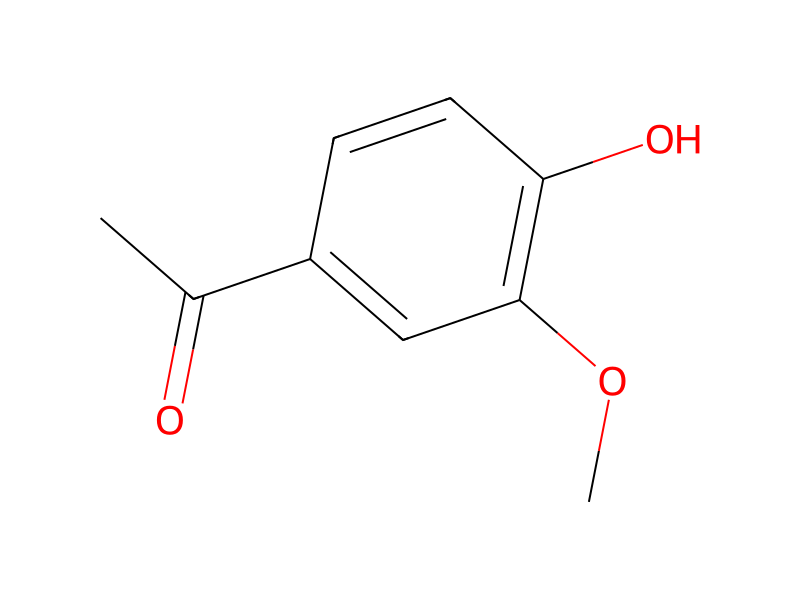
Basic information
- CAS
498-02-2- Standard SMILES
COc1cc(C(C)=O)ccc1O- InChIKey
DFYRUELUNQRZTB-UHFFFAOYSA-N- Molecular formula
- C9H10O3
- Average molar mass
- 166.17 g/mol
- Monoisotopic mass
- 166.06299418
Overview
Apocynin is an aromatic ketone that is 1-phenylethanone substituted by a hydroxy group at position 4 and a methoxy group at position 3. It has a role as a non-steroidal anti-inflammatory drug, a non-narcotic analgesic, an antirheumatic drug, a peripheral nervous system drug, an EC 1.6.3.1. [NAD(P)H oxidase (H2O2-forming)] inhibitor and a plant metabolite. It is a member of acetophenones, a methyl ketone and an aromatic ketone.
Names & identifiers
- Preferred name
- Acetovanillone
- IUPAC
- 1-(4-hydroxy-3-methoxyphenyl)ethanone
- English name
- Acetovanillone
- Molecular formula
- C9H10O3
- Molecular weight
- 166.17
Names & synonyms
Acetovanilloneapocynin498-02-24'-Hydroxy-3'-methoxyacetophenone1-(4-Hydroxy-3-methoxyphenyl)ethanoneAcetoguaiaconeApocynine4-Acetyl-2-methoxyphenolAcetoguaiacon1-(4-hydroxy-3-methoxyphenyl)ethan-1-oneEthanone, 1-(4-hydroxy-3-methoxyphenyl)-4-Hydroxy-3-methoxyphenyl methyl ketone
Show more names
4-HYDROXY-3-METHOXYACETOPHENONEACETOVANILLONApocynin (Acetovanillone)3'-METHOXY-4'-HYDROXYACETOPHENONE
B6J7B9UDTRNSC-209524DTXSID7060097CHEBI:2781RefChem:552432DTXCID1040740207-854-5Acetovanilone
Database identifiers
- CAS
498-02-2- PubChem CID
- 2214
- DTXSID
DTXSID7060097- ChEMBL
CHEMBL346919- ChEBI
CHEBI:2781
Properties
Computed structural properties
- XLogP
- 0.5
- Topological polar surface area
- 46.5 Ų
- Hydrogen bond donors
- 1
- Hydrogen bond acceptors
- 3
- Rotatable bonds
- 2
- Heavy atoms
- 12
- Formal charge
- 0
- Complexity
- 167
Experimental & physicochemical properties
DrugsPharmaceuticals -> Listed in ZINC15
FragrancesFragrance Ingredient (4'-Hydroxy-3'-methoxyacetophenone) -> IFRA transparency List
Flavoring AgentsEU Flavoring substances
Endocrine DisruptorsPotential endocrine disrupting compound
Physicochemical properties
- Melting point
- 112 · 112-115 °C (lit.)
- Boiling point
- 263 · 263-265 °C/17 mmHg (lit.)
- Density
- 1.1708 · 1.1708 (rough estimate)
- refractive index
- 1.5101 · 1.5101 (estimate)
- FLAVIS Number
- 7.142 · 07.142 | Acetovanillone
- Flash point
- 230 °F · >230 °F
- storage temp.
- Sealed in dry,Room Temperature
- solubility
- Acetonitrile (Slightly), Chloroform (Slightly), Ethyl Acetate (Slightly), Methan
Safety & regulation
Safety information is for reference only and does not replace the supplier’s Safety Data Sheet (SDS), applicable regulations, or professional assessment.
GHS classification
GHS Classification
This chemical does not meet GHS hazard criteria for 65.7% (94 of 143) of all reports.
Warning
H315 (34.3%): Causes skin irritation [Warning Skin corrosion/irritation]
P261, P264, P264+P265, P271, P280, P302+P352, P304+P340, P305+P351+P338, P319, P321, P332+P317, P337+P317, P362+P364, P403+P233, P405, and P501 (click each P-code to see the statement)
Aggregated GHS information provided per 143 reports by companies from 8 notifications to the ECHA C&L Inventory. Each notification may be associated with multiple companies.
Hazard information
Regulatory Information
Chemical: Ethanone, 1-(4-hydroxy-3-methoxyphenyl)-
Commission Regulation (EC) No 1565/2000 (Repealed by Com. Implementing Reg. (EU) No 872/2012)
Ethanone, 1-(4-hydroxy-3-methoxyphenyl)-: Does not have an individual approval but may be used under an appropriate group standard
Hazard Classes and CategoriesSkin Irrit. 2 (34.3%)
Safety data
- PPE
- dust mask type N95 (US), Eyeshields, Gloves
- wgk
- 2
- tsca
- TSCA listed
- rtecs
- AM8800000
- hs_code
- 2914509090
- risk_code
- 36/37/38
- Signal word
- Warning
- Symbol(GHS)
- GHS07
- hazard_code
- Xi
- safety_code
- 26-36
Chemistry & industry
Pharmacology
MeSH Pharmacological Classification
Anti-inflammatory agents that are non-steroidal in nature. In addition to anti-inflammatory actions, they have analgesic, antipyretic, and platelet-inhibitory actions. They act by blocking the synthesis of prostaglandins by inhibiting cyclooxygenase, which converts arachidonic acid to cyclic endoperoxides, precursors of prostaglandins. Inhibition of prostaglandin synthesis accounts for their analgesic, antipyretic, and platelet-inhibitory actions; other mechanisms may contribute to their anti-inflammatory effects.
Naturally occurring or synthetic substances that inhibit or retard oxidation reactions. They counteract the damaging effects of oxidation in animal tissues.
Compounds or agents that combine with an enzyme in such a manner as to prevent the normal substrate-enzyme combination and the catalytic reaction.
Uses & manufacturing
Use ClassificationFragrance Ingredients
General Manufacturing InformationEthanone, 1-(4-hydroxy-3-methoxyphenyl)-: ACTIVE
Applications
Uses4'-Hydroxy-3'-methoxyacetophenone is used as an inhibitor of nicotinamide adenine dinucleotide phosphate (NADPH) oxidase, which is an enzyme responsible for reactive oxygen species production. It is also useful in the treatment of various inflammatory diseases and atherosclerosis. Further, it shows an anti-inflammatory activity and improves endothelial function by reducing oxidative stress. In addition to this, it is used for studying nitric oxide regulated processes in plants.
UsesAcetovanillone is an inhibitor of NADPH oxidase (an enzyme responsible for reactive oxygen species production) and is useful in the treatment of various inflammatory diseases.
General DescriptionAcetovanillone is an aromatic plant ketone, which is a selective inhibitor of NADPH oxidase. It is mainly secreted in the urine of mammals as the corresponding glucuronide conjugate.
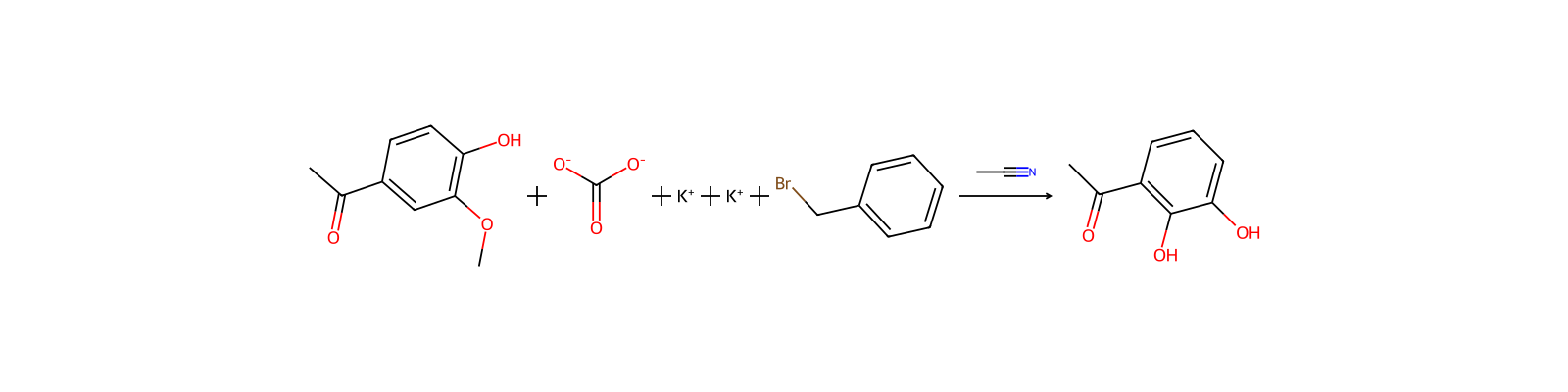
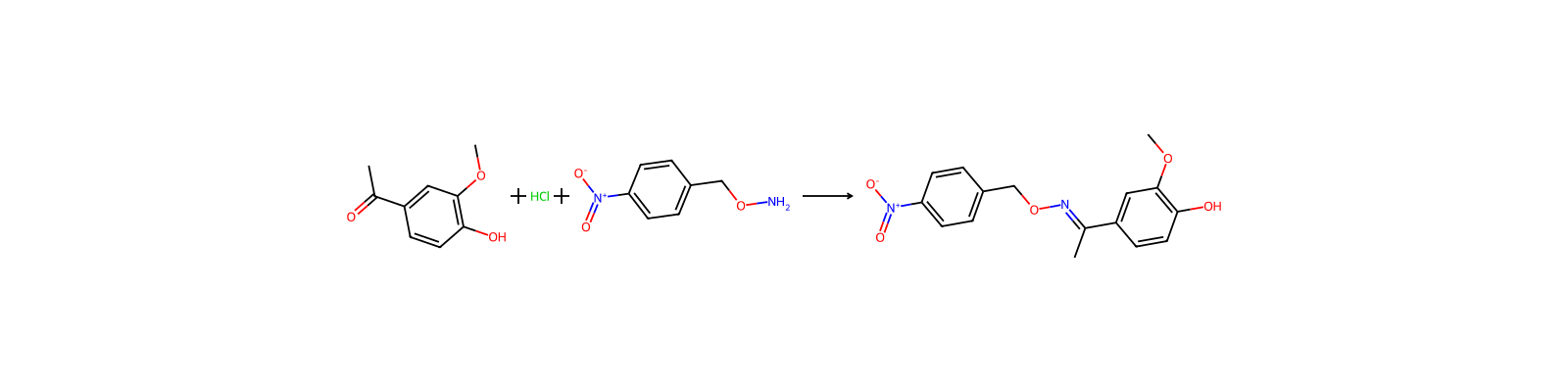
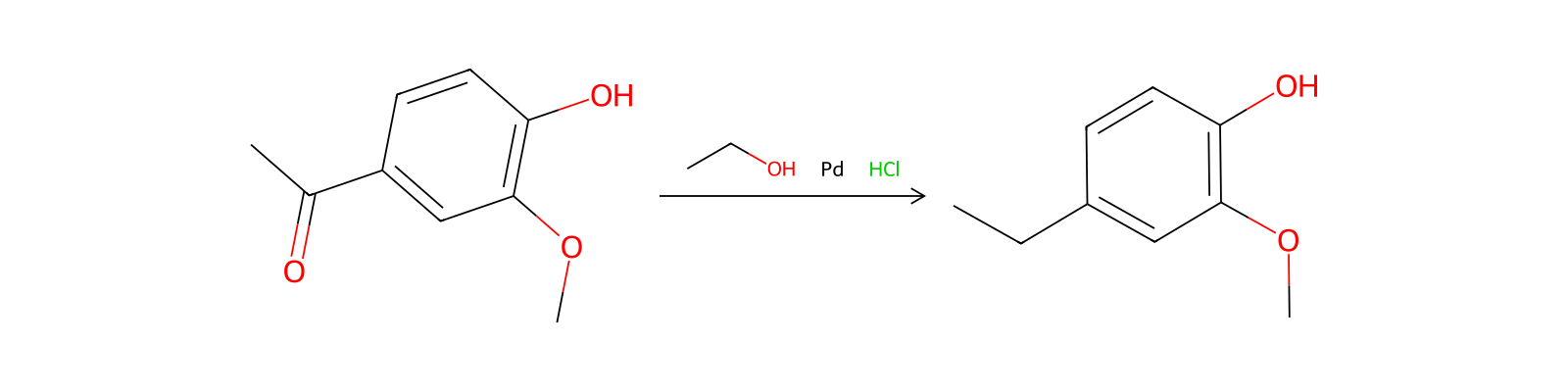
Related reactions
225 records


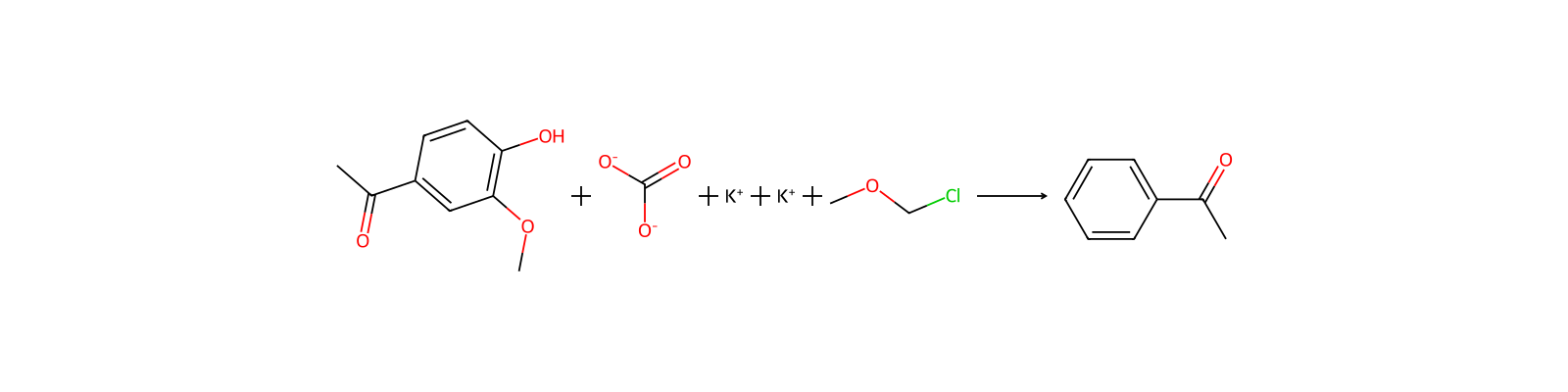

Compound notes
Loading…