
Completing data — usually done within a minute

Basic information
- CAS
474-86-2- Standard SMILES
C[C@]12CC[C@H]3C(=CCc4cc(O)ccc43)[C@@H]1CCC2=O- InChIKey
WKRLQDKEXYKHJB-HFTRVMKXSA-N- Molecular formula
- C18H20O2
- Average molar mass
- 268.3 g/mol
- Monoisotopic mass
- 268.14632988
Names & identifiers
- Preferred name
- Equilin
- IUPAC
- (9S,13S,14S)-3-hydroxy-13-methyl-9,11,12,14,15,16-hexahydro-6H-cyclopenta[a]phenanthren-17-one
Names & synonyms
equilin474-86-27-DehydroestroneDihydroequilenin3-HYDROXYESTRA-1,3,5(10),7-TETRAEN-17-ONE1,3,5,7-Estratetraen-3-ol-17-oneDTXSID7047433Estra-1,3,5(10),7-tetraen-17-one, 3-hydroxy-NSC-10971Equilin (USP)Equilin [USP]08O86EX0J4
Show more names
DTXCID5027433CHEBI:42309NSC10971DTXSID90859387RefChem:591016DTXCID90210237(1S,11S,15S)-5-hydroxy-15-methyltetracyclo(8.7.0.02,7.011,15)heptadeca-2(7),3,5,9-tetraen-14-one207-488-6
Database identifiers
- CAS
474-86-2- PubChem CID
- 223368
- DTXSID
DTXSID7047433- ChEMBL
CHEMBL323533- ChEBI
CHEBI:42309- UNII
- 08O86EX0J4
- EC Number
- 207-488-6
- Nikkaji
- J5.967F
Properties
Computed structural propertiesFilling in
- XLogP
- 2.9
- Topological polar surface area
- 37.3 Ų
- Hydrogen bond donors
- 1
- Hydrogen bond acceptors
- 2
- Rotatable bonds
- 0
- Heavy atoms
- 20
- Formal charge
- 0
- Complexity
- 466
Experimental & physicochemical properties
Solubility1.41
Melting Point239
Kovats Retention Index2745.3;2765.4;2766.1
Collision Cross Section
172.2 Ų [M-H]- [CCS Type: DT; Buffer gas: N2; Ionization: ESI-; Dataset: TOXCAST; Source Identifier: DTXSID7047433]
157.92 Ų [M+H]+ [CCS Type: TW; Method: calibrated with polyalanine and drug standards];153.17 Ų [M+H-H2O]+ [CCS Type: TW; Method: calibrated with polyalanine and drug standards];160.72 Ų [M+Na]+ [CCS Type: TW; Method: calibrated with polyalanine and drug standards]
Safety & regulation
GHS classification
GHS Classification
Danger
H302 (20.5%): Harmful if swallowed [Warning Acute toxicity, oral];H312 (20.5%): Harmful in contact with skin [Warning Acute toxicity, dermal];H332 (20.5%): Harmful if inhaled [Warning Acute toxicity, inhalation];H351 (98.8%): Suspected of causing cancer [Warning Carcinogenicity];H360 (32.5%): May damage fertility or the unborn child [Danger Reproductive toxicity];H361 (66.3%): Suspected of damaging fertility or the unborn child [Warning Reproductive toxicity];H362 (32.5%): May cause harm to breast-fed children [Reproductive toxicity, effects on or via lactation]
P203, P260, P261, P263, P264, P270, P271, P280, P301+P317, P302+P352, P304+P340, P317, P318, P321, P330, P362+P364, P405, and P501 (click each P-code to see the statement)
Aggregated GHS information provided per 83 reports by companies from 6 notifications to the ECHA C&L Inventory. Each notification may be associated with multiple companies.;Information may vary between notifications depending on impurities, additives, and other factors. The percentage value in parenthesis indicates the notified classification ratio from companies that provide hazard codes. Only hazard codes with percentage values above 10% are shown. For more detailed information, please visit ECHA C&L website.
Hazard information
Hazard Classes and CategoriesAcute Tox. 4 (20.5%);Acute Tox. 4 (20.5%);Acute Tox. 4 (20.5%);Carc. 2 (98.8%);Repr. 1A (32.5%);Repr. 2 (66.3%);Lact. (32.5%)
Toxicology
Exposure RoutesWell absorbed.
Toxicity Summary
Estrogens enter the cells of responsive tissues (e.g., female organs, breasts, hypothalamus, pituitary) where they interact with a protein receptor, subsequently increasing the rate of synthesis of DNA, RNA, and some proteins. Estrogens decrease the secretion of gonadotropin-releasing hormone by the hypothalamus, reducing the secretion of follicle-stimulating hormone (FSH) and luteinizing hormone (LH) from the pituitary.
Carcinogen ClassificationNo indication of carcinogenicity to humans (not listed by IARC).
USGS Health-Based Screening Levels for Evaluating Water-Quality
Equilin
Hormone
Smith, C.D. and Nowell, L.H., 2024. Health-Based Screening Levels for evaluating water-quality data (3rd ed.). DOI:10.5066/F71C1TWP
Chemistry & industry
Pharmacology
Protein Binding90% bound to plasma proteins
Pharmacodynamics
Equilin is a component of Premarin (conjugated estrogens), a mixture of the water soluble salts of sulfate esters from estrone, equilin, 17 alpha-dihydroequilin, and other related steroids, may be derived from pregnant equine urine or yam and soy plants. Estrogens are important in the development and maintenance of the female reproductive system and secondary sex characteristics. They promote growth and development of the vagina, uterus, and fallopian tubes, and enlargement of the breasts. Indirectly, they contribute to the shaping of the skeleton, maintenance of tone and elasticity of urogenital structures, changes in the epiphyses of the long bones that allow for the pubertal growth spurt and its termination, growth of axillary and pubic hair, and pigmentation of the nipples and genitals. Decline of estrogenic activity at the end of the menstrual cycle can bring on menstruation, although the cessation of progesterone secretion is the most important factor in the mature ovulatory cycle. However, in the preovulatory or nonovulatory cycle, estrogen is the primary determinant in the onset of menstruation. Estrogens also affect the release of pituitary gonadotropins. The pharmacologic effects of conjugated estrogens are similar to those of endogenous estrogens.
Mechanism of Action
Estrogens enter the cells of responsive tissues (e.g., female organs, breasts, hypothalamus, pituitary) where they interact with a protein receptor, subsequently increasing the rate of synthesis of DNA, RNA, and some proteins. Estrogens decrease the secretion of gonadotropin-releasing hormone by the hypothalamus, reducing the secretion of follicle-stimulating hormone (FSH) and luteinizing hormone (LH) from the pituitary.
Metabolism/Metabolites
Hepatic
Hepatic.
Absorption, Distribution and ExcretionWell absorbed.
Uses & manufacturing
Uses
For the treatment of moderate to severe vasomotor symptoms associated with the menopause, atrophic vaginitis, osteoporosis, hypoestrogenism due to hypogonadism, castration, primary ovarian failure, breast cancer (for palliation only), and Advanced androgen-dependent carcinoma of the prostate (for palliation only)
Suppliers18 total
广州隽唐科技有限公司020-36607679 13502246435 · [email protected]
武汉易泰科技有限公司上海分公司18930552037 · [email protected]
梯希爱(上海)化工贸易有限公司021-61109150 · [email protected]
上海柯维化学技术有限公司021-64609169 18901607656 · [email protected]
斯百全化学(上海)有限公司021-021-021-67601398-809-809-809 15221380277 · [email protected]
江苏艾康生物医药研发有限公司025-66113011 13913916777 · [email protected]
深圳振强药物研发有限公司0755-66853366 13670046396 · [email protected]
上海麦克林生化科技股份有限公司15221275939 15221275939 · [email protected]
Sigma-Aldrich西格玛奥德里奇(上海)贸易有限公司021-61415566 800-8193336 · [email protected]
珠海安哲生物科技有限公司13169972583 · [email protected]
上海昕凯医药科技有限公司21-619849051-1 18521059765 · [email protected]
上海源叶生物科技有限公司13636370518 · [email protected]
金锦乐(湖南)化学有限公司18001959627(微信同号) 18001959627 · [email protected]
武汉峰耀同辉化学制品有限公司027-87466105 15377573527 · [email protected]
深圳聚合生化科技有限公司+86-400-002-6226 · [email protected]
ChemeGen 中国18818260767 · [email protected]
北京百灵威科技有限公司18210857532 18210857532 · [email protected]
南京世洲生物科技有限公司025-85563444 15850508050 · [email protected]
Related reactions
27 records


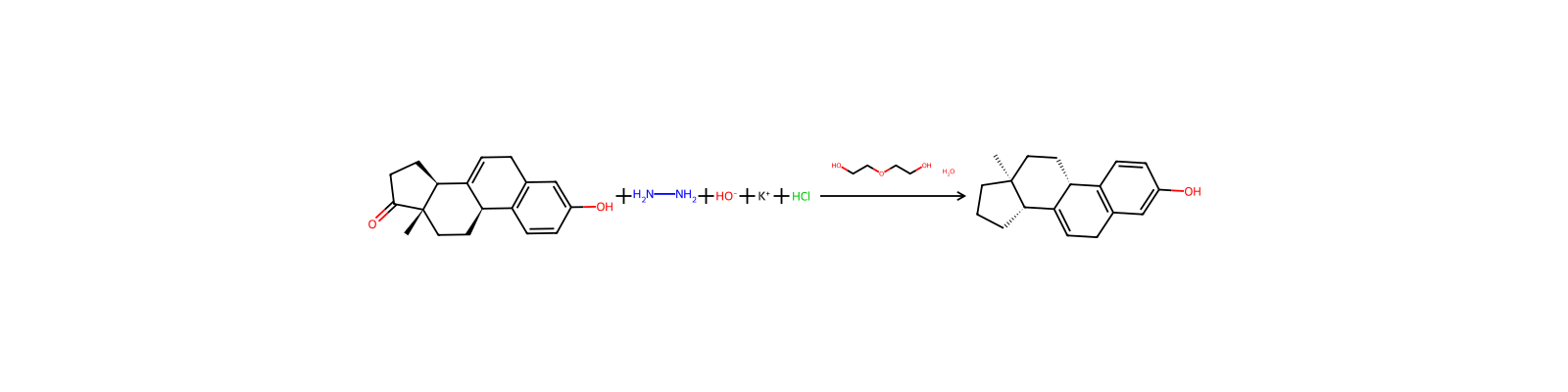


Compound notes
Loading…