
2-Pentanol
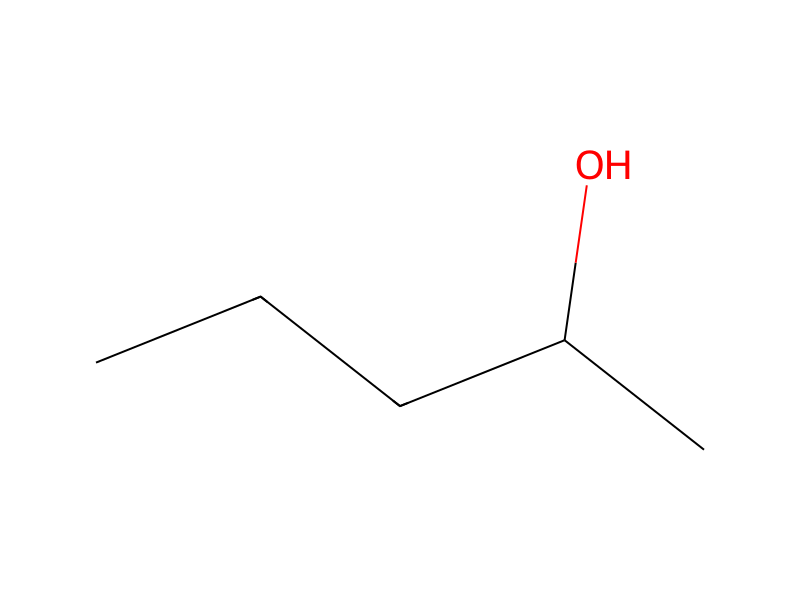
Basic information
- CAS
26184-62-3- Standard SMILES
CCCC(C)O- InChIKey
JYVLIDXNZAXMDK-UHFFFAOYSA-N- Molecular formula
- C5H12O
- Average molar mass
- 88.15 g/mol
- Monoisotopic mass
- 88.088815
Overview
Sec-amyl alcohol appears as a clear colorless liquid with a strong odor. Moderately toxic by ingestion and vapors may irritate skin and eyes. Vapors are heavier than air.
Names & identifiers
- Preferred name
- 2-Pentanol
- IUPAC
- pentan-2-ol
- English name
- (S)-(+)-2-Pentanol
- Molecular formula
- C5H12O
- Molecular weight
- 88.15
Names & synonyms
2-PENTANOLPentan-2-ol6032-29-7sec-Amyl alcoholMethylpropylcarbinolsec-Pentyl alcohol2-Pentyl alcohol1-Methyl-1-butanolMethyl propyl carbinol2-HydroxypentanePentanol-2alpha-Methylbutanol
Show more names
(S)-2-PENTANOLFEMA 3316(S)-Pentan-2-ol(S)-(-)-2-PENTANOL(+)-2-Pentanol(2S)-2-PentanolS-N-AMYL ALCOHOL(2S)-pentan-2-ol
1-Methylbutanolsec-n-Amyl alcoholIsoamyl alcohol, secondaryFEMA No. 3316DL-2-PentanolDTXSID3052721CHEBI:7751804G7050365
Database identifiers
- CAS
26184-62-3、26635-63-2、31087-44-2、50858-14-5、51000-78-3、584-02-1、6032-29-7- PubChem CID
- 22386
- DTXSID
DTXSID3052721- ChEMBL
CHEMBL45065- ChEBI
CHEBI:77518- UNII
- 04G7050365
- EC Number
- 227-907-6、256-810-1
- Nikkaji
- J9.802G
Properties
Computed structural properties
- XLogP
- 1.2
- Topological polar surface area
- 20.2 Ų
- Hydrogen bond donors
- 1
- Hydrogen bond acceptors
- 1
- Rotatable bonds
- 2
- Heavy atoms
- 6
- Formal charge
- 0
- Complexity
- 27.1
Experimental & physicochemical properties
Chemical ClassesFlammable agents - 3rd degree
SolventsSolvents -> Alcohols (<C12)
FragrancesFragrance Ingredient (2-Pentanol) -> IFRA transparency List
LogP
1.19
1.25
1.34
Food AdditivesFLAVORING AGENT OR ADJUVANT -> FDA Substance added to food
Density
0.82 (NIOSH, 2024) - Less dense than water; will float
Relative density (water = 1): 0.8
0.802-0.808
0.82
Flavoring AgentsEU Flavoring substances
Viscosity5.3 mm²/s at 20 °C
Solubility
44.6 mg/mL at 25 °C
Solubility in water, g/100ml at 20 °C: 16.6 (good)
very soluble in water; soluble in alcohol and ether
(in ethanol)
Flash Point
95 °F (NIOSH, 2024)
33 °C
(oc) 95 °F
Boiling Point
234 °F at 760 mmHg (NIOSH, 2024)
119 °C
118-119 °C
234 °F
Melting Point
-73 °C
-50 °C
Physicochemical properties
- Melting point
- -50 °C · -50 °C
- Boiling point
- 118 · 118-119 °C (lit.)
- alpha
- 13 · 13 º (c=neat)
- Density
- 0.81 g/mL · 0.81 g/mL at 25 °C (lit.)
- vapor density
- 3 · 3 (vs air)
- vapor pressure
- 3.7 · 3.7-41hPa at 20-50℃
- refractive index
- 20 · n20/D 1.406(lit.)
- Flash point
- 93 °F · 93 °F
- storage temp.
- Flammables area
- form
- clear liquid
- pka
- 15.31 · 15.31±0.20(Predicted)
- color
- Colorless to Almost colorless
- optical activity
- 25 · [α]25/D +13°, neat
- explosive limit
- 9 % · 9%
- Water Solubility
- soluble
- BRN
- 1718820 · 1718820
- InChI
- 1S/C5H12O/c1-3-4-5(2)6/h5-6H,3-4H2,1-2H3/t5-/m0/s1
- InChIKey
- JYVLIDXNZAXMDK-YFKPBYRVSA-N
- SMILES
- CCC[C@H](C)O
- LogP
- 1.2 at · 1.2 at 23℃ and pH6.3-6.6
- Surface tension
- 63.3 mN/m · 63.3mN/m at 1g/L and 20℃
- CAS DataBase Reference
- 26184 · 26184-62-3(CAS DataBase Reference)
- UNSPSC Code
- 12352001 · 12352001
- NACRES
- 22 · NA.22
- Symbol(GHS)
- 2 · GHS02,GHS07
- Signal word
- Warning
- Hazard statements
- 226 · H226-H332-H335
- Precautionary statements
- 210 · P210-P233-P240-P241-P242-P304+P340+P312
- target organs
- Respiratory system
- PPE
- Eyeshields, Faceshields, Gloves, type ABEK (EN14387) respirator filter
- Hazard Codes
- Xn,Xi,F
- Risk Statements
- 10 · 10-36/37/38-66-37-20
- Safety Statements
- 46 · 46-26-16-24/25
- RIDADR
- 1105 · UN 1105 3/PG 3
- WGK Germany
- 2 · 2
- RTECS
- 4900000 · SA4900000
- Autoignition Temperature
- 657 °F · 657 °F
- HazardClass
- 3 · 3
- PackingGroup
- III
- HS Code
- 29051990 · 29051990
- Storage Class
- 3 · 3 - Flammable liquids
- Hazard Classifications
- 4 InhalationFlam · Acute Tox. 4 InhalationFlam. Liq. 3STOT SE 3
- REACH Registrations
- Inactive
- Limited Quantities
- 5 L · 5.0 L (1.3 gallons) (liquid)
- Excepted Quantities
- Max Inner Pack (30g or 30ml) and Max Outer Pack (1Kg or 1L)
Safety & regulation
Safety information is for reference only and does not replace the supplier’s Safety Data Sheet (SDS), applicable regulations, or professional assessment.
GHS classification
GHS Classification
This chemical does not meet GHS hazard criteria for 0.6% (11 of 1753) of reports.
Warning
H226 (99.3%): Flammable liquid and vapor [Warning Flammable liquids]
P210, P233, P240, P241, P242, P243, P261, P271, P280, P303+P361+P353, P304+P340, P317, P319, P370+P378, P403+P233, P403+P235, P405, and P501 (click each P-code to see the statement)
Aggregated GHS information provided per 1753 reports by companies from 16 notifications to the ECHA C&L Inventory. Each notification may be associated with multiple companies.
Warning
Hazard information
Regulatory Information
Chemical: 2-Pentanol
Regulation (EC) No 1831/2003 (amended)
2-Pentanol: HSNO Approval: HSR001417 Approved with controls
The New Jersey Worker and Community Right to Know Act requires public and private employers to provide information about hazardous substances at their workplaces. (N.J.S.A. 34:5A-1 et. seq.)
DOT LabelFlammable Liquid
Fire Hazards
Excerpt from ERG Guide 127 [Flammable Liquids (Water-Miscible)]:
Flammable. Above 33 °C explosive vapour/air mixtures may be formed.
Health HazardsExcerpt from NIOSH Pocket Guide for Isoamyl alcohol (secondary):
Hazards Summary
An eye, nose, and throat irritant; [Hawley] An eye and respiratory tract irritant; Narcotic effects; [Merck Index] A skin, eye, nose, and throat irritant; [CAMEO] A skin, eye, nose, and throat irritant; Inhalation of high concentrations can cause CNS depression; [CHEMINFO] A skin and eye irritant; [eChemPortal: ERMA] An irritant; Chronic exposure may cause injury to CNS, kidneys, and lungs; [MSDSonline]
DOT ID and Guide1105 129
Reactive GroupAlcohols and Polyols
EC ClassificationSymbol: Xn; R: 10-20-37-66; S: (2)-46; Note: C
UN ClassificationUN Hazard Class: 3; UN Pack Group: III
Reactivity AlertsHighly Flammable
Reactivity Profile
Flammable and/or toxic gases are generated by the combination of alcohols, such as SEC-AMYL ALCOHOL, with alkali metals, nitrides, and strong reducing agents. They react with oxoacids and carboxylic acids to form esters plus water. Oxidizing agents convert them to aldehydes or ketones. Alcohols exhibit both weak acid and weak base behavior. They may initiate the polymerization of isocyanates and epoxides.
Chemical DangersReacts violently with oxidants.
Safety & protection
Fire Fighting
Excerpt from ERG Guide 127 [Flammable Liquids (Water-Miscible)]:
Use powder, alcohol-resistant foam, water spray, carbon dioxide. In case of fire: keep drums, etc., cool by spraying with water.
First Aid Measures
Fresh air, rest. Refer for medical attention.
Remove contaminated clothes. Rinse skin with plenty of water or shower. Seek medical attention if you feel unwell.
Rinse with plenty of water (remove contact lenses if easily possible). Refer for medical attention.
Rinse mouth. Do NOT induce vomiting. Refer immediately for medical attention.
First Aid
Excerpt from NIOSH Pocket Guide for Isoamyl alcohol (secondary):
(General first aid procedures)
Safe StorageFireproof. Separated from strong oxidants.
Exposure Control and Personal Protection20.0 [ppm]
Nonfire Spill ResponseExcerpt from ERG Guide 127 [Flammable Liquids (Water-Miscible)]:
Spillage Disposal
Remove all ignition sources. Personal protection: filter respirator for organic gases and particulates adapted to the airborne concentration of the substance. Collect leaking liquid in sealable containers. Absorb remaining liquid in sand or inert absorbent. Then store and dispose of according to local regulations.
Isolation and EvacuationExcerpt from ERG Guide 127 [Flammable Liquids (Water-Miscible)]:
Eye PreventionWear safety goggles or eye protection in combination with breathing protection.
Fire PreventionNO open flames, NO sparks and NO smoking. Above 33 °C use a closed system, ventilation and explosion-proof electrical equipment.
Inhalation RiskA harmful contamination of the air can be reached rather quickly on evaporation of this substance at 20 °C.
Skin PreventionProtective gloves.
Toxicology
Target OrgansEyes, skin, respiratory system, central nervous system
Adverse EffectsNeurotoxin - Acute solvent syndrome
Exposure Routes
The substance can be absorbed into the body by inhalation and by ingestion.
inhalation, ingestion, skin and/or eye contact
Signs and Symptoms
Cough. Sore throat. Headache. Nausea. Dizziness. Drowsiness. Unconsciousness.
Redness.
Redness. Pain. Temporary loss of vision.
Abdominal pain. Burning sensation in the throat and chest. Further see Inhalation.
irritation eyes, skin, nose, throat; headache, dizziness; cough, dyspnea (breathing difficulty), nausea, vomiting, diarrhea; skin cracking; In Animals: narcosis
Safety data
- PPE
- Eyeshields, Faceshields, Gloves, type ABEK (EN14387) respirator filter
- wgk
- 2
- rtecs
- SA4900000
- ridadr
- UN 1105 3/PG 3
- hs_code
- 29051990
- risk_code
- 10-36/37/38-66-37-20
- Signal word
- Warning
- Symbol(GHS)
- GHS02,GHS07
- hazard_code
- Xn,Xi,F
- safety_code
- 46-26-16-24/25
- hazard_class
- 3
- Storage Class
- 3 - Flammable liquids
- packing_group
- III
- target organs
- Respiratory system
- Hazard statements
- H226-H332-H335
- Limited Quantities
- 5.0 L (1.3 gallons) (liquid)
- Excepted Quantities
- Max Inner Pack (30g or 30ml) and Max Outer Pack (1Kg or 1L)
- REACH Registrations
- Inactive
- Hazard Classifications
- Acute Tox. 4 InhalationFlam. Liq. 3STOT SE 3
- Autoignition Temperature
- 657 °F
- Precautionary statements
- P210-P233-P240-P241-P242-P304+P340+P312
Chemistry & industry
Pharmacology
Cellular LocationsCytoplasm
Uses & manufacturing
Uses
Used as solvent for paints and lacquers and to make drugs; [Hawley] Used to make catalyst systems and methanol; Also used as a solvent for primers and for extracting 2-hydroxy-4-methylthiobutyric acid; [CHEMINFO]
Painting (Solvents) [Category: Paint]
Use Classification
Fragrance Ingredients
Flavouring Agent -> FLAVOURING_AGENT -> JECFA Functional Classes
Flavoring Agents -> JECFA Flavorings Index
Flavouring Agent -> FLAVOURING_AGENT -> JECFA Functional Classes
General Manufacturing Information2-Pentanol: ACTIVE
Applications
Uses(S)-(+)-2-Pentanol is a building block used in the synthesis of highly ptent and selective intranasal toll-like receptor 7 agonists for treating asthma.
Upstream & downstream products
Upstream raw materials
Downstream products
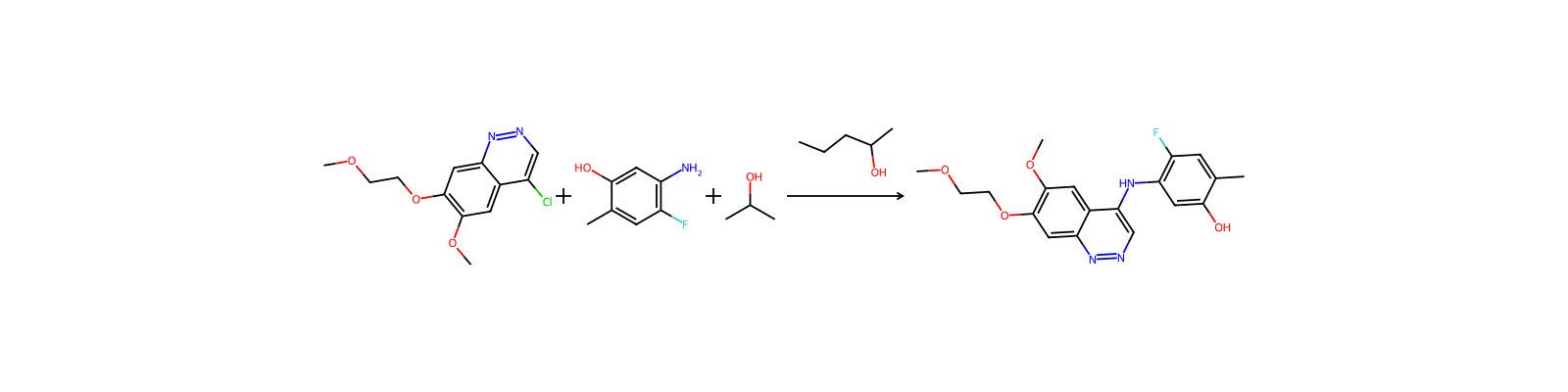
Related reactions
127 records






Compound notes
Loading…