Basic information
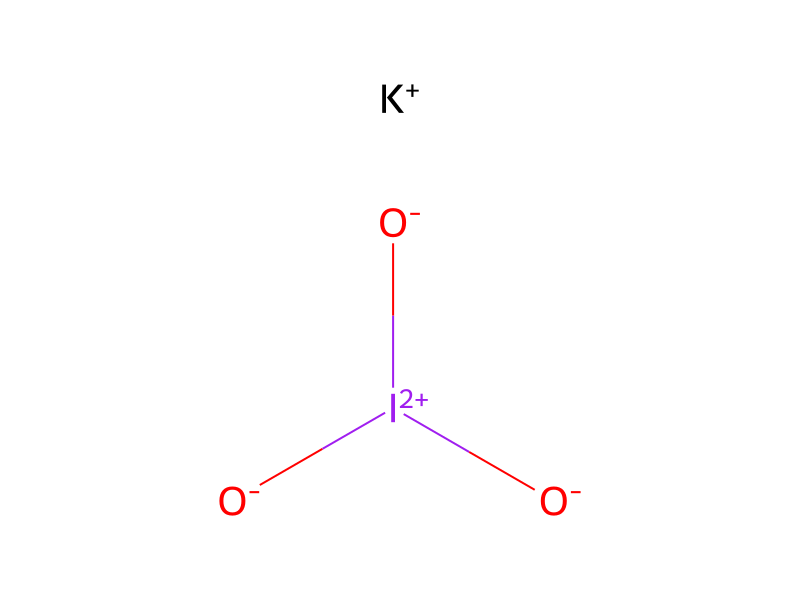
- Standard SMILES
[K+].[O-][I+2]([O-])[O-]- InChIKey
JLKDVMWYMMLWTI-UHFFFAOYSA-M- Molecular formula
- IKO3
- Average molar mass
- 214.001 g/mol
- Monoisotopic mass
- 213.85292
Names & identifiers
- Preferred name
- Potassium Iodate
- IUPAC
- potassium iodate
Names & synonyms
POTASSIUM IODATE7758-05-6Iodic acid, potassium saltIodic acid (HIO3), potassium saltI139E44NHLPotassium iodine oxide (KIO3)DTXSID5058480NSC-215201IODIC ACID (HIO3) POTASSIUM SALT (1:1)RefChem:6157DTXCID9032248231-831-9
Show more names
Potassium triodateKaliumjodatpotassium;iodatePotassium iodine oxideMFCD00011406Caswell No. 693AIKO3kalium iodate
Database identifiers
- CAS
7758-05-6- PubChem CID
- 23665710
- DTXSID
DTXSID5058480- ChEBI
CHEBI:234593- UNII
- I139E44NHL
- EC Number
- 231-831-9
- Nikkaji
- J43.935E
Properties
Computed structural properties
- Topological polar surface area
- 57.2 Ų
- Hydrogen bond donors
- 0
- Hydrogen bond acceptors
- 3
- Rotatable bonds
- 0
- Heavy atoms
- 5
- Formal charge
- 0
- Complexity
- 49
Experimental & physicochemical properties
OdorOdorless
Density
3.98
3.89 @25 °C
Color/Form
White crystals or crystalline powder
Colorless monoclinic crystals
Solubility
4.74 g/100 cc water @ 0 °C; 32.3 g/100 cc @ 100 °C; insol in alc, nitric acid; sol in potassium iodide
Sol in dil sulfuric acid
9.16 g/100 g H20 at 25 °C
DecompositionWhen heated to decomposition it emits very toxic fumes.
Melting Point
560 °C
560 °C
Physical DescriptionWhite crystals or crystalline powder. [HSDB]
Other Experimental Properties
Partial decomp @ 560 °C
DECOMP @ GREATER THAN 100 °C
Safety & regulation
GHS classification
GHS Classification
Danger
H272 (85.3%): May intensify fire; oxidizer [Danger Oxidizing liquids; Oxidizing solids];H302 (58.2%): Harmful if swallowed [Warning Acute toxicity, oral];H315 (59.6%): Causes skin irritation [Warning Skin corrosion/irritation];H319 (66.8%): Causes serious eye irritation [Warning Serious eye damage/eye irritation];H335 (59.4%): May cause respiratory irritation [Warning Specific target organ toxicity, single exposure; Respiratory tract irritation]
P210, P220, P261, P264, P264+P265, P270, P271, P280, P301+P317, P302+P352, P304+P340, P305+P351+P338, P319, P321, P330, P332+P317, P337+P317, P362+P364, P370+P378, P403+P233, P405, and P501 (click each P-code to see the statement)
Aggregated GHS information provided per 443 reports by companies from 25 notifications to the ECHA C&L Inventory. Each notification may be associated with multiple companies.;Information may vary between notifications depending on impurities, additives, and other factors. The percentage value in parenthesis indicates the notified classification ratio from companies that provide hazard codes. Only hazard codes with percentage values above 10% are shown. For more detailed information, please visit ECHA C&L website.
Hazard information
Regulatory Information
Chemical: Iodic acid (HIO3), potassium salt
Status: Active Update: 01-07-2020 https://echa.europa.eu/registration-dossier/-/registered-dossier/13616
Iodic acid, potassium salt: Does not have an individual approval but may be used under an appropriate group standard
Other Safety InformationIMAP assessments - Iodic acid and selected salts: Human health tier II assessment
Fire Potential...DANGEROUS BECAUSE THEY ARE STRONG OXIDIZERS. IN CONTACT WITH FLAMMABLE OR EVEN COMBUSTIBLE MATERIALS THEY CAN START FIRES. /IODATES/
Hazards SummaryCauses gastrointestinal tract, liver, and kidney injury in high-dose animal experiments; [HSDB]
FDA RequirementsSubstance added directly to human food affirmed as generally recognized as safe (GRAS).
Special Reports
REVIEW OF THE HEALTH ASPECTS OF POTASSIUM IODIDE, POTASSIUM IODATE, & CALCIUM IODATE AS FOOD INGREDIENTS.[LIFE SCIENCES RESEARCH OFFICE/FEDERATION OF AMERICAN SOCIETIES FOR EXPTL BIOLOGY; EVALUATION OF THE HEALTH ASPECTS OF POTASSIUM IODIDE, POTASSIUM IODATE, & CALCIUM IODATE AS FOOD INGREDIENTS; USNTIS PB REPORT PB-254 533: 22 PP (1975)]
Hazard Classes and Categories
Ox. Sol. 2 (85.3%);Acute Tox. 4 (58.2%);Skin Irrit. 2 (59.6%);Eye Irrit. 2 (66.8%);STOT SE 3 (59.4%)
Acute toxicity (ingestion) - category 4;Specific target organ toxicity (single exposure) - category 2
Acute toxicity (Oral) - Category 4
Hazardous Reactivities and Incompatibilities
CAN REACT VIGOROUSLY WITH REDUCING MATERIALS
Potentially explosive reaction with charcoal + ozone; metals; arsenic; carbon; phosphorus; sulfur; alkali metal hydrides; alkaline earth metal hydrides; antimony sulfide; arsenic sulfide; copper sulfide; tin sulfide; metal cyanides; metal thiocyanates; manganese dioxide. Violent reaction with organic matter.
Safety & protection
Disposal Methods
SRP: At the time of review, criteria for land treatment or burial (sanitary landfill) disposal practices are subject to significant revision. Prior to implementing land disposal of waste residue (including waste sludge), consult with environmental regulatory agencies for guidance on acceptable disposal practices.
Protective Action Criteria (PAC)
3.6 [mg/m3]
40 [mg/m3]
240 [mg/m3]
Toxicology
Adverse EffectsOccupational hepatotoxin - Secondary hepatotoxins: the potential for toxic effect in the occupational setting is based on cases of poisoning by human ingestion or animal experimentation.
Human Toxicity ExcerptsNO HUMAN INGESTION OF IODATE SALTS CAN BE CITED. /IODATE SALTS/
Non-Human Toxicity Excerpts
...IN FASTING DOG...0.2-0.25 G/KG...USUALLY CAUSE/S/ EMESIS, BUT IF THIS IS PREVENTED SIGNS OF ANOREXIA AND PROSTRATION PRECEDE DEATH. NECROTIC LESIONS OF THE LIVER, KIDNEYS AND GASTRIC AND INTESTINAL MUCOSA...
POTASSIUM & SODIUM IODATE HAVE ABOUT THE SAME LD50 & PRODUCE DEATH IN ACUTE RENAL FAILURE /IN MICE/...SOMETIMES HEMOGLOBINURIA PRECEDED RENAL SHUTDOWN.
POTASSIUM IODATE INDUCED STERILITY IN COPTA MITE (T PUTRESCENTIAE) WHEN GIVEN IN DIET @ 0.25-1.0% CONCN FOR 1-2 WK. FEMALES WERE MORE SUSCEPTIBLE THAN MALES. EGG FORMATION WAS DETRIMENTALLY AFFECTED.
POTASSIUM IODATE INDUCED DEFORMED SPIRACLES IN PUPAE WHEN FED TO SILKWORM LARVAE @ 100 PPM IODINE.
Non-Human Toxicity ValuesLD50 Mouse ip 136 mg/kg
Regulatory information
Regulatory Information
Chemical: Iodic acid (HIO3), potassium salt
Status: Active Update: 01-07-2020 https://echa.europa.eu/registration-dossier/-/registered-dossier/13616
Iodic acid, potassium salt: Does not have an individual approval but may be used under an appropriate group standard
FDA RequirementsSubstance added directly to human food affirmed as generally recognized as safe (GRAS).
Chemistry & industry
Pharmacology
MeSH Pharmacological ClassificationSubstances that destroy fungi by suppressing their ability to grow or reproduce. They differ from FUNGICIDES, INDUSTRIAL because they defend against fungi present in human or animal tissues.
Uses & manufacturing
Uses
Used as a reagent to test for zinc and arsenic, a photographic emulsion, a feed additive, a dietary supplement, and in spectroscopy, infrared transmission, and scintillation; [Hawley] Classification code: Anti-infective agents; antifungal agents; [ChemIDplus]
Photographic Processing [Category: Other];Farming (Feed Additives) [Category: Industry]
MEDICATION (VET)
Medication
Oxidizing agent in volumetric chemical analysis
REAGENT IN MERCURY REDN METHOD OF PYRETHRIN ANALYSIS
Methods of Manufacturing
Prepared by dissolving iodine in a caustic alkali solution and recovering the iodate by filtration.
Prepared by oxidation of iodine to iodic acid, followed by neutralization with an oxide or hydroxide; or by electrolytic oxidation of an iodide solution.
Formulations/Preparations
Grades: ...CP; FCC; Technical
/Available as/ techincal, FCC food grades; 99.9% purity grade; ACS reagent grade
Use ClassificationFood Additives -> FLOUR_TREATMENT_AGENT -> JECFA Functional Classes
General Manufacturing Information
Iodic acid (HIO3), potassium salt (1:1): ACTIVE
RECOMMENDED BY WORLD HEALTH ORGANIZATION AS AN ADDITIVE TO TABLE SALT TO PREVENT GOITER /IODATES/.
Iodates are precipitated when solutions of metal salts react with alkali-metal iodates.
Formed when potassium iodide is fused with potassium chlorate, bromate, or perchlorate.
Related reactions
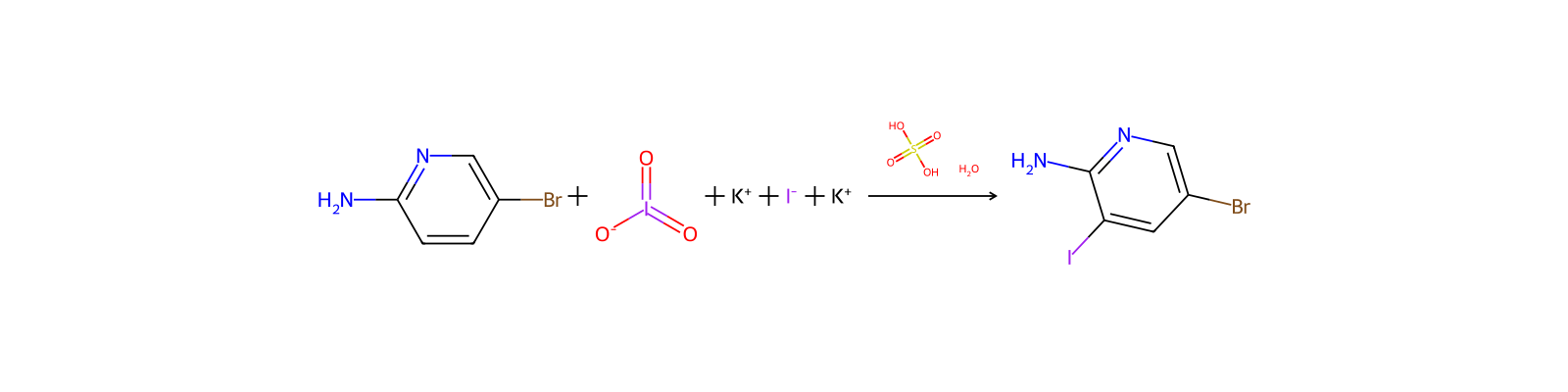
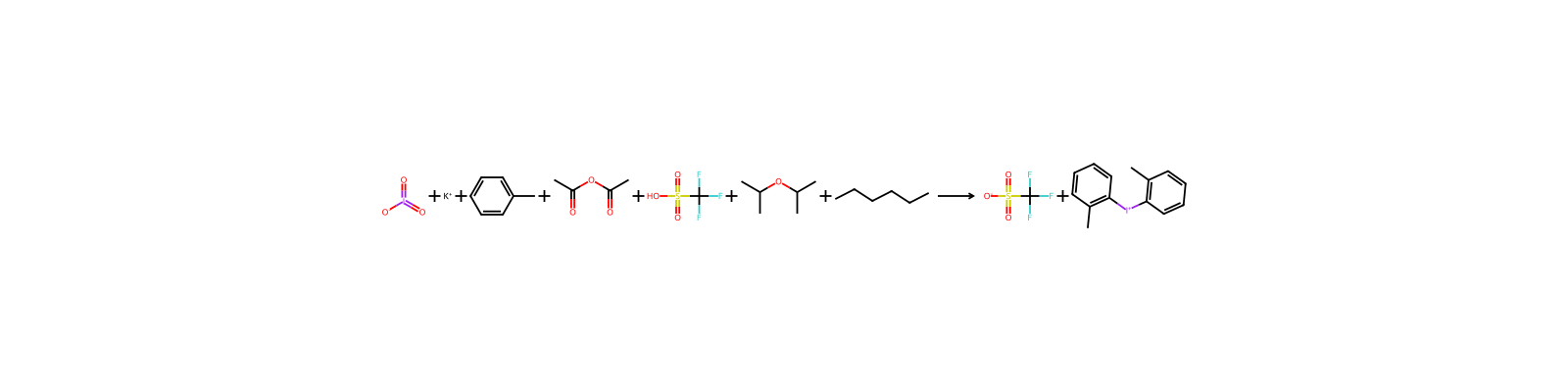
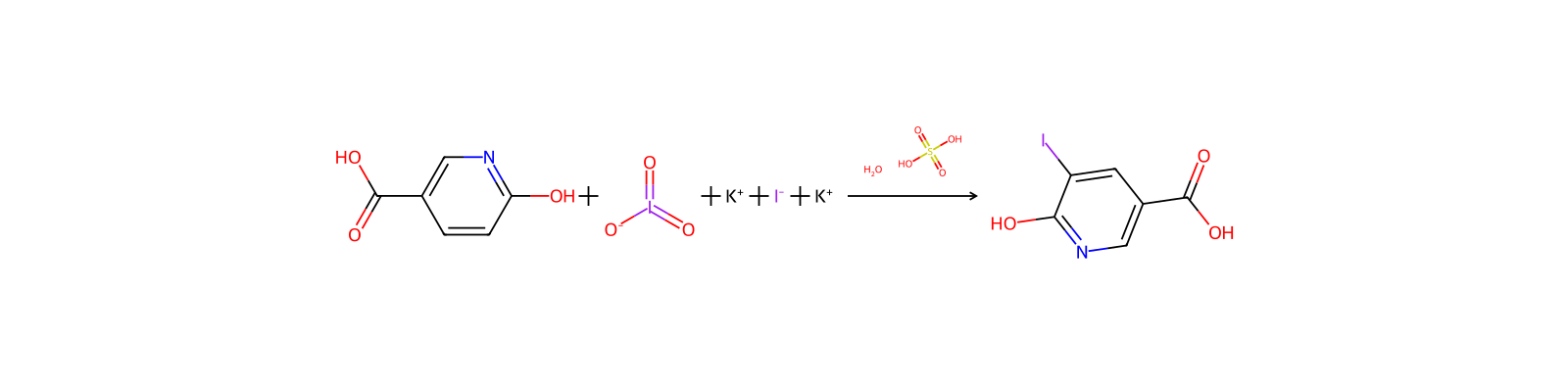
32 records




Linked notes
Loading…