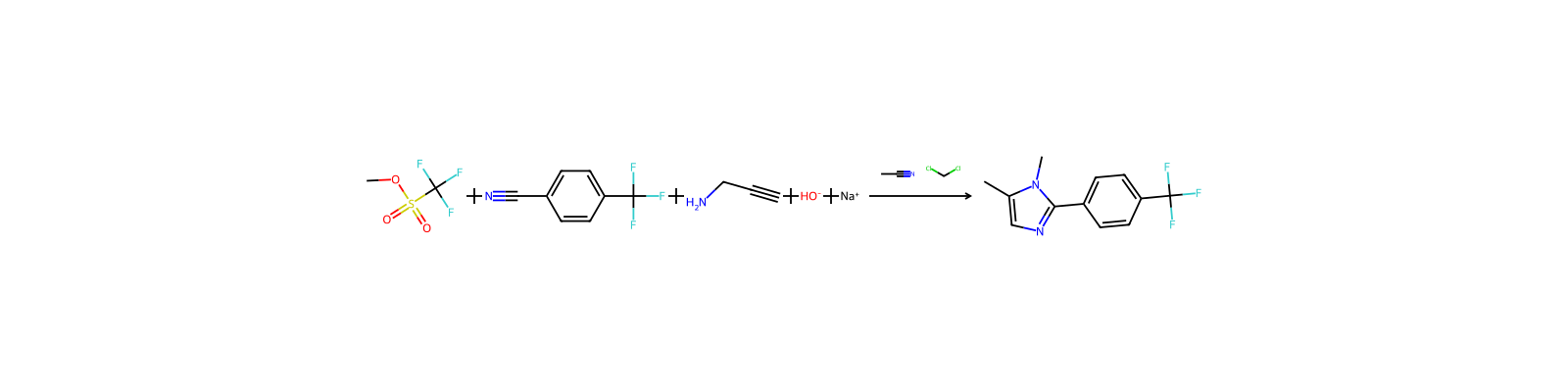
HRID 1480As reactant

2450-71-7C#CCNJKANAVGODYYCQF-UHFFFAOYSA-NRN given refers to parent cpd; structure
2450-71-7DTXSID30862951CHEMBL3263480Safety information is for reference only and does not replace the supplier’s Safety Data Sheet (SDS), applicable regulations, or professional assessment.
Danger
H225 (100%): Highly Flammable liquid and vapor [Danger Flammable liquids]
P210, P233, P240, P241, P242, P243, P260, P262, P264, P264+P265, P270, P280, P301+P317, P301+P330+P331, P302+P352, P302+P361+P354, P303+P361+P353, P304+P340, P305+P354+P338, P316, P317, P321, P330, P361+P364, P363, P370+P378, P403+P235, P405, and P501 (click each P-code to see the statement)
Aggregated GHS information provided per 168 reports by companies from 10 notifications to the ECHA C&L Inventory. Each notification may be associated with multiple companies.
UsesA useful intermediates in the preparation of drugs or pesticides.
UsesPropargylamine is used in the synthesis of a chiral, a fluorescent macrocycle by 1,3-dipolar cycloaddition of propargyl amides of carbohydrate-linked amino acids and 9,10-bis(azidomethyl)anthracene. It acts as an intermediate in the production of drugs.
UsesSynthesis of a chiral, fluorescent macrocycle by 1,3-dipolar cycloaddition of propargyl amides of carbohydrate-linked amino acids and 9,10-bis(azidomethyl)anthracene.