
2-Methyl-1-naphthol
Completing data — refresh the page later to see the latest

Basic information
- CAS
7469-77-4- Standard SMILES
Cc1ccc2ccccc2c1O- InChIKey
SRJCJJKWVSSELL-UHFFFAOYSA-N- Molecular formula
- C11H10O
- Average molar mass
- 158.2 g/mol
- Monoisotopic mass
- 158.07316494
Overview
structure in first source
Names & identifiers
- Preferred name
- 2-Methyl-1-naphthol
- IUPAC
- 2-methylnaphthalen-1-ol
- English name
- 2-Methyl-1-naphthol
- Molecular formula
- C11H10O
- Molecular weight
- 158.2
Names & synonyms
2-Methyl-1-naphthol7469-77-41-Naphthol, 2-methyl-COU5JQ433INSC-402211DTXSID50225665RefChem:474903DTXCID80148156231-265-22-methylnaphthalen-1-ol1-Naphthalenol, 2-methyl-1-hydroxy-2-methylnaphthalene
Show more names
NSC 4022112-Methyl-1-naphthalenol2-Methyl-1-naphthol 98%2-Methyl-1-hydroxynaphthalene
methylnaphtolMFCD000039642-Methyl-alpha-naphthol2-methyl-naphthol2-Methyl-a-naphtholEINECS 231-265-22-Methyl-.alpha.-naphthol2-Methyl-1-naphthol, 98%
Database identifiers
- CAS
7469-77-4- PubChem CID
- 24055
- DTXSID
DTXSID50225665- ChEMBL
CHEMBL122451- UNII
- COU5JQ433I
- EC Number
- 231-265-2
- Nikkaji
- J130.656A
Properties
Computed structural propertiesFilling in
- XLogP
- 3.2
- Topological polar surface area
- 20.2 Ų
- Hydrogen bond donors
- 1
- Hydrogen bond acceptors
- 1
- Rotatable bonds
- 0
- Heavy atoms
- 12
- Formal charge
- 0
- Complexity
- 155
Experimental & physicochemical properties
CosmeticsHair dyeing
Physicochemical properties
- Melting point
- 64 · 64-66 °C (lit.)
- Boiling point
- 304.3 · 304.3±11.0 °C(Predicted)
- Density
- 1.144 · 1.144±0.06 g/cm3(Predicted)
- storage temp.
- -20 °C · -20°C
- form
- solid
- pka
- 9.94 · 9.94±0.50(Predicted)
- Appearance
- Off-white to light yellow Solid
- Cosmetics Ingredients Functions
- HAIR DYEING
- InChI
- InChI=1S/C11H10O/c1-8-6-7-9-4-2-3-5-10(9)11(8)12/h2-7,12H,1H3
- InChIKey
- SRJCJJKWVSSELL-UHFFFAOYSA-N
- SMILES
- C1(O)=C2C(C=CC=C2)=CC=C1C
- LogP
- 3.17 · 3.170 (est)
Safety & regulation
Safety information is for reference only and does not replace the supplier’s Safety Data Sheet (SDS), applicable regulations, or professional assessment.
GHS classification
GHS Classification
This chemical does not meet GHS hazard criteria for 46.2% (36 of 78) of reports.
Danger
H315 (53.8%): Causes skin irritation [Warning Skin corrosion/irritation]
P261, P264, P264+P265, P271, P280, P302+P352, P304+P340, P305+P354+P338, P317, P319, P321, P332+P317, P362+P364, P403+P233, P405, and P501 (click each P-code to see the statement)
Aggregated GHS information provided per 78 reports by companies from 6 notifications to the ECHA C&L Inventory. Each notification may be associated with multiple companies.
Hazard information
Hazard Classes and CategoriesSkin Irrit. 2 (53.8%)
Safety data
- PPE
- dust mask type N95 (US), Eyeshields, Gloves
- wgk
- 3
- hs_code
- 2906290090
- risk_code
- 37/38-41
- Signal word
- Danger
- Symbol(GHS)
- GHS05,GHS07
- hazard_code
- Xi
- safety_code
- 26-39
- Storage Class
- 11 - Combustible Solids
- target organs
- Respiratory system
- Hazard statements
- H315-H318-H335
- Hazard Classifications
- Eye Dam. 1Skin Irrit. 2STOT SE 3
- Precautionary statements
- P261-P280-P305+P351+P338
Chemistry & industry
Uses & manufacturing
Use ClassificationCosmetics -> Hair dyeing
Applications
Uses2-Methyl-1-naphthol was used in selective synthesis of vitamin K3 via liquid-phase oxidation using NbSBA-15 catalyst.
General Description2-Methyl-1-naphthol undergoes oxidation with molecular oxygen to yield 2-methyl-1,4-naphthoquinone. Mechanism of selective oxidation of 2-methyl-1-naphthol with H2O2 catalyzed by titanium single-site catalysts, TiO2-SiO2 aerogel and mesostructured hydrothermally stable titanium-silicate has been investigated by EPR spectroscopic technique.
Upstream & downstream products
Downstream products
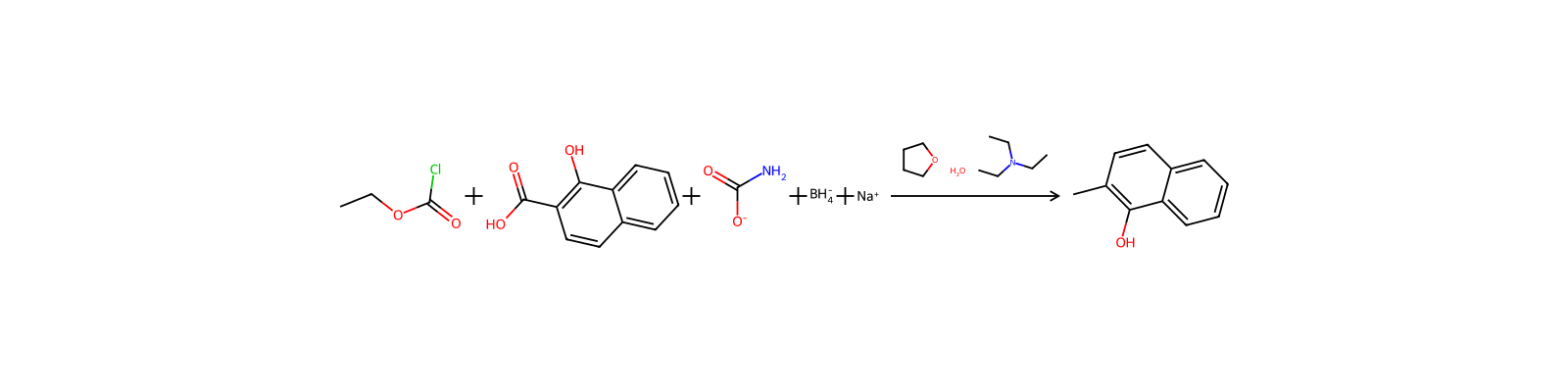
Related reactions
33 records


Compound notes
Loading…