HomeMCPWorkbenchSkills
HomeWorkbenchNotificationsMe
llms.txt · MCP GuidePrivacy Policy · Terms of Service · Supportv1.8.0
  1. Home
  2. /Compound

Tin tetrachloride

HCID 24287
New noteNew reactionRequest quotes
Print preview

Completing data — refresh the page later to see the latest

Basic informationOverviewNames & identifiersPropertiesSafety & regulationChemistry & industryRelated reactionsCompound notes
Substructure searchFind similar structures

Basic information

CAS
10026-06-9
Standard SMILES
[Cl][Sn]([Cl])([Cl])[Cl]
InChIKey
HPGGPRDJHPYFRM-UHFFFAOYSA-J
Molecular formula
Cl4Sn
Average molar mass
260.5 g/mol
Monoisotopic mass
259.77760542

Overview

Stannic chloride, anhydrous is a colorless fuming liquid with a pungent odor. It is soluble in cold water and decomposed by hot water to form hydrochloric acid with the evolution of heat. It is corrosive to metals and tissue.

Names & identifiers

Preferred name
Tin tetrachloride
IUPAC
tetrachlorostannane
English name
Tin(IV) chloride
Molecular formula
Cl4H2OSn
Molecular weight
278.53

Names & synonyms

Tin tetrachloride7646-78-8STANNIC CHLORIDETetrachlorotinTin perchlorideTintetrachlorideStannic tetrachlorideStannane, tetrachloro-Tin(IV) tetrachlorideZinntetrachloridTin Chloride (sncl4)SnCl4
Show more names
TIN(IV) CHLORIDETIN(IV) CHLORIDE PENTAHYDRATESTANNIC CHLORIDE PENTAHYDRATEtin chloride pentahydrateTin(IV) chloride hydrateOlovo Stanicoride pentahydrate4-(289-Butyl)phenolStannic chloride hydSTANNIC CHLORIDE 5H2O
Tin Tetrachloride, anhydrousStagno (tetracloruro di)Tin perchloride(DOT)Tin chloride (1:4)Etain (tetrachlorure d')Tin chloride, fuming (DOT)Tin chloride, fuming67H76LFL3V

Database identifiers

CAS
10026-06-9、7646-78-8
PubChem CID
24287
DTXSID
DTXSID1029679
EC Number
231-588-9

Properties

Computed structural propertiesFilling in

Topological polar surface area
0 Ų
Hydrogen bond donors
0
Hydrogen bond acceptors
0
Rotatable bonds
0
Heavy atoms
5
Formal charge
0
Complexity
19.1

Experimental & physicochemical properties

Chemical Classes · 2 items

Metals -> Metals, Inorganic Compounds

Corrosives

OdorACRID
Food AdditivesUse unspecified -> FDA Substance added to food
Density · 3 items

2.34 g/cu cm

Relative density (water = 1): 2.26

2.232 @25 °C

Color/FormColorless fuming liquid
Solubility · 5 items

White or slightly yellow crystals or fused small lumps; slight hydrochloric acid odor; very sol in water; sol in alcohol /stannic chloride pentahydrate/

Soluble in acetone, ethanol, gasoline, benzene, carbon tetrachloride, toluene, kerosene, methanol

Sol in cold water (decomposes in hot water), carbon disulfide

Soluble in ethanol, carbon tetrachloride, benzene and acetone.

Solubility in water: reaction

Corrosivity · 2 items

Corrosive to metals

Will attack some forms of plastics, rubber, & coatings.

Boiling Point

Safety & regulation

Safety information is for reference only and does not replace the supplier’s Safety Data Sheet (SDS), applicable regulations, or professional assessment.

GHS classification

GHS Classification · 6 items

Danger

H314: Causes severe skin burns and eye damage [Danger Skin corrosion/irritation]

P260, P264, P273, P280, P301+P330+P331, P302+P361+P354, P304+P340, P305+P354+P338, P316, P321, P363, P405, and P501 (click each P-code to see the statement)

Danger

H314 (100%): Causes severe skin burns and eye damage [Danger Skin corrosion/irritation]

P260, P261, P264, P264+P265, P271, P273, P280, P301+P330+P331, P302+P361+P354, P304+P340, P305+P354+P338, P316, P317, P319, P321, P363, P403+P233, P405, and P501 (click each P-code to see the statement)

Hazard information

Regulatory Information · 6 items

Chemical: Stannane, tetrachloro-

Directive (EC) No 46/2002

Stannane, tetrachloro- is listed on the EPA's Chemical Data Reporting (CDR) system. Manufacturers and importers of Stannane, tetrachloro- are required to report information about their production and use of this chemical to the EPA under the Toxic Substances Control Act (TSCA). (40 eCFR Part 711)

Status: Active Update: 14-12-2022 https://echa.europa.eu/registration-dossier/-/registered-dossier/14578

Tin (IV) chloride: Does not have an individual approval but may be used under an appropriate group standard

The New Jersey Worker and Community Right to Know Act requires public and private employers to provide information about hazardous substances at their workplaces. (N.J.S.A. 34:5A-1 et. seq.)

DOT LabelCorrosive
Fire Hazards · 4 items

Excerpt from ERG Guide 137 [Substances - Water-Reactive - Corrosive]:

· EXCEPT FOR ACETIC ANHYDRIDE (UN1715), THAT IS FLAMMABLE, some of these materials may burn, but none ignite readily.

· EXCEPT FOR ACETIC ANHYDRIDE (UN1715), THAT IS FLAMMABLE, some of these materials may burn, but none ignite readily.

Not combustible. Gives off irritating or toxic fumes (or gases) in a fire.

Chemistry & industry

Pharmacology

Metabolism/Metabolites · 1 item

Though tin metal is very poorly absorbed, tin compounds may be absorbed via oral, inhalation, or dermal routes, with organotin compounds being much more readily absorbed than inorganic tin compounds. Tin may enter the bloodstream and bind to hemoglobin, where it is distributed and accumulates mainly in the kidney, liver, lung, and bone. Tin and its metabolites are excreted mainly in the urine and feces. (L308)

Uses & manufacturing

Uses · 5 items

Used as a mordant, catalyst, stabilizer for colors and perfumes in soap, antistatic agent for synthetic fabrics, and dehydrating agent in organic syntheses; Also used for tinning vessels, making ceramic coatings, dyeing fabrics, weighting silk, curing polymers, treating glass, and producing sensitized paper; [HSDB]

Pulp and Paper Processing [Category: Industry]

Ceramics making [Category: Hobbies]

As mordant; reviving colors; dehydrating agent in organic syntheses; stabilizer for colors and perfumes in soap; in dyeing of fabrics, weighting silk, tinning vessels, in ceramics to produce abrasion resistant or light reflecting coatings.

The main uses of stannic chloride are as a raw material for the manufacture of other tine compounds, especially organotins. and in the surface treatmentof glass and other nonconductive materials, whereby stannic oxide is deposited from the stannic chloride solutions onto the surface giving it strength, abrasive resistance, and conductivity. It is also widely used as a catalyst in Friedel-Craft acylation, alkylation and cyclization reactions, esterifications, halogenations, and curing and other polymerization reactions. Minor uses are as a stabilizer for colors in soap, mordant for dyeing silks in the manufacture of blueprints and other sensitized paper, and as an antistatic agent for synthetic fabrics.

U.S. Imports(1986) 30,071 LB
U.S. Production2023: 25,000,000 - <40,000,000 lb
Consumer UsesNot Known or Reasonably Ascertainable

Related reactions

1,197 records
New reaction record
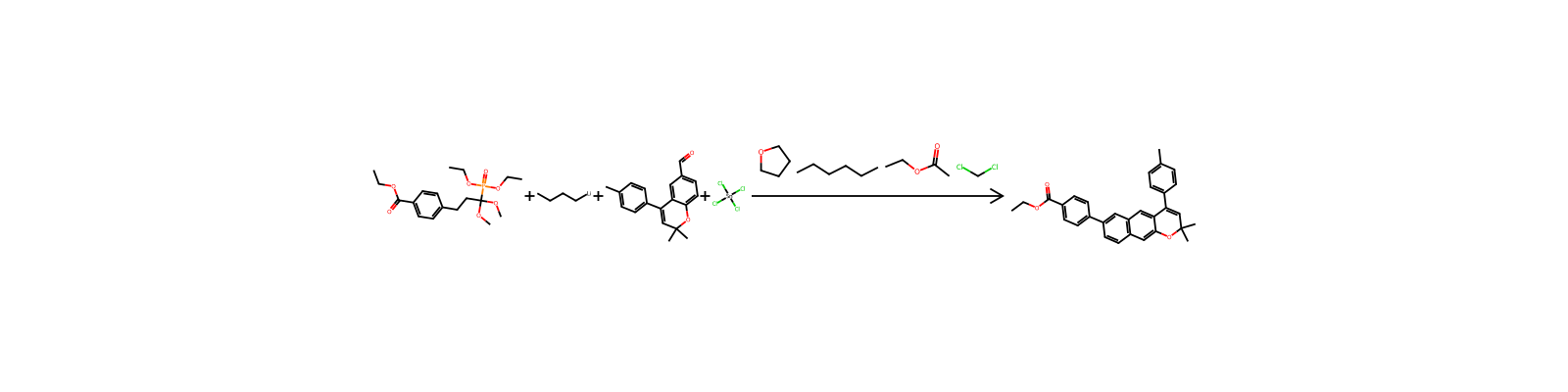
HRID 1556 reaction equation
HRID 1556As reactantuspto-grants-1998_03
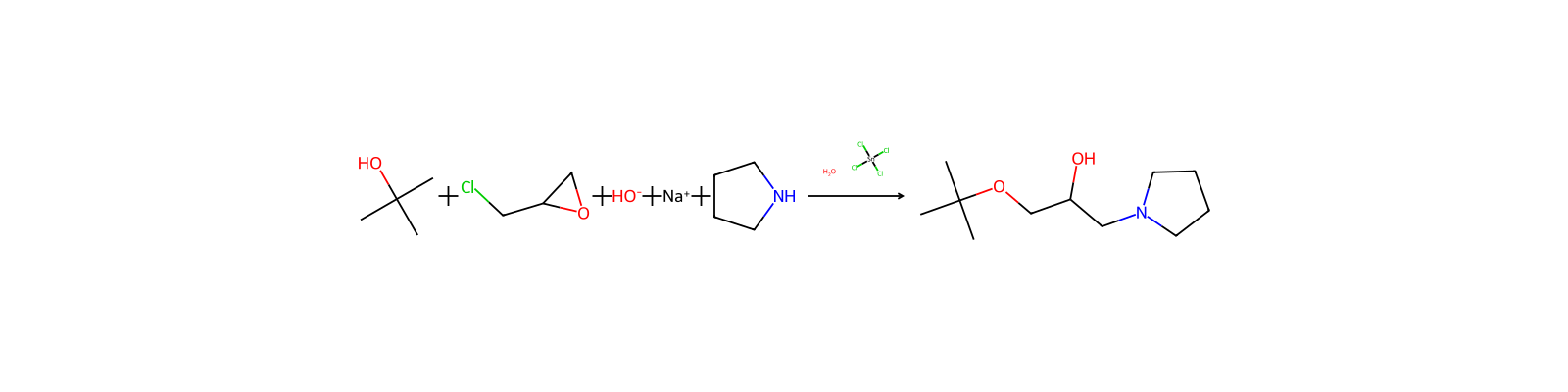
HRID 2613 reaction equation
HRID 2613As reactantuspto-grants-1998_03
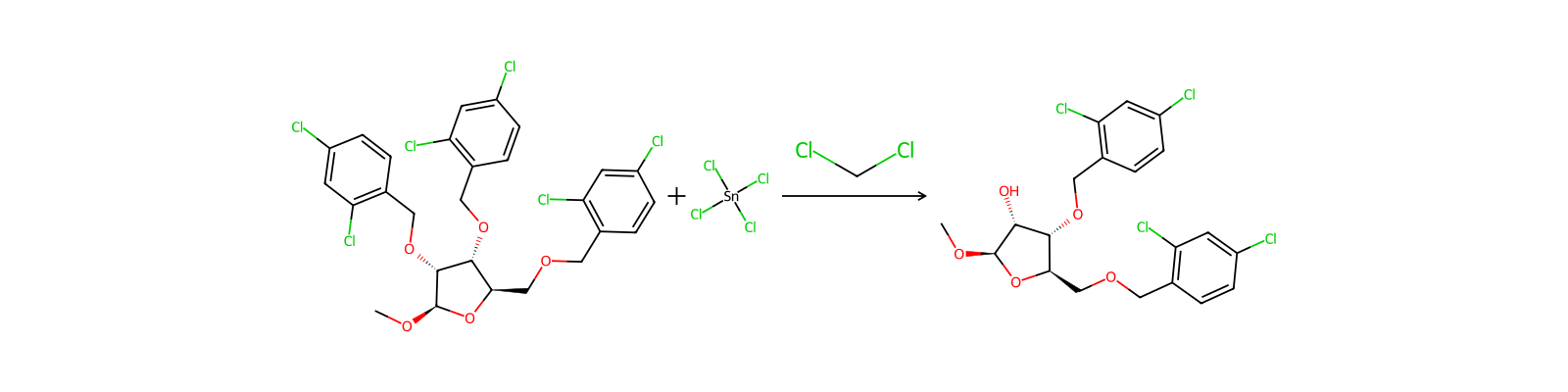
HRID 2617 reaction equation
HRID 2617As reactantuspto-grants-1998_03
HRID 2621 reaction equation
HRID 2621As reactantuspto-grants-1998_03
HRID 4507 reaction equation
HRID 4507As catalystuspto-grants-1988_02
HRID 10159 reaction equation
HRID 10159As reactantuspto-grants-2006_08
HRID 16723 reaction equation
HRID 16723As reactantuspto-grants-2010_06
HRID 16725 reaction equation
HRID 16725As reactantuspto-grants-2010_06
Page 1 of 150

Compound notes

Loading…

On this pageBasic informationOverviewNames & identifiersPropertiesSafety & regulationChemistry & industryRelated reactionsCompound notes
More actions
New noteNew reactionRequest quotes
· 3 items

114.15 °C

114 °C

114.1 °C @760 [mm Hg]

DecompositionWhen heated to decomposition it emits toxic fumes of /chloride/.
Melting Point · 4 items

-33 °C

-33 °C

-33 °C

-33 °C

Vapor Density · 2 items

9 (air= 1)

Relative vapor density (air = 1): 9.0

Vapor Pressure · 4 items

18.0 [mmHg]

18 MM HG AT 20 °C

Vapor pressure, kPa at 20 °C: 2.4

10 [mm Hg] @10 °C

Physicochemical properties

Melting point
56 °C · 56 °C
Density
2.04 · 2.040
solubility
2 O; · very soluble in H2O; soluble in ethanol
form
lumps
color
Light Yellow
Water Solubility
soluble
Thermal Conductivity
0.106 W/ · 0.106 W/(m·K) at 25 ℃
Specific Heat Capacity
0.59 J/ · Cp(liquid): 0.59 J/(g·K); Cp(gas): 0.35 J/(g·K), at 25℃
Merck
14 · 14,8774
Stability
Stable, but may decompose in contact with moisture or water. Incompatible with strong acids.
InChI
InChI=1S/4ClH.H2O.Sn/h4*1H;1H2;/q;;;;;+4/p-4
InChIKey
KHMOASUYFVRATF-UHFFFAOYSA-J
SMILES
[Sn](Cl)(Cl)(Cl)Cl.O
CAS DataBase Reference
10026 · 10026-06-9(CAS DataBase Reference)
EPA Substance Registry System
Stannane, tetrachloro-, pentahydrate (10026-06-9)
UNSPSC Code
12352302 · 12352302
NACRES
55 · NA.55
Symbol(GHS)
5 · GHS05
Signal word
Danger
Hazard statements
314 · H314
Precautionary statements
260 · P260-P264-P280-P301+P330+P331-P303+P361+P353-P363-P304+P340-P310-P305+P351+P338-P405-P501
Hazard Codes
C
Risk Statements
34 · 34-52/53
Safety Statements
26 · 26-36/37/39-45-7/8-61
RIDADR
2440 · UN 2440
WGK Germany
3 · 3
RTECS
8870000 · XP8870000
HazardClass
8 · 8
PackingGroup
III
HS Code
28273990 · 28273990
Storage Class
8 A · 8A - Combustible corrosive hazardous materials
Hazard Classifications
3 Skin · Aquatic Chronic 3Skin Corr. 1B
Fire Potential · 2 items

Nonflammable ... .

Combustible by chemical reaction.

Health Hazards · 3 items

Excerpt from ERG Guide 137 [Substances - Water-Reactive - Corrosive]:

· CORROSIVE and/or TOXIC; inhalation, ingestion or contact (skin, eyes) with vapors, dusts or substance may cause severe injury, burns or death.

· CORROSIVE and/or TOXIC; inhalation, ingestion or contact (skin, eyes) with vapors, dusts or substance may cause severe injury, burns or death.

Hazards Summary · 1 item

Respiratory symptoms were more common in hot end workers in a glass bottle manufacturing plant exposed to stannic chloride; [Reference #1] Produces substantial heat on contact with water; A strong eye and mucous membrane irritant; [Merck Index] Reacts violently with water or moist air forming hydrogen chloride; A corrosive substance that can cause injury to the skin, eyes, and respiratory tract; [ICSC] A skin, eye, and respiratory tract irritant; May cause burns on prolonged contact; [HSDB] Reacts with water producing hydrochloric acid and heat; Corrosive to tissue; [CAMEO] Forms hydrogen chloride on contact with moisture; May cause corrosive injuries to skin and eyes; [CHEMINFO] Corrosive to skin and eyes; [eChemPortal: ERMA] Can cause burns; [eChemPortal: ESIS] A corrosive substance that can cause injury to the skin, eyes, and respiratory tract; Inhalation may cause chemical pneumonitis; [MSDSonline]

DOT ID and Guide · 2 items

1827 137

1827 137

Reactive GroupAcids, Strong Non-oxidizing
EC ClassificationSymbol: C; R: 34-52/53; S: (1/2)-7/8-26-45-61
UN ClassificationUN Hazard Class: 8; UN Pack Group: II
Reactivity AlertsWater-Reactive
Reactivity ProfileSTANNIC CHLORIDE readily hydrolyzes to form hydrochloric acid in aqueous solution or moist air. Combination of stannic chloride with turpentine is strongly exothermic, and may lead to ignition [Mellor, 1941, Vol. 7, 446].

Safety & protection

Fire Fighting · 2 items

Excerpt from ERG Guide 137 [Substances - Water-Reactive - Corrosive]:

NO hydrous agents. In case of fire in the surroundings, use appropriate extinguishing media.

First Aid Measures · 4 items

Fresh air, rest. Half-upright position. Artificial respiration may be needed. Refer for medical attention.

Rinse skin with plenty of water or shower. Refer for medical attention .

First rinse with plenty of water for several minutes (remove contact lenses if easily possible), then refer for medical attention.

Do NOT induce vomiting. Refer for medical attention .

Accidental Release Measures · 4 items

· CALL 911. Then call emergency response telephone number on shipping paper. If shipping paper not available or no answer, refer to appropriate telephone number listed on the inside back cover.

· Do not touch damaged containers or spilled material unless wearing appropriate protective clothing.

· CALL 911. Then call emergency response telephone number on shipping paper. If shipping paper not available or no answer, refer to appropriate telephone number listed on the inside back cover.

· Do not touch damaged containers or spilled material unless wearing appropriate protective clothing.

First Aid · 3 items

Excerpt from ERG Guide 137 [Substances - Water-Reactive - Corrosive]:

General First Aid:

General First Aid:

Safe StorageSeparated from food and feedstuffs. Dry. Well closed. Keep in a well-ventilated room.
Exposure Control and Personal Protection · 2 items

· Wear positive pressure self-contained breathing apparatus (SCBA).

· Wear positive pressure self-contained breathing apparatus (SCBA).

Fire Fighting Procedures · 2 items

Use appropriate extinguishing agents on nearby combustible fires. Do not use water-based extinguishers on fires where this material has been released. use water spray to keep fire-exposed containers cool. Visibility can be reduced by the solid tin oxide fumes produced when reacted with moisture.

If material involved in fire: Use dry chemical, dry sand, or carbon dioxide. Do not use water on material itself. If large quantities of combustibles are involved, use water in flooding quantities as spray & fog. Use water to knock down vapors. Cool all affected containers with flooding quantities of water. Apply water from as far a distance as possible.

Storage Conditions · 2 items

Store in a cool, dry, well-ventilated location. Outside or detached storage is preferred.

KEEP WELL STOPPERED

Cleanup Methods · 4 items

Cover ... spills with sufficient amount of sodium bicarbonate. Remove the mixture in a container such as a fiber drum, plastic bag or carton box for easy disposal. ...

If material not involved in fire: ... Neutralize spilled material with crushed limestone, soda ash, or lime.

If tin, stannous chloride, stannic chloride, stannous sulfate, or potassium stannate are spilled or leaked, the following steps should be taken: 1. Ventilate area of spill or leak. 2. Collect spilled or leaked material in the most convenient and safe manner for reclamation or for disposal. ... Liquid containing inorganic tin compounds should be absorbed in vermiculite, dry sand, earth, or a similar material.

Use water spray to cool and disperse vapors, protect personnel, and carefully dilute spills to form nonreactive mixtures.

Nonfire Spill ResponseExcerpt from ERG Guide 137 [Substances - Water-Reactive - Corrosive]:
Disposal Methods · 1 item

SRP: At the time of review, criteria for land treatment or burial (sanitary landfill) disposal practices are subject to significant revision. Prior to implementing land disposal of waste residue (including waste sludge), consult with environmental regulatory agencies for guidance on acceptable disposal practices.

Spillage Disposal · 1 item

Evacuate danger area! Personal protection: chemical protection suit including self-contained breathing apparatus. Do NOT let this chemical enter the environment. Ventilation. Cautiously neutralize spilled liquid with soda ash or lime. Then store and dispose of according to local regulations.

Toxicology

Treatment · 1 item

EYES: irrigate opened eyes for several minutes under running water. INGESTION: do not induce vomiting. Rinse mouth with water (never give anything by mouth to an unconscious person). Seek immediate medical advice. SKIN: should be treated immediately by rinsing the affected parts in cold running water for at least 15 minutes, followed by thorough washing with soap and water. If necessary, the person should shower and change contaminated clothing and shoes, and then must seek medical attention. INHALATION: supply fresh air. If required provide artificial respiration.

Health EffectsIngestion of large amounts of inorganic tin compounds can cause stomachache, anemia, and liver and kidney problems. (L307, L308)
Adverse EffectsDermatotoxin - Skin burns.
Exposure RoutesOral (L308) ; inhalation (L308) ; dermal (L308)
Toxicity SummaryInorganic and organic tin compounds are weak inhibitors of alcohol dehydrogenase. (A183)
Signs and Symptoms · 5 items

Cough. Sore throat. Burning sensation. Laboured breathing. Shortness of breath. Wheezing.

Redness. Pain. Skin burns.

Redness. Pain. Severe deep burns.

Abdominal pain. Burning sensation. Shock or collapse.

Inorganic or organic tin compounds placed on the skin or in the eyes can produce skin and eye irritation. (L308)

ICSC Environmental DataThe substance is harmful to aquatic organisms.
Human Toxicity Excerpts · 3 items

... Prolonged contact with the skin causes burns ... .

Concern about upper respiratory tract irritation and other symptoms among workers at a glass bottle manufacturing plant led to an epidemiologic and an industrial hygiene survey. Questionnaire responses from 35 hot end and 53 cold end workers indicated that the incidence of wheezing, chest pain, dyspnea on exertion, and cough was significantly elevated among hot end workers. Among smokers and nonsmokers, hot end workers reported higher, but not significantly higher rates of wheezing and chest pain. Among smokers, hot end workers reported significantly higher rates of dyspnea on exertion and cough than did cold end workers. Reported exposure to stannic chloride solution likely caused these symptoms. The industrial hygiene survey, conducted when stannic chloride use had ben reduced, cleaning had been done and ventilation improved, focused on measuring air contaminants that might have caused symptoms. Levels of HCl which apparently was formed by the combination of stannic chloride and water in the presence of heat, were elevated. The finding of increased prevalence of respiratory symptoms among hot end workers was consistent with this exposure. Recommendations were made to reduce hazardous exposures at this plant. Individuals responsible for occupational health should be aware that relatively benign substances, such as stannic chloride and water, can combine spontaneously to form hazardous substances.

Stannic chloride is a fuming caustic liquid, highly irritating to the eyes and mucous membranes. The irritating presumably is attributable t o the hydrochloric acid which is generated when stannic chloride reacts with water.

Carcinogen ClassificationNo indication of carcinogenicity to humans (not listed by IARC).
Non-Human Toxicity Excerpts · 3 items

INHALATION EXPOSURE FOR 10 MIN TO TIN TETRACHLORIDE AT CONCN OF 3 MG/CU M WAS SAID TO BE WELL TOLERATED BY GUINEA PIGS. EVEN REPEATED EXPOSURES TO THIS CONCN WAS CLAIMED TO BE TOLERATED.

Microbial communities in water from Baltimore Harbor (Maryland, USA) and from the mainstem of Chesapeake Bay were examined for sensitivity to mercury chloride, monomethyl mercury, stannic chloride, and tributyltin chloride. Acute toxicity was determined by measuring the effects on (3)H-thymidine incorporation, (14)C-glutamate incorporation and respiration, and viability as compared with those of controls. Minimum inhibitory concn were low for all metals except stannic chloride (5 mg/l). The Chesapeake Bay community appeared to be slightly more sensitive to metal stress than the Baltimore Harbor community, but this was not true for all treatments or assays. For culturable bacteria, the opposite result was found. Thymidine incorporation and glutamate metabolism were much more sensitive indicators of metal toxicity than was viability. The use of thymidine incorporation method for ecotoxicology studies was at least equal in sensitivity to metabolic measurements and likely measures the effects on the greater portion of the natural community.

Twenty one different metal chlorides have been tested for mutagenicity in the presence of 9-aminoacridine in strains of Salmonella typhimurium. Stannic chloride was not mutagenic alone, exhibited mutagenicity when combined with 9-aminoacridine in strains TA1537 and TA2637.

Toxicity Data · 2 items

LC50 (rat) = 2,300 mg/m3/10min

LD50: 46 mg/kg (Intraperitoneal, Mouse) (T57) LC50: 2300 mg/m3 over 10 minutes (Inhalation, Rat) (T14)

Non-Human Toxicity Values · 2 items

LD50 Mouse intraperitoneal 46 mg/kg

LC50 Rat inhalation 2300 mg/cu m/10 min

Regulatory information

State Drinking Water Guidelines(MN) MINNESOTA 4000 ug/l /Tin/

Safety data

wgk
3
rtecs
XP8870000
ridadr
UN 2440
hs_code
28273990
risk_code
34-52/53
Signal word
Danger
Symbol(GHS)
GHS05
hazard_code
C
safety_code
26-36/37/39-45-7/8-61
hazard_class
8
Storage Class
8A - Combustible corrosive hazardous materials
packing_group
III
Hazard statements
H314
Hazard Classifications
Aquatic Chronic 3Skin Corr. 1B
Precautionary statements
P260-P264-P280-P301+P330+P331-P303+P361+P353-P363-P304+P340-P310-P305+P351+P338-P405-P501
Industry UsesIntermediate
Methods of Manufacturing · 4 items

Stannic chloride is made by direct chlorination of tin at 110-115 °C.

Treatment of tin or stannous chloride with chlorine.

The pentahydrate is prepared by dissolving stannic chloride in hot water, thereby forming the pentahydrate at a temperature above the melting point and crystallizing on cooling. /pentahydrate/

STANNIC CHLORIDE IS PREPARED BY HEATING POWDERED TIN WITH MERCURIC CHLORIDE OR BY PASSING A STREAM OF CHLORINE OVER MOLTEN TIN.

Formulations/Preparations · 5 items

Grades: technical, cp (chemically pure)

Often sold in the form of the double salt with sodium chloride: disodium stannic hexachloride monohydrate.

Stannic chloride is available commercially as anhydrous stannic chloride; stannic chloride pentahydrate; and in proprietary solutions for special applications.

A stannic chloride pentahydrate-ammonium bifluoride formulation for fire proofing wool is commercially available and used in New Zealand and Australia.

99.9 & 99.999% purity grades ... .

General Manufacturing Information · 3 items

Not Known or Reasonably Ascertainable

Stannane, tetrachloro-: ACTIVE

Improperly called tin bichloride.

Applications · 4 items

UsesTin(IV) chloride is a mordant for dying fabrics; a stabilizer for perfume in soap; used in weighting silk; in ceramic coatings; in manufacturing blue print papers; and to produce fuchsin. Also, tin(IV) chloride is used in preparing many organotin compounds.

UsesSubstitute for anhydrous stannic chloride where the presence of water is not objectionable

UsesTin (IV) Chloride Pentahydrate is a hydrate of Tin (IV) Chloride(T443805), which can induce slight inhibition of the catalytic activity of horse liver alcohol dehydrogenase (HLADH).

General DescriptionStannic chloride pentahydrate is a white colored solid. Stannic chloride pentahydrate is soluble in water. Stannic chloride pentahydrate is toxic by ingestion, inhalation and skin absorption. Stannic chloride pentahydrate is used to make perfumes and dyes.

Preparation methods

PreparationTin(IV) chloride is prepared by reacting tin or tin(II) chloride with chlorine: Sn + 2Cl2 → SnCl4 SnCl2 + Cl2 → SnCl4