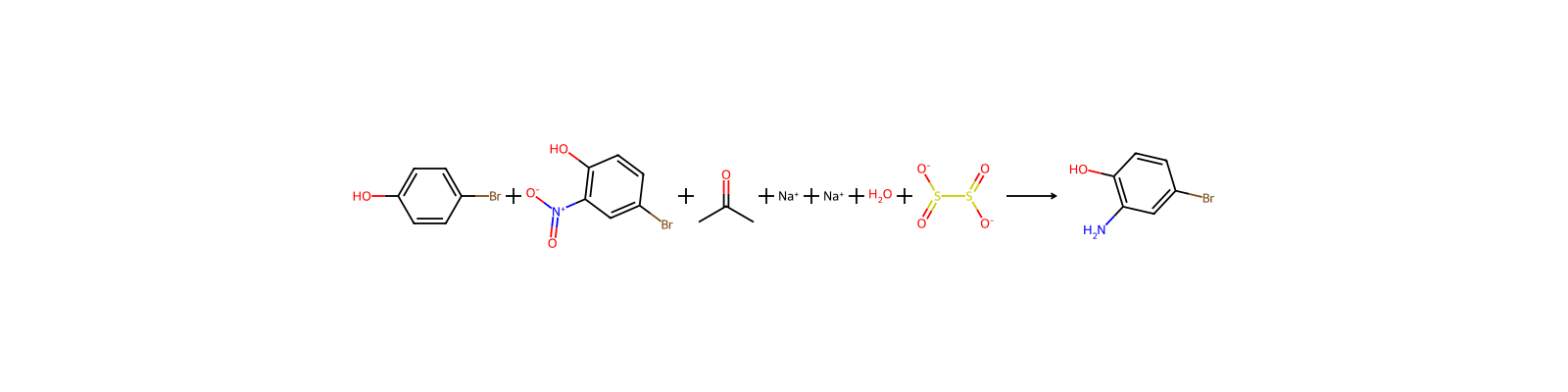
HRID 7769As reactant
Completing data — refresh the page later to see the latest

7693-52-9O=[N+]([O-])c1cc(Br)ccc1OCUTFAPGINUFNQM-UHFFFAOYSA-N7693-52-9DTXSID20227717Safety information is for reference only and does not replace the supplier’s Safety Data Sheet (SDS), applicable regulations, or professional assessment.
Warning
H302+H332 (85.1%): Harmful if swallowed or if inhaled [Warning Acute toxicity, oral; acute toxicity, inhalation]
P261, P264, P264+P265, P270, P271, P280, P301+P317, P302+P352, P304+P340, P305+P351+P338, P317, P319, P321, P330, P332+P317, P337+P317, P362+P364, P403+P233, P405, and P501 (click each P-code to see the statement)
Aggregated GHS information provided per 47 reports by companies from 6 notifications to the ECHA C&L Inventory. Each notification may be associated with multiple companies.
Description4-bromo-2-nitrophenol is an essential intermediate for fine chemical engineering. It can be used to synthesize derivatives with biological activity, such as heterocyclic compounds as peptidase inhibitors for treating diabetes, introducing fluorine-containing groups as pesticides, and aminic compounds as Btk inhibitors for treating immune diseases.
Uses4-Bromo-2-nitrophenol serves as a precursor for synthesizing ether derivatives. It reacts with 1,2-dibromoethane in the presence of NaOH to form 4-bromo-1-(2-bromoethoxy)-2-nitrobenzene, and couples with 1-(2-bromoethoxy)-2-nitrobenzene using K2CO3 in DMF to yield 4-bromo-2-nitro-1-[2-(2-nitrophenoxy)ethoxy]benzene[1-2].
General DescriptionThe Suzuki coupling of 4-bromo-2-nitrophenol with boronic acid was studied.