HomeMCPWorkbenchSkills
HomeWorkbenchNotificationsMe
llms.txt · MCP GuidePrivacy Policy · Terms of Service · Supportv1.8.3
  1. Home
  2. /Compound

1,2-Diethylhydrazine dihydrochloride

HCID 24372
New reaction
Print
Basic informationOverviewNames & identifiersPropertiesSafety & regulationChemistry & industryRelated reactionsCompound notes
Substructure searchFind similar structures

Basic information

CAS
7699-31-2
Standard SMILES
CCNNCC.Cl.Cl
InChIKey
NMTDWUVFGOBBAX-UHFFFAOYSA-N
Molecular formula
C4H12N2.2ClH
Average molar mass
161.07 g/mol
Monoisotopic mass
160.0534038

Overview

1,2-diethylhydrazine dihydrochloride is a white powder. (NTP, 1992)

Names & identifiers

Preferred name
1,2-Diethylhydrazine dihydrochloride
IUPAC
1,2-diethylhydrazine;dihydrochloride
English name
N,N'-Diethylhydrazine dihydrochloride
Molecular formula
C4H14Cl2N2
Molecular weight
161.07

Names & synonyms

1,2-Diethylhydrazine dihydrochloride7699-31-2N,N'-Diethylhydrazine dihydrochlorideCCRIS 8919UNII-X3O3IWE4TGX3O3IWE4TGHydrazine, 1,2-diethyl-, dihydrochlorideDTXSID2025056RefChem:71879DTXCID405056N,N'Diethylhydrazine dihydrochlorideHydrazine, 1,2diethyl, dihydrochloride
Show more names
1,2-Diethylhydrazine2HCl-Diethylhydrazine dihydrochloride1,2-diethyl-hydrazindihydrochlorideHydrazine, 1,2-diethyl, dihydrochloride.N,Nzzhlxy-Diethylhydrazine dihydrochlorideN,N''-DIETHYLHYDRAZINE DIHYDROCHLORIDE: TECH., 90%N,N'-DIETHYLHYDRAZINE DIHYDROCHLORIDE ISO 9001:2015 REACH
624-628-51,2-diethylhydrazine;dihydrochlorideMFCD00012523N,N-Diethylhydrazine dihydrochlorideN',N'-Diethylhydrazine Dihydrochloridediethylhydrazine dihydrochlorideSCHEMBL3118416CHEMBL1203769

Database identifiers

CAS

Properties

Computed structural properties

Topological polar surface area
24.1 Ų
Hydrogen bond donors
4
Hydrogen bond acceptors
2
Rotatable bonds
3
Heavy atoms
8
Formal charge
0
Complexity
17.5

Experimental & physicochemical properties

Chemical ClassesNitrogen Compounds -> Hydrazines
Solubilitygreater than or equal to 100 mg/mL at 64 °F (NTP, 1992)
Melting Point336 °F (decomposes) (NTP, 1992)
Physical Description · 2 items

1,2-diethylhydrazine dihydrochloride is a white powder. (NTP, 1992)

White solid; [CAMEO] White odorless crystalline powder; [Alfa Aesar MSDS]

Physicochemical properties

Melting point
169 °C · 169 °C (dec.)(lit.)
storage temp.
Room Temperature
solubility
DMSO, Methanol
form
Solid
color
Off-White
BRN
3668380 · 3668380
InChI
1S/C4H12N2.2ClH/c1-3-5-6-4-2;;/h5-6H,3-4H2,1-2H3;2*1H
InChIKey
NMTDWUVFGOBBAX-UHFFFAOYSA-N

Safety & regulation

Safety information is for reference only and does not replace the supplier’s Safety Data Sheet (SDS), applicable regulations, or professional assessment.

GHS classification

GHS Classification · 4 items

Danger

H302 (100%): Harmful if swallowed [Warning Acute toxicity, oral]

P203, P261, P264, P264+P265, P270, P271, P280, P301+P317, P302+P352, P304+P340, P305+P351+P338, P317, P318, P319, P321, P330, P332+P317, P337+P317, P362+P364, P403+P233, P405, and P501 (click each P-code to see the statement)

Aggregated GHS information provided per 43 reports by companies from 3 notifications to the ECHA C&L Inventory. Each notification may be associated with multiple companies.

Hazard information

DOT LabelPoison
Fire HazardsFlash point data for this chemical are not available. It is probably combustible. (NTP, 1992)
Health HazardsSYMPTOMS: Symptoms of exposure to this compound may include a burning sensation, coughing, wheezing, laryngitis, shortness of breath, headache, nausea and vomiting.
Hazards Summary · 1 item

A strong reducing agent; [CAMEO] A severe irritant that may cause corrosive injuries at high concentrations; Harmful by ingestion, inhalation, and skin absorption; [NTP] A skin and strong eye irritant; Toxic by ingestion and skin absorption; [Alfa Aesar MSDS]

Reactive GroupAzo, Diazo, Azido, Hydrazine, and Azide Compounds
Reactivity AlertsStrong Reducing Agent
Reactivity Profile1,2-DIETHYLHYDRAZINE DIHYDROCHLORIDE is incompatible with strong oxidizing agents, strong acids and strong bases. (NTP, 1992)

Chemistry & industry

Applications · 3 items

UsesReactant involved in:• ;Bromopyridazinedione-mediated protein and peptide bioconjugation1• ;Synthesis of human neutrophil proteinase 3 inhibitors2• ;Three-component cascade processes for sythesis of aminoisoindolones and phthalazones3• ;Stereoselective heterocyclization for synthesis of substituted hexahydropyrazolodiazepinecarboxylates4• ;Synthesis of azacycloalkanes, isoindoles, pyrazole, pyrazolidine, and phthalazine derivatives5

UsesReactant involved in:Bromopyridazinedione-mediated protein and peptide bioconjugationSynthesis of human neutrophil proteinase 3 inhibitorsThree-component cascade processes for sythesis of aminoisoindolones and phthalazonesStereoselective heterocyclization for synthesis of substituted hexahydropyrazolodiazepinecarboxylatesSynthesis of azacycloalkanes, isoindoles, pyrazole, pyrazolidine, and phthalazine derivatives

General DescriptionWhite powder.

Related reactions

7 records
New reaction record
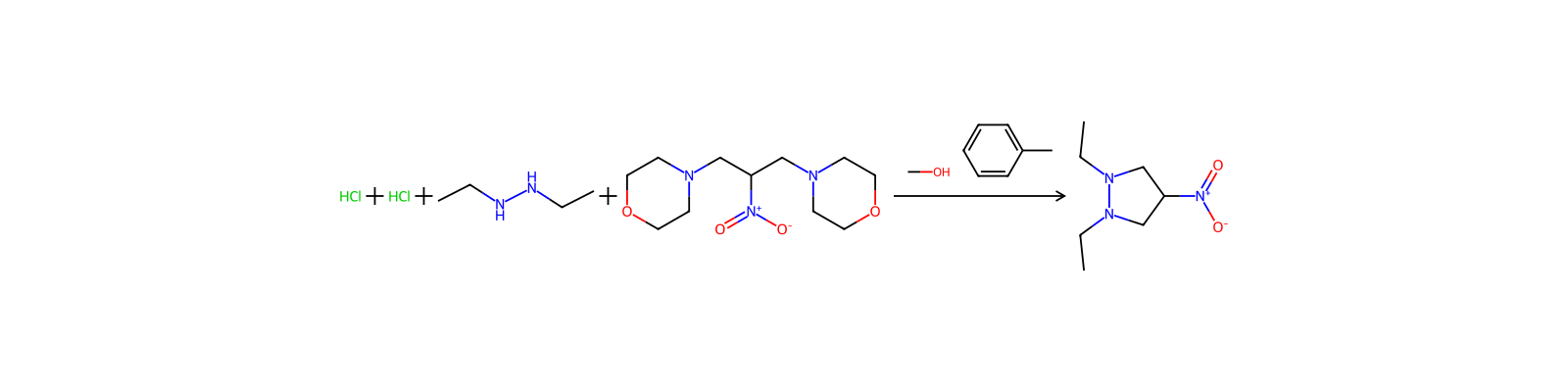
HRID 991996 reaction equation
HRID 991996As reactant
HRID 1105690 reaction equation
HRID 1105690As reactant
HRID 1105694 reaction equation
HRID 1105694As reactant
HRID 1978275 reaction equation
HRID 1978275As reactant
HRID 2198564 reaction equation
HRID 2198564As reactant
HRID 2198568 reaction equation
HRID 2198568As reactant
HRID 2299111 reaction equation
HRID 2299111As reactant

Compound notes

On this pageBasic informationOverviewNames & identifiersPropertiesSafety & regulationChemistry & industryRelated reactionsCompound notes
7699-31-2
PubChem CID
24372
DTXSID
DTXSID2025056
ChEMBL
CHEMBL1203769
UNII
X3O3IWE4TG
EC Number
624-628-5
SMILES
Cl[H].Cl[H].CCNNCC
CAS DataBase Reference
7699 · 7699-31-2
FDA UNII
3 O3IWE4TG · X3O3IWE4TG
EPA Substance Registry System
1 · 1,2-Diethylhydrazine dihydrochloride (7699-31-2)
UNSPSC Code
12352100 · 12352100
NACRES
22 · NA.22
Symbol(GHS)
7 · GHS07,GHS08
Signal word
Danger
Hazard statements
302 · H302+H312+H332-H315-H319-H335-H350
Precautionary statements
280 · P280-P301+P312-P302+P352+P312-P304+P340+P312-P305+P351+P338-P308+P313
target organs
Respiratory system
PPE
2 · Eyeshields, Gloves, type P2 (EN 143) respirator cartridges
Hazard Codes
T
Risk Statements
45 · 45-20/21/22-36/37/38
Safety Statements
53 · 53-26-36/37/39-45
RIDADR
2811 · 2811
WGK Germany
3 · 3
RTECS
2295000 · MV2295000
PackingGroup
III
Storage Class
6.1 C · 6.1C - Combustible acute toxic Cat.3toxic compounds or compounds which causing chronic effects
Hazard Classifications
4 DermalAcute · Acute Tox. 4 DermalAcute Tox. 4 InhalationAcute Tox. 4 OralCarc. 1BEye Irrit. 2Skin Irrit. 2STOT SE 3
Air and Water Reactions
Probably moisture sensitive. Water soluble.
Hazard Classes and CategoriesAcute Tox. 4 (100%)

Safety & protection

Fire FightingFires involving this material can be controlled with a dry chemical, carbon dioxide or Halon extinguisher. (NTP, 1992)
First Aid · 1 item

EYES: First check the victim for contact lenses and remove if present. Flush victim's eyes with water or normal saline solution for 20 to 30 minutes while simultaneously calling a hospital or poison control center. Do not put any ointments, oils, or medication in the victim's eyes without specific instructions from a physician. IMMEDIATELY transport the victim after flushing eyes to a hospital even if no symptoms (such as redness or irritation) develop.

Nonfire Spill Response · 1 item

SMALL SPILLS AND LEAKAGE: If you spill this chemical, you should dampen the solid spill material with water, then transfer the dampened material to a suitable container. Use absorbent paper dampened with water to pick up any remaining material. Seal your contaminated clothing and the absorbent paper in a vapor-tight plastic bag for eventual disposal. Wash all contaminated surfaces with a soap and water solution. Do not reenter the contaminated area until the Safety Officer (or other responsible person) has verified that the area has been properly cleaned.

Isolation and EvacuationExcerpt from ERG Guide 154 [Substances - Toxic and/or Corrosive (Non-Combustible)]:
Personal Protective Equipment (PPE)MINIMUM PROTECTIVE CLOTHING: If Tyvek-type disposable protective clothing is not worn during handling of this chemical, wear disposable Tyvek-type sleeves taped to your gloves.

Toxicology

Adverse EffectsDermatotoxin - Skin burns.

Safety data

PPE
Eyeshields, Gloves, type P2 (EN 143) respirator cartridges
wgk
3
rtecs
MV2295000
ridadr
2811
risk_code
45-20/21/22-36/37/38
Signal word
Danger
Symbol(GHS)
GHS07,GHS08
hazard_code
T
safety_code
53-26-36/37/39-45
Storage Class
6.1C - Combustible acute toxic Cat.3toxic compounds or compounds which causing chronic effects
packing_group
III
target organs
Respiratory system
Hazard statements
H302+H312+H332-H315-H319-H335-H350
Hazard Classifications
Acute Tox. 4 DermalAcute Tox. 4 InhalationAcute Tox. 4 OralCarc. 1BEye Irrit. 2Skin Irrit. 2STOT SE 3
Precautionary statements
P280-P301+P312-P302+P352+P312-P304+P340+P312-P305+P351+P338-P308+P313