
HRID 6968As catalyst

7789-45-9[Br][Cu][Br]QTMDXZNDVAMKGV-UHFFFAOYSA-LCopper(ii) bromide is an odorless black solid. Sinks and mixes with water. (USCG, 1999)
7789-45-9DTXSID70648634.77 at 68 °F (USCG, 1999) - Denser than water; will sink
4.710 @ 20 °C/4 °C
Very sol in water; sol in alcohol, acetone, ammonia; practically insol in benzene, ether, concentrated sulfuric acid
Very sol in water; sol in ethanol, acetone; insoluble in benzene, ethyl ether
126 parts/100 parts water
Anhydrous product is very soluble in water (55.7 g/100g solution) and soluble in ethanol and acetone.
928 °F (USCG, 1999)
498 °C
Copper(ii) bromide is an odorless black solid. Sinks and mixes with water. (USCG, 1999)
Safety information is for reference only and does not replace the supplier’s Safety Data Sheet (SDS), applicable regulations, or professional assessment.
Danger
H302 (99.5%): Harmful if swallowed [Warning Acute toxicity, oral]
P260, P264, P264+P265, P270, P273, P280, P301+P317, P301+P330+P331, P302+P361+P354, P304+P340, P305+P354+P338, P316, P317, P321, P330, P363, P391, P405, and P501 (click each P-code to see the statement)
Aggregated GHS information provided per 199 reports by companies from 11 notifications to the ECHA C&L Inventory. Each notification may be associated with multiple companies.
Chemical: Copper bromide (CuBr2)
Status: Active Update: 29-03-2019 https://echa.europa.eu/registration-dossier/-/registered-dossier/27998
Copper (II) bromide: Does not have an individual approval but may be used under an appropriate group standard
Inhalation of dust causes irritation of throat and lungs. Ingestion of large amounts causes violent vomiting and purging, intense pain, collapse, coma, convulsions, and paralysis. Contact with solutions causes eye irritation; contact with solid causes severe eye surface injury and skin irritation. (USCG, 1999)
A skin, eye, and respiratory tract irritant; May cause serious eye injury; [CAMEO] Acute copper poisoning after ingestion can cause liver injury, methemoglobinemia, and hemolytic anemia. Acute renal failure may result, secondary to massive hemoglobinuria. [Goldfrank, p. 1259] Causes burns; Inhalation may cause corrosive injuries to upper respiratory tract and lungs; Harmful by ingestion; [Alfa Aesar MSDS] See Bromine. See Copper.
Copper is mainly absorbed through the gastrointestinal tract, but it can also be inhalated and absorbed dermally. It passes through the basolateral membrane, possibly via regulatory copper transporters, and is transported to the liver and kidney bound to serum albumin. The liver is the critical organ for copper homoeostasis. In the liver and other tissues, copper is stored bound to metallothionein, amino acids, and in association with copper-dependent enzymes, then partitioned for excretion through the bile or incorporation into intra- and extracellular proteins. The transport of copper to the peripheral tissues is accomplished through the plasma attached to serum albumin, ceruloplasmin or low-molecular-weight complexes. Copper may induce the production of metallothionein and ceruloplasmin. The membrane-bound copper transporting adenosine triphosphatase (Cu-ATPase) transports copper ions into and out of cells. Physiologically normal levels of copper in the body are held constant by alterations in the rate and amount of copper absorption, compartmental distribution, and excretion. Bromine is mainly absorbed via inhalation, but may also enter the body through dermal contact. Bromine salts can be ingested. Due to its reactivity, bromine quickly forms bromide and may be deposited in the tissues, displacing other halogens. (L626, L277, L279)
Used as an intensifier in photography, brominating agent in organic synthesis, humidity indicator, wood preservative, electrolyte in batteries, stabilizer for acetylated polyformaldehyde, in metal machining, removing lead from gasoline, copying processes, and sulfur extraction of oil; [HSDB]
Metal Machining [Category: Heat or Machine]
As intensifier in photography; as brominating agent in org synthesis; as humidity indicator; as wood preservative; in solid electrolyte battery; as stabilizer for acetylated polyformaldehyde
USED IN CUTTING SOLUTIONS FOR MACHINING STEEL; FOR REMOVING LEAD FROM GASOLINE; IN PHOTOTHERMOGRAPHIC COPYING, AND FOR SULFUR EXTRACTION OF OIL.
Copper(II) bromide is used in photographic processing as an intensifier and as a brominating agent in organic synthesis. (L297)


Almost black, deliquescent solid; Very soluble in water; [HSDB] Below 29 deg C, the green tetrahydrate forms; [Ullmann] Black, odorless, hygroscopic crystalline powder; [Alfa Aesar MSDS]
Acidic inorganic salts, such as COPPER(II) BROMIDE, are generally soluble in water. The resulting solutions contain moderate concentrations of hydrogen ions and have pH's of less than 7.0. They react as acids to neutralize bases. These neutralizations generate heat, but less or far less than is generated by neutralization of inorganic acids, inorganic oxoacids, and carboxylic acid. They usually do not react as either oxidizing agents or reducing agents but such behavior is not impossible. Many of these compounds catalyze organic reactions.
SRP: At the time of review, criteria for land treatment or burial (sanitary landfill) disposal practices are subject to significant revision. Prior to implementing land disposal of waste residue (including waste sludge), consult with environmental regulatory agencies for guidance on acceptable disposal practices.
1.0 [mg/m3], as Cu
8 hr Time Weighted Avg (TWA): 1 mg/cu m /Copper dusts and mists, as Cu/
Excursion Limit Recommendation: Excursions in worker exposure levels may exceed 3 times the TLV-TWA for no more than a total of 30 minutes during a work day, and under no circumstances should they exceed 5 times the TLV-TWA, provided that the TLV-TWA is not exceeded. /Copper dusts and mists, as Cu/
EYES: irrigate opened eyes for several minutes under running water. INGESTION: do not induce vomiting. Rinse mouth with water (never give anything by mouth to an unconscious person). Seek immediate medical advice. SKIN: should be treated immediately by rinsing the affected parts in cold running water for at least 15 minutes, followed by thorough washing with soap and water. If necessary, the person should shower and change contaminated clothing and shoes, and then must seek medical attention. INHALATION: supply fresh air. If required provide artificial respiration.
People must absorb small amounts of copper every day because copper is essential for good health, however, high levels of copper can be harmful. Very-high doses of copper can cause damage to your liver and kidneys, and can even cause death. Copper may induce allergic responses in sensitive individuals. Bromine vapour causes irritation and direct damage to the mucous membranes. Elemental bromine also burns the skin. The bromide ion is a central nervous system depressant and chronic exposure produces neuronal effects. This is called bromism and can result in central reactions reaching from somnolence to coma, cachexia, exicosis, loss of reflexes or pathologic reflexes, clonic seizures, tremor, ataxia, loss of neural sensitivity, paresis, papillar edema of the eyes, abnormal speech, cerebral edema, delirium, aggressiveness, and psychoses. (L625, L626, L627, L278, L279)
EC50 Selenastrum capricornatum (green alga) 85 ug/l/14 days /Cell volume bioassay/
EC50 Thalassiosira pseudonana (alga, saltwater) 5 ug/l/72 hr /Growth rate bioassay/
EC50 Nitschia closterium (alga, saltwater) 33 ug/l/96 hr /Growth rate bioassay/
EC50 Chlorella stigmatophora (alga, saltwater) 70 ug/l/21 days /Cell volume bioassay/
For more Ecotoxicity Values (Complete) data for COPPER(II) BROMIDE (7 total), please visit the HSDB record page.
Excess copper is sequestered within hepatocyte lysosomes, where it is complexed with metallothionein. Copper hepatotoxicity is believed to occur when the lysosomes become saturated and copper accumulates in the nucleus, causing nuclear damage. This damage is possibly a result of oxidative damage, including lipid peroxidation. Copper inhibits the sulfhydryl group enzymes such as glucose-6-phosphate 1-dehydrogenase, glutathione reductase, and paraoxonases, which protect the cell from free oxygen radicals. It also influences gene expression and is a co-factor for oxidative enzymes such as cytochrome C oxidase and lysyl oxidase. In addition, the oxidative stress induced by copper is thought to activate acid sphingomyelinase, which lead to the production of ceramide, an apoptotic signal, as well as cause hemolytic anemia. Copper-induced emesis results from stimulation of the vagus nerve. Bromine is a powerful oxidizing agent and is able to release oxygen free radicals from the water in mucous membranes. These free radicals are also potent oxidizers and produce tissue damage. In additon, the formation of hydrobromic and bromic acids will result in secondary irritation. The bromide ion is also known to affect the central nervous system, causing bromism. This is believed to be a result of bromide ions substituting for chloride ions in the in actions of neurotransmitters and transport systems, thus affecting numerous synaptic processes. (L626, L627, A543, L277, T49, A174, L280)
Breathing high levels of copper can cause irritation of the nose and throat. Ingesting high levels of copper can cause nausea, vomiting, diarrhea, headache, dizziness, and respiratory difficulty. Bromine vapour causes irritation and direct damage to the mucous membranes. Symptoms include lacrimation, rhinorrhoea, eye irritation with mucous secretions from the oropharyngeal and upper airways, coughing, dyspnoea, choking, wheezing, epistaxis, and headache. The bromide ion is a central nervous system depressant producing ataxia, slurred speech, tremor, nausea, vomiting, lethargy, dizziness, visual disturbances, unsteadiness, headaches, impaired memory and concentration, disorientation and hallucinations. This is called bromism. (L626, L627, L278, L279)
Basic treatment: Establish a patent airway. Suction if necessary. Watch for signs of respiratory insufficiency and assist ventilations if necessary. Administer oxygen by nonrebreather mask at 10 to 15 L/min. Monitor for shock and treat if necessary ... . For eye contamination, flush eyes immediately with water. Irrigate each eye continuously with normal saline during transport ... . Do not use emetics. For ingestion, rinse mouth and administer 5 ml/kg up to 200 ml of water for dilution if the patient can swallow, has a strong gag reflex, and does not drool. Administer activated charcoal ... . /Copper and related compounds/
Advanced treatment: Consider orotracheal or nasotracheal intubation for airway control in the patient who is unconscious. Start an IV with lactated Ringer's /SRP: "To keep open", minimal flow rate/. Watch for signs of fluid overload. For hypotension with signs of hypovolemia, administer fluid cautiously. Consider vasopressors if hypotensive with a normal fluid volume. Watch for signs of fluid overload ... . Use proparacaine, hydrochloride to assist eye irrigation ... . /Copper and related compounds/
Prepn: Watt et al, J Am Chem Soc 77, 2752 (1955); Glemser, Sauer in Handbook of Preparative Inorganic Chemistry, vol 2, G Brauer, ed Academic Press, New York, 2nd ed, 1965) p 1009.
Cupric oxide + hydrogen bromide, anhydrous (salt formation)
Prepared by dissolving copper(II) oxide in hydrobromic acid; it can also be prepared by the direct action of bromine water on metallic copper.
DescriptionCupric bromide is a kind of inorganic compound obtained through the reaction between copper oxide and hydrobromic acid. It can be used in laser, generating pulse yellow and green light. The cupric bromide laser is an important technology used in dermatology for the treatment of pigmented lesion and vascular lesions. It can also be used in living radical polymerization and as an intensifier in photographic processing. It is also a brominating agent used in organic synthesis. In addition, it is a kind of highly efficient catalyst in the direct alkynylation of azoles.
UsesCopper(II) bromide is used as a catalyst in organic reactions, as an intensifier in photography, and as a brominating agent.
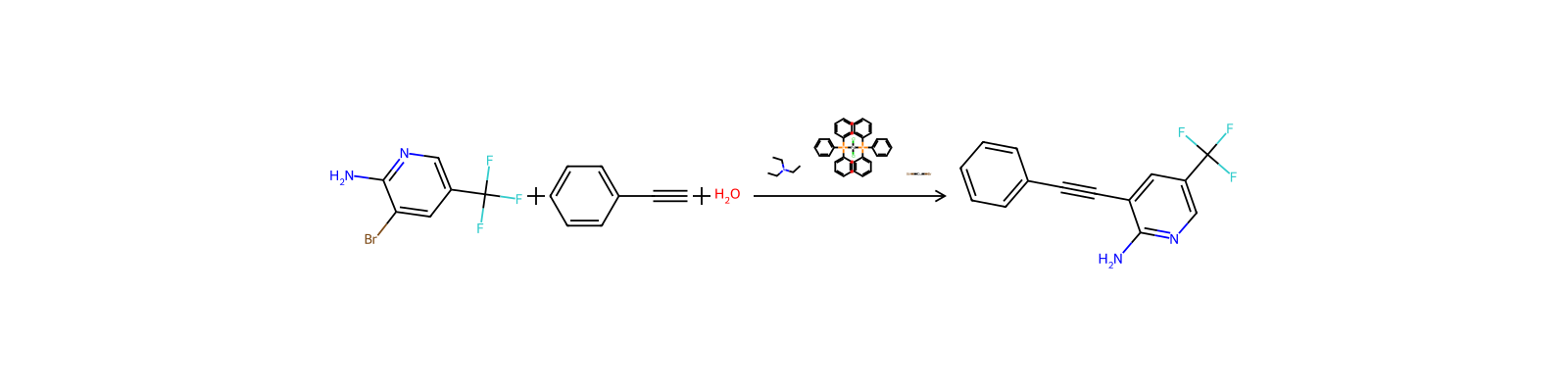
UsesCopper(II) bromide is used in photographic processing as an intensifier and as a brominating agent in organic synthesis. It is also used in the coupling of o-iodophenols and aryl acetylenes avoiding the use of palladium. It finds application in the preparation of NK1/NK2 receptor antagonists used in the regulation of tachykinin.
UsesSome reported applications of copper bromide are:catalyst in cross coupling reactions.co-catalyst in Sonogashira coupling.Lewis acid in enantioselective addition of alkynes.reducing agent, when complexed by three molecules of pyridine initiators for the controlled polymerization of styrene, methyl acrylate and methyl methacrylate.Reductive homocoupling of α-bromo- α- chlorocarboxylates to dimethyl α, α′ dichlorosuccinate derivatives in presence of CuBr/LiOCH3 in methanol has been reported.
UsesAs intensifier in photography; as brominating agent in organic synthesis; as humidity indicator; as wood preservative; in solid-electrolyte battery; as stabilizer for acetylated polyformaldehyde.
General DescriptionOdorless black solid. Sinks and mixes with water.
PreparationCopper(II) bromide is most easily prepared by neutralization of copper(II) oxide, carbonate, or hydroxide with hydrobromic acid. It can also be produced by oxidation of copper metal with bromine water or by reaction of bromine solutions in alcohol with copper powder.