HomeMCPWorkbenchSkills
HomeWorkbenchNotificationsMe
llms.txt · MCP GuidePrivacy Policy · Terms of Service · Supportv1.8.0
  1. Home
  2. /Compound

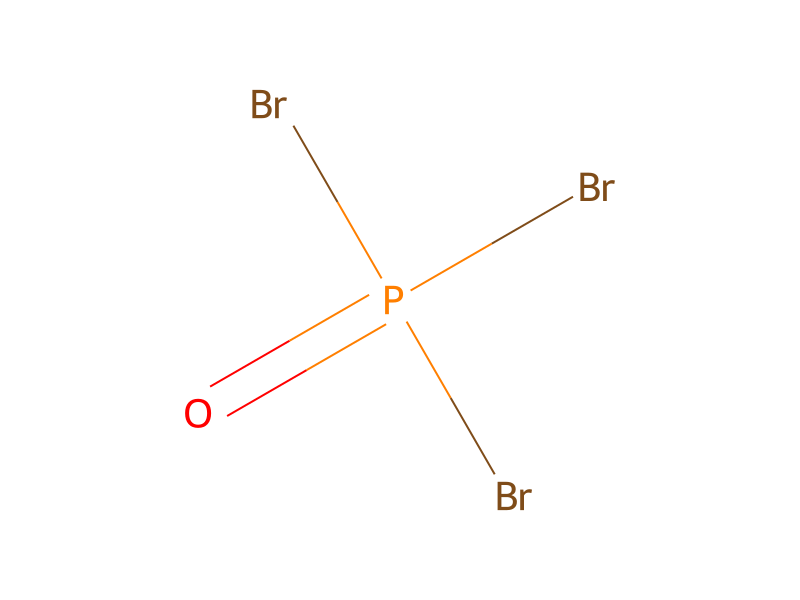
Phosphorus oxybromide
HCID 24613
New noteNew reactionRequest quotes
Print preview
Basic informationOverviewNames & identifiersPropertiesSafety & regulationChemistry & industryRelated reactionsCompound notes
Substructure searchFind similar structures

Basic information

CAS
7789-59-5
Standard SMILES
O=P(Br)(Br)Br
InChIKey
UXCDUFKZSUBXGM-UHFFFAOYSA-N
Molecular formula
Br3OP
Average molar mass
286.69 g/mol
Monoisotopic mass
283.72369

Overview

Phosphorus oxybromide appears as a colorless crystalline solid or liquid if heated above 133 °F with a pungent odor. It is commonly heated and shipped in a molten state. Soluble in water, but, decomposed by water to hydrobromic and phosphoric acid with evolution of heat. Reacts with organic materials to cause fire. Evolves highly toxic and corrosive gases when exposed to fire. Corrosive to metals and tissue. Used to make other chemicals.

Names & identifiers

Preferred name
Phosphorus oxybromide
IUPAC
Phosphoric tribromide
English name
Phosphorus oxybromide
Molecular formula
Br3OP
Molecular weight
286.69

Names & synonyms

PHOSPHORUS OXYBROMIDE7789-59-5Phosphoric tribromidePhosphoryl bromidePhosphoryl tribromideTribromophosphorus oxidePhosphorus (V) oxybromideUN1939UN2576H98H8Y87QQHSDB 1166PHOSPHONYL TRIBROMIDE
Show more names
POBr3phosphorus(v) oxybromidePHOSPHOROUS OXYBROMIDEphosphoryltribromidetribromophosphorusoxideAURORA KA-1088Formylmelphalan
EINECS 232-177-7UN2576 (molten)PHOSPHORUS BROMIDE OXIDE (PBR3O)PHOSPHORUS OXYTRIBROMIDEDTXSID2064868PHOSPHORUS OXYBROMIDE [MI]PHOSPHORUS OXYBROMIDE, SOLIDUN-1939

Database identifiers

CAS
7789-59-5
PubChem CID
24613
DTXSID
DTXSID2064868
UNII
H98H8Y87QQ
EC Number
232-177-7
Nikkaji

Properties

Computed structural properties

XLogP
2.2
Topological polar surface area
17.1 Ų
Hydrogen bond donors
0
Hydrogen bond acceptors
1
Rotatable bonds
0
Heavy atoms
5
Formal charge
0
Complexity
53

Experimental & physicochemical properties

Chemical Classes · 2 items

Other Classes -> Halogens, Inorganic Compounds

Corrosives

SpringerMaterials PropertiesGibbs energy
Density · 2 items

greater than 1 (NOAA, 2007)

2.822

Color/Form · 2 items

COLORLESS CRYSTALS

THIN PLATES, FAINT ORANGE TINT

SolubilitySOL IN ETHER, BENZENE, CHLOROFORM, CARBON DISULFIDE, CONCENTRATED SULFURIC ACID
Boiling PointAT 758 MM HG IT BOILS AT 193 °C WITH DECOMPOSITION
DecompositionWHEN HEATED TO DECOMP, IT EMITS HIGHLY TOXIC FUMES OF BROMIDES & PO(X).
Melting Point · 2 items

133 °F (NOAA, 2007)

56 °C (IN HOT WATER)

Physical Description · 2 items

Phosphorus oxybromide appears as a colorless crystalline solid or liquid if heated above 133 °F with a pungent odor. It is commonly heated and shipped in a molten state. Soluble in water, but, decomposed by water to hydrobromic and phosphoric acid with evolution of heat. Reacts with organic materials to cause fire. Evolves highly toxic and corrosive gases when exposed to fire. Corrosive to metals and tissue. Used to make other chemicals.

Safety & regulation

Safety information is for reference only and does not replace the supplier’s Safety Data Sheet (SDS), applicable regulations, or professional assessment.

GHS classification

GHS Classification · 4 items

Danger

H290 (13%): May be corrosive to metals [Warning Corrosive to Metals]

P234, P260, P261, P264, P271, P280, P301+P330+P331, P302+P361+P354, P304+P340, P305+P354+P338, P316, P319, P321, P363, P390, P403+P233, P405, P406, and P501 (click each P-code to see the statement)

Aggregated GHS information provided per 69 reports by companies from 8 notifications to the ECHA C&L Inventory. Each notification may be associated with multiple companies.

Hazard information

Regulatory Information · 4 items

Chemical: Phosphoryl bromide

REACH registered substance: Phosphoryl tribromide (EC: 232-177-7)

Phosphoryl bromide: Does not have an individual approval but may be used under an appropriate group standard

The New Jersey Worker and Community Right to Know Act requires public and private employers to provide information about hazardous substances at their workplaces. (N.J.S.A. 34:5A-1 et. seq.)

DOT LabelCorrosive
Fire Hazards · 3 items

Excerpt from ERG Guide 137 [Substances - Water-Reactive - Corrosive]:

· EXCEPT FOR ACETIC ANHYDRIDE (UN1715), THAT IS FLAMMABLE, some of these materials may burn, but none ignite readily.

· EXCEPT FOR ACETIC ANHYDRIDE (UN1715), THAT IS FLAMMABLE, some of these materials may burn, but none ignite readily.

Health Hazards · 3 items

Excerpt from ERG Guide 137 [Substances - Water-Reactive - Corrosive]:

· CORROSIVE and/or TOXIC; inhalation, ingestion or contact (skin, eyes) with vapors, dusts or substance may cause severe injury, burns or death.

· CORROSIVE and/or TOXIC; inhalation, ingestion or contact (skin, eyes) with vapors, dusts or substance may cause severe injury, burns or death.

Chemistry & industry

Uses & manufacturing

Uses · 2 items

Used as chemical intermediate; [Hawley]

PRINCIPALLY USED AS CHEM INTERMEDIATE

U.S. Exports · 2 items

(1972) No Data

(1975) No Data

U.S. Imports · 2 items

(1972) No Data

(1975) No Data

U.S. Production · 2 items

(1972) No Data

(1975) No Data

Methods of Manufacturing · 2 items

REACTION OF PHOSPHORUS PENTABROMIDE & PHOSPHORUS PENTOXIDE

REACTION OF PHOSPHORUS PENTABROMIDE AND PHOSPHORUS PENTOXIDE: HONIGSCHMID, HIRSCHBOLD-WITTNER; Z ANORG ALLGEM CHEM 243: 355 (1940); JOHNSON, NUNN; J AM CHEM SOC 63: 141 (1941); BOOTH, SEEGMILLER; INORG SYN 2: 151 (1946).

General Manufacturing InformationPhosphoric tribromide: ACTIVE
Applications · 3 items

UsesPhosphorus(V) Oxybromide is a reagent used in the preparation of phosphoryl halide for N-protection of amino acids using group assisted purification (GAP). Phosphorus(V) Oxybromide is a brominating agent.

UsesPhosphorus(V) oxybromide may be used as brominating reagent in the synthesis of 2,4,6-tribromopyrimidine. It may be used in the preparation of bromoheterocyclic compounds.

General DescriptionA colorless crystalline solid or liquid if heated above 133° F with a pungent odor. Phosphorus oxybromide is commonly heated and shipped in a molten state. Soluble in water, but, decomposed by water to hydrobromic and phosphoric acid with evolution of heat. Reacts with organic materials to cause fire. Evolves highly toxic and corrosive gases when exposed to fire. Corrosive to metals and tissue. Used to make other chemicals.

Related reactions

551 records
New reaction record
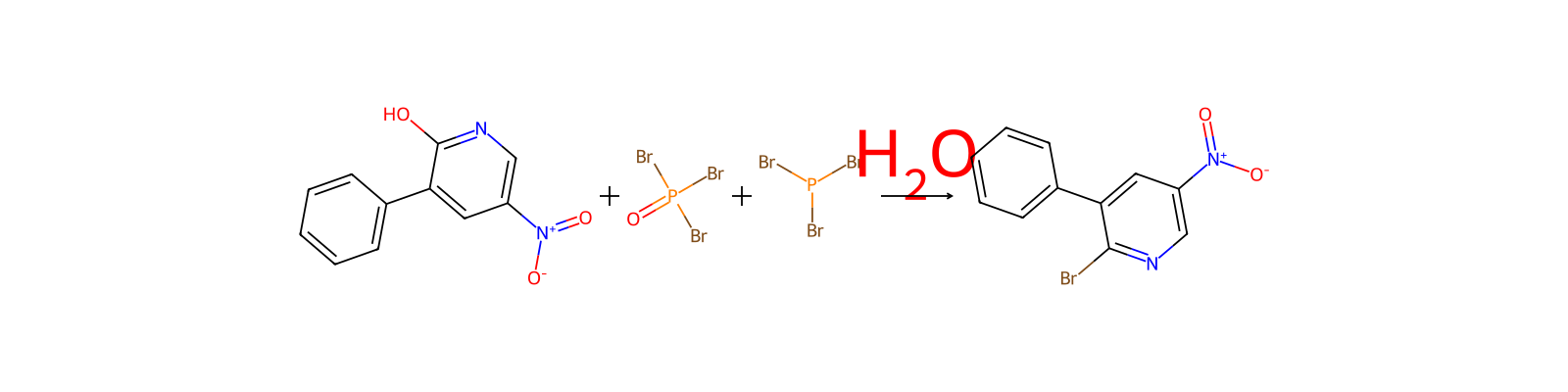
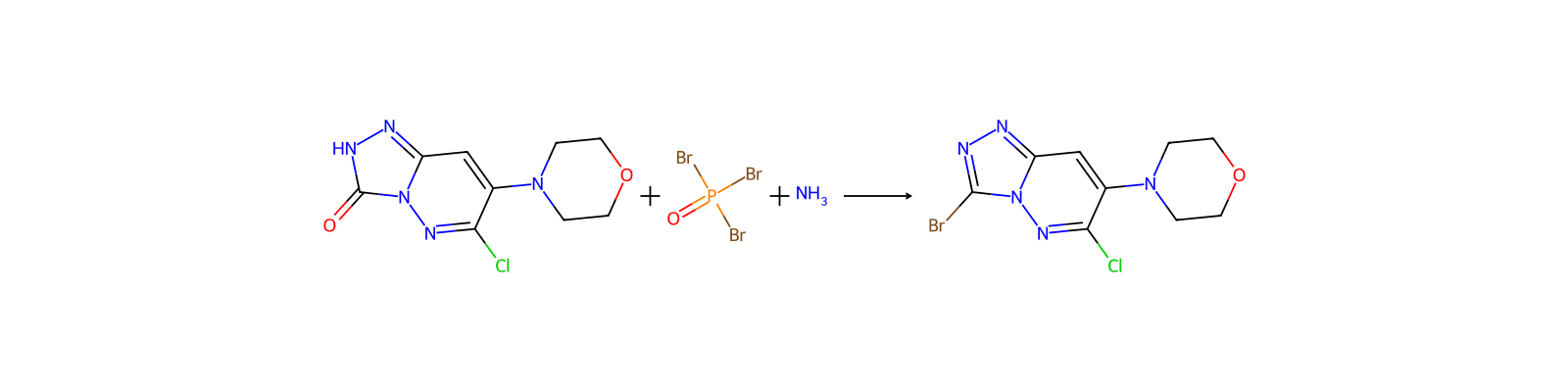
HRID 41585 reaction equation
HRID 41585As reactantuspto-grants-2013_09
HRID 41603 reaction equation
HRID 41603As reactantuspto-grants-2013_09
HRID 41981 reaction equation
HRID 41981As reactantuspto-grants-2013_09
HRID 41994 reaction equation
HRID 41994As reactantuspto-grants-2013_09
HRID 47233 reaction equation
HRID 47233As reactantuspto-grants-2004_03
HRID 59958 reaction equation
HRID 59958As reactantuspto-grants-2016_09
HRID 65782 reaction equation
HRID 65782As reactantuspto-grants-1978_12
HRID 70814 reaction equation
HRID 70814As reactantuspto-grants-2014_09
Page 1 of 69

Compound notes

Loading…

On this pageBasic informationOverviewNames & identifiersPropertiesSafety & regulationChemistry & industryRelated reactionsCompound notes
More actions
New noteNew reactionRequest quotes
J95.146C

Colorless solid; [Hawley] Light brown solid; [MSDSonline]

Other Experimental Properties · 2 items

SLOWLY HYDROLYZES IN WATER FORMING PHOSPHORIC ACID & HYDROGEN BROMIDE; AT 758 MM HG IT BOILS AT 193 °C WITH DECOMPOSITION

DECOMPOSES IN COLD WATER

Physicochemical properties

Melting point
56 °C · 56 °C(lit.)
Boiling point
192 °C · 192 °C(lit.)
Density
2.82 g/mL · 2.82 g/mL at 25 °C(lit.)
Flash point
189 °C · 189°C
storage temp.
30 °C · Store below +30°C.
solubility
2 O; · reacts with H2O; soluble in benzene, ethyl ether,chloroform
form
Lump
Specific Gravity
2.822 · 2.822
color
White to yellow
Water Solubility
decomposes
Specific Heat Capacity
0.31 J/ · Cp(gas): 0.31 J/(g·K), at 25℃
Sensitive
Moisture Sensitive
Merck
14 · 14,7348
InChI
1S/Br3OP/c1-5(2,3)4
InChIKey
UXCDUFKZSUBXGM-UHFFFAOYSA-N
SMILES
BrP(Br)(Br)=O
CAS DataBase Reference
7789 · 7789-59-5(CAS DataBase Reference)
FDA UNII
98 H8Y87QQ · H98H8Y87QQ
NIST Chemistry Reference
Phosphorus tribromide oxide(7789-59-5)
EPA Substance Registry System
Phosphoric tribromide (7789-59-5)
UNSPSC Code
12352307 · 12352307
NACRES
22 · NA.22
Symbol(GHS)
5 · GHS05
Signal word
Danger
Hazard statements
314 · H314
Precautionary statements
260 · P260-P264-P280-P301+P330+P331-P303+P361+P353-P363-P304+P340-P310-P305+P351+P338-P405-P501
PPE
3 · Eyeshields, Faceshields, Gloves, type P3 (EN 143) respirator cartridges
Hazard Codes
C
Risk Statements
14 · 14-34-37
Safety Statements
26 · 26-36/37/39-43-45-7/8-Neverusewater.
RIDADR
1939 · UN 1939 8/PG II (PHOSPHORUS OXYBROMIDE)
WGK Germany
3 · 3
F
10 · 10-21
Hazard Note
Corrosive
TSCA
TSCA listed
HazardClass
8 · 8
PackingGroup
II
HS Code
28129090 · 28129090
Storage Class
8 A · 8A - Combustible corrosive hazardous materials
Hazard Classifications
1 Skin · Eye Dam. 1Skin Corr. 1B
Hazardous Substances Data
7789 · 7789-59-5(Hazardous Substances Data)
REACH Registrations
Active
Limited Quantities
1 L · 1.0 L (0.3 gallons) (liquid) or 1 Kg (2.2 lbs) (solid)
Excepted Quantities
Max Inner Pack (30g or 30ml) and Max Outer Pack (500g or 500ml)
Hazards Summary · 1 item

Highly reactive with organic materials; A strong skin and tissue irritant; [Hawley] May cause fire on contact with organic substances; Corrosive to tissue; [CAMEO] Corrosive to skin and eyes; [eChemPortal: ERMA] Reacts violently with water; A corrosive substance that can cause injury to the skin, eyes, and respiratory tract; Inhalation may cause chemical pneumonitis; [MSDSonline]

DOT ID and Guide · 2 items

1939 137

2576 137

Reactive GroupAcyl Halides, Sulfonyl Halides, and Chloroformates
Reactivity AlertsWater-Reactive
Reactivity Profile · 1 item

PHOSPHORUS OXYBROMIDE is incompatible with water, strong oxidizing agents, alcohols, bases, including amines. May react vigorously or explosively if mixed with diisopropyl ether or other ethers in the presence of trace amounts of metal salts [J. Haz. Mat., 1981, 4, 291].

DOT Emergency Guidelines · 5 items

/GUIDE 137: SUBSTANCES - WATER-REACTIVE - CORROSIVE/ Health: CORROSIVE and/or TOXIC; inhalation, ingestion or contact (skin, eyes) with vapors, dusts or substance may cause severe injury, burns, or death. Fire will produce irritating, corrosive and/or toxic gases. Reaction with water may generate much heat which will increase the concentration of fumes in the air. Contact with molten substance may cause severe burns to skin and eyes. Runoff from fire control or dilution water may cause pollution. /Phosphorus oxybromide; Phosphorus oxybromide, molten; Phosphorus oxybromide, solid/

/GUIDE 137: SUBSTANCES - WATER-REACTIVE - CORROSIVE/ Fire or Explosion: ... Some of these materials may burn, but none ignite readily. May ignite combustibles (wood, paper, oil, clothing, etc.). Substance will react with water (some violently), releasing corrosive and/or toxic gases. Flammable/toxic gases may accumulate in confined areas (basement, tanks, hopper/tank cars etc.). Contact with metals may evolve flammable hydrogen gas. Containers may explode when heated or if contaminated with water. Substance may be transported in a molten form. /Phosphorus oxybromide; Phosphorus oxybromide, molten; Phosphorus oxybromide, solid/

/GUIDE 137: SUBSTANCES - WATER-REACTIVE - CORROSIVE/ Public Safety: CALL Emergency Response Telephone Number ... . As an immediate precautionary measure, isolate spill or leak area in all directions for at least 50 meters (150 feet) for liquids and at least 25 meters (75) feet for solids. Keep unauthorized personnel away. Stay upwind. Keep out of low areas. Ventilate enclosed areas. /Phosphorus oxybromide; Phosphorus oxybromide, molten; Phosphorus oxybromide, solid/

/GUIDE 137: SUBSTANCES - WATER-REACTIVE - CORROSIVE/ Protective Clothing: Wear positive pressure self-contained breathing apparatus (SCBA). Wear chemical protective clothing that is specifically recommended by the manufacturer. It may provide little or no thermal protection. Structural firefighters' protective clothing provides limited protection in fire situations ONLY; it is not effective in spill situations where direct contact with the substance is possible. /Phosphorus oxybromide; Phosphorus oxybromide, molten; Phosphorus oxybromide, solid/

For more DOT Emergency Guidelines (Complete) data for PHOSPHORUS OXYBROMIDE (8 total), please visit the HSDB record page.

DOT Hazard Classification · 6 items

Phosphorus oxybromide

UN1939

Class 8 Corrosive material (49 eCFR § 173.136)

PG II: the degree of danger presented by the material is medium

Phosphorus oxybromide, molten

UN2576

Air and Water ReactionsReacts slowly and exothermically with water to form phosphoric acid and hydrobromic acid [Merck, 11th ed. 1989]. Decomposes exothermically in water to form toxic fumes of hydrobromic and phosphoric acids [Lewis].

Safety & protection

Fire FightingExcerpt from ERG Guide 137 [Substances - Water-Reactive - Corrosive]:
Accidental Release Measures · 4 items

· CALL 911. Then call emergency response telephone number on shipping paper. If shipping paper not available or no answer, refer to appropriate telephone number listed on the inside back cover.

· Do not touch damaged containers or spilled material unless wearing appropriate protective clothing.

· CALL 911. Then call emergency response telephone number on shipping paper. If shipping paper not available or no answer, refer to appropriate telephone number listed on the inside back cover.

· Do not touch damaged containers or spilled material unless wearing appropriate protective clothing.

First Aid · 3 items

Excerpt from ERG Guide 137 [Substances - Water-Reactive - Corrosive]:

General First Aid:

General First Aid:

Exposure Control and Personal Protection · 2 items

· Wear positive pressure self-contained breathing apparatus (SCBA).

· Wear positive pressure self-contained breathing apparatus (SCBA).

Storage Conditions · 2 items

...SHOULD BE STORED IN A COOL, WELL-VENTILATED PLACE, OUT OF DIRECT RAYS OF SUN, AWAY FROM AREAS OF HIGH FIRE HAZARD, &...PERIODICALLY INSPECTED & MONITORED. INCOMPATIBLE MATERIALS SHOULD BE ISOLATED...

STORE IN SEALED GLASS AMPULES.

Nonfire Spill ResponseExcerpt from ERG Guide 137 [Substances - Water-Reactive - Corrosive]:
Preventive MeasuresTHE BASIC VENTILATION METHODS ARE LOCAL EXHAUST AND DILUTION OR GENERAL VENTILATION.
Isolation and Evacuation · 3 items

Excerpt from ERG Guide 137 [Substances - Water-Reactive - Corrosive]:

Immediate precautionary measure

Immediate precautionary measure

Personal Protective Equipment (PPE)Excerpt from ERG Guide 137 [Substances - Water-Reactive - Corrosive]:
Emergency Response Planning Guidelines · 2 items

· When material is not involved in fire, do not use water on material itself.

· When material is not involved in fire, do not use water on material itself.

Toxicology

Adverse EffectsDermatotoxin - Skin burns.
Human Toxicity Excerpts · 2 items

SYMPTOMATOLOGY (...INGESTION OR SKIN CONTACT): 1. CORROSION OF MUCOUS MEMBRANES OF MOUTH, THROAT...ESOPHAGUS, WITH...PAIN & DYSPHAGIA. NECROTIC AREAS...GRAYISH WHITE BUT SOON...BLACKISH DISCOLORATION (YELLOW IN CASE OF NITRIC ACID) & SOMETIMES SHRUNK OR WRINKLED TEXTURE. 2. EPIGASTRIC PAIN...MAY BE ASSOC WITH NAUSEA & VOMITING...INTENSE THIRST. 3. CIRCULATORY COLLAPSE...CLAMMY SKIN, WEAK & RAPID PULSE, SHALLOW RESP...SCANTY URINE. ...SHOCK IS OFTEN...CAUSE OF DEATH. 4. ASPHYXIAL DEATH DUE TO GLOTTIC EDEMA. /ACIDS/

SYMPTOMATOLOGY.../INGESTION/: 5. ULCERATION OF ALL MEMBRANES & TISSUES WITH WHICH ACID COMES IN CONTACT. ULCERATED AREAS OFTEN PERFORATE, LEADING TO MEDIASTINITIS & PERITONITIS. 6. LATE ESOPHAGEAL, GASTRIC & PYLORIC STRUCTURES & STENOSIS...MAY REQUIRE...SURGICAL REPAIR, SHOULD BE ANTICIPATED. PERMANENT SCARS MAY...APPEAR IN CORNEA, SKIN & OROPHARYNX. 7. UNCORRECTED CIRCULATORY COLLAPSE OF SEVERAL HR...MAY LEAD TO RENAL FAILURE & ISCHEMIC LESIONS IN LIVER & HEART. /ACIDS/

Safety data

F
10-21
PPE
Eyeshields, Faceshields, Gloves, type P3 (EN 143) respirator cartridges
wgk
3
tsca
TSCA listed
ridadr
UN 2576 8/PG II (PHOSPHORUS OXYBROMIDE, MOLTEN)
hs_code
28129090
risk_code
14-34-37
Signal word
Danger
Symbol(GHS)
GHS05
hazard_code
C
hazard_note
Corrosive
safety_code
26-36/37/39-43-45-7/8-Neverusewater.
hazard_class
8
Storage Class
8A - Combustible corrosive hazardous materials
packing_group
II
Hazard statements
H314
Limited Quantities
1.0 L (0.3 gallons) (liquid) or 1 Kg (2.2 lbs) (solid)
Excepted Quantities
Max Inner Pack (30g or 30ml) and Max Outer Pack (500g or 500ml)
REACH Registrations
Active
Hazard Classifications
Eye Dam. 1Skin Corr. 1B
Precautionary statements
P260-P264-P280-P301+P330+P331-P303+P361+P353-P363-P304+P340-P310-P305+P351+P338-P405-P501
Hazardous Substances Data
7789-59-5(Hazardous Substances Data)
Preparation methods · 1 item

PreparationPhosphorus oxychloride method: take phosphorus oxychloride as raw material and aluminum trichloride as the catalyst, upon heating at about 80 ℃, introduce hydrogen bromide gas for reaction, generating tribromo phosphorus. The reaction is: POC13 + 3HBr → POBr3 + 3HCl ↑ The produced hydrogen chloride gas during the reaction, after being absorbed by water, can produce dilute hydrochloric acid. Phosphorus tribromide method: to a round bottom flask equipped with a reflow condenser, add the mixture of phosphorus pentabromide and phosphorus pentoxide (250 g of PBr5/about 30 g of P2O5) and heat slowly to 150 ° C. Phosphorus pentoxide is a bit more than the phosphorus pentabromide in stoichiometry. At this time, one the one hand, pay attention to expel the bromine out; on the other hand, make sure that the reaction is completed within 5h. Then, 10 g of bromine and equivalent amount of phosphorus pentoxide were added to the melt and refluxed at 150 ° C for several hours. This is because it takes time for the intermediate product, phosphorus tribromide, to be oxidized to phosphorus pentabromide and transited to tribromonic phosphorus. The resultant was subjected to vacuum distillation under reduced pressure. After removing the initial distillate and the phosphorus tribromide contained therein, the trapping was carried out. The receiver is cooled with ice brine to generate tribromo phosphorus. Its reaction is: 3PBr5 + P2O5 → 5POBr3

Upstream & downstream products

Upstream raw materials

BifenthrinHydrogen bromide

Downstream products

2,4-Dibromothiazole2-Bromo-3-iodo-isonicotinic acid2-Bromo-4-nitroimidazolePyridazine, 3-bromo- (9CI)3,3,3-Trifluoropropionic acid6-Chloro-2-(trifluoromethyl)quinoline-4-carboxylic acid3-Amino-2-bromopyridine4-Bromopyrimidine4-Bromo-6-fluoro-2-(trifluoromethyl)quinoline2-Bromo-pyridin-3-ylamine HCl2-(Trifluoromethyl)quinoline-4-carboxylic acid2,4,6-Tribromopyrimidine4-Bromo-pyran-2-one4-Bromoquinolin-2(1H)-oneN-(2-Bromo-3-pyridinyl)acetamide5-Dimethylamino-thiophene-2-carbaldehydeThiazole-5-carboxaldehyde2-Bromoquinoline5-Acetamido-2-bromopyridine2-Bromo-6-ethoxypyridine-4-carboxylic acid2-(Trifluoromethyl)-5,7-dimethylquinoline-4-carboxylic acid1-(3-Methoxypropyl)-piperazineMethyl 5-bromopyrazine-2-carboxylate2-Bromo-5-nitropyridine2-Bromo-3-nitropyridineThiazole-4-carboxaldehyde2,4-Dibromopyrimidine6-Bromopurine5-Chloro-2-(trifluoromethyl)quinoline-4-carboxylic acid5-Bromothiophene-2-carbaldehyde5-Amino-2-bromopyridine4-bromo-2-(trifluoromethyl)quinoline6-Fluoro-4-(trifluoromethyl)quinoline-2-carboxylic acid ,97%2-Bromo-5-nitro-4-picoline2-Trifluoromethylquinoline6-Bromo-2,4-dimethoxypyrimidine2-Bromoquinoxaline2-(Trifluoromethyl)-5-methylquinoline-4-carboxylic acid2-Chloro(bromo)pyrimidine2,6-Bis(trifluoromethyl)-4-hydroxyquinoline