

Basic information
- Standard SMILES
CCCCCCCCCCCCCCCCCC(=O)OCC(O)CO- InChIKey
VBICKXHEKHSIBG-UHFFFAOYSA-N- Molecular formula
- C21H42O4
- Average molar mass
- 358.6 g/mol
- Monoisotopic mass
- 358.30830982
Names & identifiers
- Preferred name
- Monostearin
- IUPAC
- 2,3-dihydroxypropyl octadecanoate
- English name
- 1,2,3-Propanetriol, homopolymer, isooctadecanoate
- Molecular formula
- C18H36O2.x(C3H8O3)x
- Molecular weight
- 0
Names & synonyms
Glyceryl monostearateMonostearin31566-31-1Glycerin 1-monostearateGlycerin 1-stearateStearin, 1-mono-Stearic acid 1-monoglyceride1-Glyceryl stearatealpha-MonostearinGlyceryl 1-monostearateStearoylglycerolGlycerin monostearate
Show more names
Polyglycerin-3-triisostearat1,2,3-Propanetriol, homopolymer, isooctadecanoate
3-Stearoyloxy-1,2-propanediolGlycerol alpha-monostearateCerasynt SDMonoglyceryl stearateCefatinDermagineMonelginSedetine
Database identifiers
- CAS
123-94-4、14811-92-8、22610-63-5、31566-31-1、83138-62-9、85666-92-8、91052-47-0- PubChem CID
- 24699
- DTXSID
DTXSID7029160- ChEMBL
CHEMBL255696- ChEBI
CHEBI:75555- UNII
- 258491E1RZ
- EC Number
- 204-664-4、245-121-1、250-705-4、293-208-8、617-739-5
- Nikkaji
- J10.136B
Properties
Computed structural properties
- XLogP
- 7.4
- Topological polar surface area
- 66.8 Ų
- Hydrogen bond donors
- 2
- Hydrogen bond acceptors
- 4
- Rotatable bonds
- 20
- Heavy atoms
- 25
- Formal charge
- 0
- Complexity
- 281
Experimental & physicochemical properties
Density0.97 @25 °C
Solubility
insoluble in water; soluble in hot oils, organic solvents
soluble in hot alcohol (in ethanol)
Physical Description
Dry Powder; Liquid; Other Solid; Dry Powder; Large Crystals; CBI; Large Crystals; Other Solid; Dry Powder
Large Crystals
White waxy solid; [Merck Index]
white to pale yellow wax-like solid with a mild fatty odour
Collision Cross Section201.2 Ų [M+Na]+ [CCS Type: DT; Buffer gas: N2; Ionization: ESI+; Dataset: TOXCAST; Source Identifier: DTXSID7029160]
Physicochemical properties
- EPA Substance Registry System
- 1 · 1,2,3-Propanetriol, homopolymer, isooctadecanoate (83138-62-9)
- TSCA
- TSCA listed
Safety & regulation
GHS classification
GHS Classification
This chemical does not meet GHS hazard criteria for 99.6% (708 of 711) of all reports.
Not Classified;Reported as not meeting GHS hazard criteria by 708 of 711 companies (only 0.4% companies provided GHS information). For more detailed information, please visit ECHA C&L website.
Aggregated GHS information provided per 711 reports by companies from 5 notifications to the ECHA C&L Inventory.;Reported as not meeting GHS hazard criteria per 708 of 711 reports by companies.;There are 3 notifications provided by 3 of 711 reports by companies with hazard statement code(s).;Information may vary between notifications depending on impurities, additives, and other factors. The percentage value in parenthesis indicates the notified classification ratio from companies that provide hazard codes. Only hazard codes with percentage values above 10% are shown. For more detailed information, please visit ECHA C&L website.
This chemical does not meet GHS hazard criteria for 100% (428 of 428) of all reports.
Not Classified;Reported as not meeting GHS hazard criteria by 428 of 428 companies. For more detailed information, please visit ECHA C&L website.
Aggregated GHS information provided per 428 reports by companies from 1 notifications to the ECHA C&L Inventory.;Reported as not meeting GHS hazard criteria per 428 of 428 reports by companies.;There are 0 notifications provided by 0 of 428 reports by companies with hazard statement code(s).;Information may vary between notifications depending on impurities, additives, and other factors. The percentage value in parenthesis indicates the notified classification ratio from companies that provide hazard codes. Only hazard codes with percentage values above 10% are shown. For more detailed information, please visit ECHA C&L website.
Hazard information
Regulatory Information
Chemical: Octadecanoic acid, 2,3-dihydroxypropyl ester
Chemical: Octadecanoic acid, monoester with 1,2,3-propanetriol
Octadecanoic acid, monoester with 1,2,3-propanetriol is listed on the EPA's Chemical Data Reporting (CDR) system. Manufacturers and importers of Octadecanoic acid, monoester with 1,2,3-propanetriol are required to report information about their production and use of this chemical to the EPA under the Toxic Substances Control Act (TSCA). (40 eCFR Part 711)
Octadecanoic acid, 2,3-dihydroxypropyl ester is listed on the EPA's Chemical Data Reporting (CDR) system. Manufacturers and importers of Octadecanoic acid, 2,3-dihydroxypropyl ester are required to report information about their production and use of this chemical to the EPA under the Toxic Substances Control Act (TSCA). (40 eCFR Part 711)
Status: Active Update: 03-03-2020 https://echa.europa.eu/registration-dossier/-/registered-dossier/14699
Status: Active Update: 23-03-2023 https://echa.europa.eu/registration-dossier/-/registered-dossier/2133
Other Safety Information
IMAP assessments - Octadecanoic acid, 2,3-dihydroxypropyl ester: Human health tier I assessment
IMAP assessments - Octadecanoic acid, monoester with 1,2,3-propanetriol: Human health tier I assessment;IMAP assessments - Octadecanoic acid, monoester with 1,2,3-propanetriol: Environment tier I assessment
Hazards Summary
Intraperitoneal LD50 (mouse) = 200 mg/kg; [RTECS] Product of commerce is a variable mixture of glyceryl monostearate and glyceryl monopalmitate; [Merck Index] Safe when used as a flavoring agent in food; [JECFA] May cause irritation; [Alfa Aesar MSDS]
EPA Safer Chemical
Chemical: Glyceryl monostearate; Green circle - The chemical has been verified to be of low concern based on experimental and modeled data.
Chemical: Glyceryl monostearate; Green circle - The chemical has been verified to be of low concern based on experimental and modeled data.
Hazard Classes and Categories
Not Classified
Not Classified
Not Classified
Safety & protection
Protective Action Criteria (PAC)
0.66 [mg/m3]
7.2 [mg/m3]
43 [mg/m3]
Regulatory information
Regulatory Information
Chemical: Octadecanoic acid, 2,3-dihydroxypropyl ester
Chemical: Octadecanoic acid, monoester with 1,2,3-propanetriol
Octadecanoic acid, monoester with 1,2,3-propanetriol is listed on the EPA's Chemical Data Reporting (CDR) system. Manufacturers and importers of Octadecanoic acid, monoester with 1,2,3-propanetriol are required to report information about their production and use of this chemical to the EPA under the Toxic Substances Control Act (TSCA). (40 eCFR Part 711)
Octadecanoic acid, 2,3-dihydroxypropyl ester is listed on the EPA's Chemical Data Reporting (CDR) system. Manufacturers and importers of Octadecanoic acid, 2,3-dihydroxypropyl ester are required to report information about their production and use of this chemical to the EPA under the Toxic Substances Control Act (TSCA). (40 eCFR Part 711)
Status: Active Update: 03-03-2020 https://echa.europa.eu/registration-dossier/-/registered-dossier/14699
Status: Active Update: 23-03-2023 https://echa.europa.eu/registration-dossier/-/registered-dossier/2133
Safety data
- tsca
- TSCA listed
Chemistry & industry
Uses & manufacturing
Uses
Used as a pharmaceutical aid; [Merck Index] Permitted for use as an inert ingredient in non-food pesticide products; [EPA] Used as an emulsifier, firming agent, flavor enhancer, lubricant or release agent, masticatory substance, and texturizer for foods; [FDA]
U.S. Production
2023: 4,000,000 - <5,500,000 lb;2022: 7,000,000 - <8,500,000 lb;2021: 7,000,000 - <8,500,000 lb;2020: 5,500,000 - <7,000,000 lb
2023: 125,399 lb;2022: 335,698 lb
Consumer UsesLubricating agent;Dispersing agent;Anti-caking agent;Insulators;Anti-adhesive/cohesive;Processing aids not otherwise specified;Surfactant (surface active agent);Not Known or Reasonably Ascertainable;Emulsifier;Anti-static agent
Industry UsesAnti-static agent;Not Known or Reasonably Ascertainable;Emulsifier;Plasticizer;Surfactant (surface active agent);Processing aids not otherwise specified;Lubricating agent;Other;Anti-adhesive/cohesive;Dispersing agent;Anti-caking agent
Household ProductsInformation on 51 consumer products that contain Glyceryl monostearate in the following categories is provided:;• Personal Care
Use Classification
EPA Safer Chemical Functional Use Classes -> Surfactants
Safer Chemical Classes -> Green circle - The chemical has been verified to be of low concern
EPA Safer Chemical Functional Use Classes -> Surfactants
Safer Chemical Classes -> Green circle - The chemical has been verified to be of low concern
Flavouring Agent -> FLAVOURING_AGENT -> JECFA Functional Classes
Flavoring Agents -> JECFA Flavorings Index
General Manufacturing Information
Plastics Product Manufacturing;Soap, Cleaning Compound, and Toilet Preparation Manufacturing;Custom Compounding of Purchased Resins;Rubber Product Manufacturing;Other (requires additional information);All Other Basic Organic Chemical Manufacturing;All Other Chemical Product and Preparation Manufacturing;Not Known or Reasonably Ascertainable;Paint and Coating Manufacturing;Plastics Material and Resin Manufacturing
Octadecanoic acid, 2,3-dihydroxypropyl ester: ACTIVE
Octadecanoic acid, monoester with 1,2,3-propanetriol: ACTIVE
Suppliers50 total
Shandong chuangyingchemical Co., Ltd.18853181302 · [email protected]
南通润丰石油化工有限公司66017690 19952660367 · [email protected]
河北创之源生物科技有限公司13012111162
Hong Kong Tiansheng New Material Trading Co., Ltd+8617320695765 · [email protected]
上海光铧科技有限公司13801626616 · [email protected]
河北创海生物科技有限公司+86-86-13131129325 · [email protected]
河北展药生物科技有限公司15369953316 +8615369953316 · [email protected]
Baoji Guokang Healthchem co.,ltd+8615604608665 15604608665 · [email protected]
Dayang Chem (Hangzhou) Co.,Ltd.+86-0571-88938639 17705817739 · [email protected]
淄博联碳化学有限公司0533-0533-13695336297 13695336297 · [email protected]
Henan Xiangtong Chemical Co., Ltd.86-371-61312303 · [email protected]
北京华威锐科化工有限公司0757-86329057 18934348241 · [email protected]
阿法埃莎(中国)化学有限公司400-6106006 · [email protected]
安耐吉化学&3A(安徽泽升科技股份有限公司)400-0056266 · [email protected]
河北缤享新材料科技有限公司+8618633865755 · [email protected]
山东洛克化工有限公司17653113209 13065062079 · [email protected]
合肥天健化工有限公司551-65418679 15856988503;15837135945 · [email protected]
武汉丰泰威远科技有限公司027-87465837 19945049750 · [email protected]
Beckmann-Kenko GmbH+49 4241 9308 88 · [email protected]
玛雅试剂+86 (573) 82222445 (0)18006601000 452520369 · [email protected]
四川库利南科技有限公司400-1166-196 18981987031 · [email protected]
天津希恩思生化科技有限公司400 638 7771 · [email protected]
Xiamen AmoyChem Co., Ltd+86-86-5926051114 · [email protected]
南京维奥化工有限公司Please Send Email 18652950785 · [email protected]
斯百全化学(上海)有限公司021-021-021-67601398-809-809-809 15221380277 · [email protected]
北京环宇世纪化学科技有限公司hysj_bj.com
成都零六生物科技有限公司400-1166-196 13458535857 · [email protected]
湖北瑞今化学有限公司027 83642615 13995607107 · [email protected]
上海麦克林生化科技股份有限公司15221275939 15221275939 · [email protected]
杭州杰恒化工有限公司0571-87396432 · [email protected]
北京欣赛维化学科技有限公司010-56218822 13717722232 · [email protected]
成都润泽本土化工有限公司13096311329 028-88469284 616445927 · [email protected]
北京华扬致成科技有限公司13716033033 · [email protected]
池州凯隆进出口贸易有限公司[email protected]
Alfa Chemistry1-516-6625404 · [email protected]
上海陶术生物科技股份有限公司+1-781-999-5354; +1-00000000000 · [email protected]
杭州鼎燕化工有限公司0571-87157530-8003 18267553885 · [email protected]
武汉鑫儒化工有限公司15927387915 15337108568
厦门志信化学有限公司+86-5922680277 +86-13806087780 · [email protected]
山东智尚新材料有限公司+8617653113209 · [email protected]
Alfa Chemistry+1-5166625404 · [email protected]
武汉匠信生物科技有限公司19272768272 18007157445 · [email protected]
成都京欣科技有限公司028-85005297 13980656781 · [email protected]
成都润泽本土化工有限公司028-88469284 18000562381 · [email protected]
陕西缔都医药化工有限公司+86-29-81139210 +86-17392587031 · [email protected]
南京择优新材料科技有限公司173-40521416 17340521416 · [email protected]
广州市齐云生物技术有限公司020-61288194 61288195 · [email protected]
上海源叶生物科技有限公司13636370518 · [email protected]
上海习致化学有限公司021-69005855 13701817869 · [email protected]
上海朋索生化科技有限公司021-59118555 13701823997 · [email protected]
Additional notes
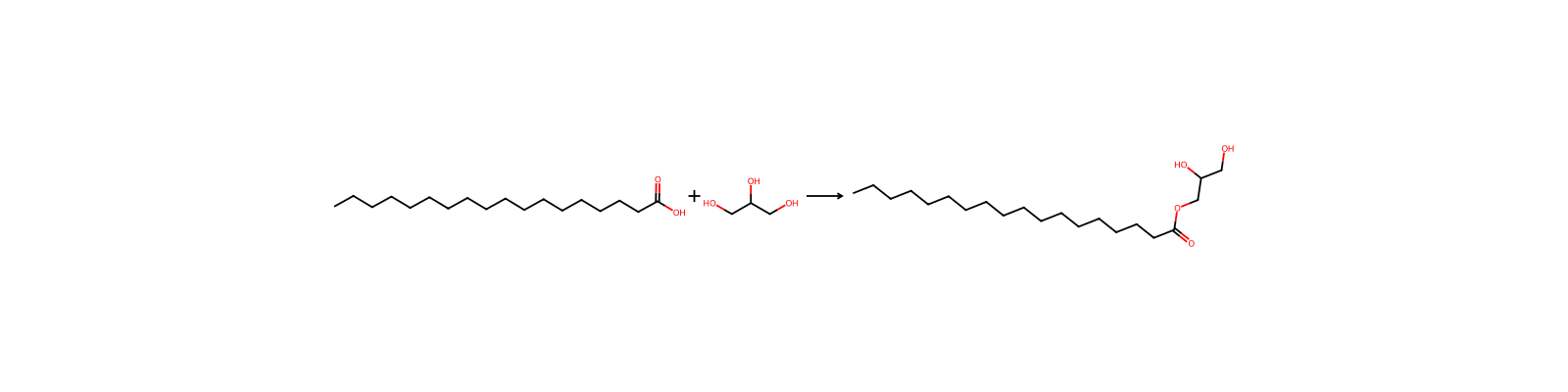
DefinitionChEBI: 1-monostearoylglycerol is a 1-monoglyceride that has stearoyl as the acyl group. It has a role as an algal metabolite and a Caenorhabditis elegans metabolite.
Related reactions
19 records






Linked notes
Loading…